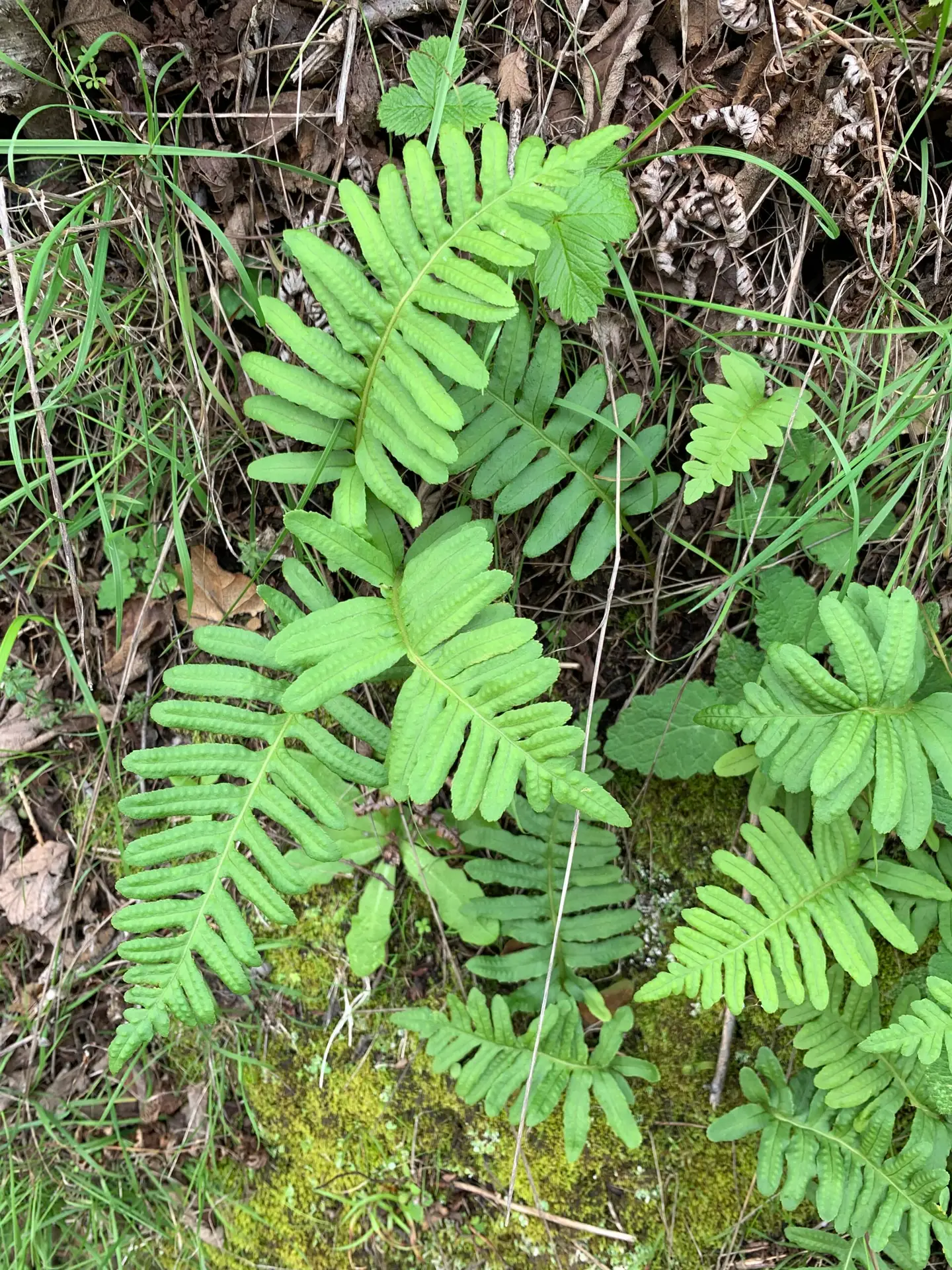
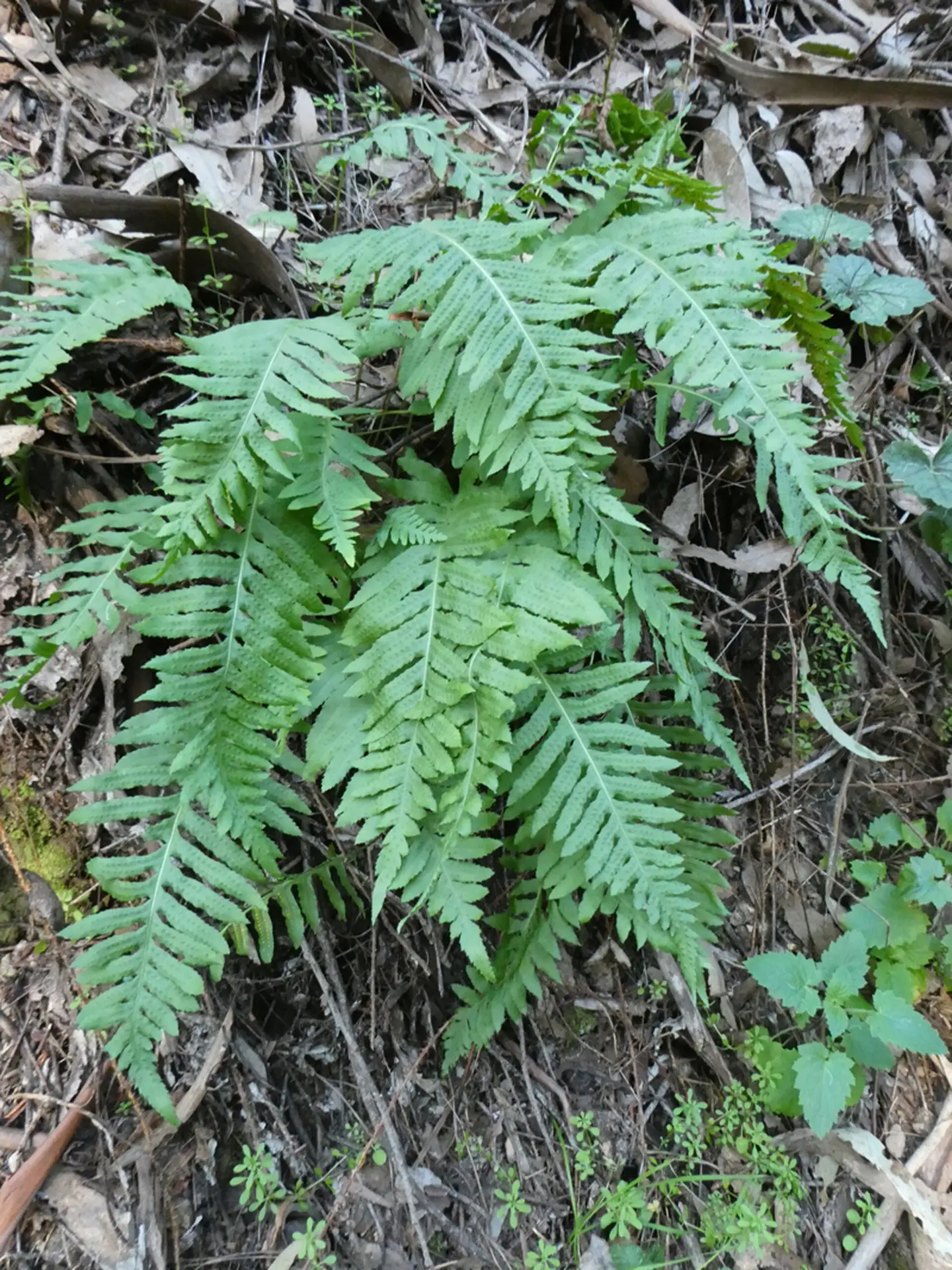
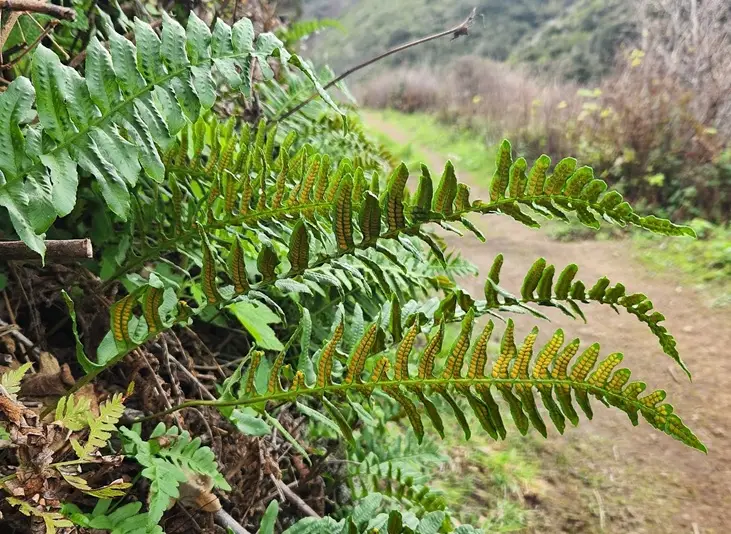
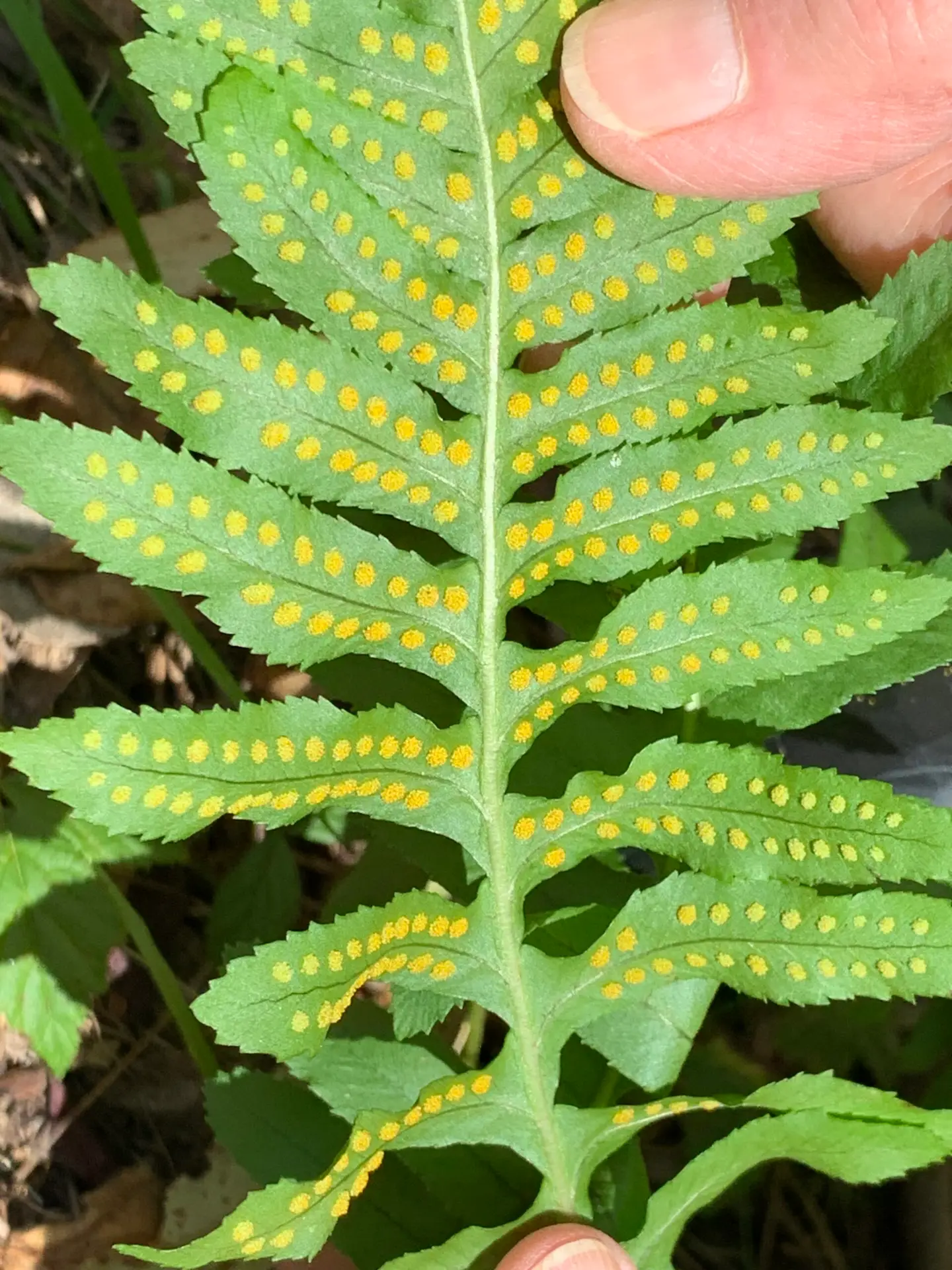
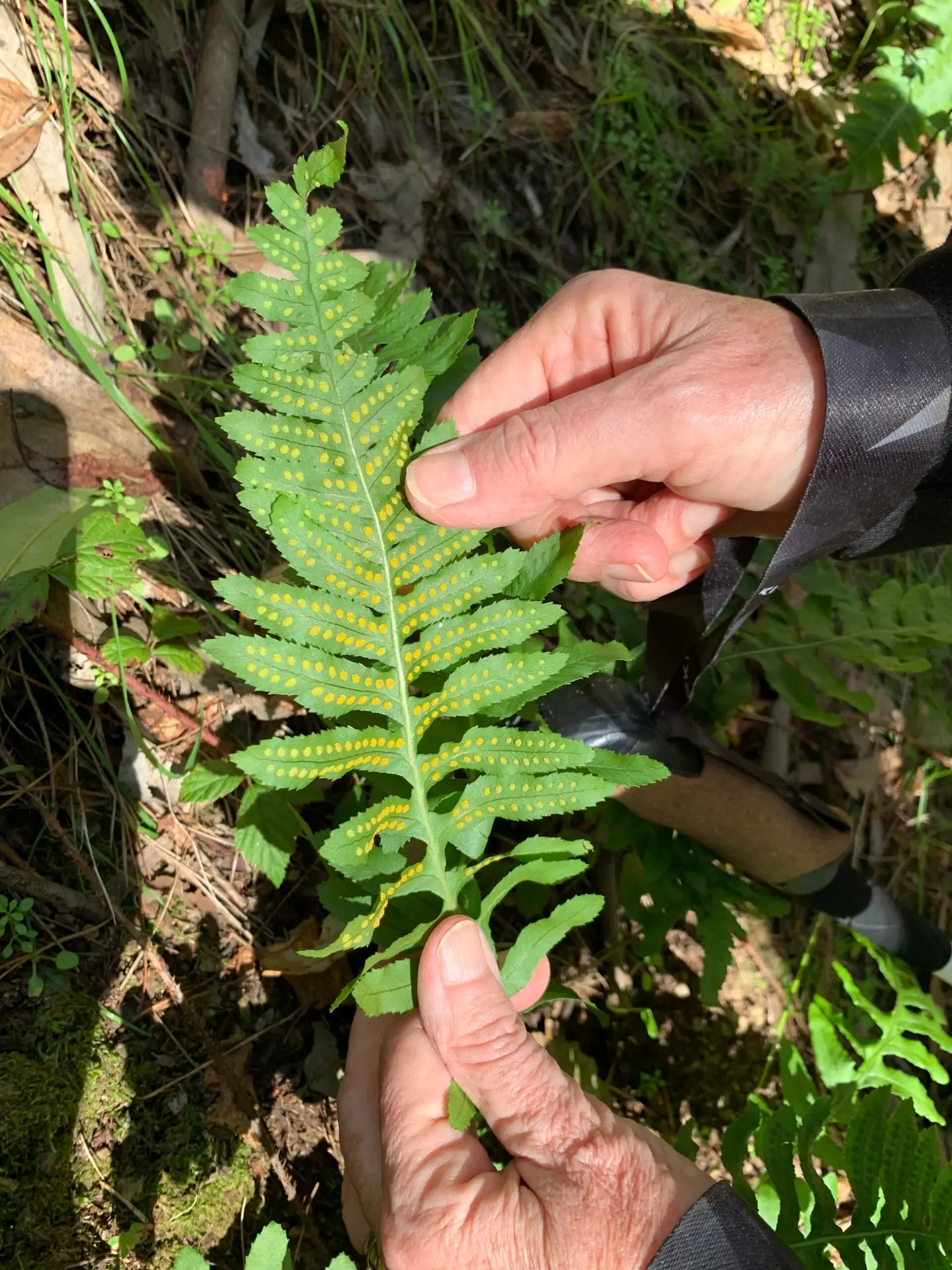
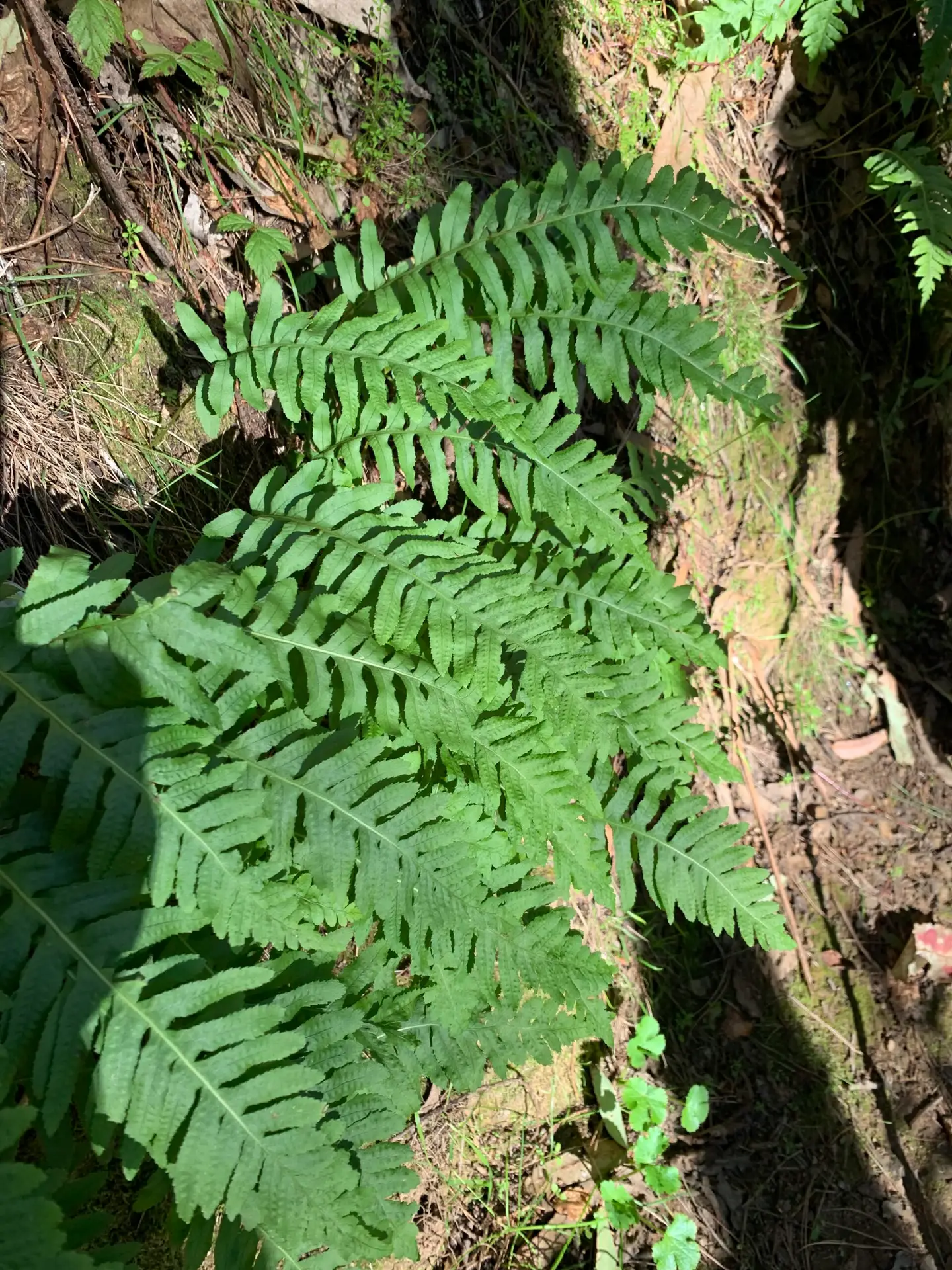
Common fern with long, wavy fronds without distinct separation between each pinnae at the midrib. Sori occur in two rows on the underside of the fronds.
Similar To
Leather Fern (Polypodium scouleri). California Polypody fronds turn brown and die back by summer whereas Leather Fern is evergreen. Both ferns have fronds with an oblong-ovate shape but the tip of a Leather Fern frond is elongated. The sori of the California Polypody are typically bright yellow, becoming brown when the plant begins to die back whereas Leather Fern sori develop into a dark orange color. California Polypody is very abundant in the park, while Leather Fern is rare, with only one small patch reported to date. California Polypody is also similar to Acrid Fern (Polypodium calirhiza) but they are difficult to tell apart visually.
Height / Size
Up to 2 feet (60 centimeters) tall
Fronds
Fronds are up to 1 foot (30 centimeters) in length, once divided (1-pinnate) with light brown stems (rachis). Summer deciduous in dry areas.
Pinnae
Pinnae are wavy and slightly serrated. Each pinna is connected to the next near the midrib and tend to be alternate.
Sori
Sori are round to ovate, sunken, contain tiny yellow spores, and are arranged in two rows on the underside of the fronds.
Indusium
None
Habitat
Found in moist, rocky, shady banks.
Location / Range
Found on Trout Farm and Brooks Creek Trails. Common in canyons, streambanks and north facing slopes, from northern California to northern Baja California, at elevations from sea level to 4,000 feet (1,200 meters).
Lifespan
Perennial. May live 10-20 years.
Fascinating / Fun Facts
The name for this fern family is derived from Ancient Greek: poly meaning “many” + podion meaning “little foot” because the fronds arise from many points along the creeping rhizome.