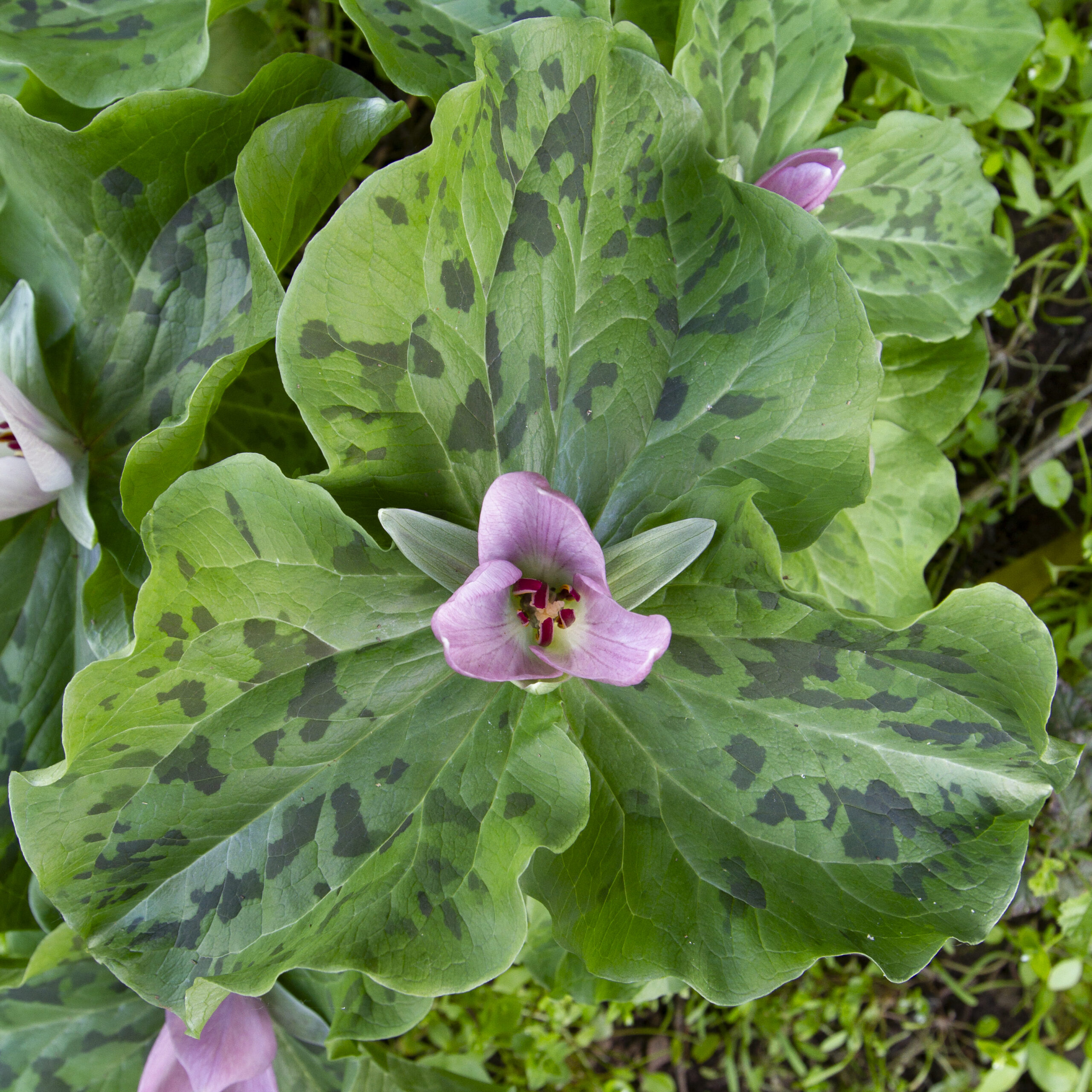
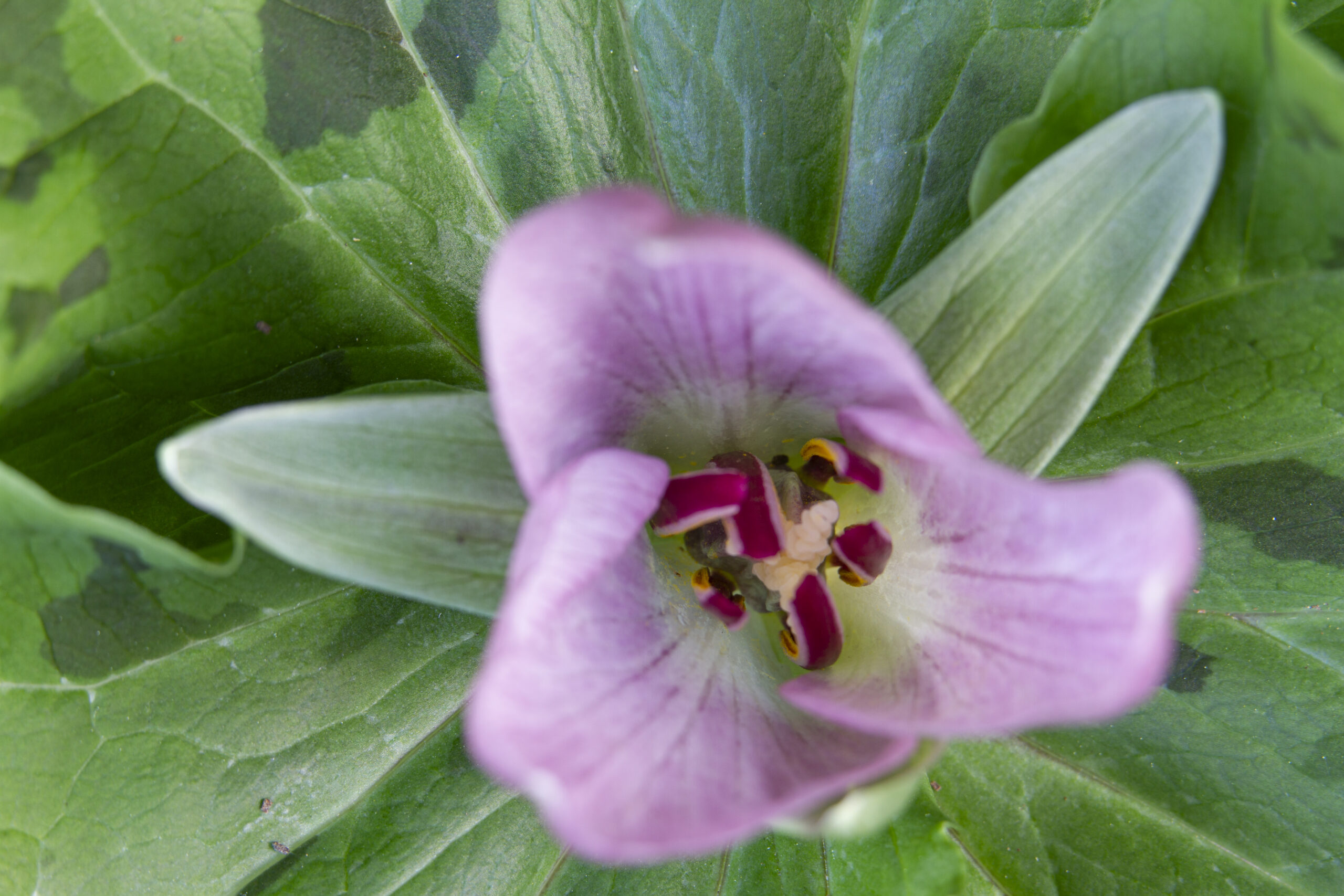
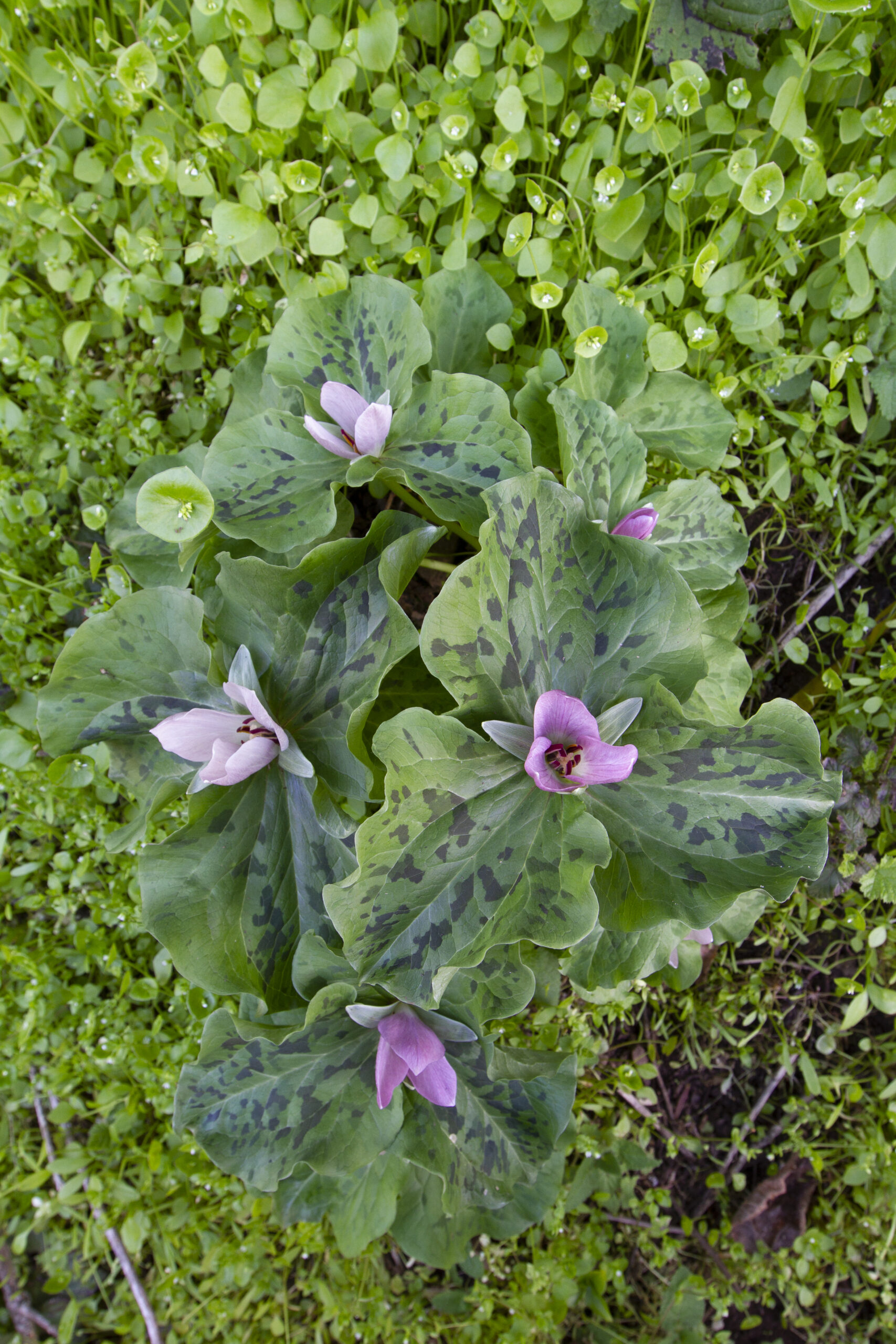
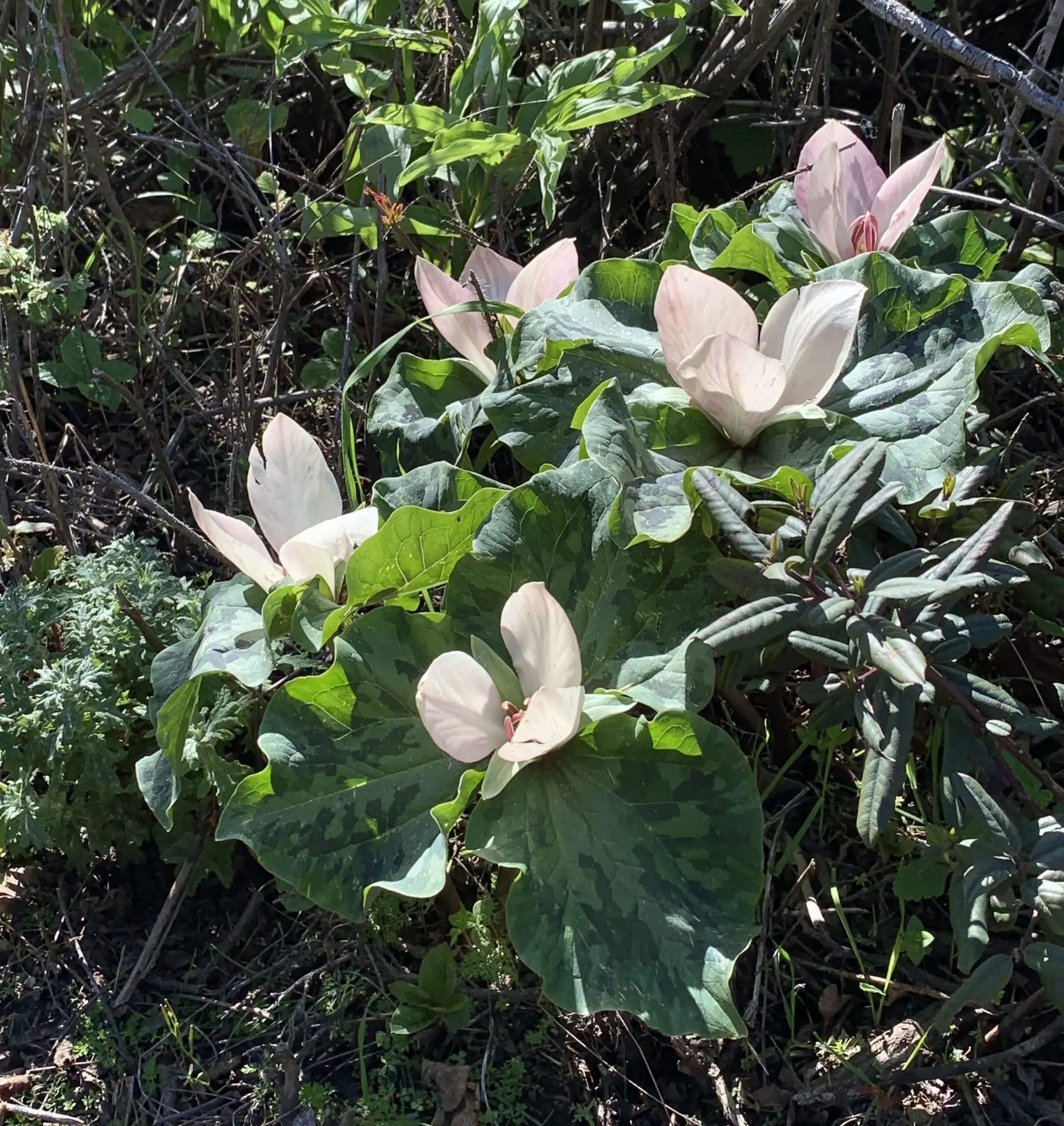
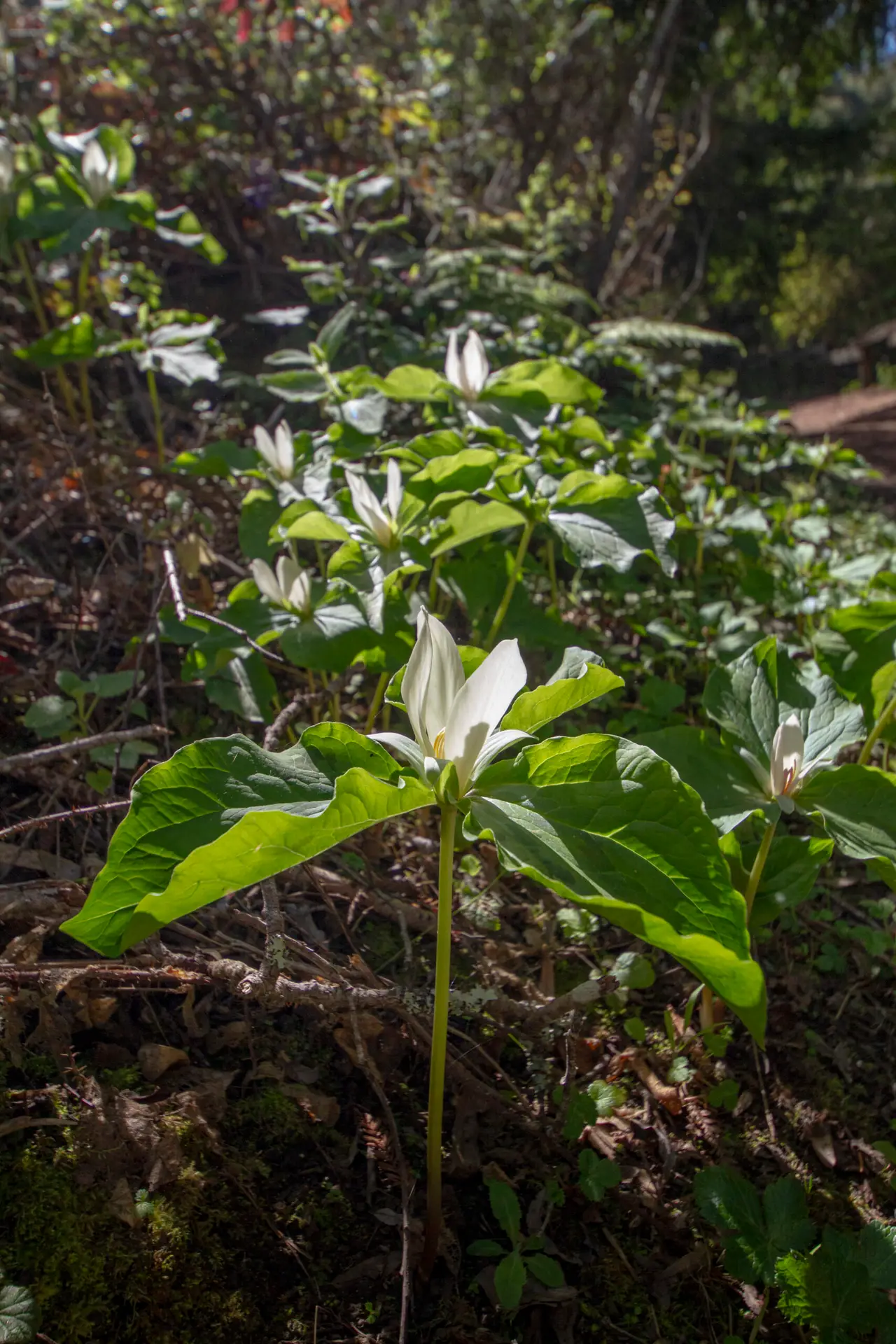
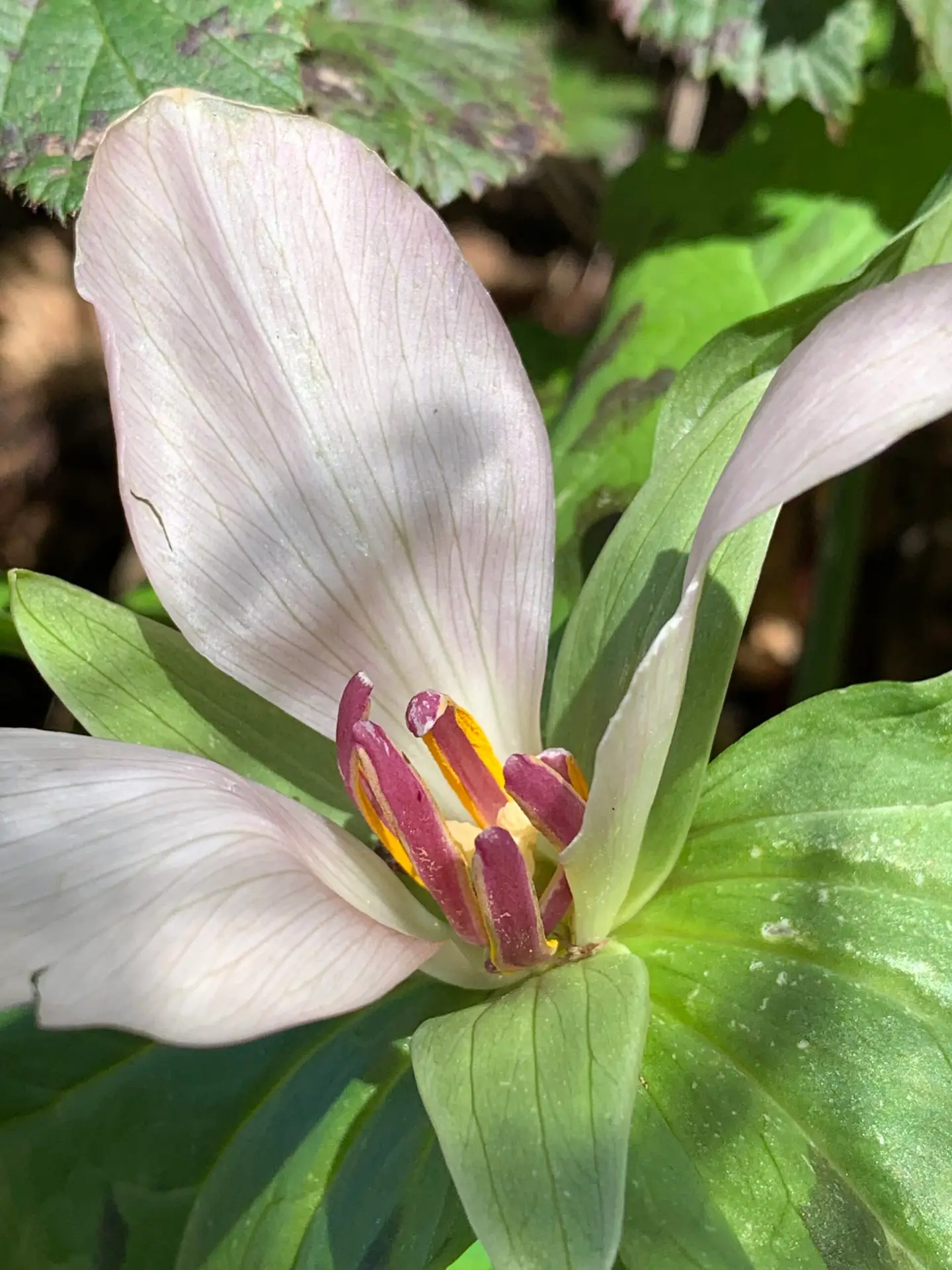
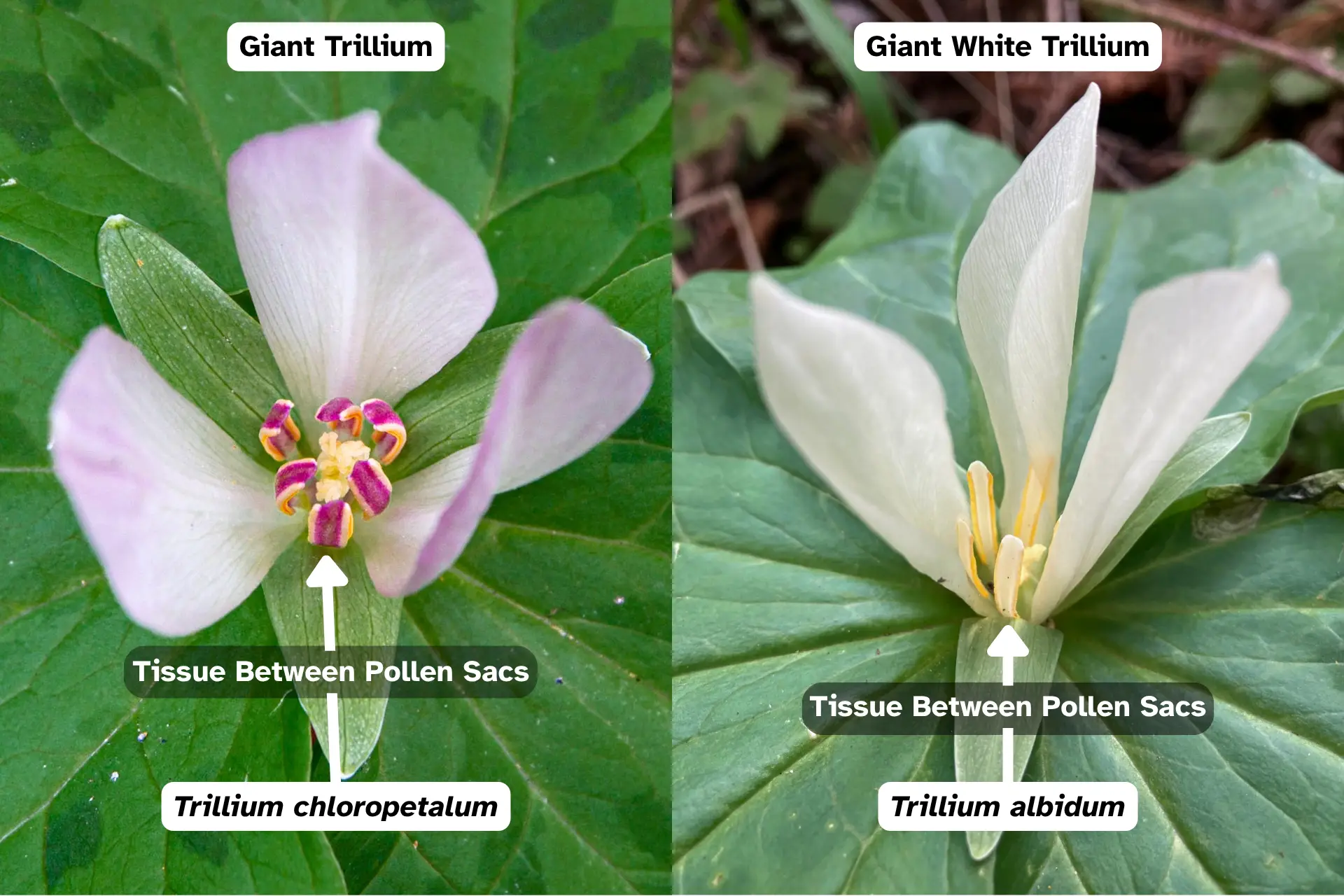
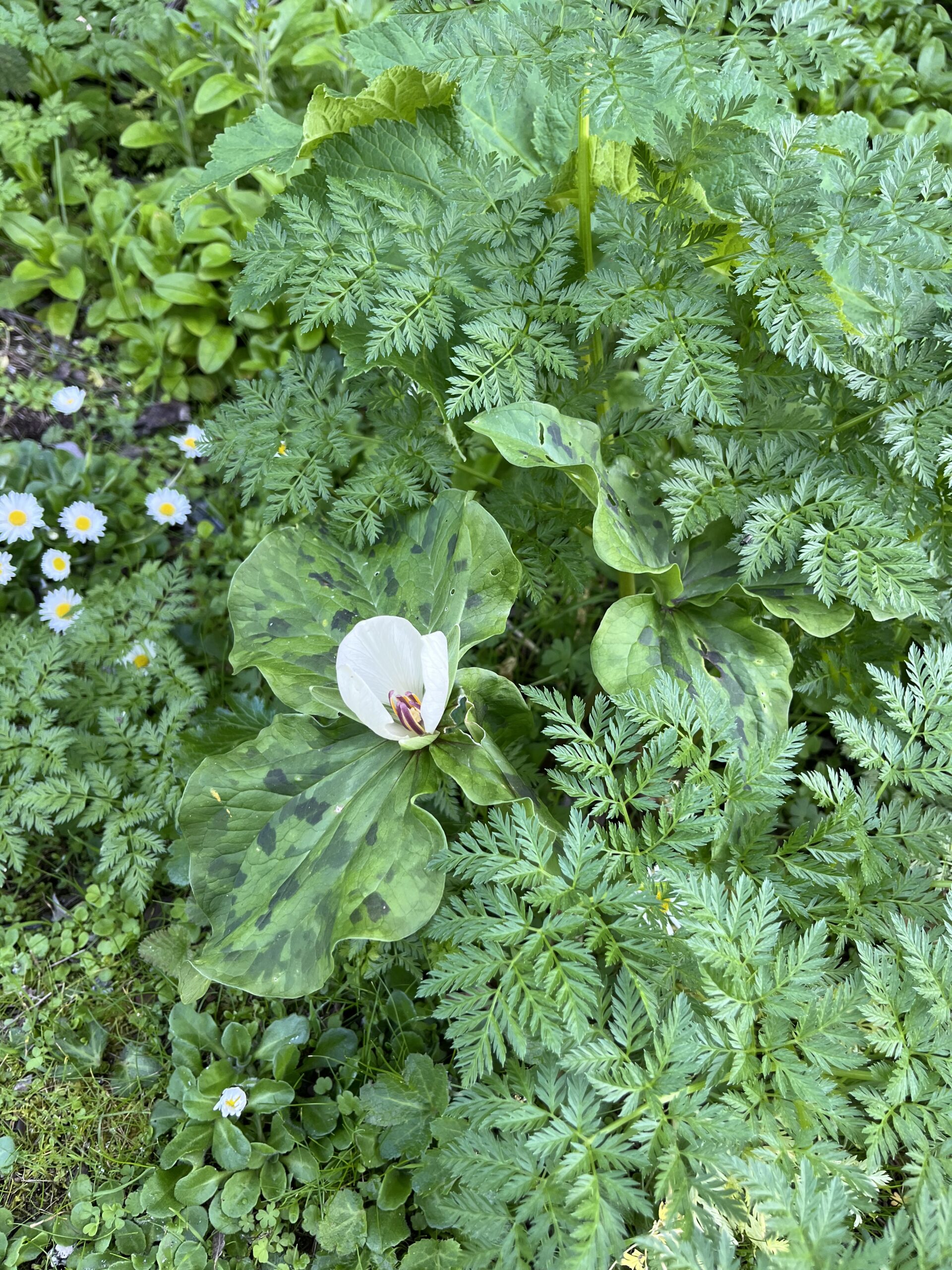
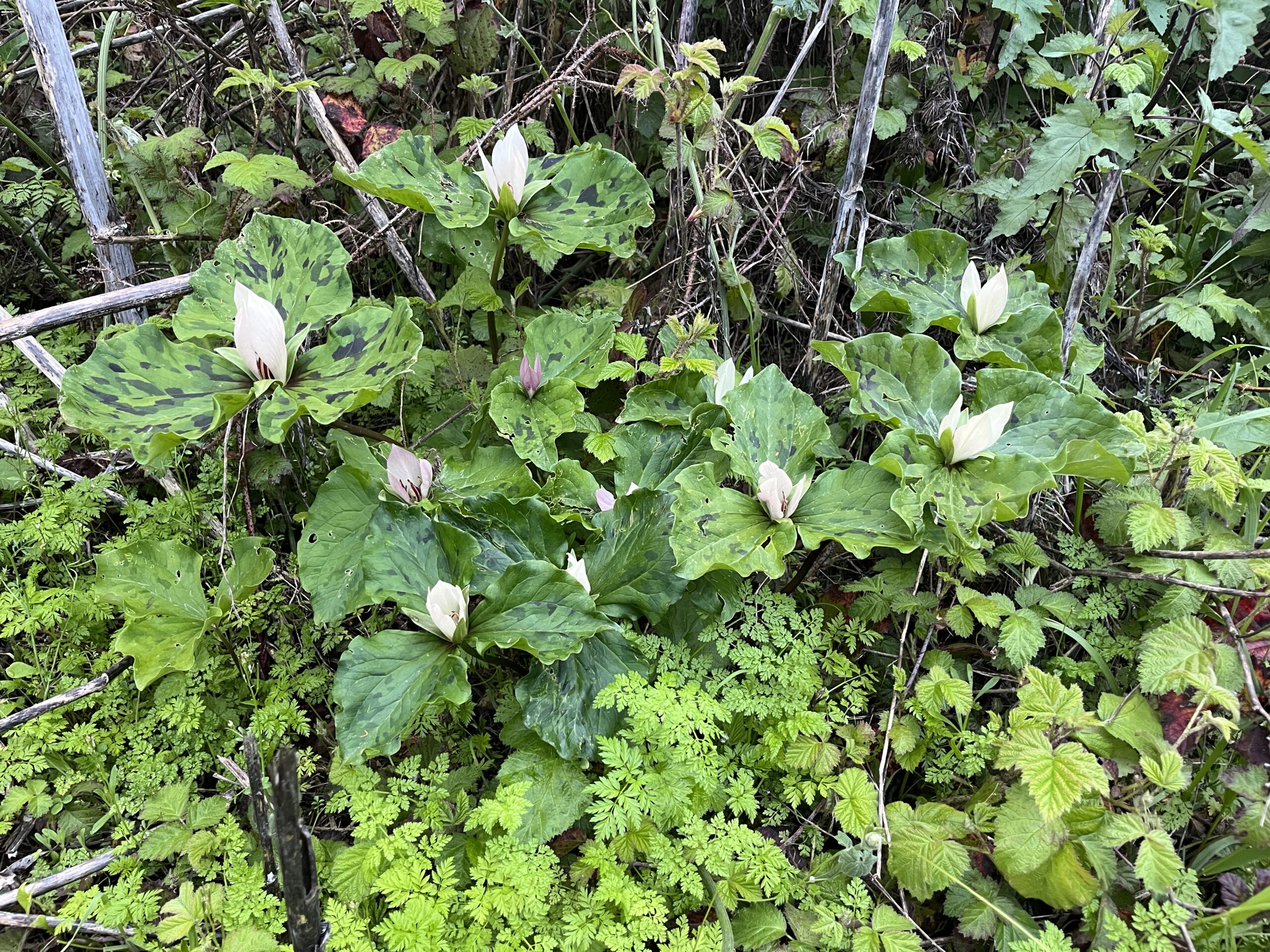
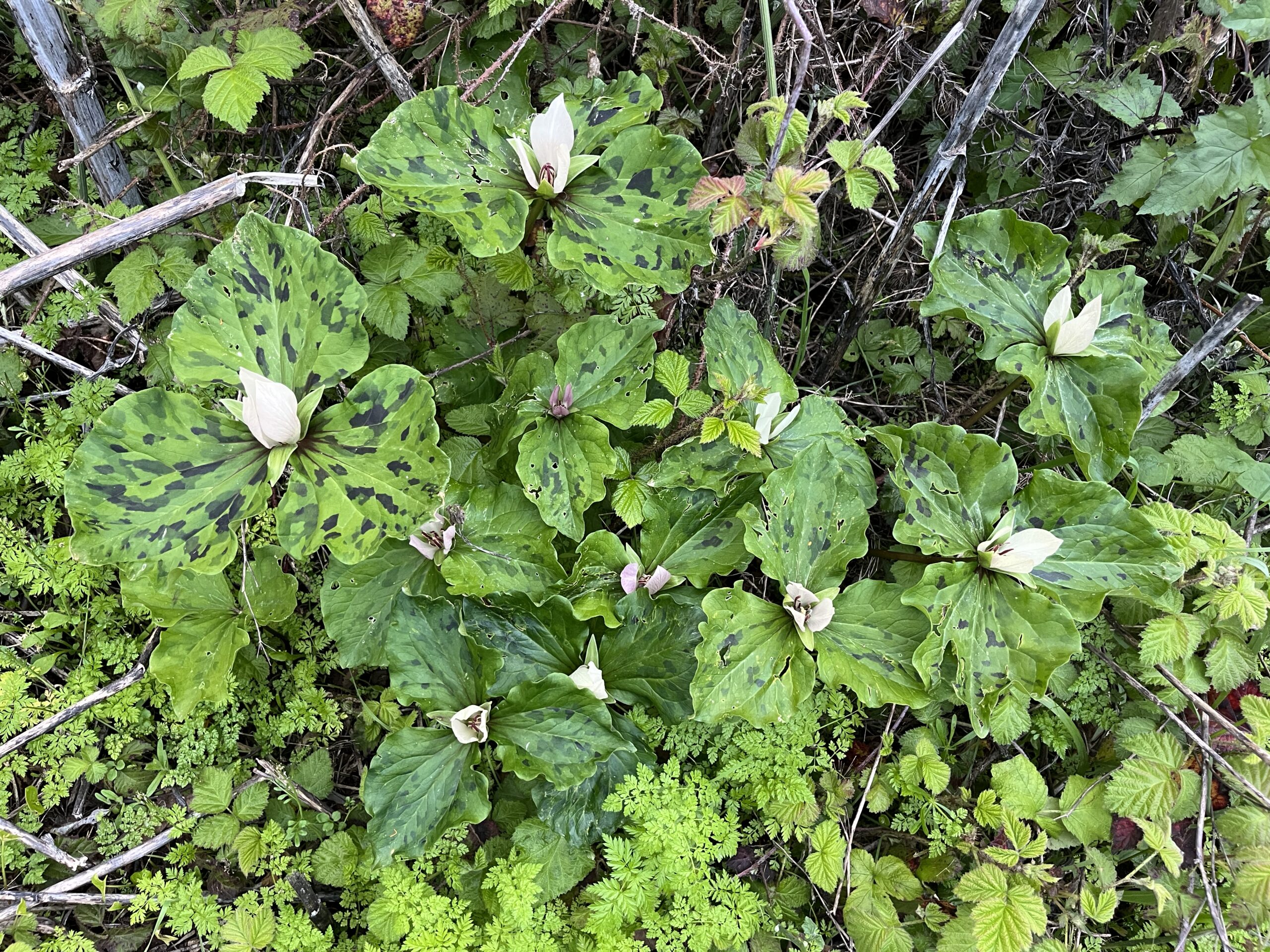
Early spring flowering plant with three large pointed leaves that arise from underground rhizomes, three sepals (subtend the petals of a flower), and three petals. Flower is sessile (has no stalk or peduncle) and attaches directly to the stem. Tissue between pollen sacs (anthers sacs) is purple to light purple, which distinguishes it from Giant White Trillium where the tissue is not purple.
Three large, triangular leaves attach directly to the stem (sessile). Leaves generally have darker green to greenish-brown spots.
Flower
Each stem produces one flower above 3 sepals. Petals are spear or lance shaped (lanceolate) and tend to stand straight up or lean inward. Petal color varies from white, yellow, pink, purple. Tissue between pollen sacs is purple. Generally sweet smelling. Bloom Time: February to June.
Fruit / Seed
Ovoid, 6-angled, fleshy fruit. Insects, such as ants, primarily disperse Trillium seeds as they have fleshy structures outside of the seed that are rich in lipids and proteins called elaiosomes. This attracts ants, who carry the seed home, remove the elaiosome, and then throw away the seed itself, planting it. It is thought that mule deer may disperse seeds across greater distances.
Habitat
Generally shady moist slopes. Forest, redwood forest, chaparral.
Location / Range
Every trail except Valley View. Coast Ranges and in the Sierra Nevada foothills, from Siskiyou County to Santa Barbara county.
Lifespan
Up to 30 to 40 plus years from rhiozomes. Refer to Fun Facts for more information.
Fascinating / Fun Facts
Trilliums have an interesting life cycle that includes a cotyledon (a seed leaf or embryonic leaf) stage, a one leaf stage, a juvenile three leaf stage, a mature three leaf stage, and sometimes three leaf regressive stage with no flower. It takes a plant a minumum of seven years and up to 18 years to reach the flowering or mature stage. Because it takes so long to mature, it is best to never pick a trillium. Seed-carrying partnership between plants and ants is called myrmecochory. The Giant Trillium is also known as common trillium, giant wakerobin, or sessile trillium.
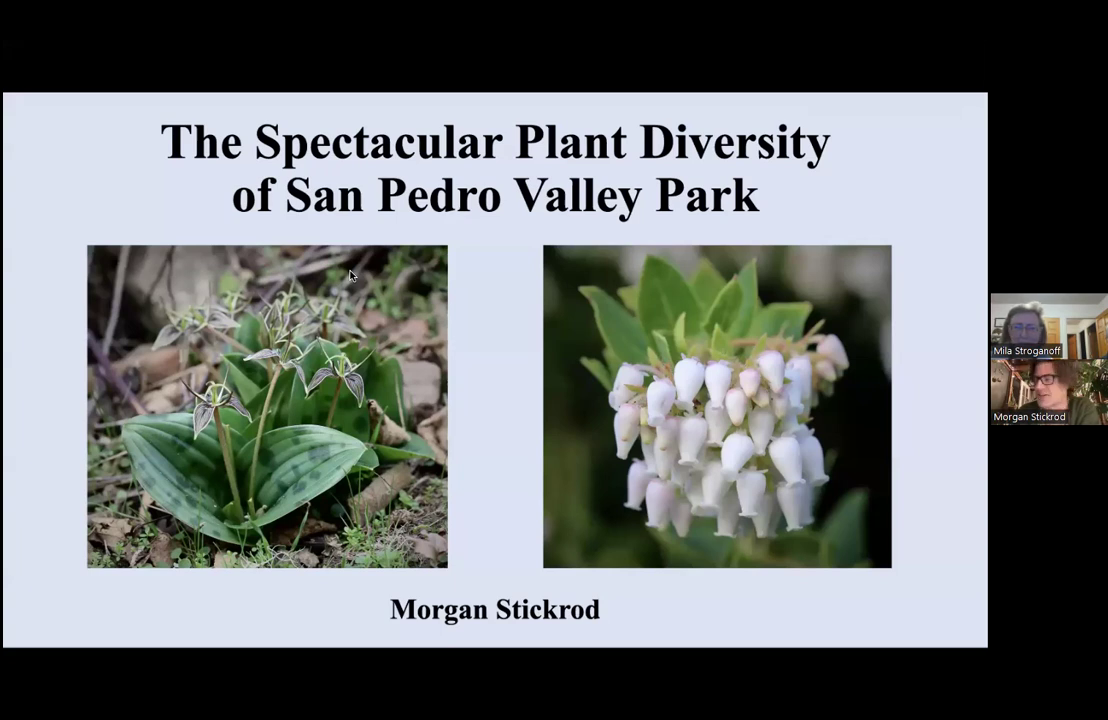
The Friends of San Pedro Valley Park welcomed Morgan Stickrod, a botanist and plant ecologist with over 10 years of experience doing research and field...