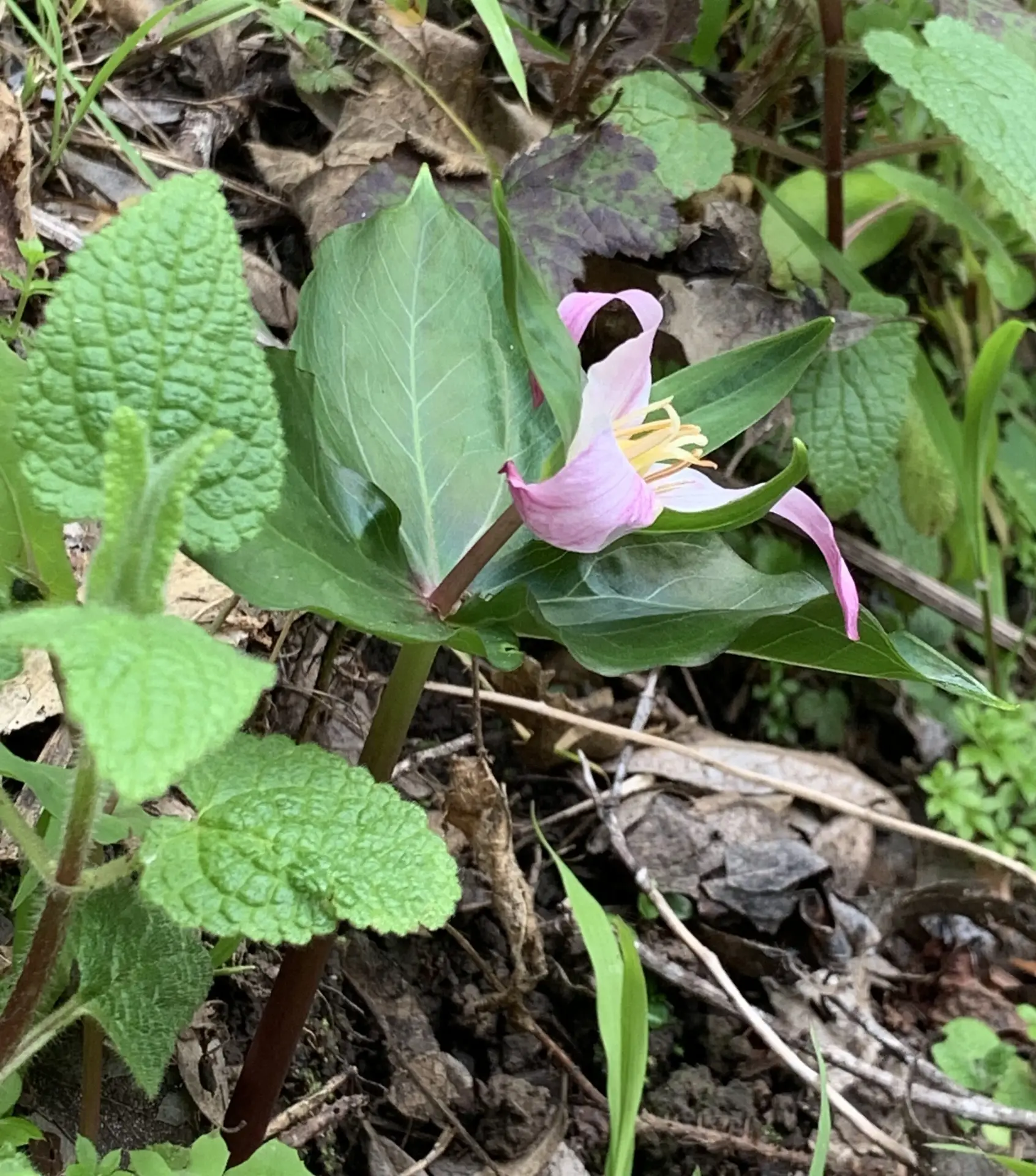
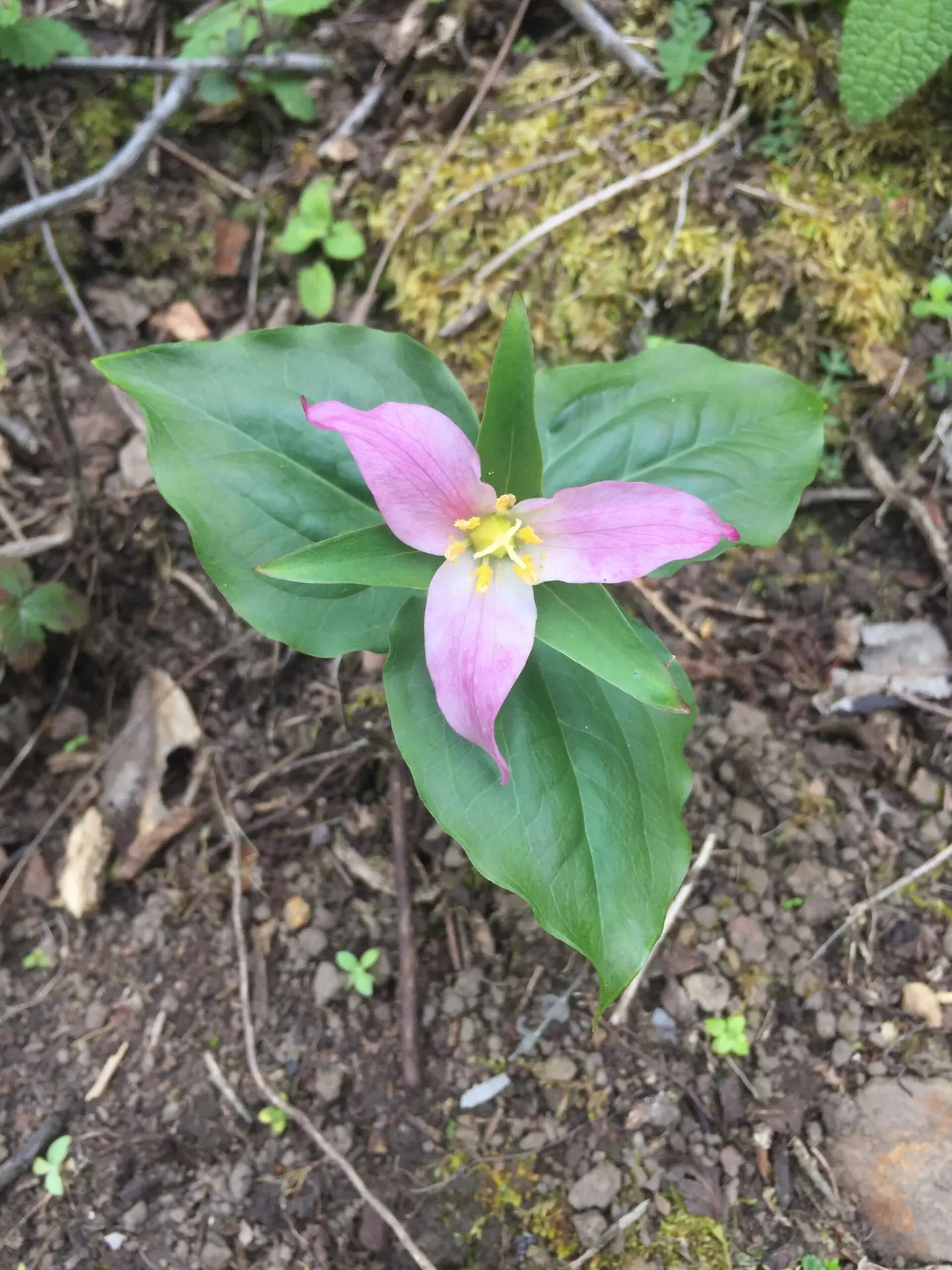
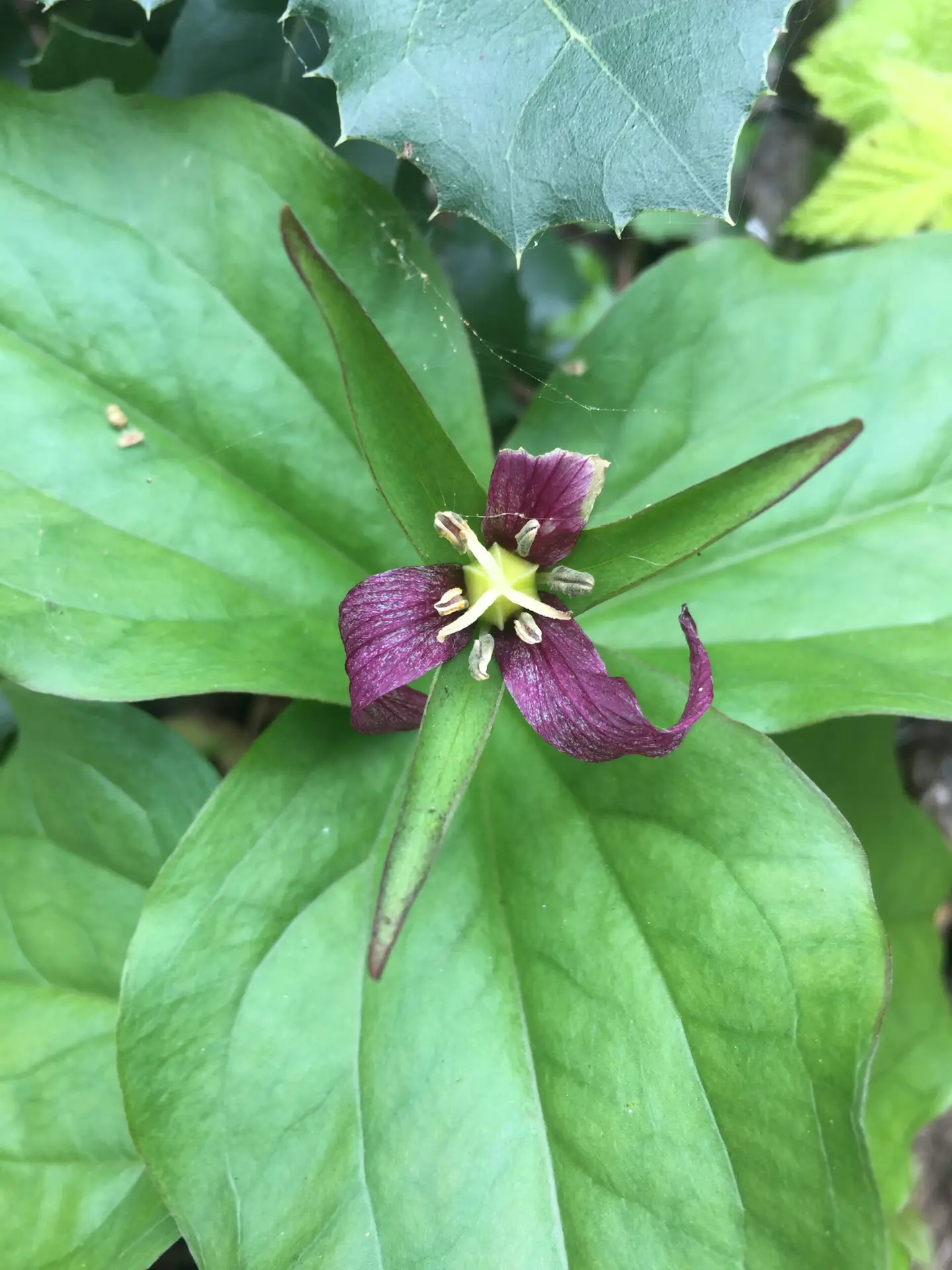
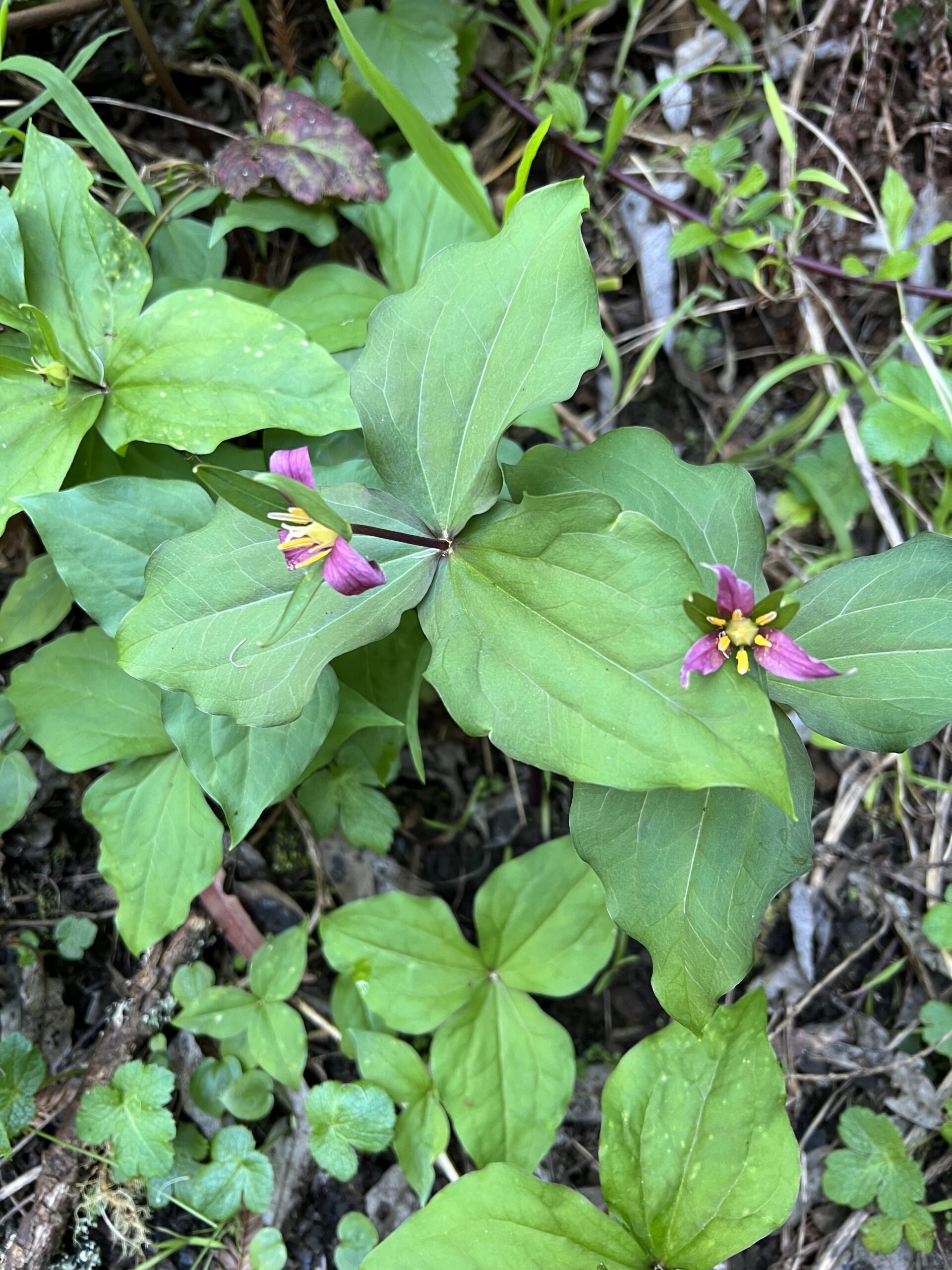
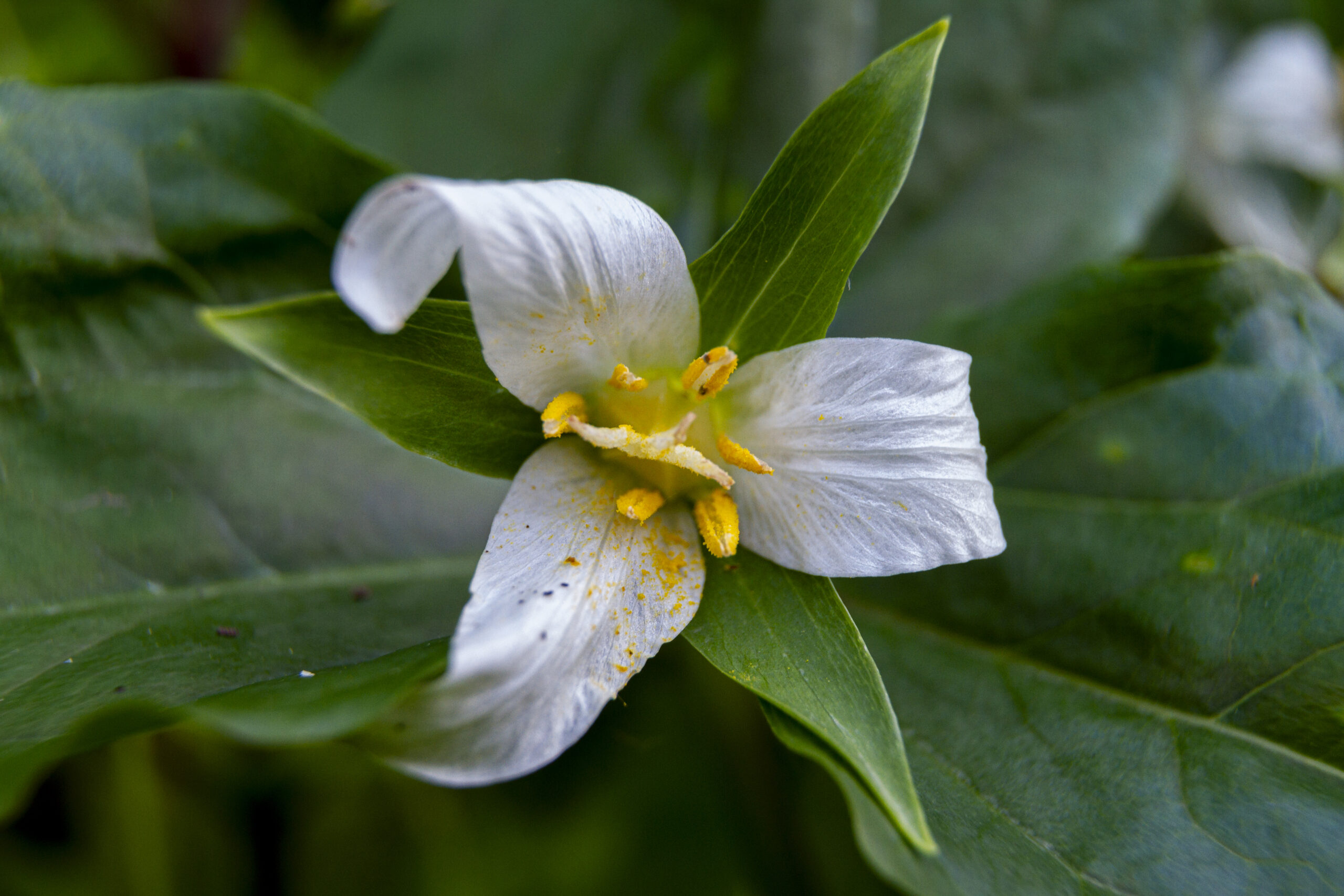
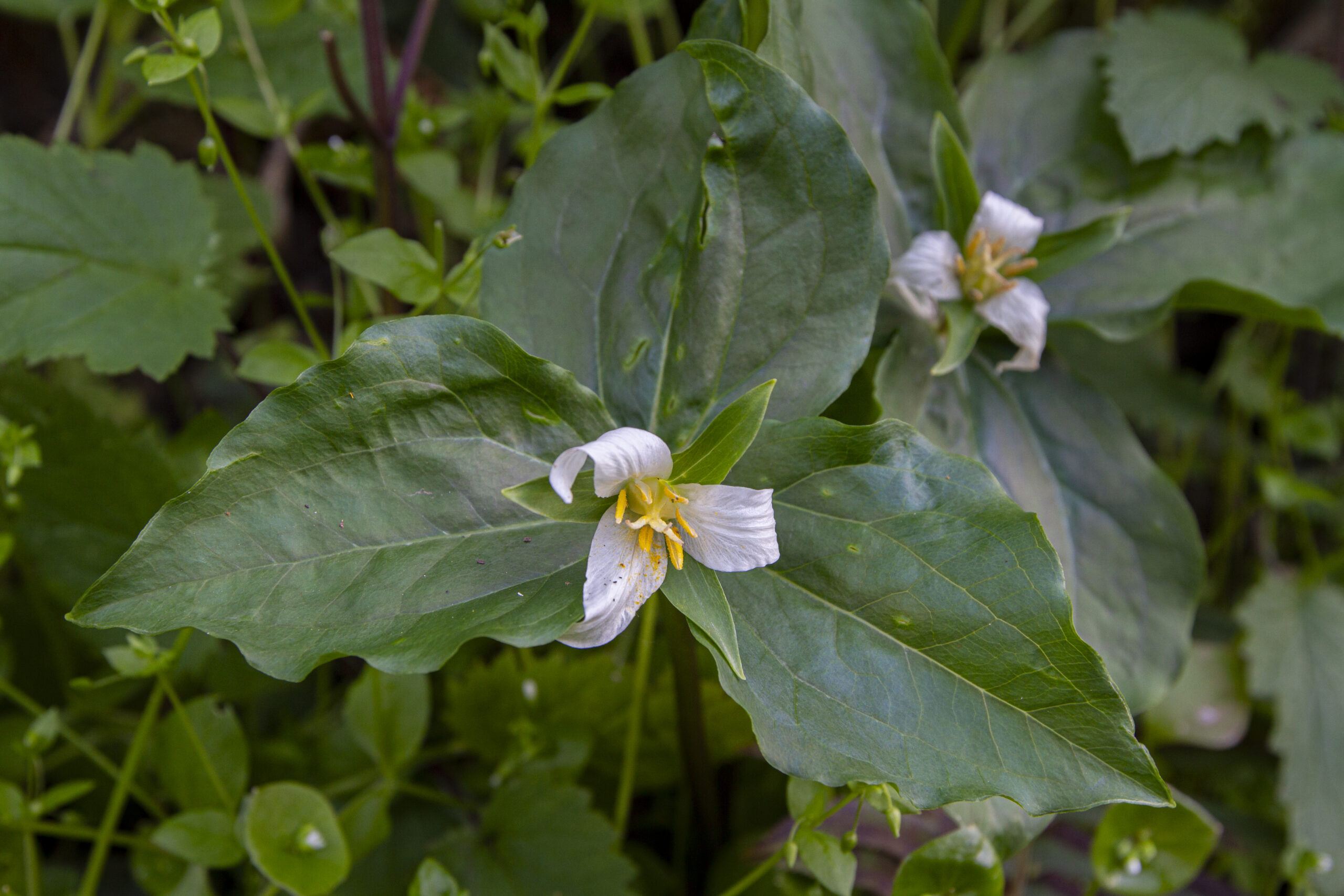
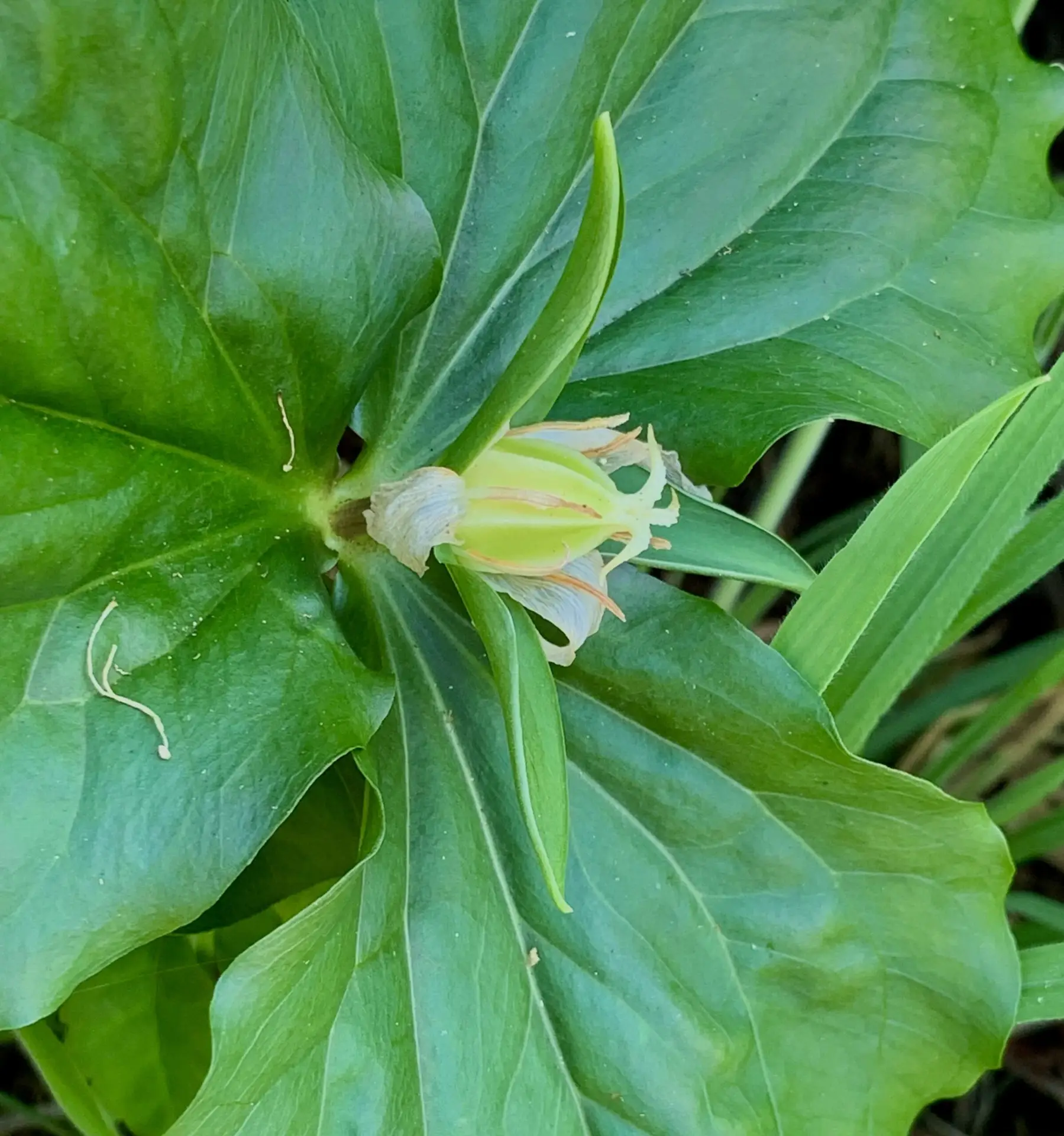
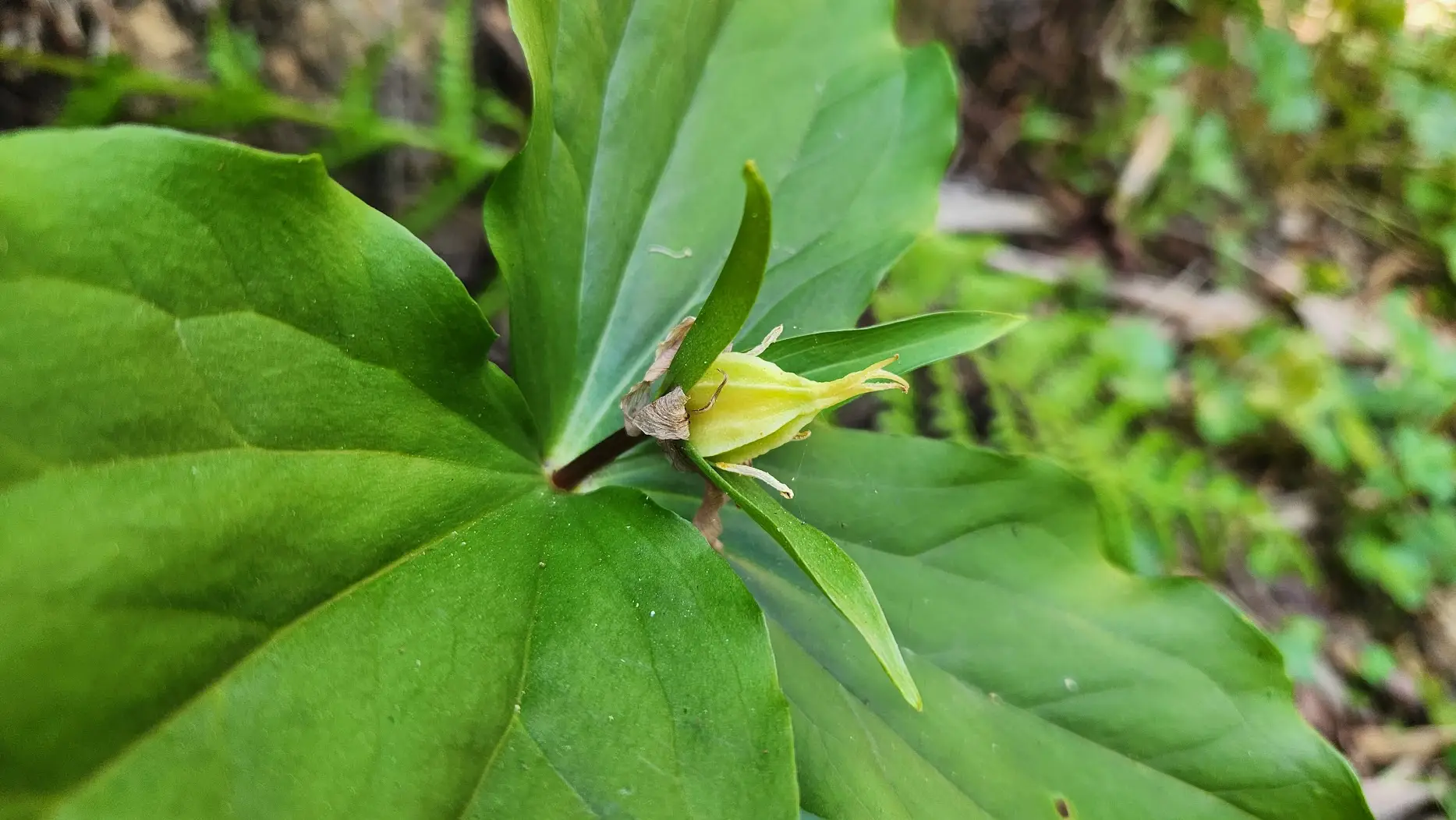
Early spring flowering plant with three large pointed leaves that arise from underground rhizomes, three leaf-like sepals and three petals. Flower has a stalk (peduncle) which distinguishes from the other trilliums found in San Pedro Valley Park. Flower is sometimes leaning or nodding.
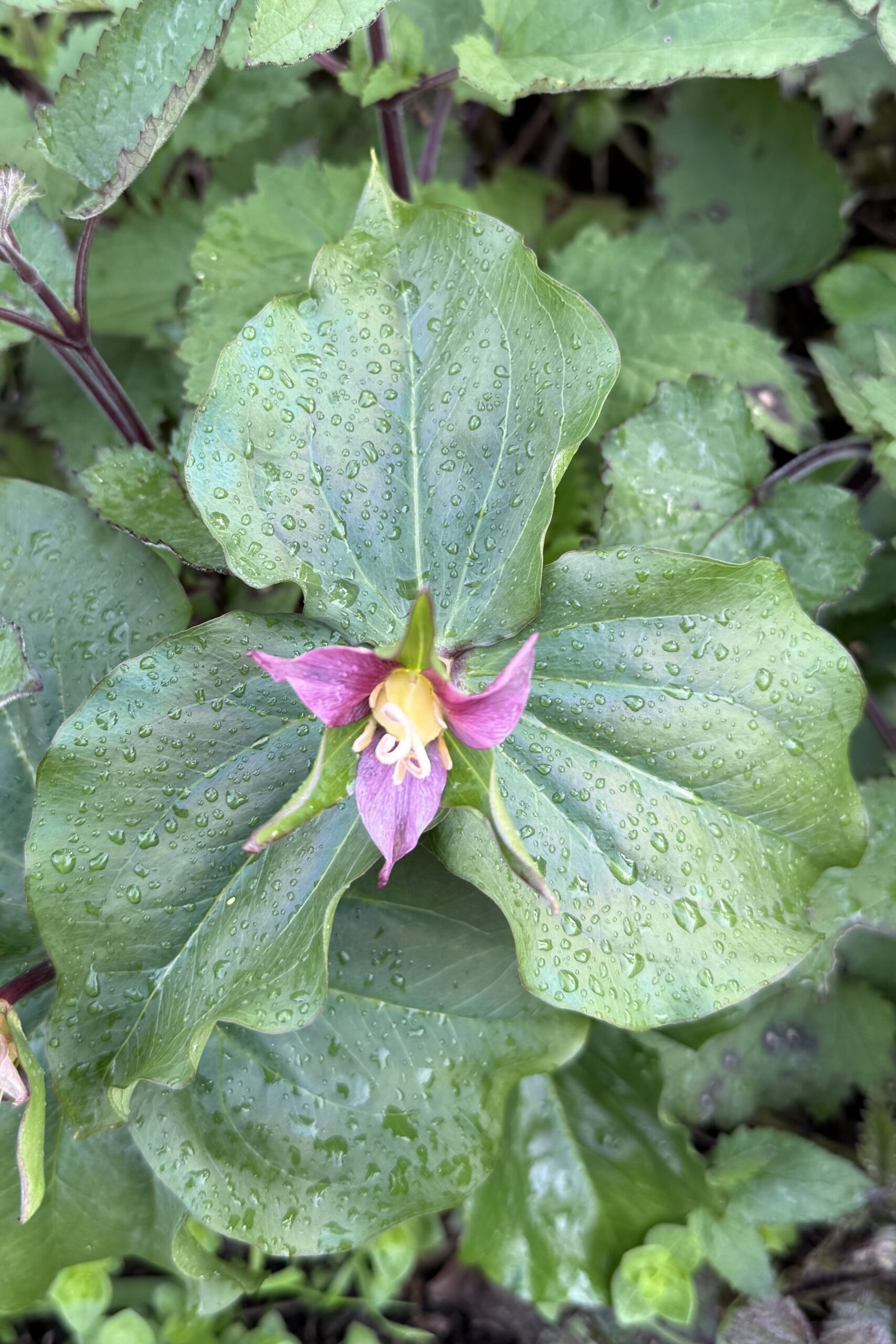
Three broad, diamond-shaped-ovate (widest part below the middle) leaves come to a sharp or tapering point (acute to acuminate). Leaves attach directly to the stem (sessile) and are rarely spotted.
Flower
Flowers are white but turn lavender to purple with age. Flower has a stalk (peduncle) and is sometimes leaning or nodding. Flower has three petals that are egg shapped (ovate) to lance shaped (lanceolate). There are three lance shaped (ovate) green sepals between the petals. Flower’s scent varies in strength. Petals can turn dark purple after fertilization.
Bloom Time: January to June.
Fruit / Seed
Fruit is green, three-dimensional egg shape (ovoid) with 6 sides and the ridges have wings.
Insects such as ants primarily disperse Trillium seeds as they have fleshy structures outside of the seed that are rich in lipids and proteins called elaiosomes. This attracts ants, who carry the seed home, remove the elaiosome, and then throw away the seed itself, planting it. It is thought that mule deer may dispurse seed across greater distances.
Habitat
Generally shady moist slopes. Forest, redwood forest.
Location / Range
Found on all trails except Valley View Trail. Grows primarily on the West Coast from Southern British Columbia to Gorda in Southern California (Monterey County) uand from Southern Alberta to Idaho, with far east pockets in Southern Montana and Northern Colorado.
Lifespan
Up to 30 to 40 plus years from rhiozomes. See Fun Facts for more information.
Fascinating / Fun Facts
Trilliums have an interesting life cycle that includes a cotyledon (a seed leaf or embryonic leaf) stage, a one leaf stage, a juvenile three leaf stage, a mature three leaf stage, and sometimes three leaf regressive stage with no flower. It takes a plant a minumum of seven years and up to 18 years to reach the flowering or mature stage. Because it takes so long to mature, it is best to never pick a trillium. Seed-carrying partnership between plants and ants is called myrmecochory. The Pacific Trillium is also known as western trillium or western wakerobin.
The Friends of San Pedro Valley Park welcomed Morgan Stickrod, a botanist and plant ecologist with over 10 years of experience doing research and field...