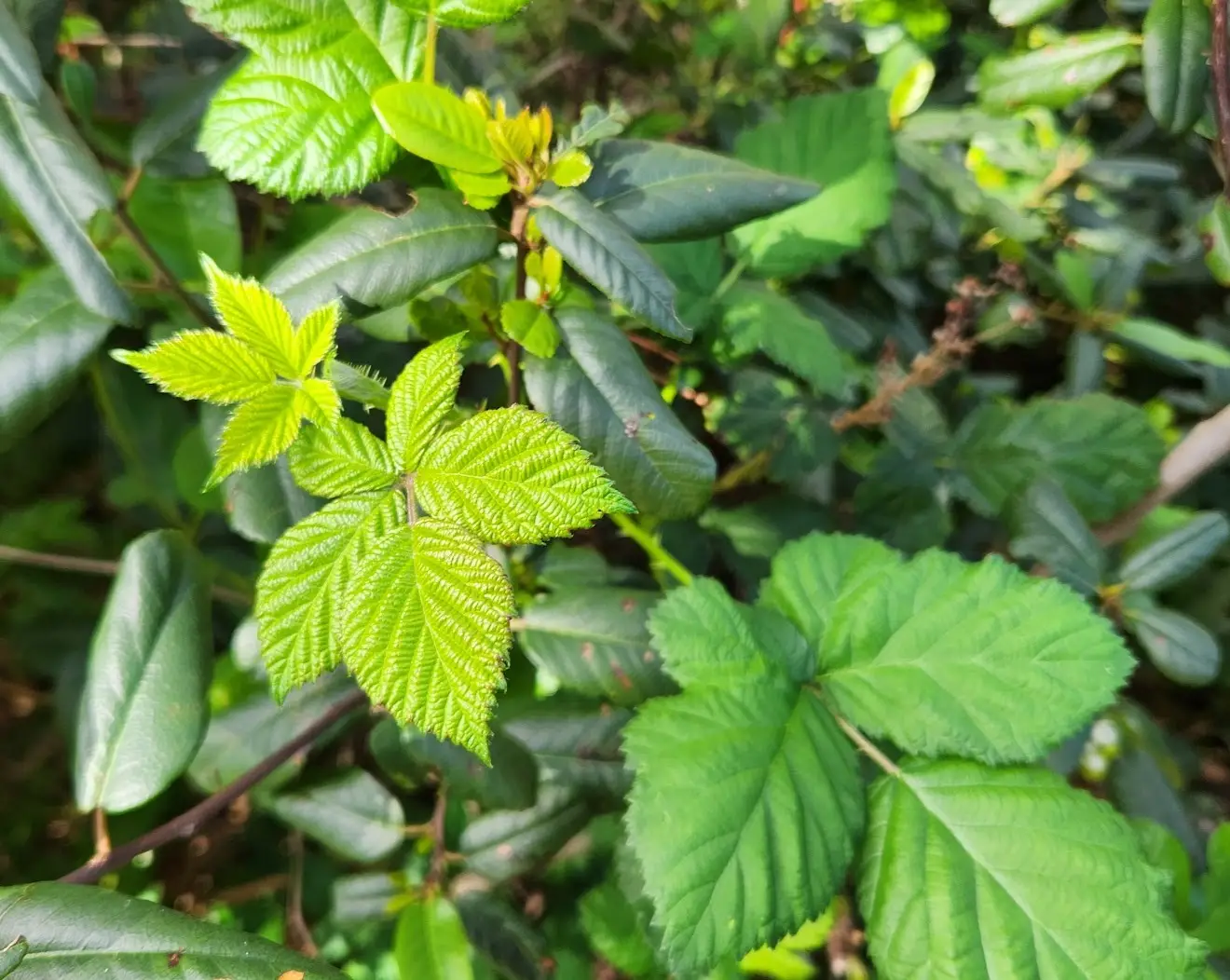
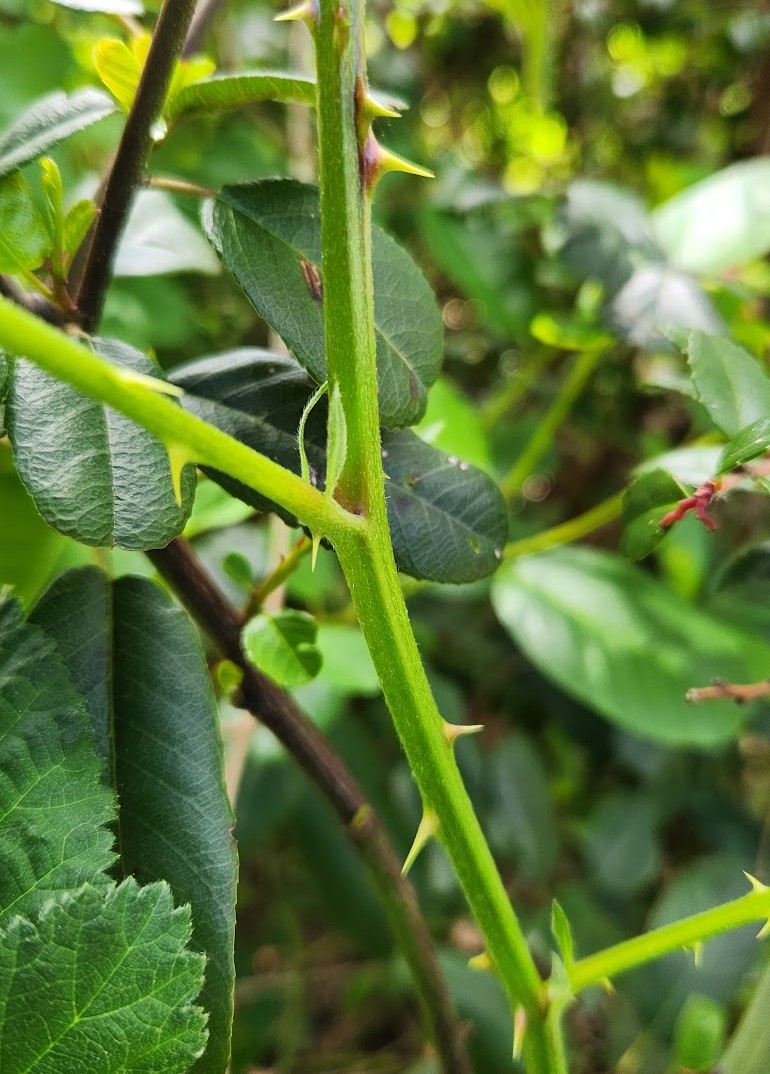
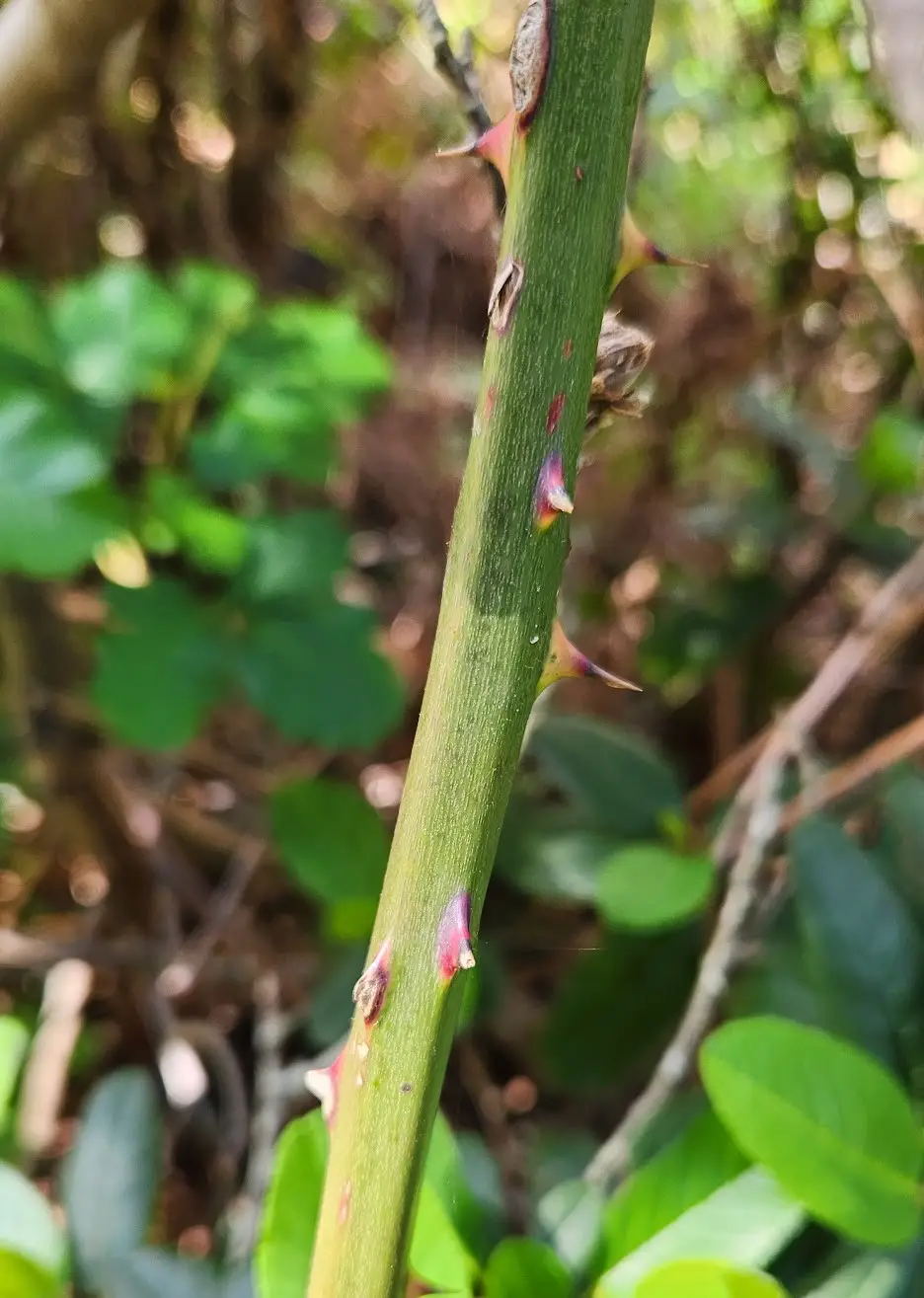
Highly invasive plant produces an impenetrable tangle of five sided, angled stems that can turn red or purple. Stems are .8 -1.0 inch across and have large, stout prickles (up to 1/2 inch long) that are wider at the base and spaced apart, similar in look to small rose thorns. Leaves of 3 to 5 leaflets in groups of 3 with prickles are a lighter shade of green underneath. Flowers are white to pink.
Similar To
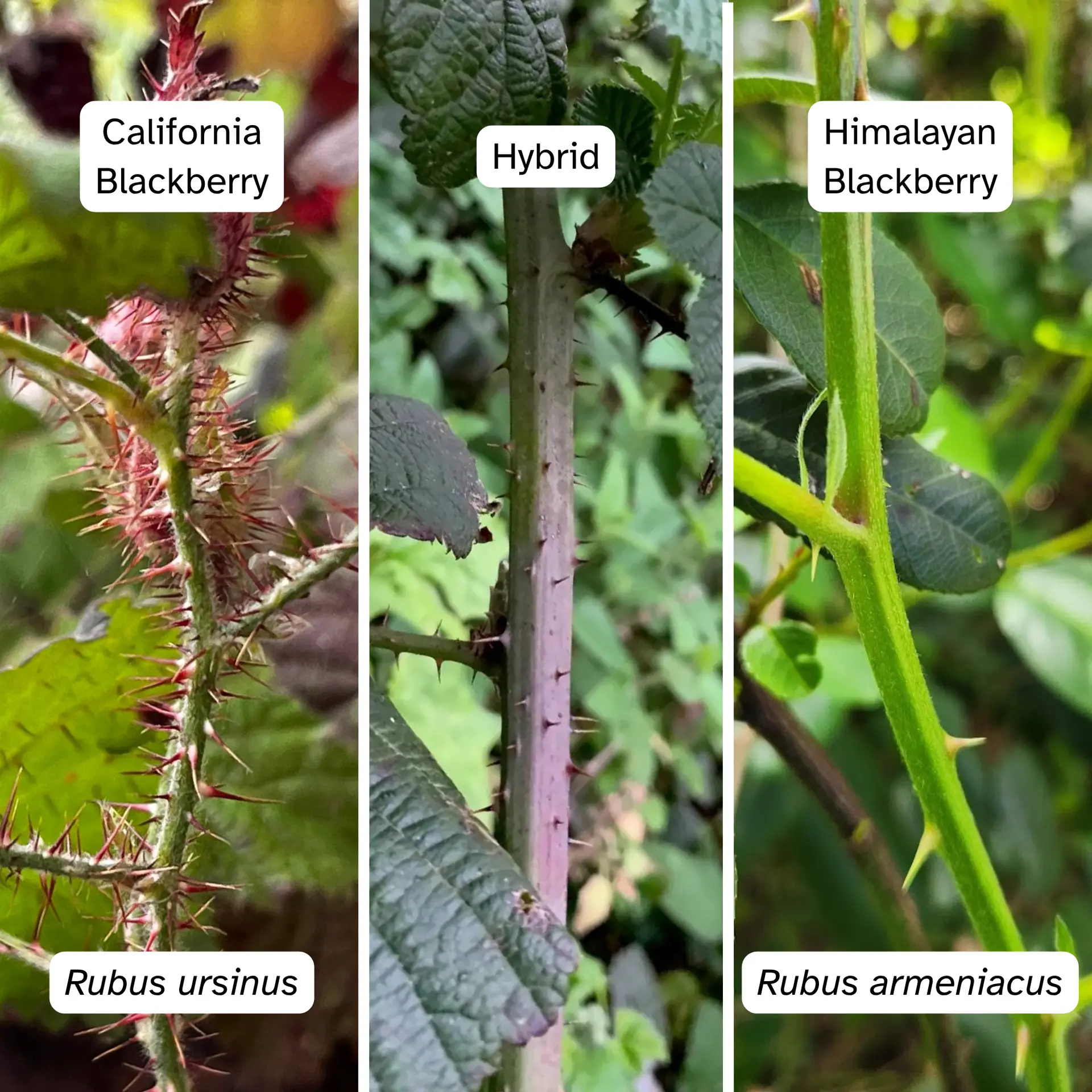
California Blackberry (Rubus ursinus). California Blackberry has smaller, round stems covered with many fine prickles, rarely 5 leaflets and white flowers with smaller petals. California and Himalayan Blackberries can also hybridize (see comparison photo). Sometimes confused with Poison Oak (which has no prickles). (See also Western Thimbleberry which has a similar look; but also has no prickles.)
Height / Size
2 to 6 feet high, up to 6 feet wide, but can expand a large as a six-square-yard thicket.
Leaves
Compound leaves with five leaflets the first year and three leaflets on second year side branches. Dark green above and pale below. Leaflet margin is toothed with snaring, hooked thorns along the underside of the midrib. Leaves are also sometimes red.
Flower
White to pink, about 1 inch wide, 5 petals, dark tipped stamens. Bloom Time: March to June.
Fruit / Seed
Red berry, ripening to black or dark purple. Seed primarily spread by fruit-eating birds.
Habitat
Riparian, woodland, disturbed and moist areas, roadsides, fence rows.
Location / Range
All trails in the park. Grows in extensive areas of California, other than desert and arid areas.
Lifespan
Stands can live up to 25 years. Bears biennial stems or canes that persist 2 years from the perennial root system.
Fascinating / Fun Facts
The Himalayan Blackberry has a poorly chosen English name. It is NOT native to the Himalayas. It was developed by Luther Burbank from seed stock thought to have originated from Armenia. His over-successful blackberry plant is now rampant and aggressively invasive across the West. The main stem extends 13 to 32 feet long, then sends out secondary shoots in the second year . Himalyan Blackberry is difficult to control because its perennial roots readily resprout.
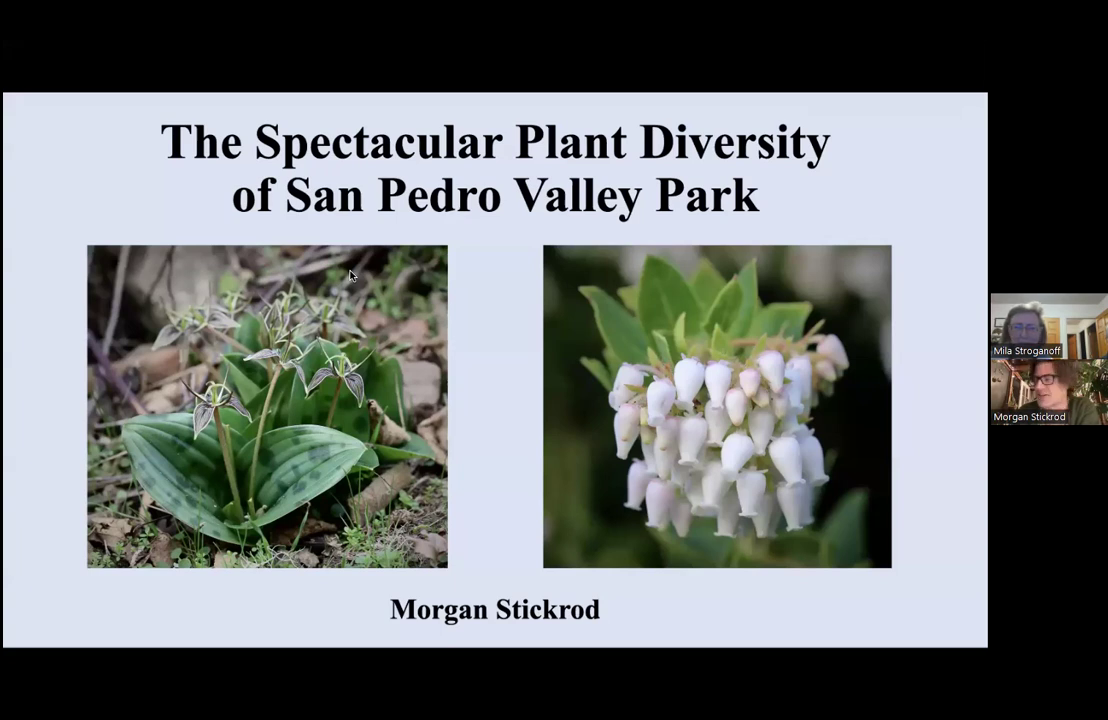
The Friends of San Pedro Valley Park welcomed Morgan Stickrod, a botanist and plant ecologist with over 10 years of experience doing research and field...