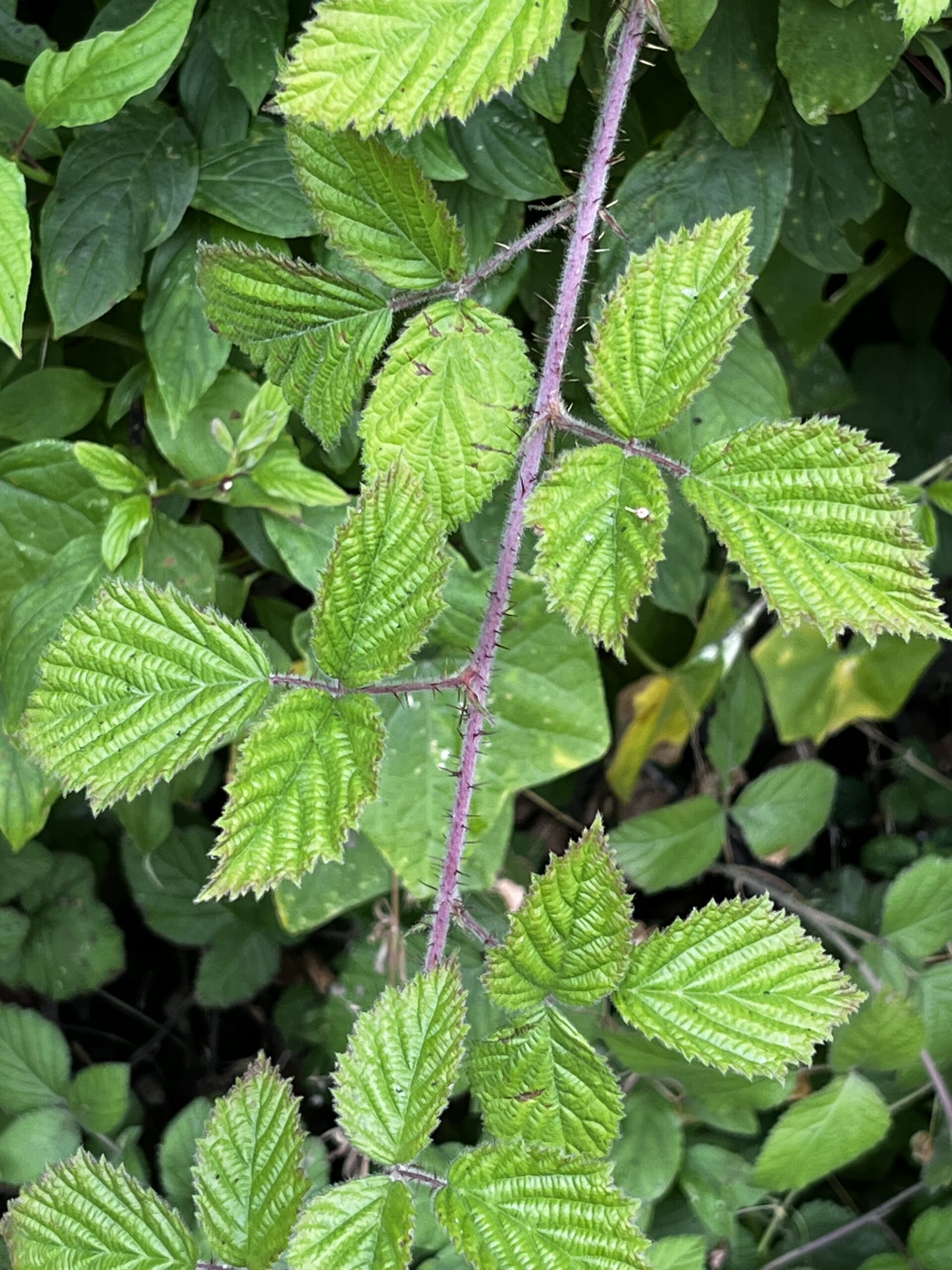
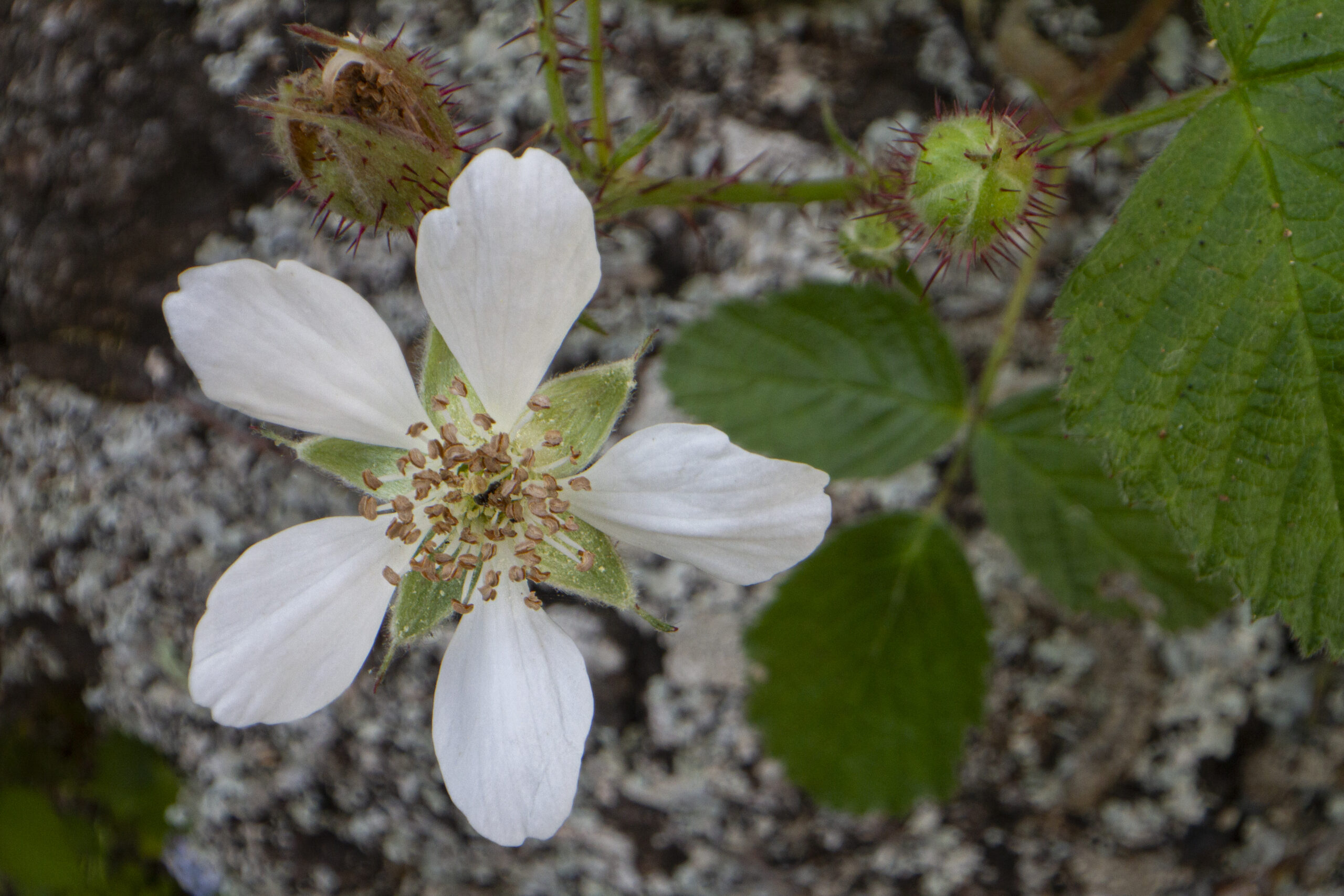
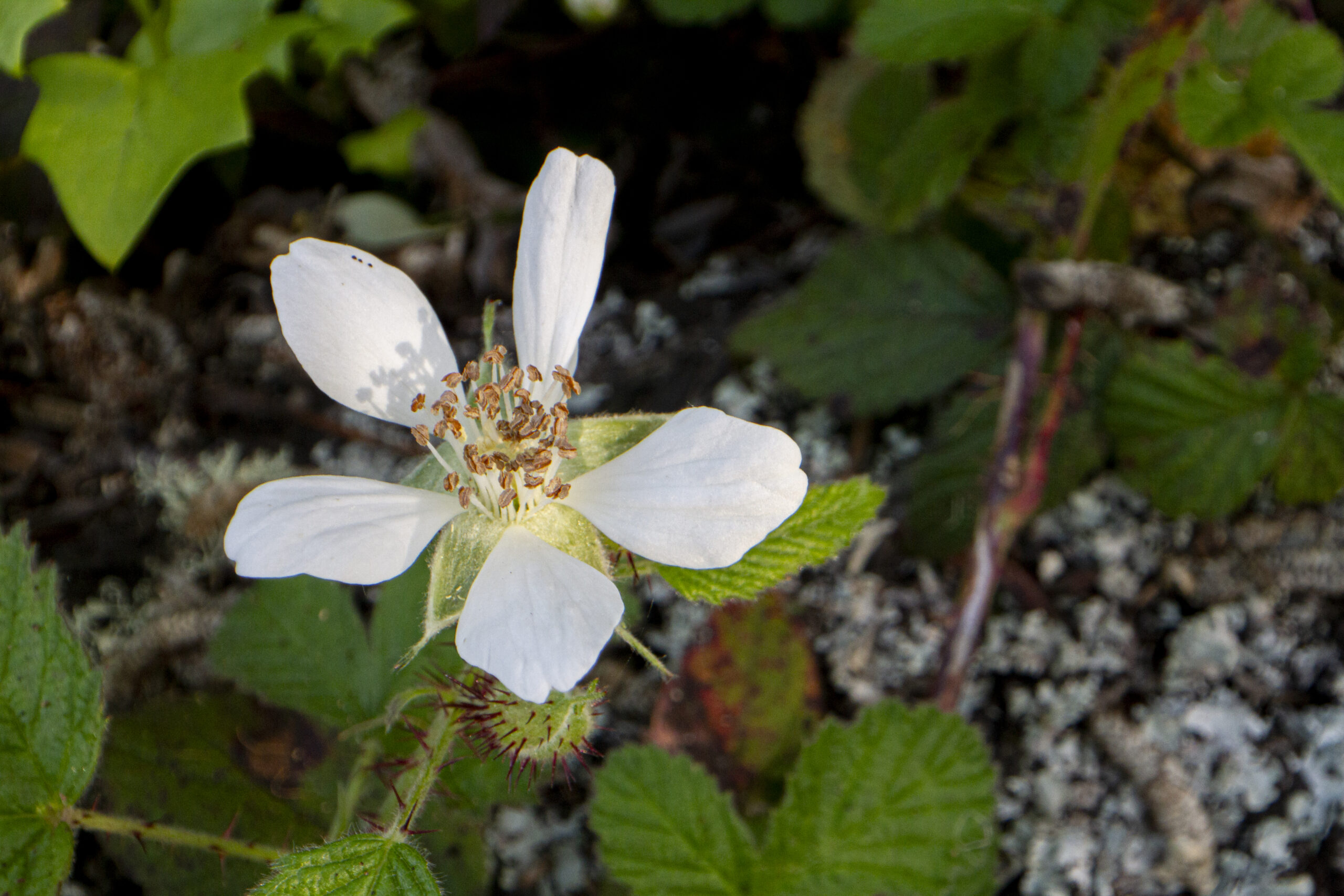
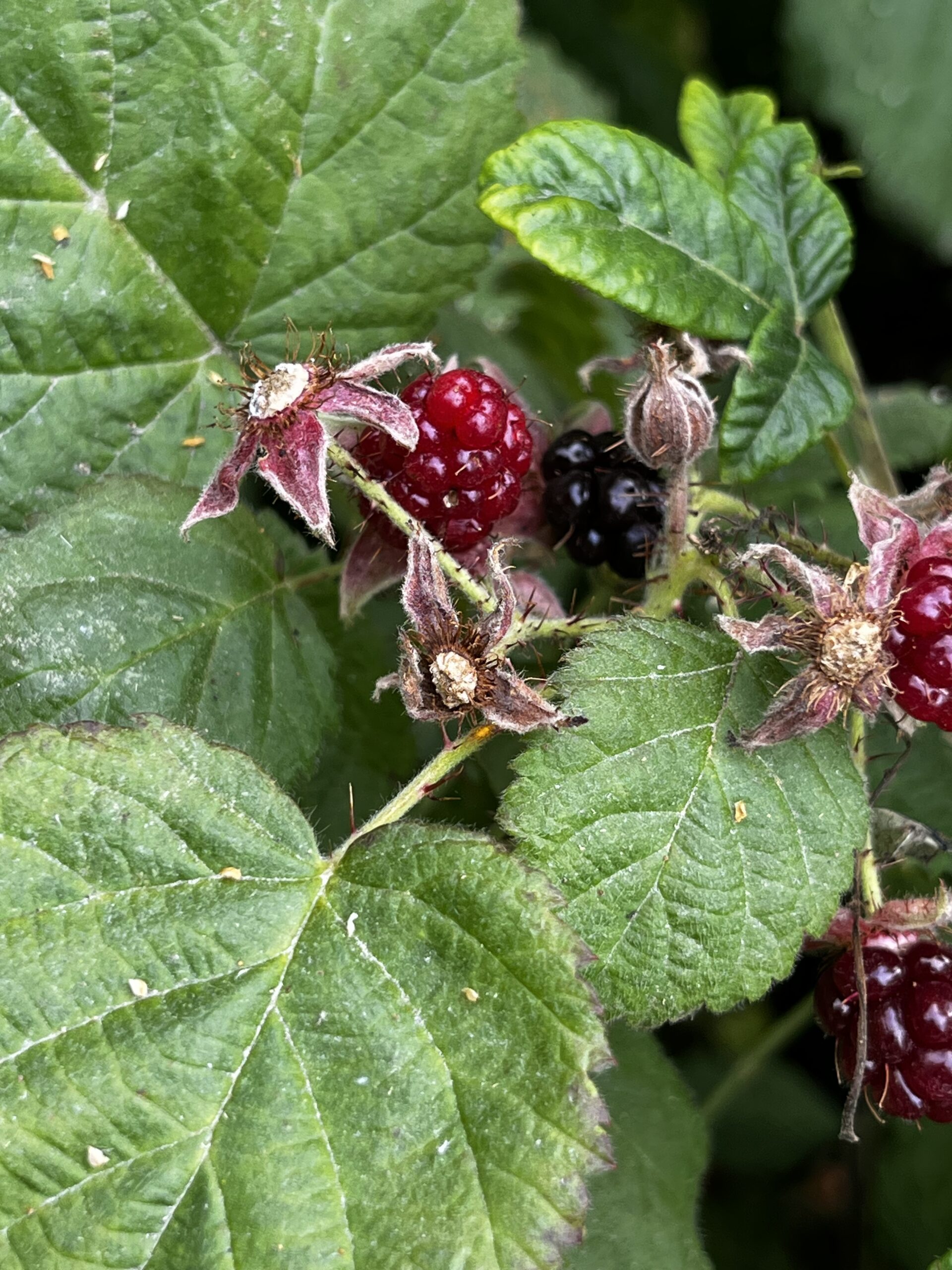
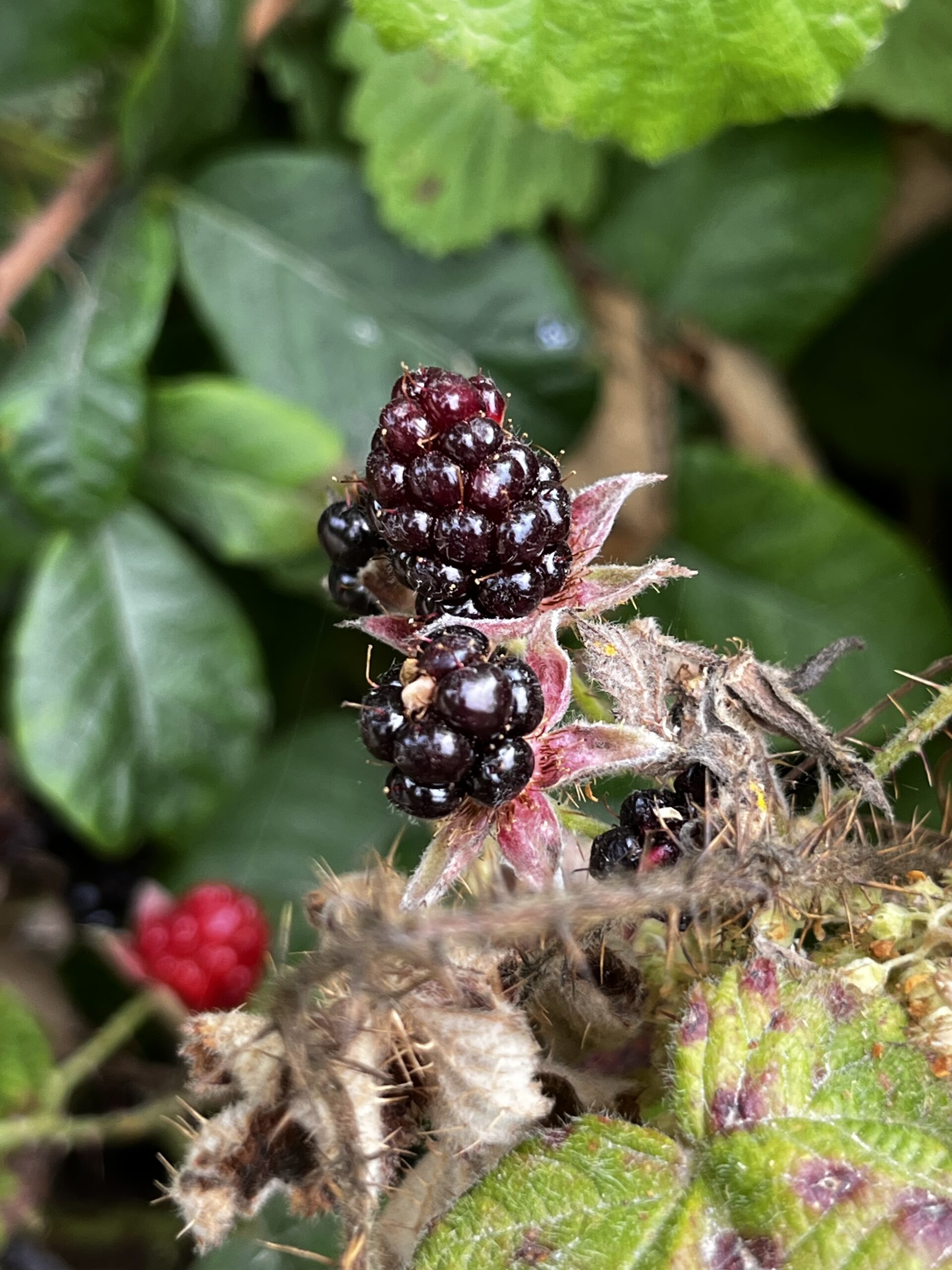
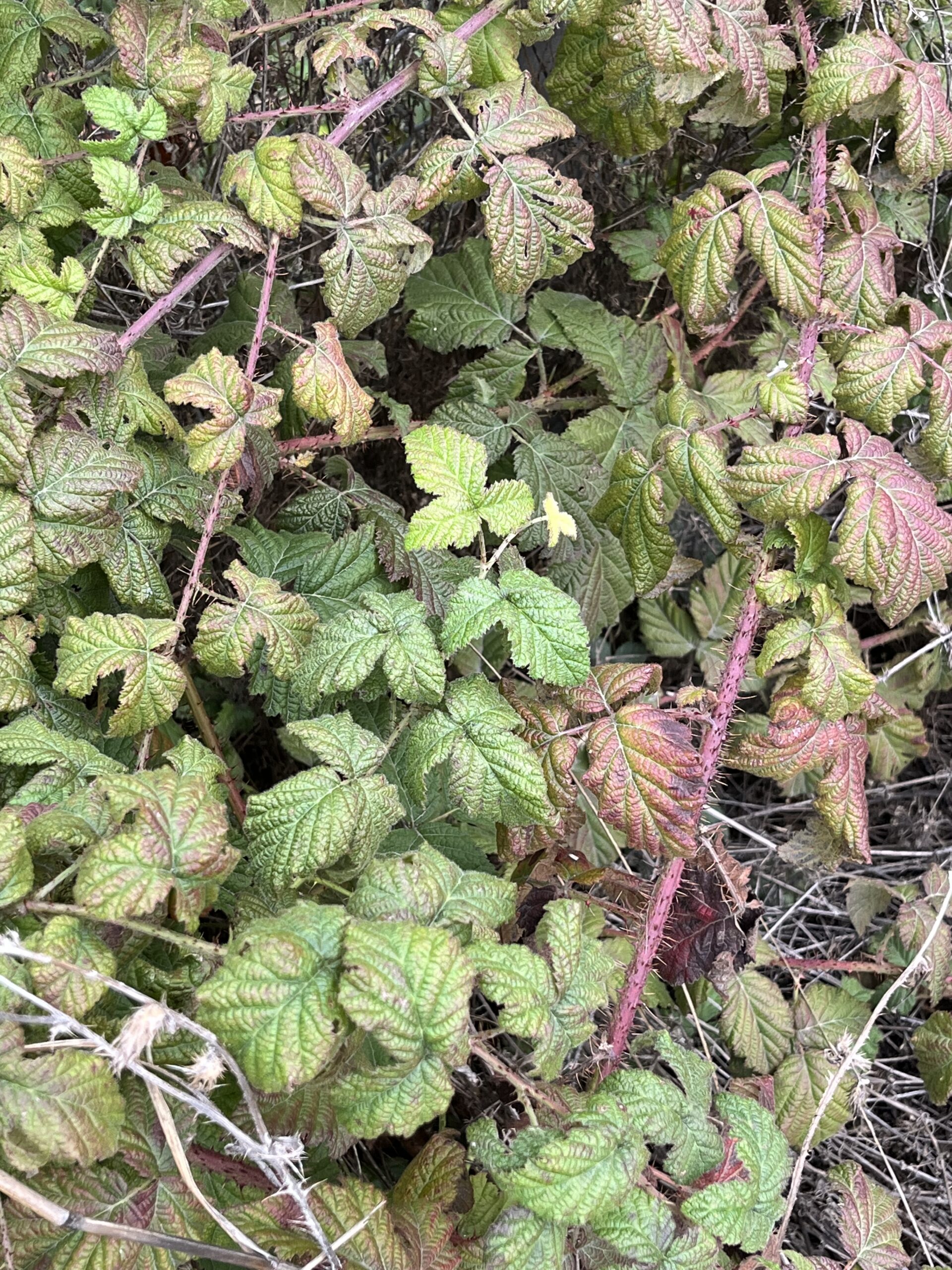
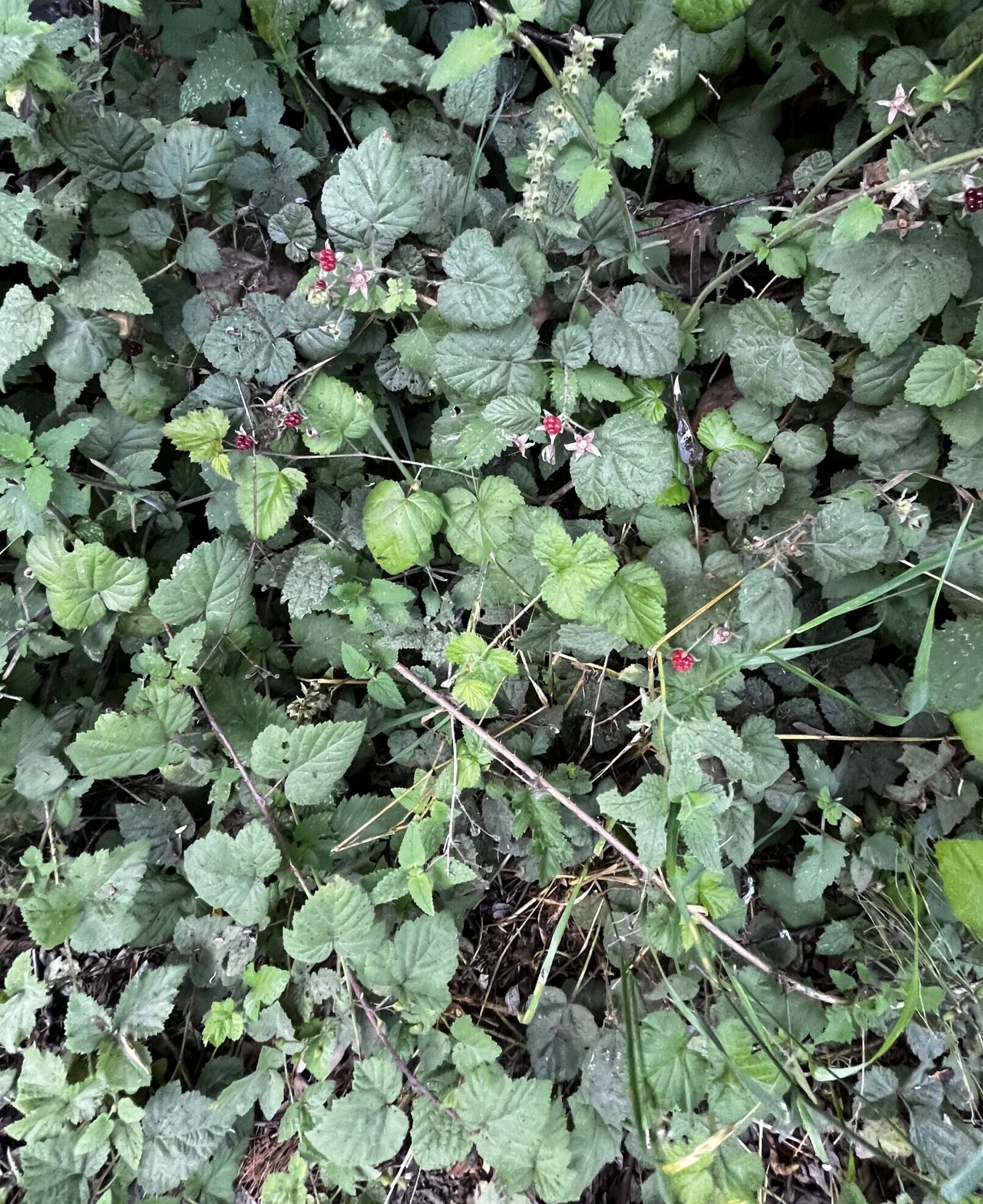
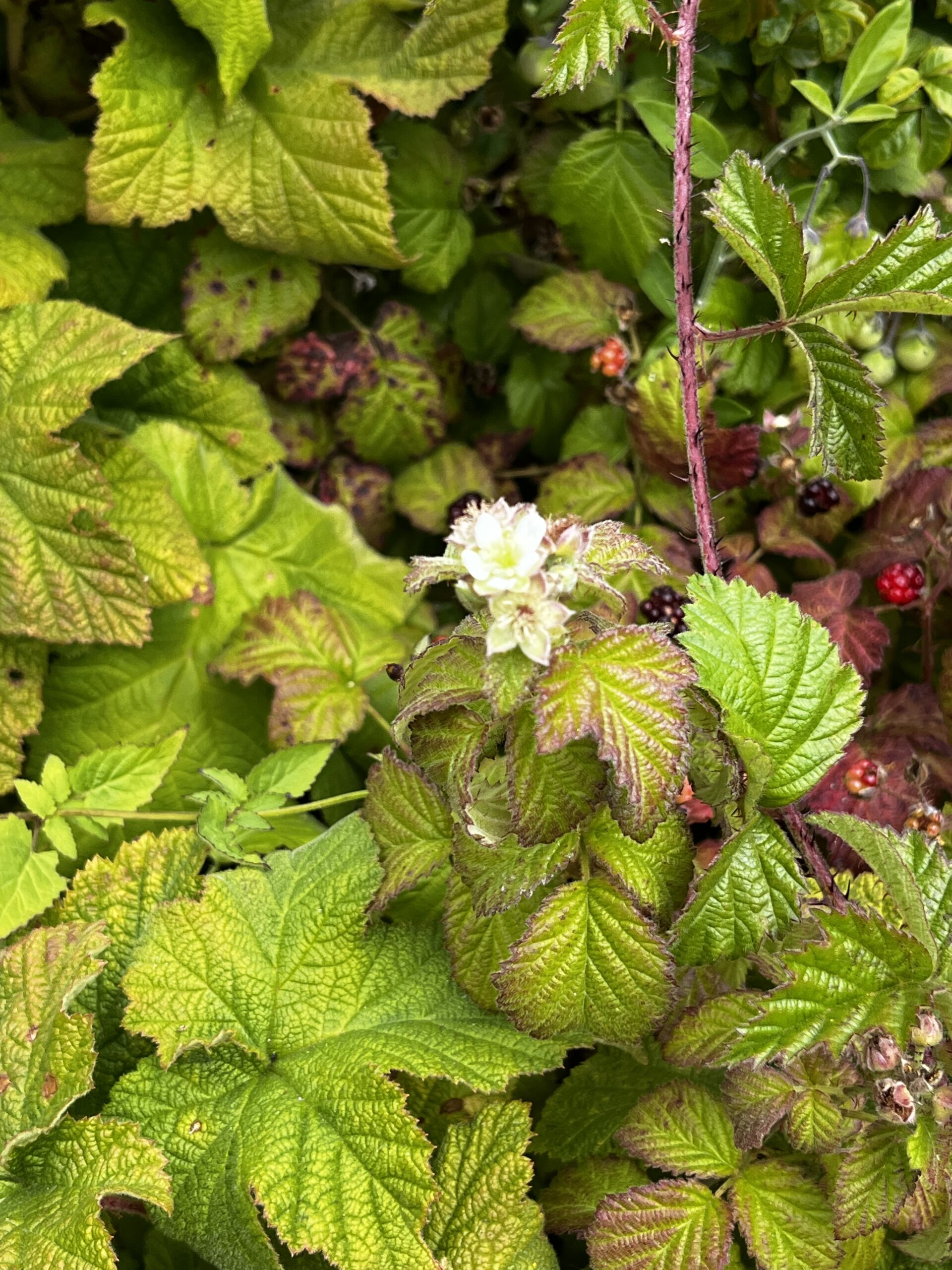
This shrubby vine forms an impenetrable thicket of branches. The stem is round, 1/2 inch or smaller, and densely covered with short, straight, thin, weak prickles. Leaves are simple or compound with 3 lobes or leaflets (rarely 5) and coarsely toothed. White flowers have 5 widely spaced petals.
Similar To
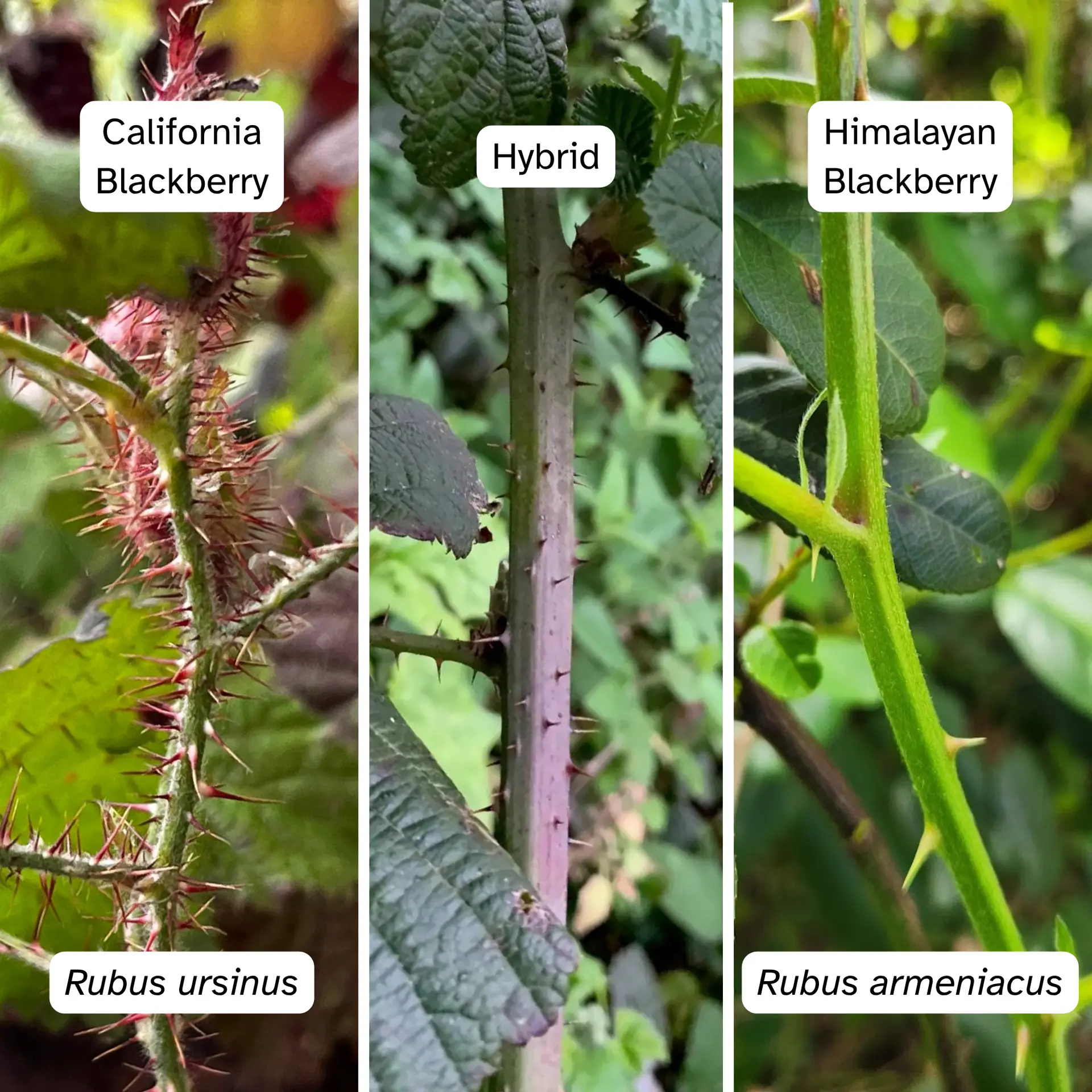
Himalayan Blackberry (Rubus armeniacus). Himalayan Blackberry has larger, more spread out prickles on a bigger, 5 sided angular stem and larger, white to pink flowers. California and Himalayan Blackberries can also hybridize (see comparison photo). Sometimes confused with Poison Oak (which has no prickles). (See also Thimbleberry which has a similar look; but also has no prickles.)
Height / Size
2 to 6 feet high, up to 6 feet wide.
Leaves
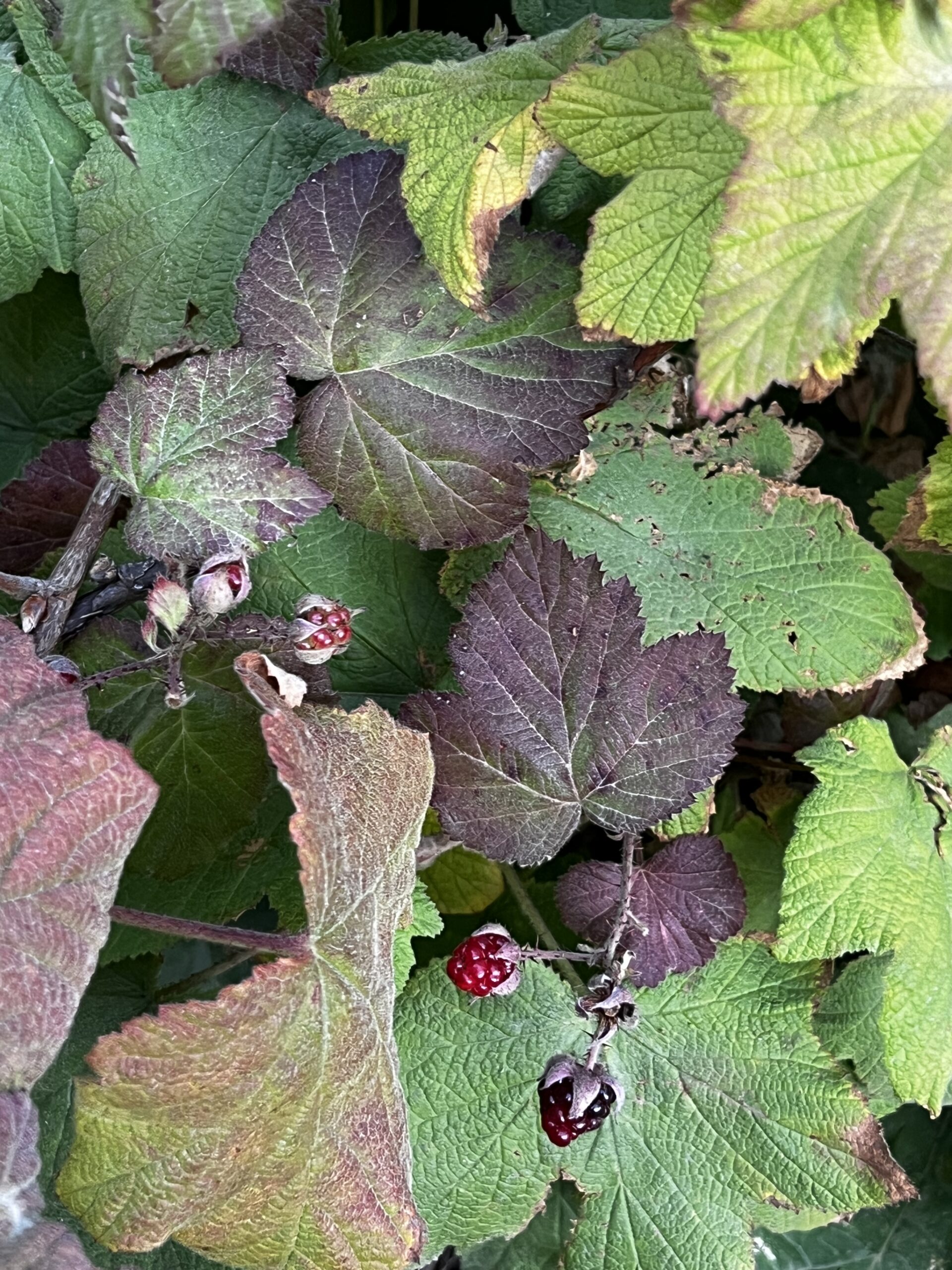
Simple or compound leaves with 3 leaflets are hairy, irregularly coarse toothed with indented veins on the top of the leaf and prickles spines along the midrib underneath. Deciduous.
Flower
Bright white flowers 1 inch across have 5 petals, many stamens on male flowers. Petals are noticeably separated with leafy, green sepals in between. (Himalayan Blackberry has white to pinkish flowers). Generally dioecious (male and female flowers on separate canes). It takes 2 years for new canes to produce flowers. Bloom Time: March to July.
Fruit / Seed
Fruit is an edible berry that turns from red to black with maturity between July to August. Seeds are mainly dispersed by birds.
Habitat
Found in riparian woodlands, moist areas, canyons, coastal, stream banks and disturbed areas.
Location / Range
Common, all trails in the park. Grows all along the coast and in central and mountain areas with enough moisture.
Lifespan
10 to 15 years or longer. Since plants have perennial roots and “clonally” produce new stems or canes, they could potentially live for decades under optimal conditions.
Fascinating / Fun Facts
Also known as Pacific Blackberry. Botanical name derives from the Latin for bramble, bear-like. A favorite of many species of birds and mammals for food and shelter.
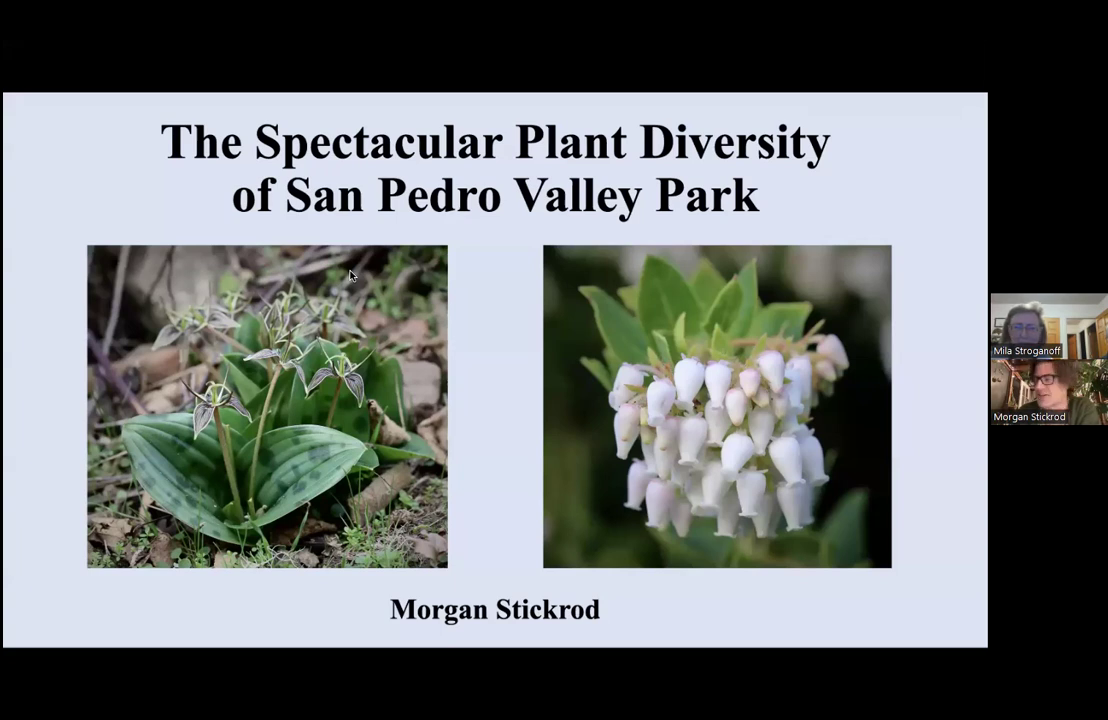
The Friends of San Pedro Valley Park welcomed Morgan Stickrod, a botanist and plant ecologist with over 10 years of experience doing research and field...