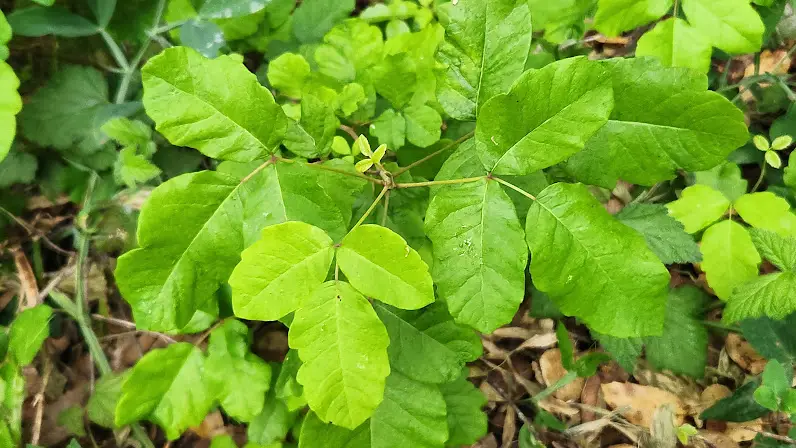
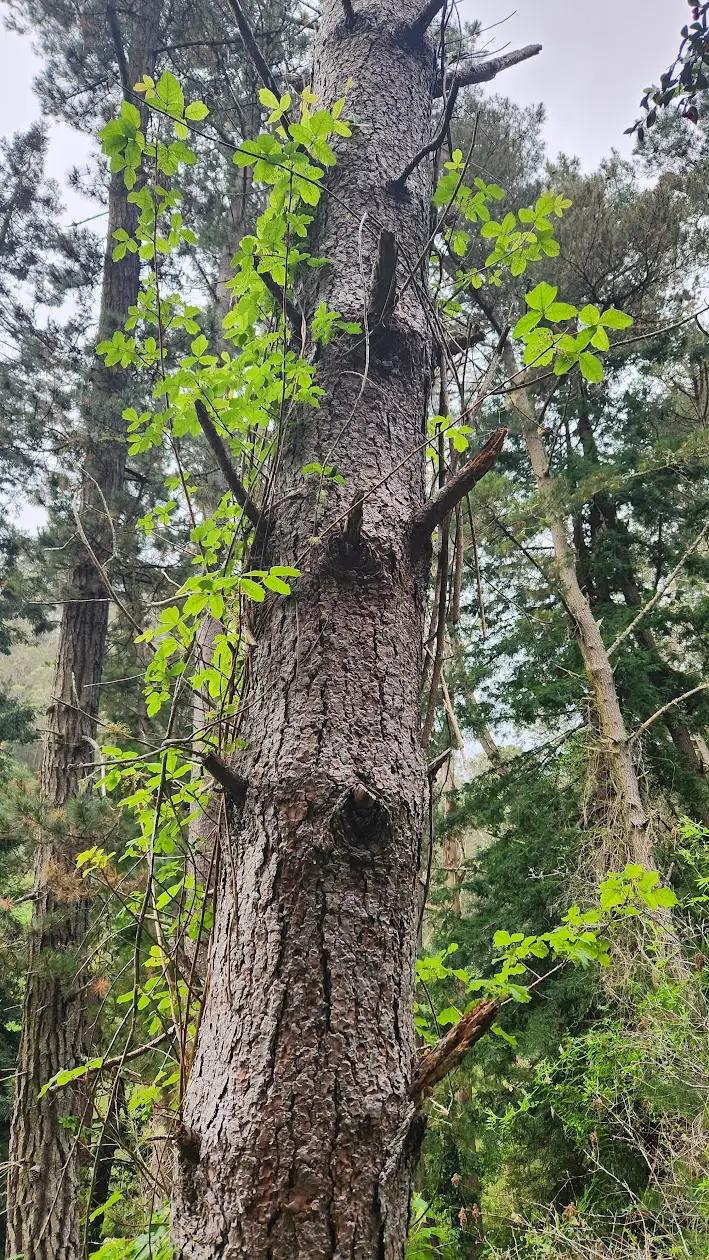
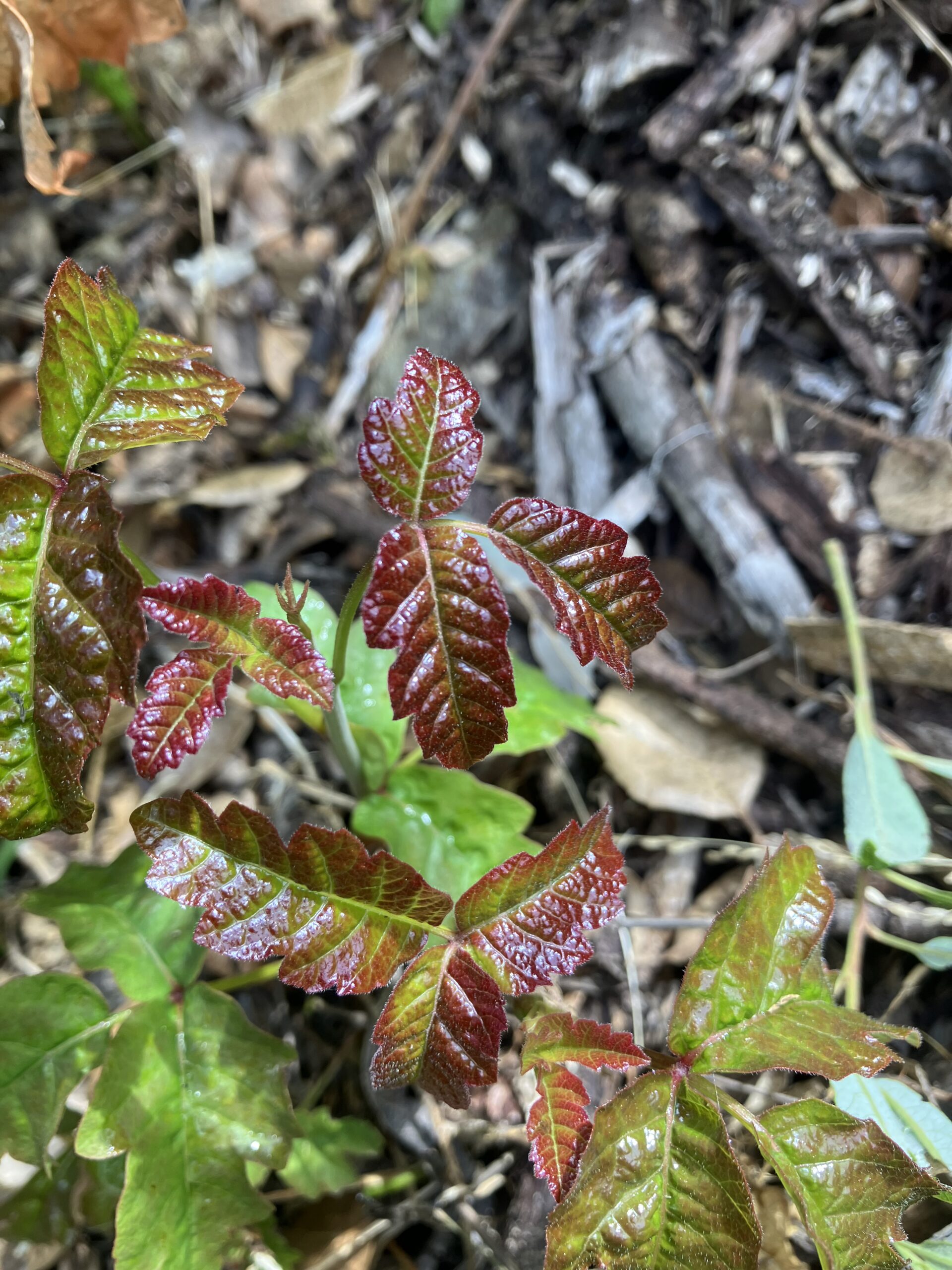
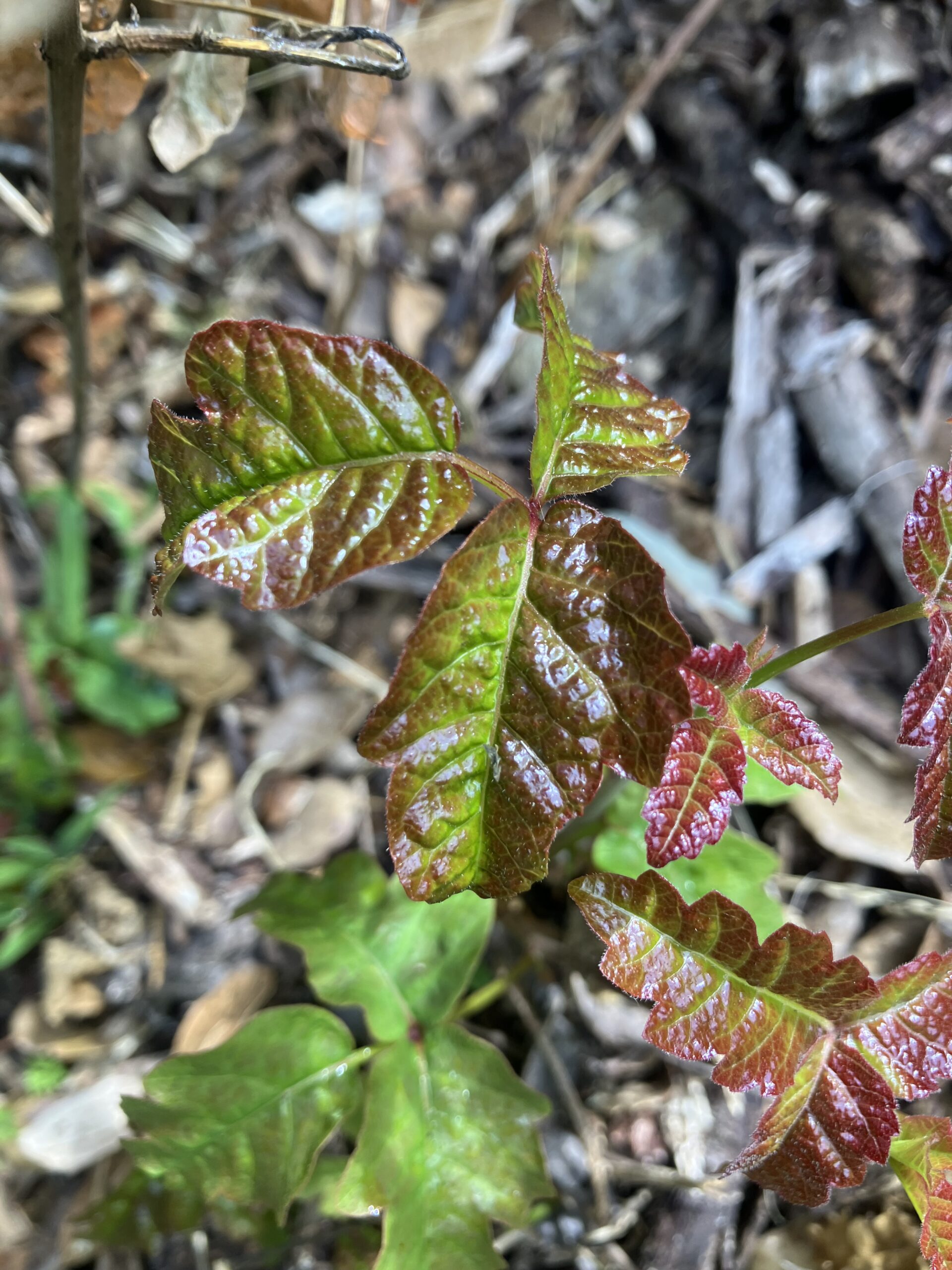
Bushy shrub or woody vine with distinctive, three lobed leaflets in clusters of three. Contact with the plant causes allergic reactions and skin rashes in some people. This includes inhaling the smoke of a burning plant. Winter deciduous leaving only bare stems with alternating branches.
Similar To
Often confused with oak species that look somewhat similar. But oaks have simple leaves and poison oak has compound leaves. Can also be confused with blackberry. Blackberry has prickles on the stems. Poison oak does not.
Height / Size
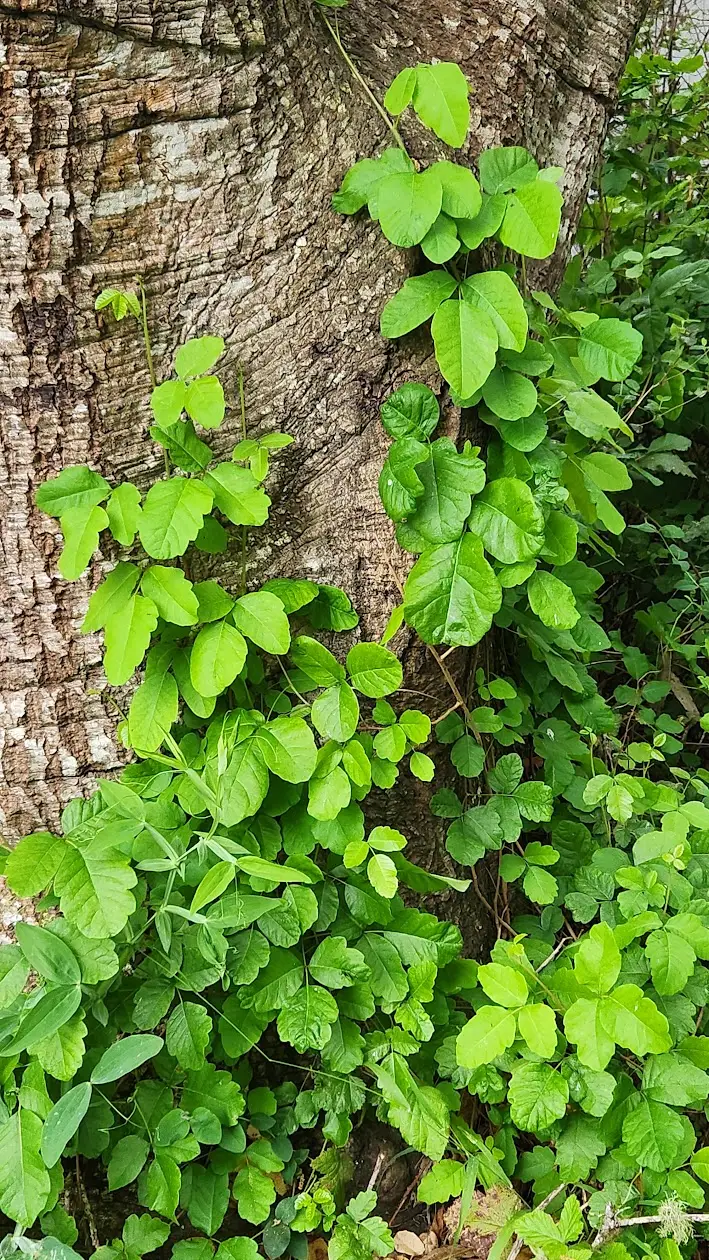
Up to 13 feet tall and 13 feet wide. Up to 100 feet long when growing like a vine, often up trees.
Leaves
Leaves are compound with three leaflets. Leaflet margins can be quite variable, but can often have lobes or be relatively undulating (wavy). The upper leaf surface often takes on a glossy/leathery appearance, particularly when young, gradually fading to a more dull appearance.
Flower
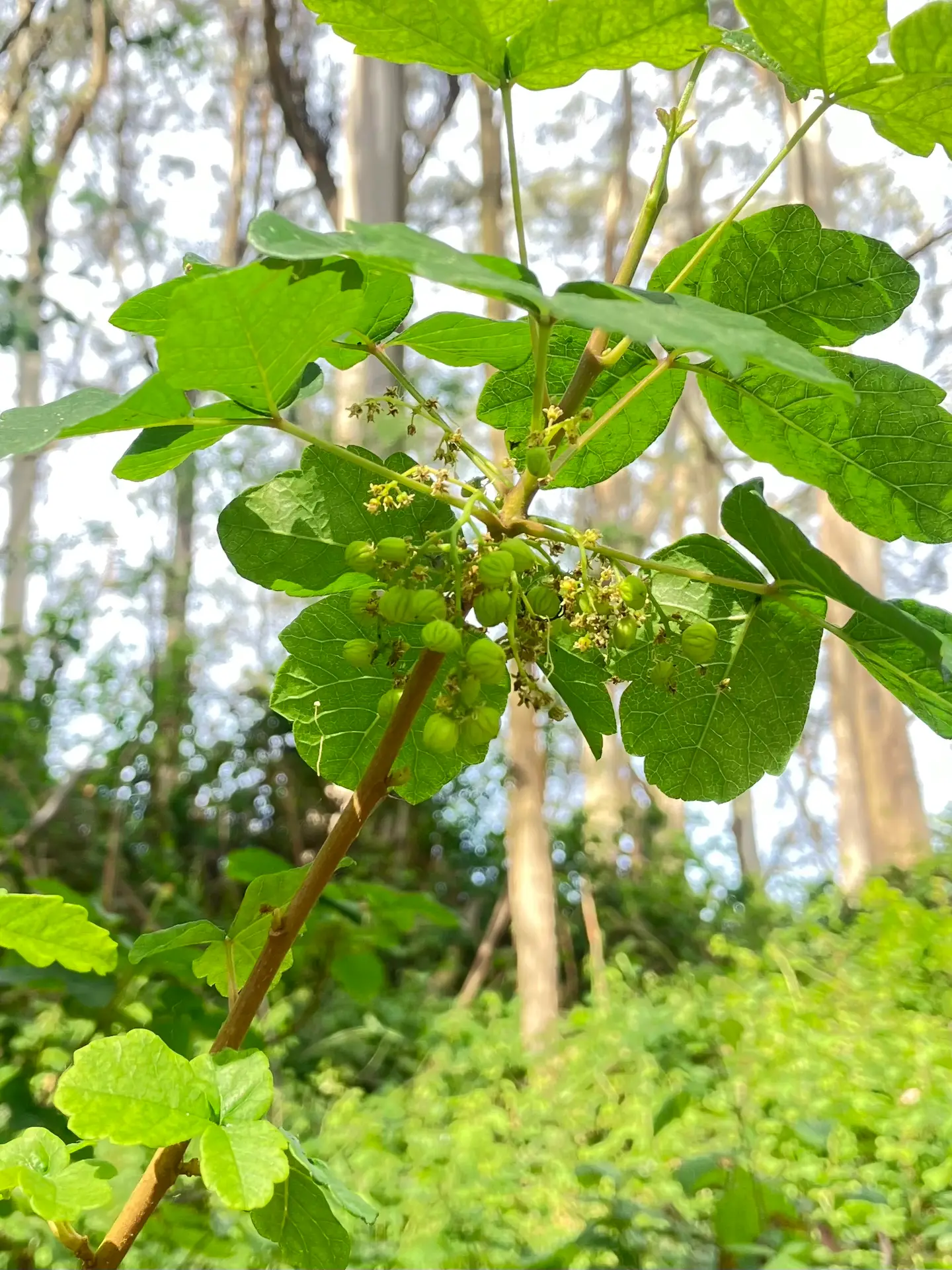
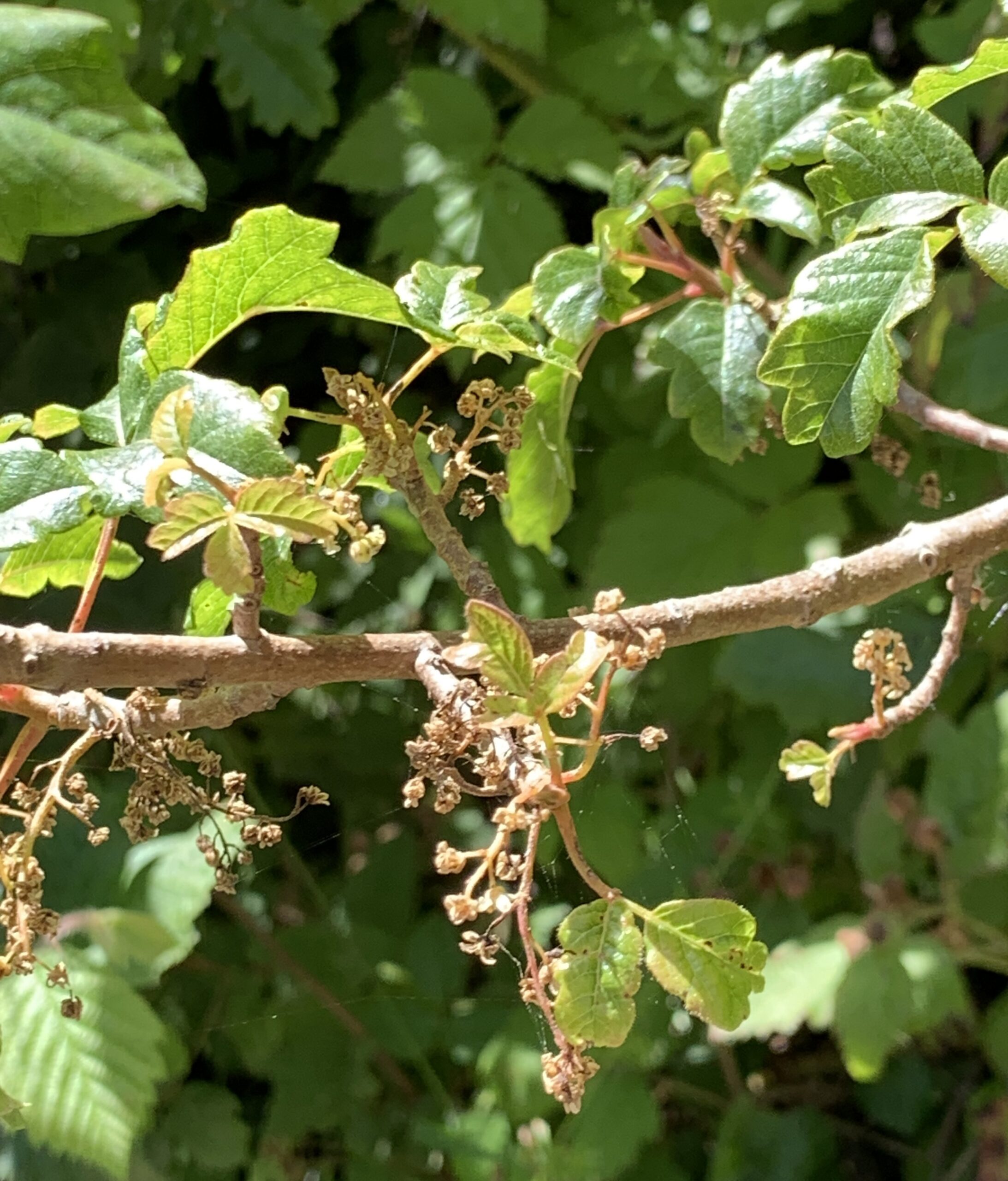
Flowers are small, creamy green with five petals. Poison oak actually has male and female flowers on separate plants (dioecioius), but the flowers are very similar in appearance and hard to tell apart. Bloom Time: March – June.
Fruit / Seed
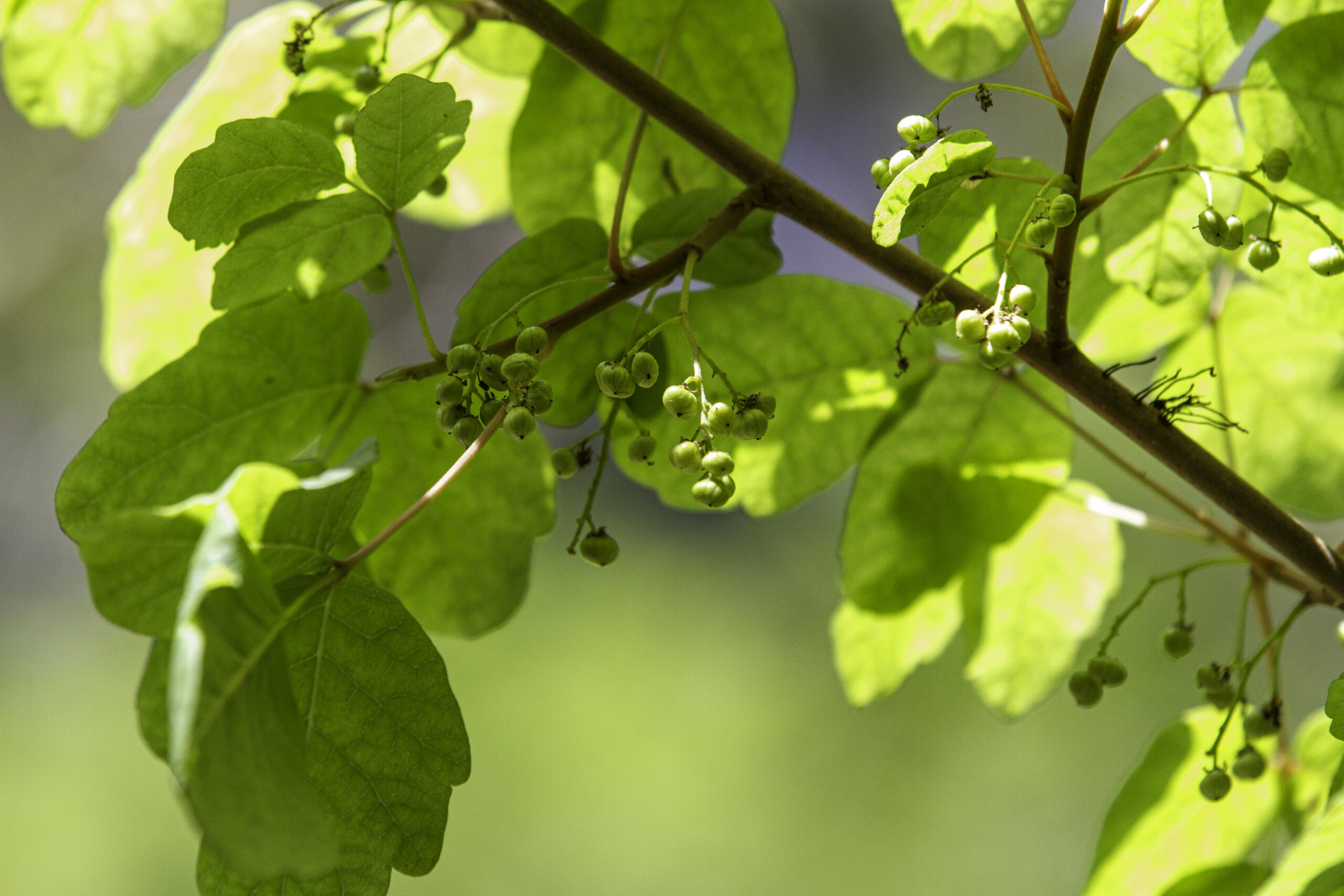
Produces small white clusters of ribbed berries.
Habitat
Coastal Scrub, Chaparral, Woodland, Riparian, Valley Grassland, Yellow Pine Forest
Location / Range
Found on all trails. Grows throughout California <6500 feet.
Lifespan
2 to 30+ years
Fascinating / Fun Facts
A common helpful rhyme used to warn and help identify the plant is “Leaves of three, let it be.” Every part of the plant except the pollen contains urushiol (pronounced yer-OO-shee-all) which is the compound that causes skin irritation. The Forest Service says that poison oak is the most widespread shrub in California.
The Friends of San Pedro Valley Park welcomed Morgan Stickrod, a botanist and plant ecologist with over 10 years of experience doing research and field...