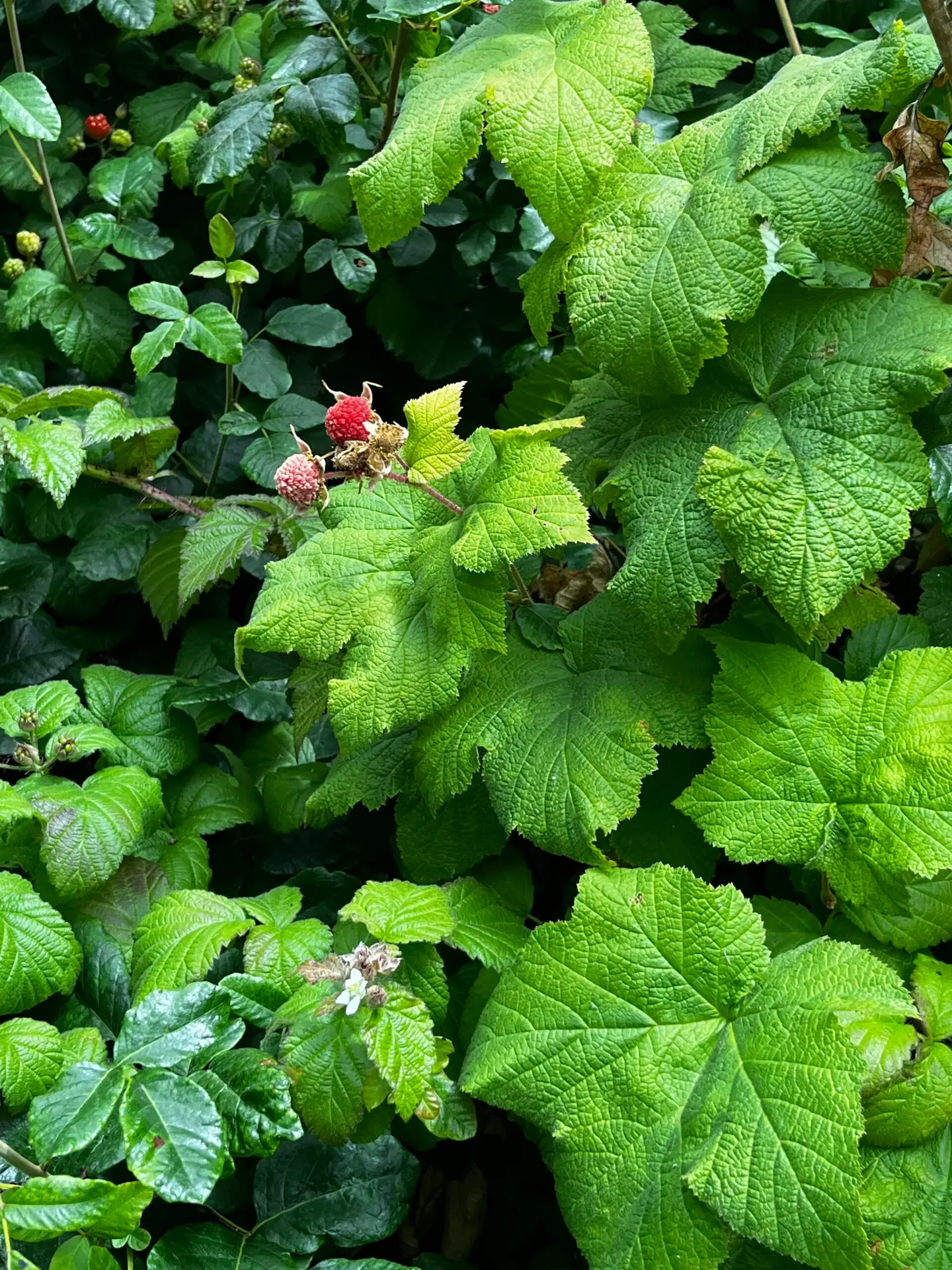
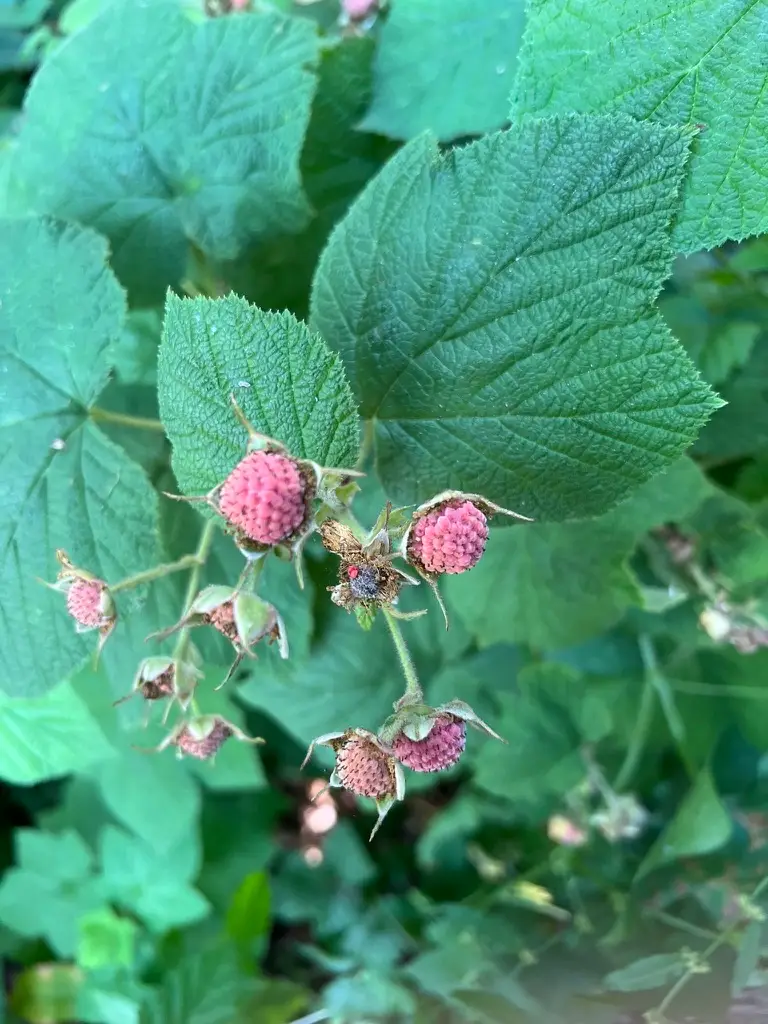
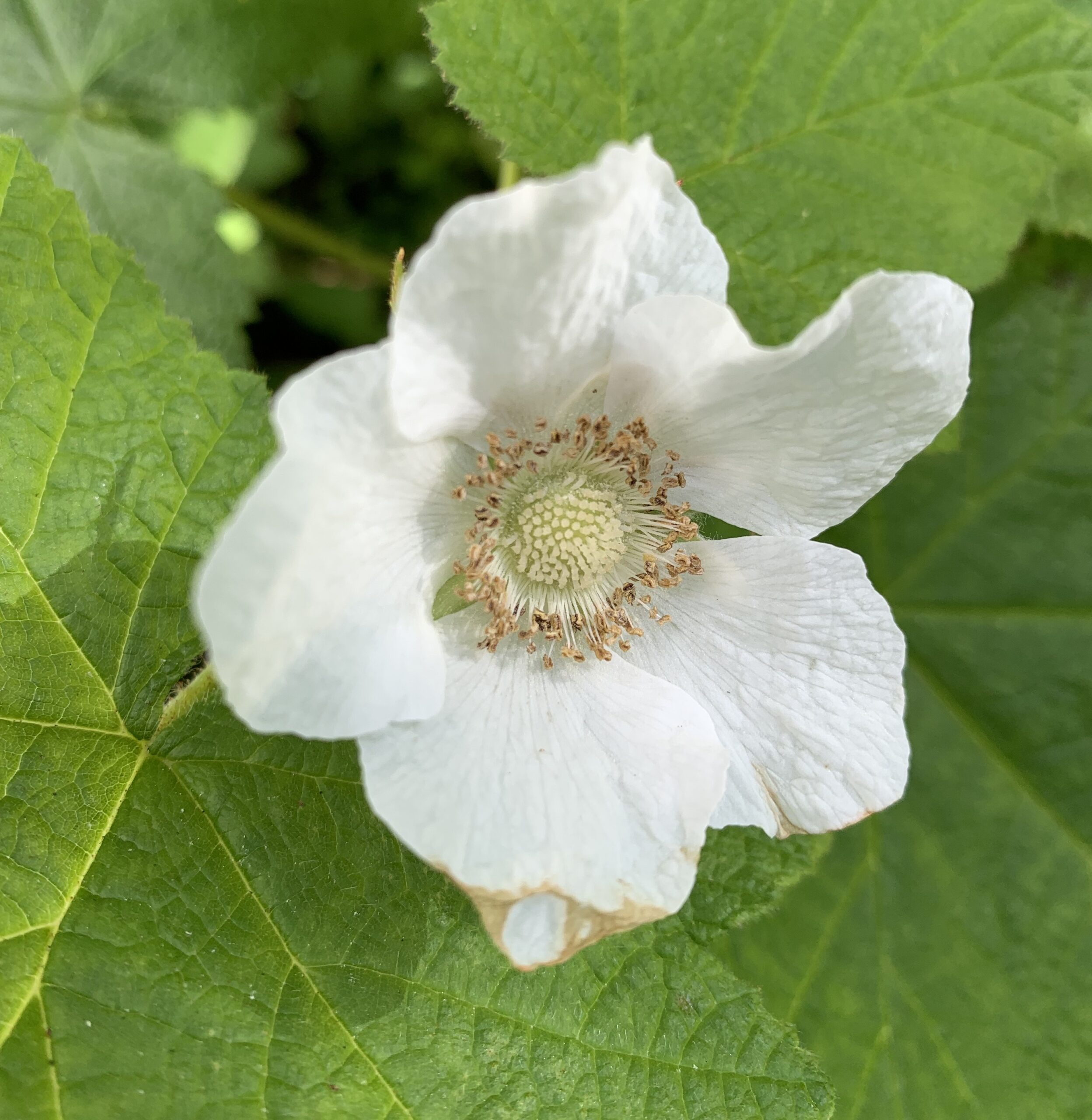
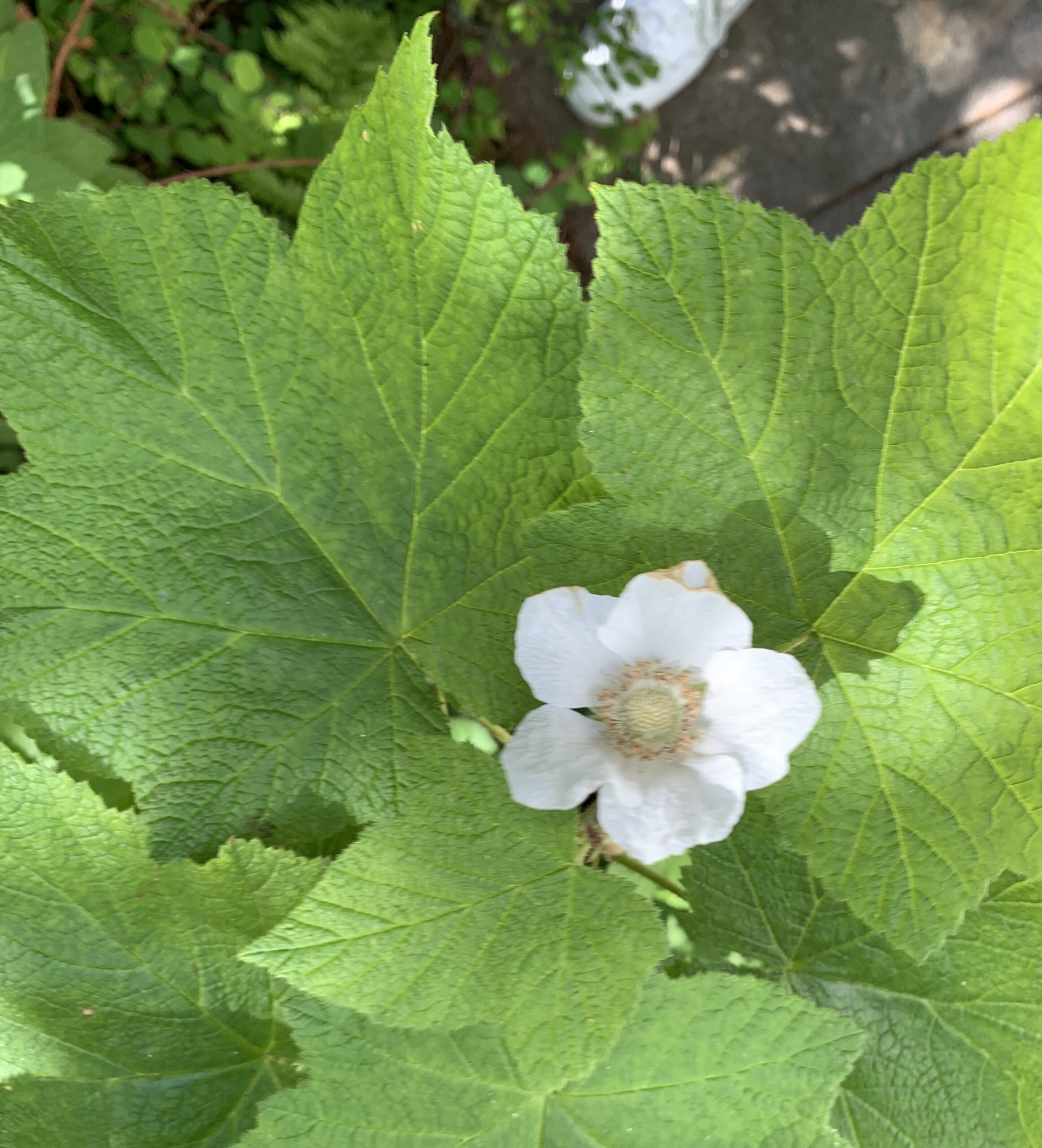
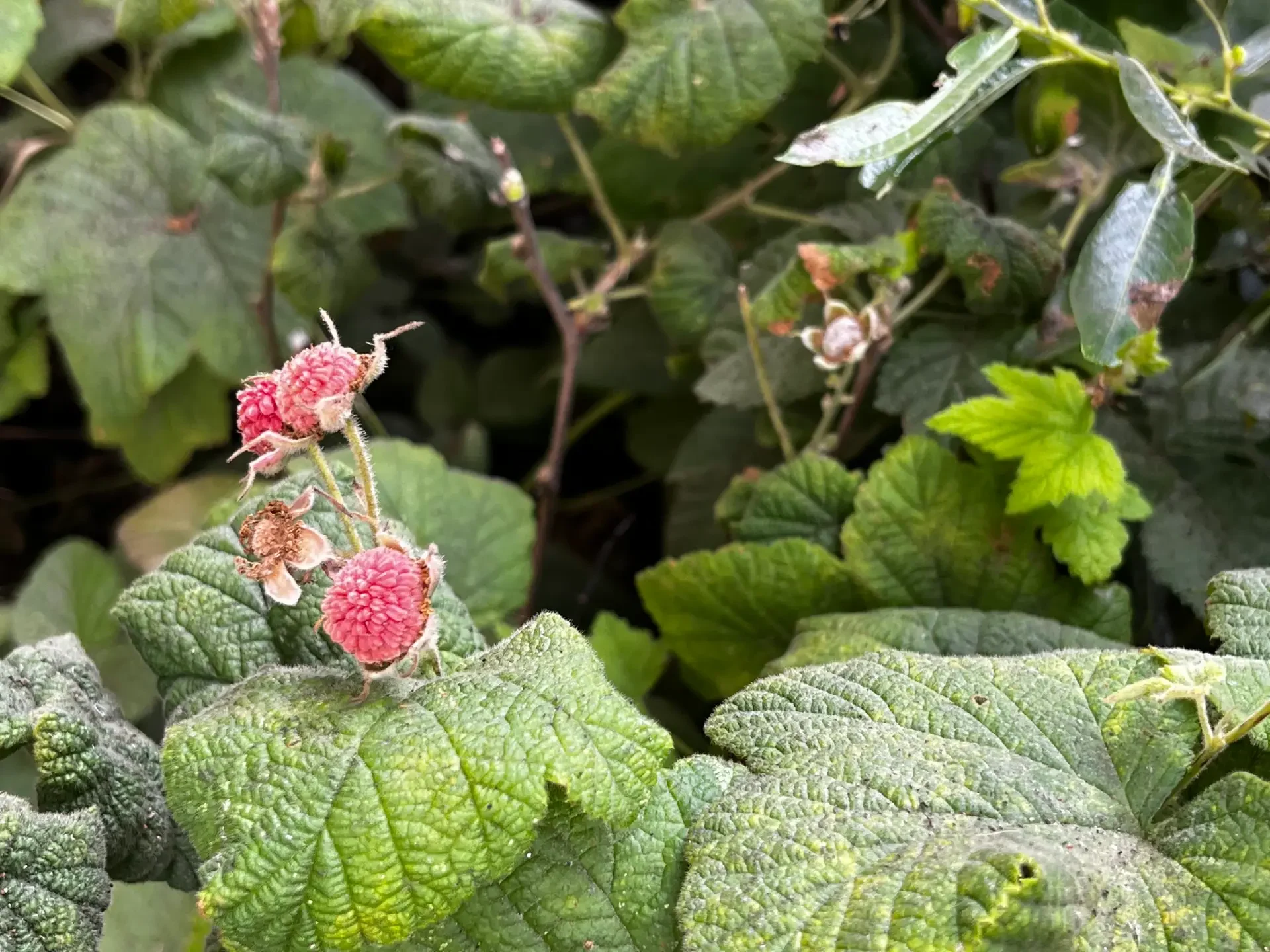
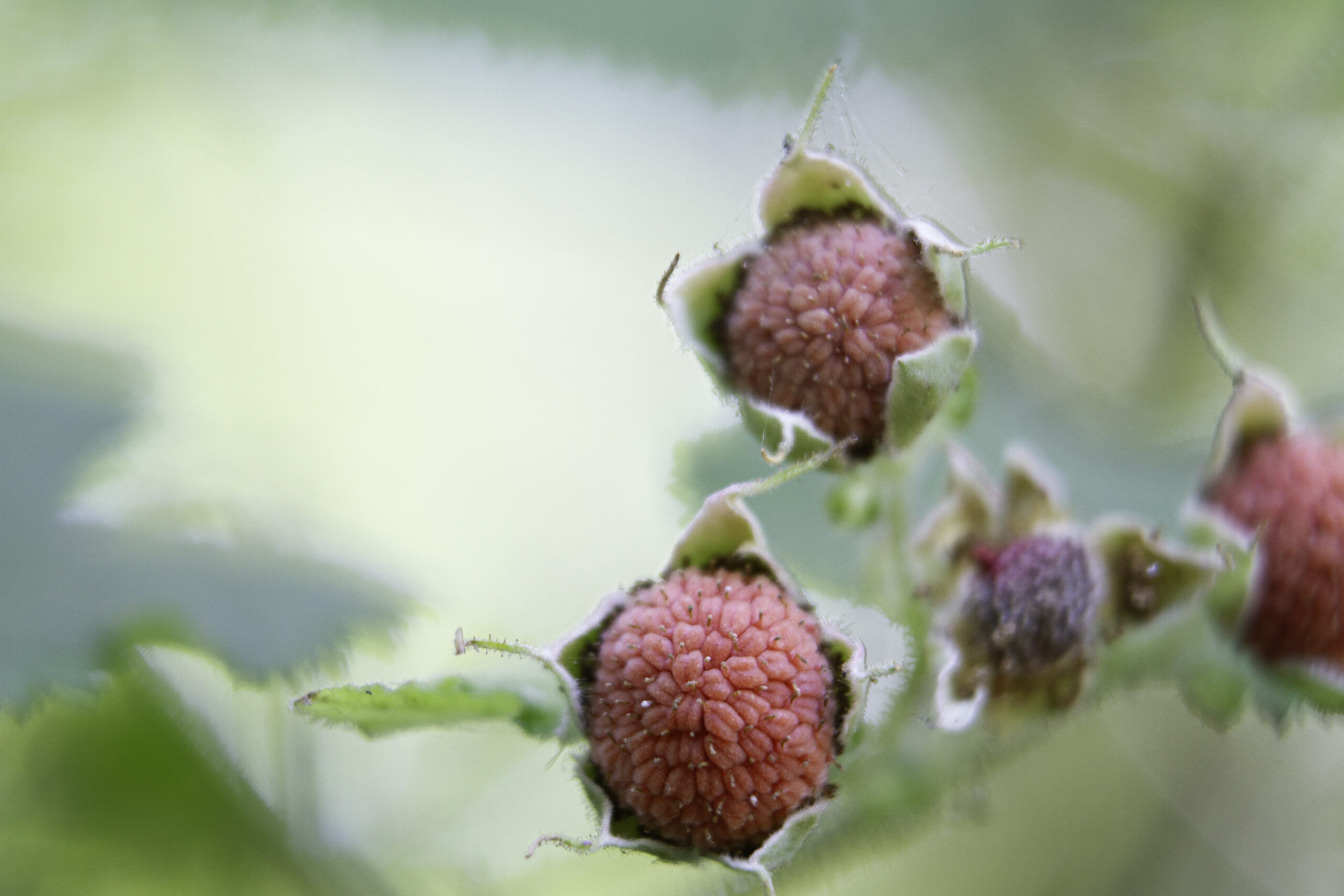
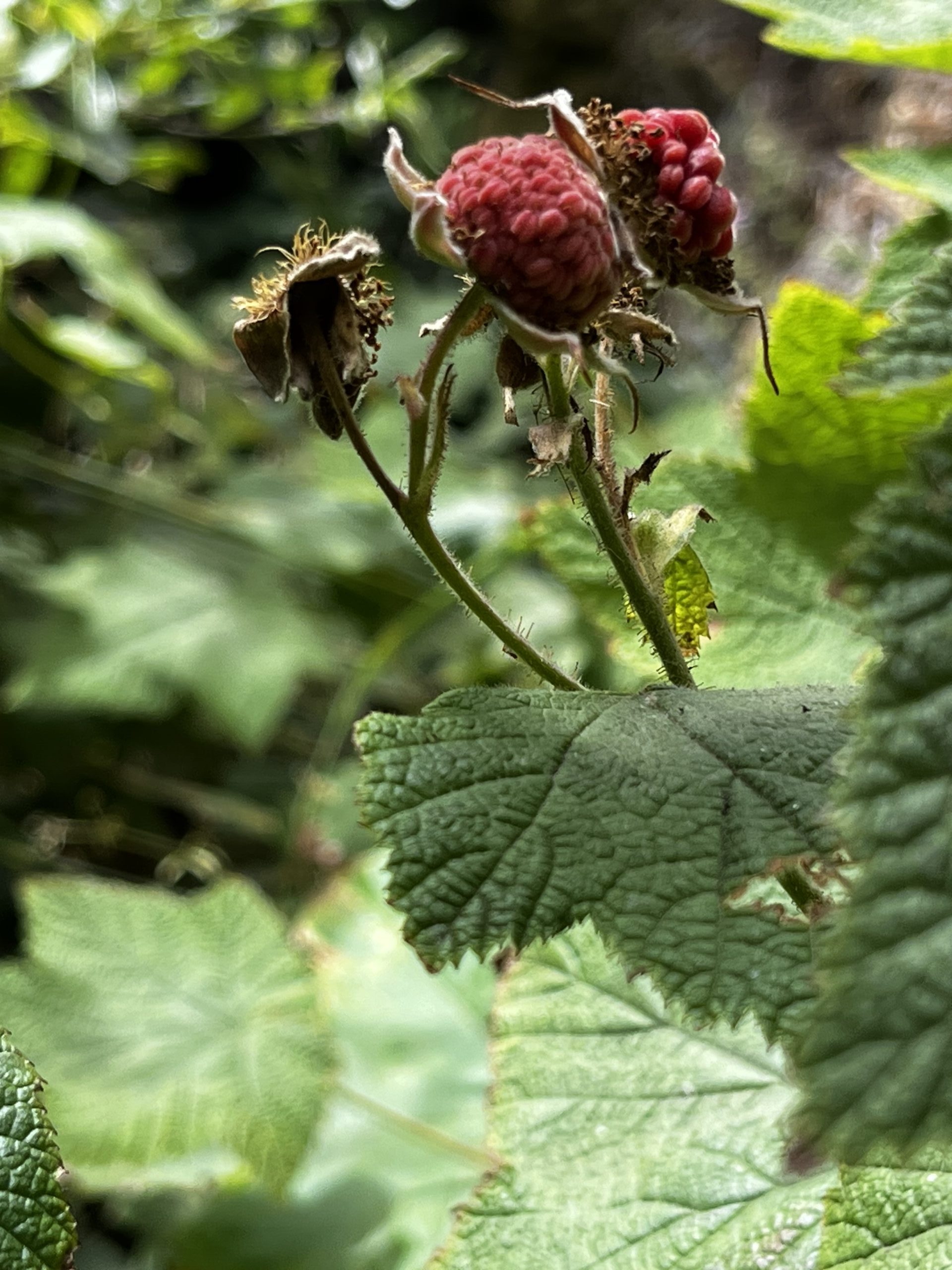
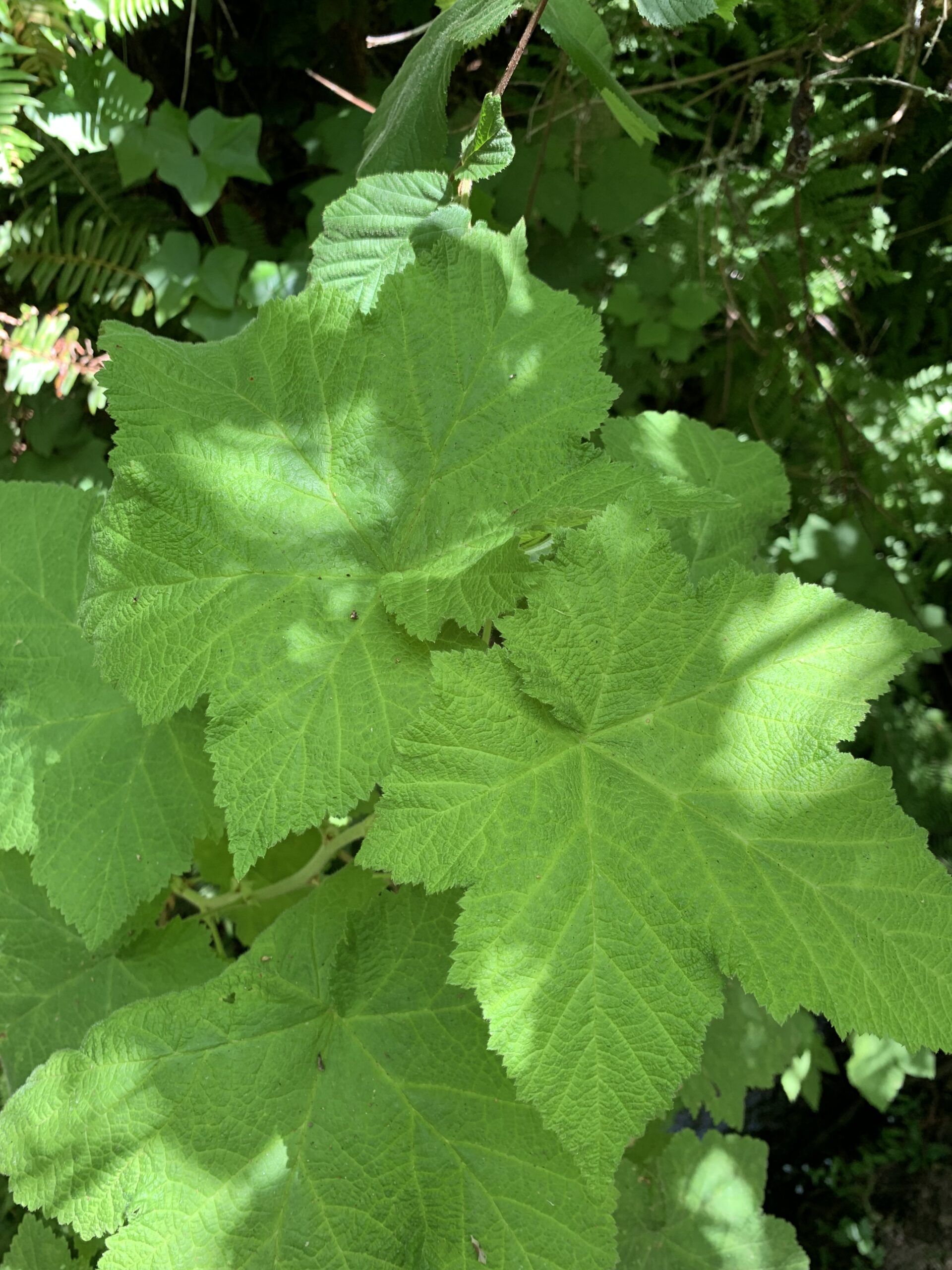
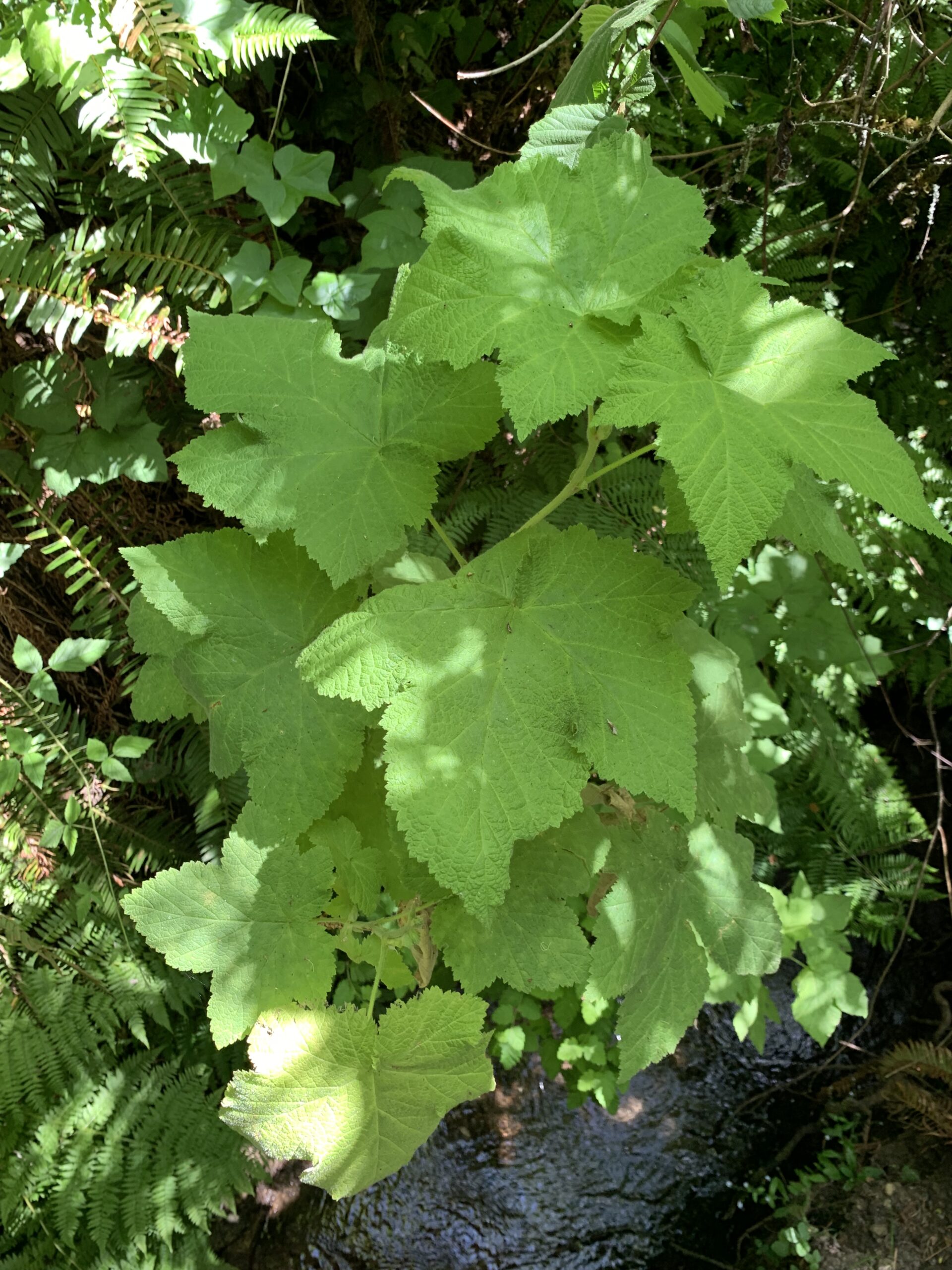
Thickets of erect canes can create a dense stand that is topped by large, maple-like leaves. The whole plant has a soft look. The stems and leaves have no prickles or thorns but are covered with a light fuzz. In spring, substantial white flowers bloom above the leaves. In summer, thimble-shape berries turn from light to dark red and have a similar soft or dull appearance.
Similar To
California Blackberry and Himalayan Blackberry. Looks similar to blackberry plants. Thimbleberry is one of two upright/erect shrubs found in the county, the other being Salmonberry (Rubus spectabilis), which typically occurs in closer proximity to the coast.
Height / Size
2 to 8 feet tall.
Leaves
Palmately 5-veined leaves; fine to occasionally densely-hairy on the abaxial leaf surface (underside).
Flower
White flowers with five petals and numerous stamens bloom above the leaves. Flowers are 1 to 2 inches across. Bloom Time: March to May
Fruit / Seed
A dull, muted or matte, light to bold red, edible fruit that resembles a raspberry ripens in summer from June to July.
Habitat
Partly-shaded forest openings and on moist woodland canyons or slopes.
Location / Range
Nearly all trails; common. Hazelnut Trail. East end of Weiler Ranch Trail. Ranges beyond California to southern Alaska, Ontario, New Mexico, northern Mexico.
Lifespan
Perennial.
Fascinating / Fun Facts
Each thimbleberry is a fragile cluster of small individual berries (drupelets) and must be carefully picked from the stem. If picked off in one piece, you’ll see a hollow in the middle of the berry…like a thimble. Berries are too delicate for commercial use and are used more as decorative native plants.
Ethnobotany
Numerous ethnobotanical applications by the indigenous groups inhabiting regions where thimbleberry occurs. The berries are eaten raw, but are also easily dried for long-term storage or usage in other culinary applications. Similarly, young shoots can be eaten raw or also cooked as a (reportedly sweet) vegetable.
The Friends of San Pedro Valley Park welcomed Morgan Stickrod, a botanist and plant ecologist with over 10 years of experience doing research and field...