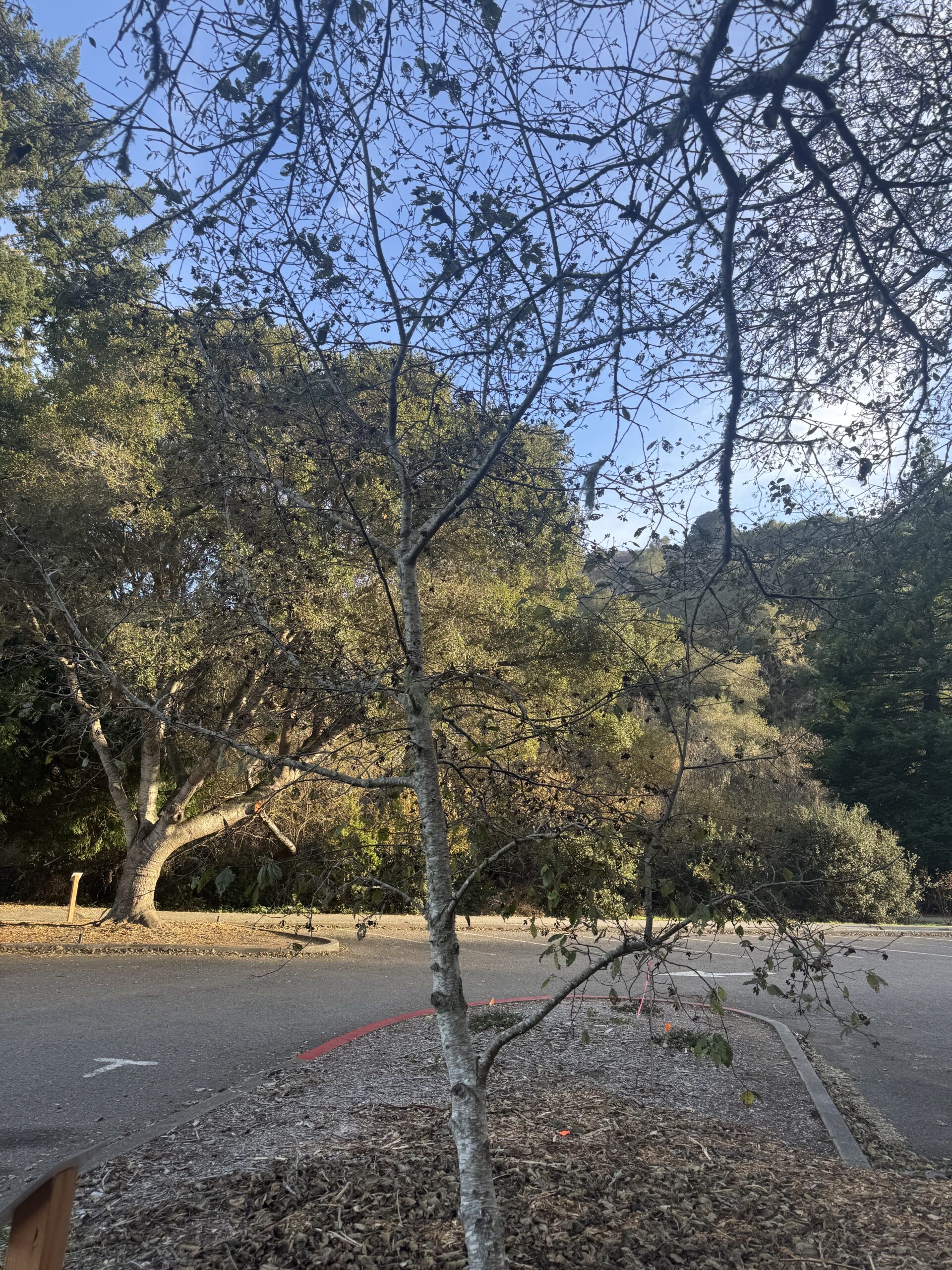
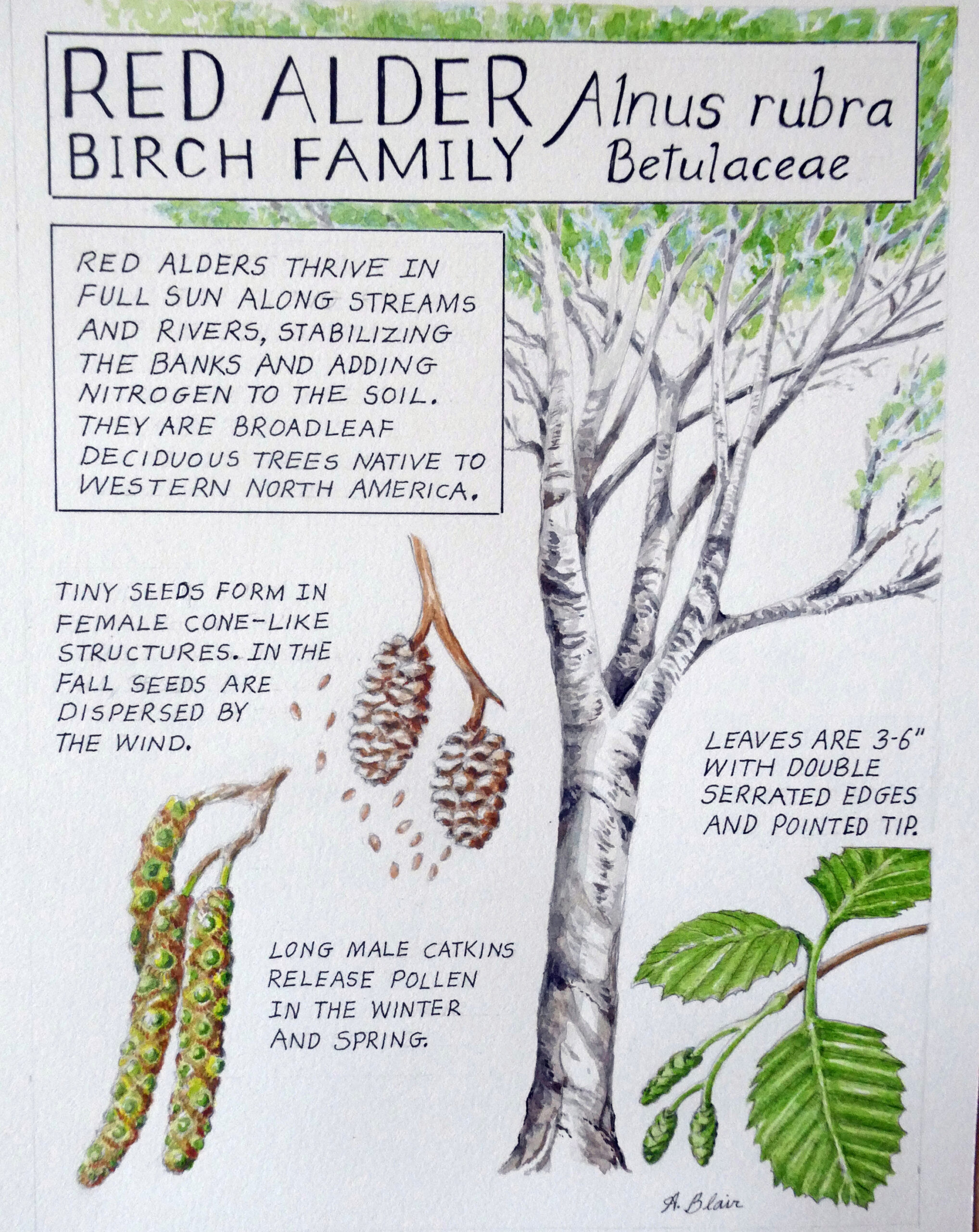
Broadleaf deciduous tree that thrives in full sun along steams and rivers. Red alder has simple, alternate leaves and distinctive catkins in the spring.
Height / Size
65 to 95 feet tall.
Leaves or Needles
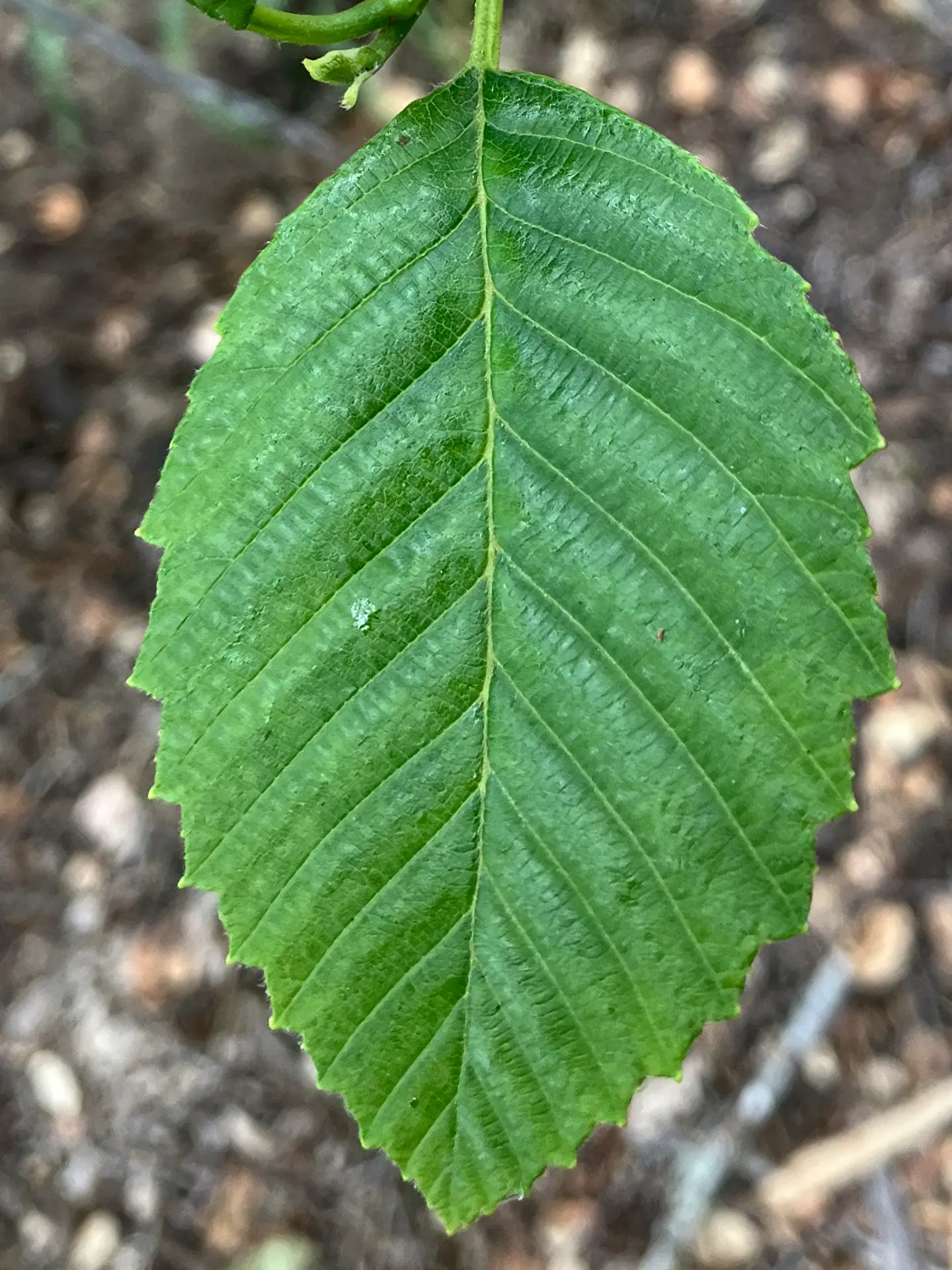
Leaves are simple, alternate, 3 to 6 inches with double serrated, rolled edges and pointed tips. Leaves are wide at the base and come to a point at the tip. Leaf edges are toothed with strong veins going to each tooth.
Bark / Trunk
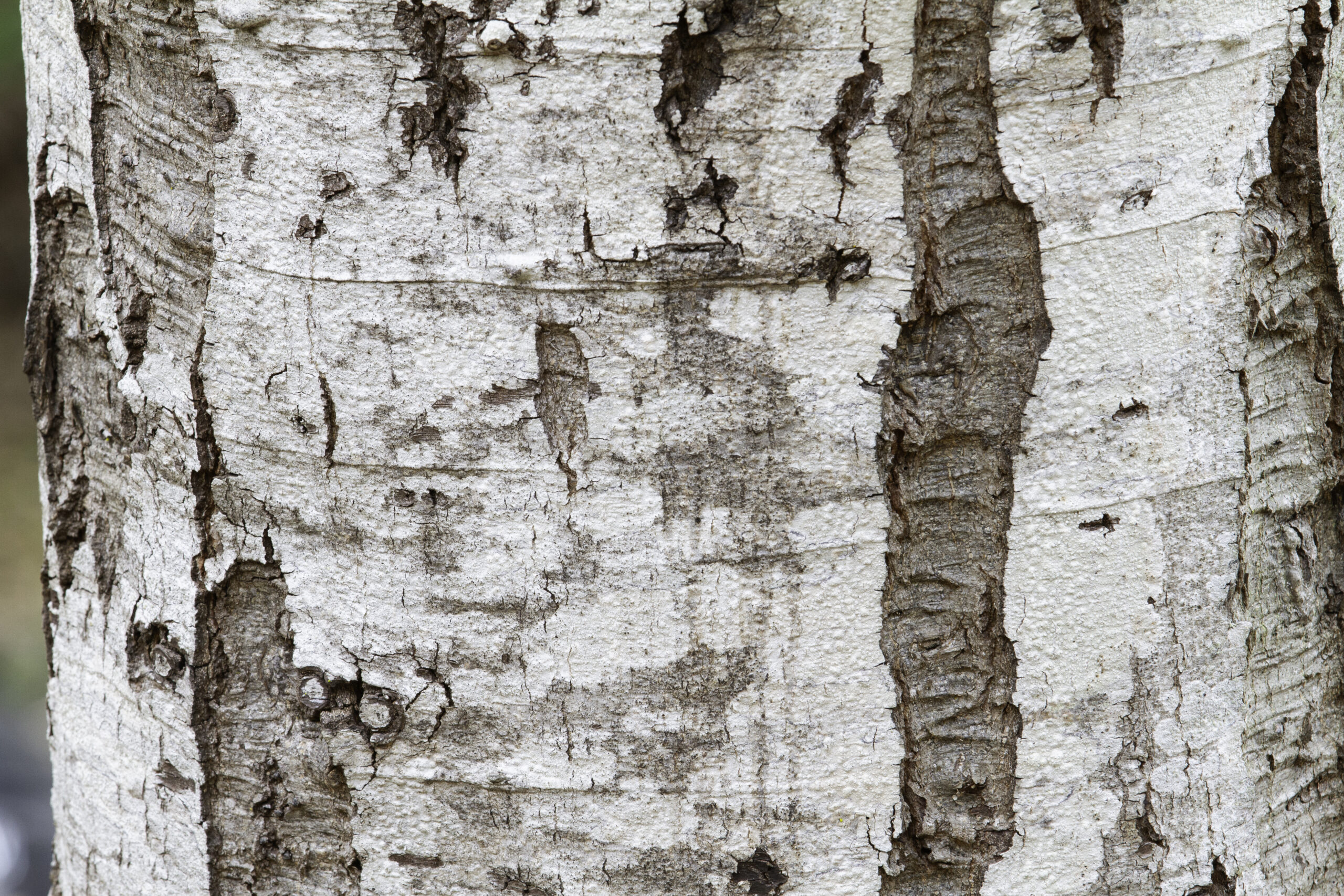
Mottled, ash gray and patchy looking.
Flower
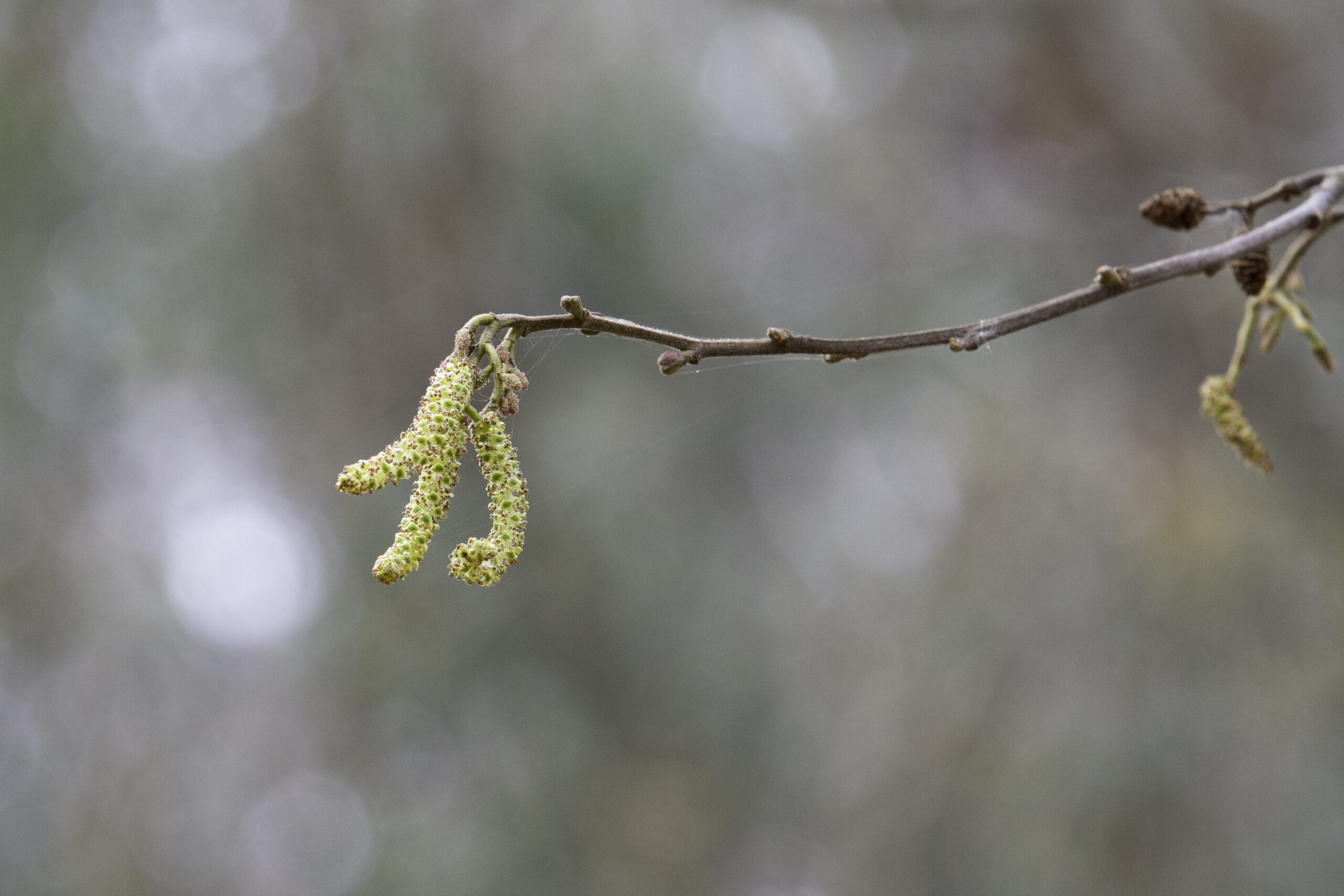
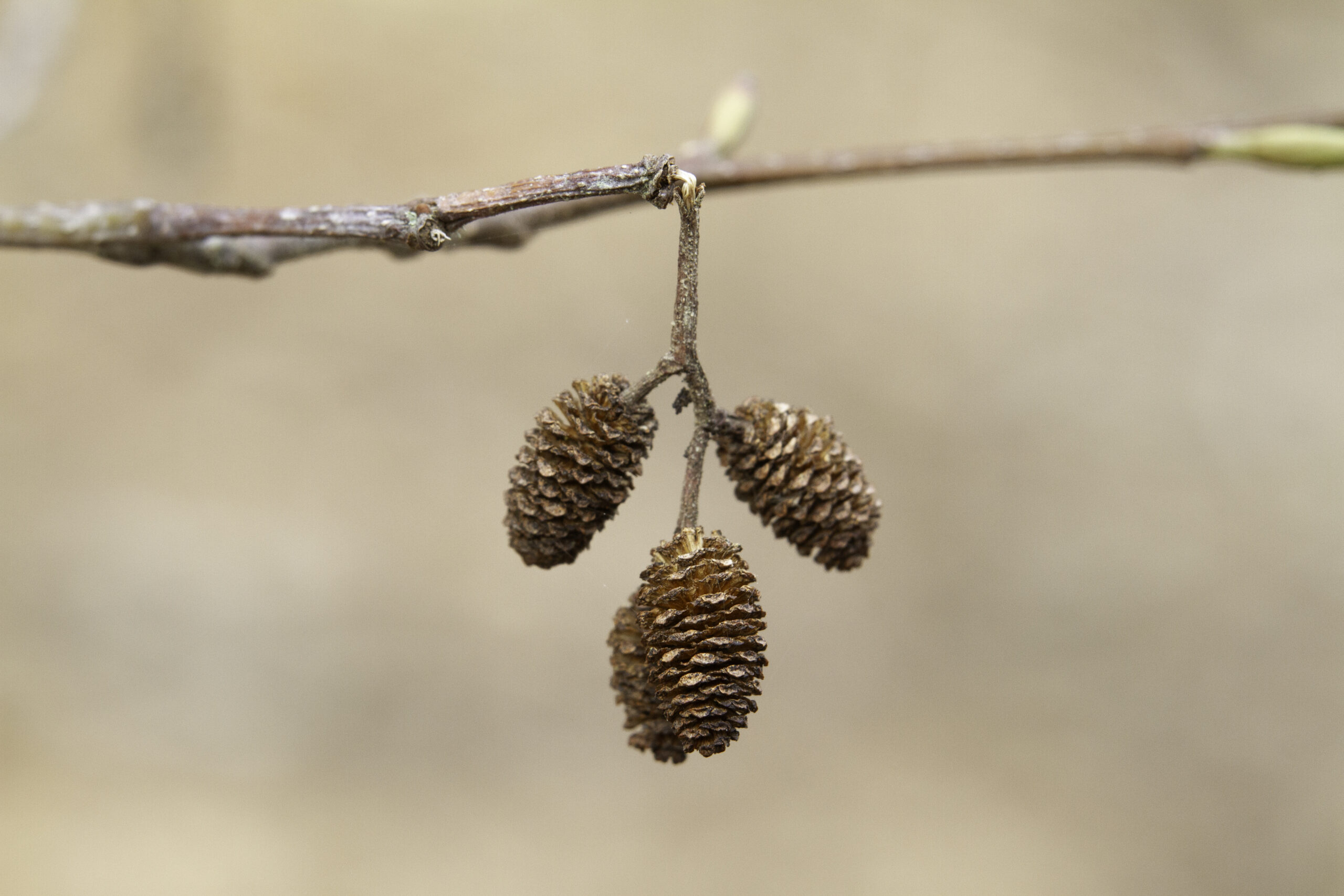
Red alder is monoecious, meaning that the plant produces both male and female structures on the same plant. Male flowers are dangling greenish/red catkins. Female flowers are smaller, upright catkins that develop into cone-like structures. Bloom time: February to March
Fruit / Seed / Cone
Tiny seeds form in female cone-like structures. In the fall seeds are dispersed by the wind. Long male catkins release pollen in winter and spring.
Habitat
Thrives in full sun along streams and rivers.
Location / Range
Brooks Creek, Trout Farm, and Weiler Ranch Road trails. Found in California along the coast from San Luis Obispo county north to Oregon. Its name derives from the bright rusty red color that develops in bruised or scraped bark.
Lifespan
Matures at 60 to 70 years and seldom survives beyond 100 years.
Fascinating / Fun Facts
The red alder is the only tree in the birch family that reaches commercial size and abundance. It is also the most common and important of the hardwoods in the Pacific Northwest.