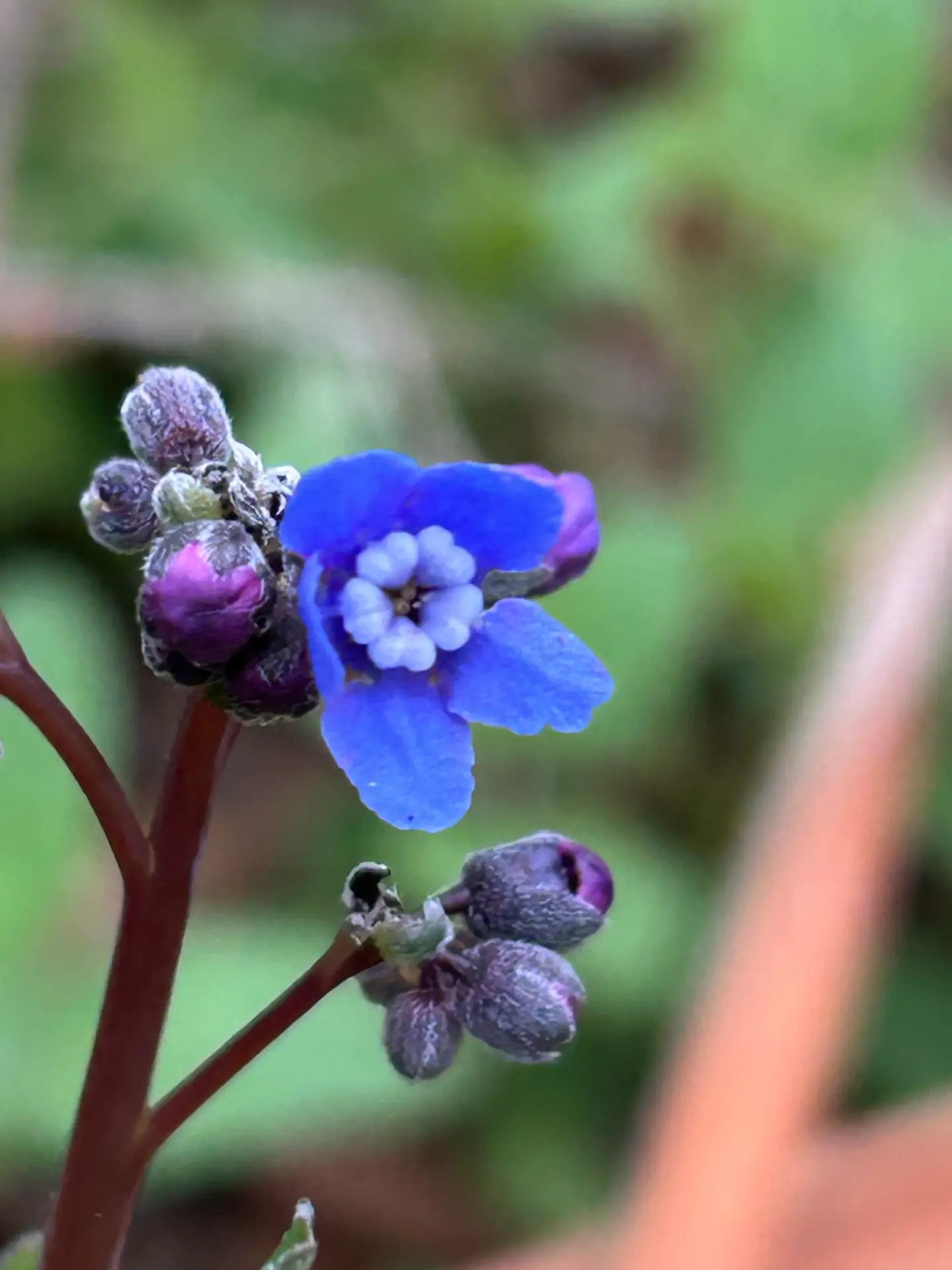
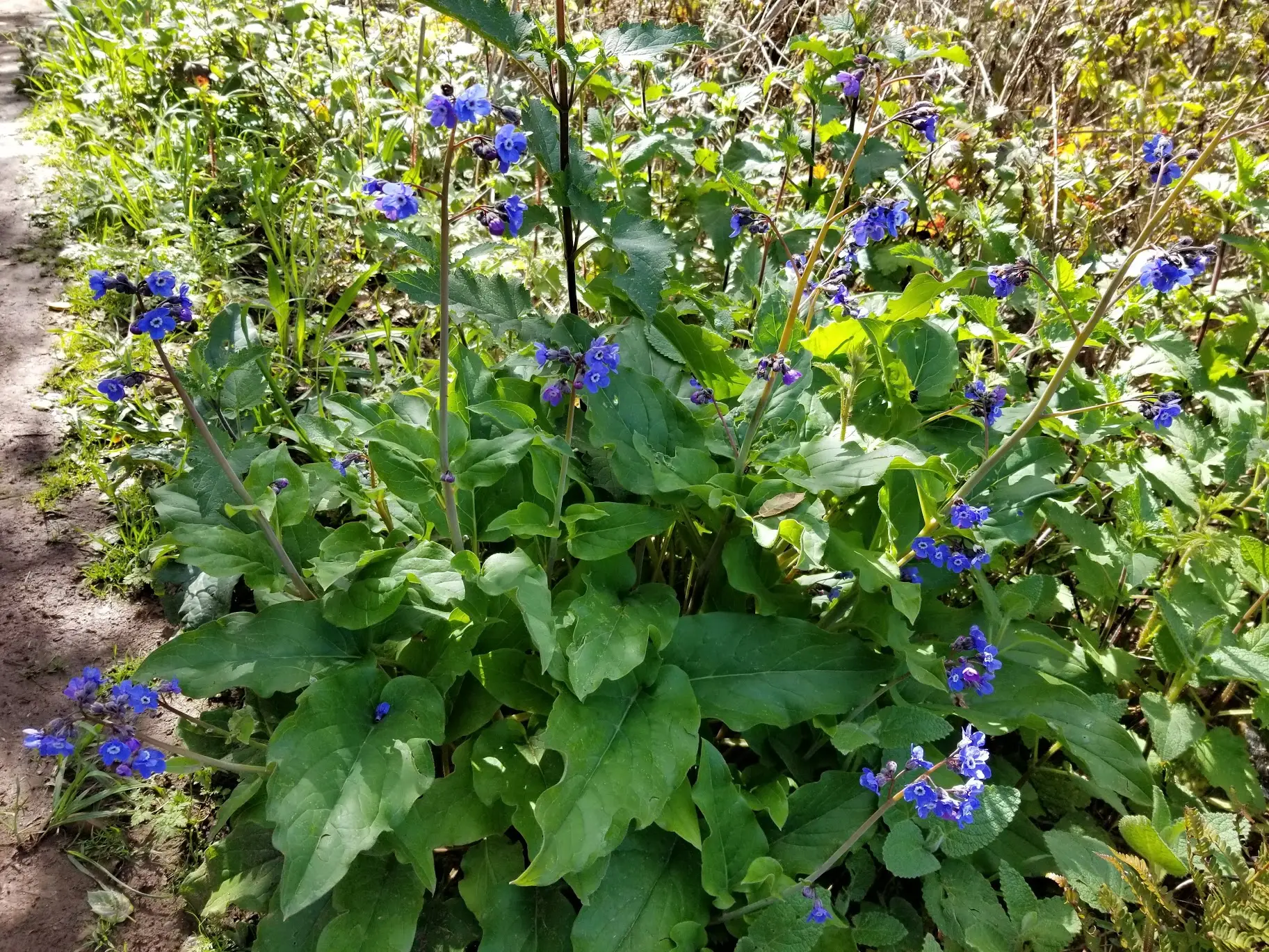
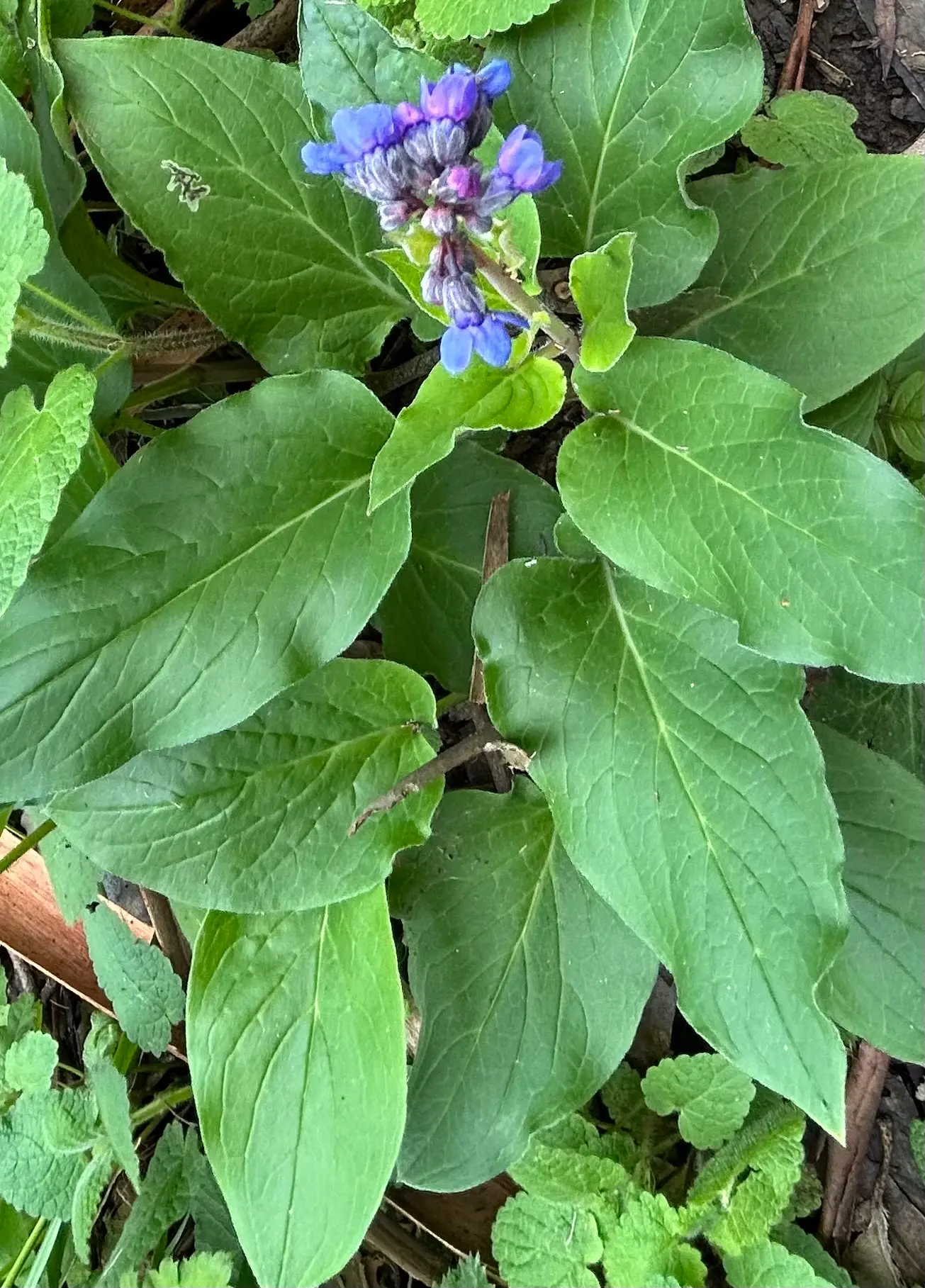
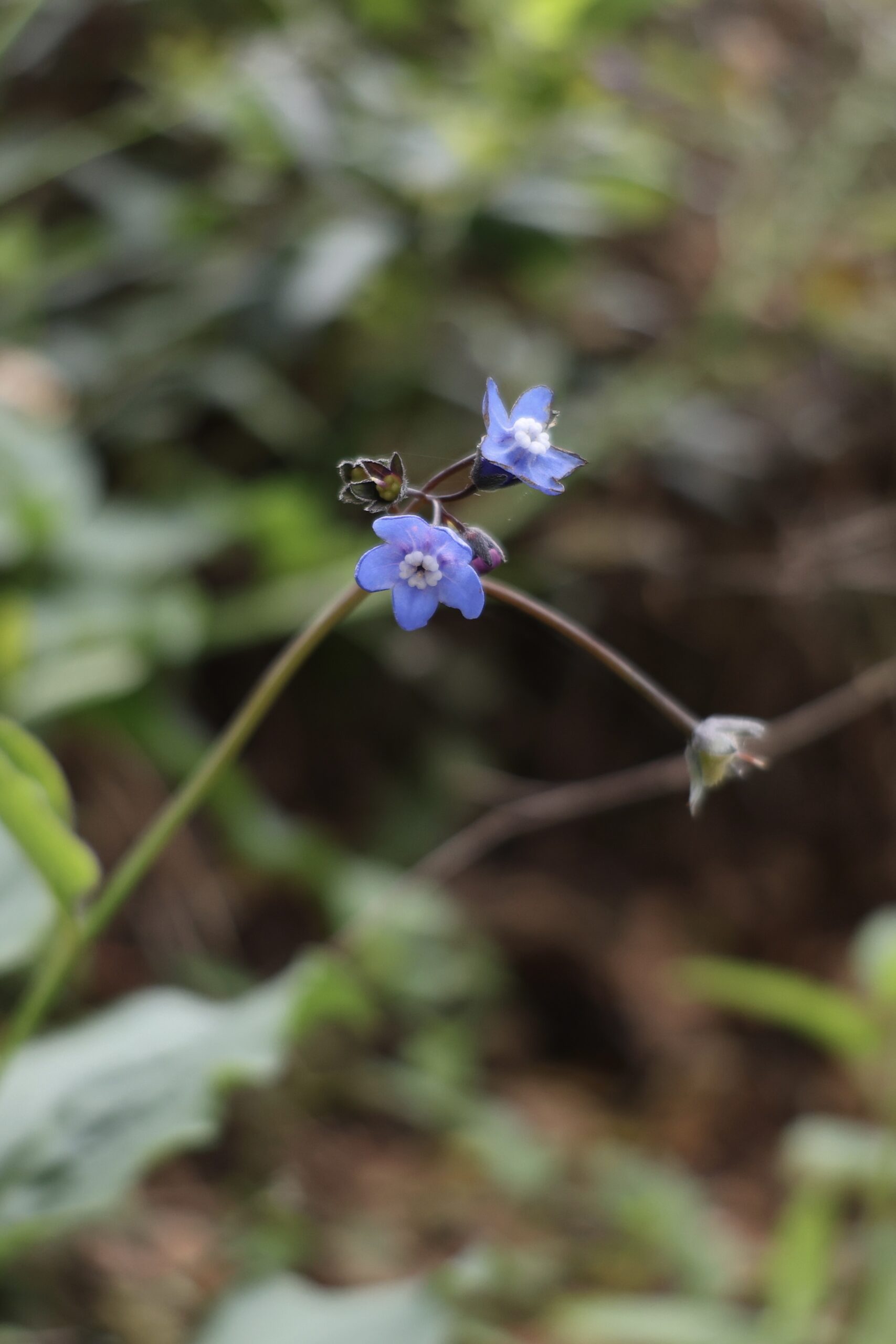
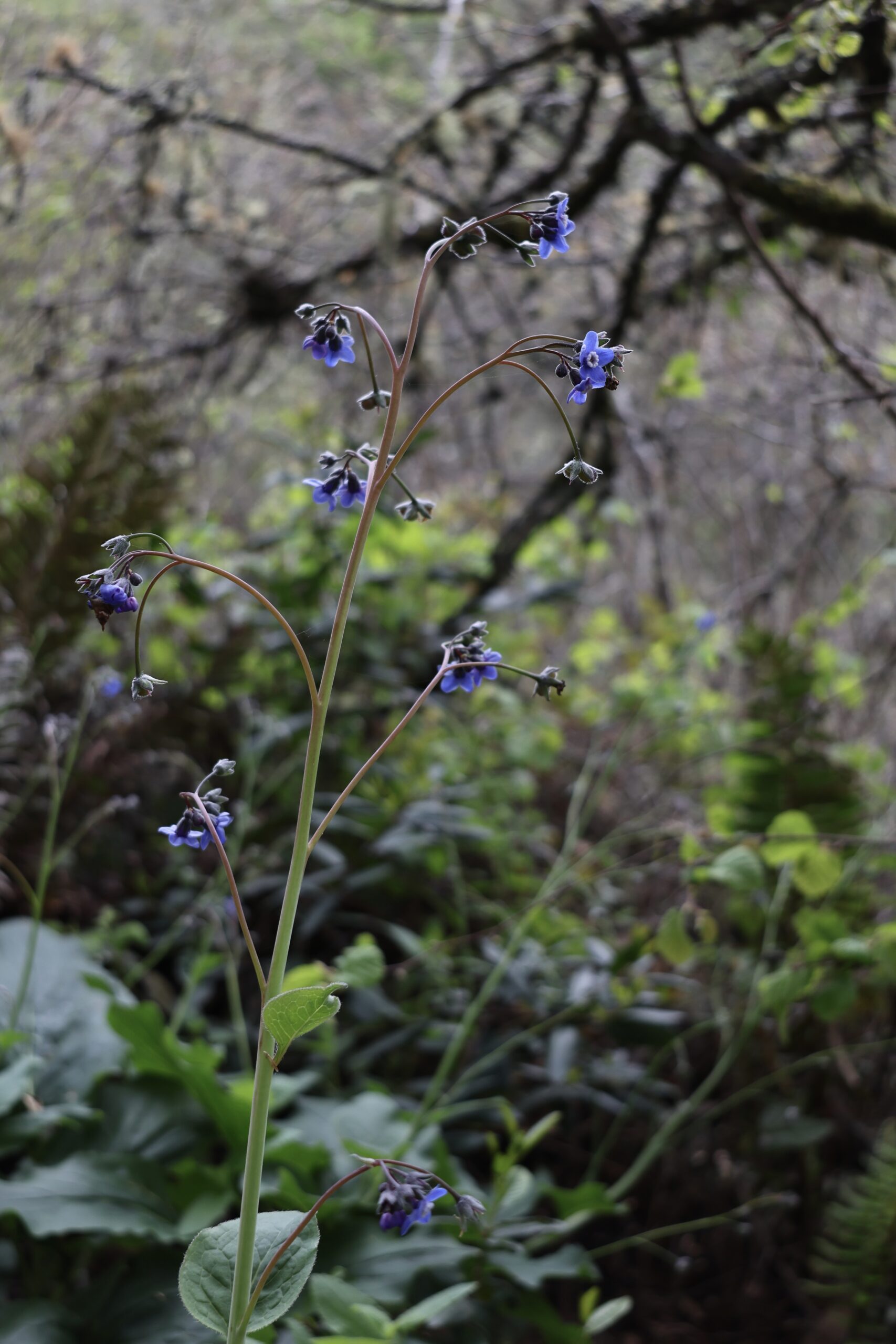
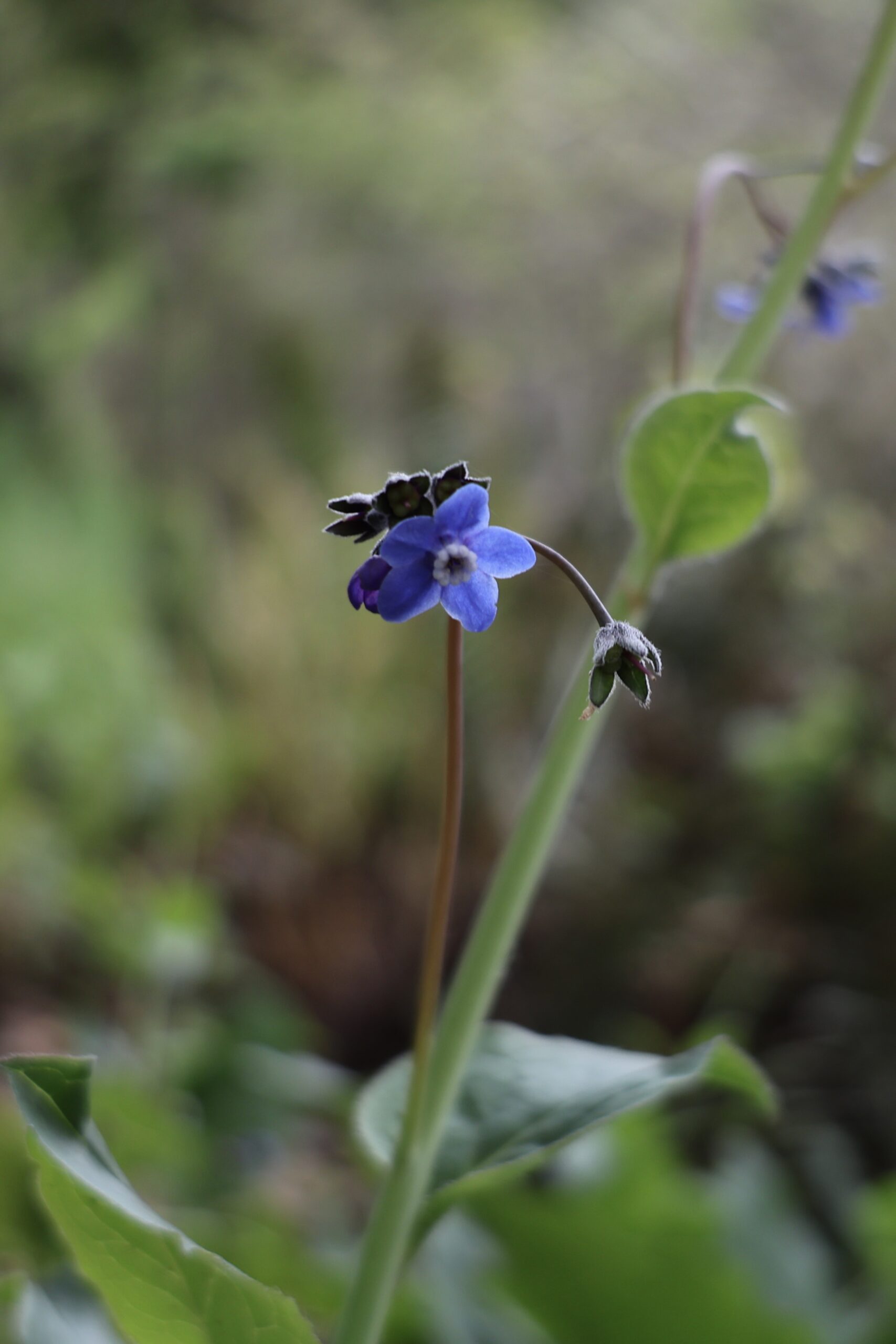
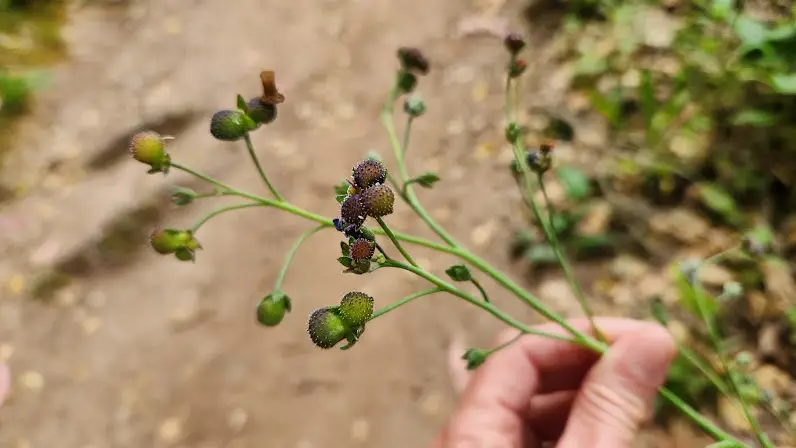
Early blooming plant with large, plentiful, branching leaves mostly at the bottom of the plant. Clusters of bright blue, five petaled flowers with white centers appear in early spring.
Similar to
Broadleaf Forget-Me-Not (Myosotis latifolia). Hound’s Tongue is a bigger plant and the center of its flowers are white. Forget-Me-Not is shorter and center of flowers is yellow.
Height / Size
Typically 1 to 3 feet tall.
Leaves
Long oval (similar shape to garden trowel) alternating leaves are dark green and approximately 5 inches long. The underside of the leaf is hairy with prominent veins. Leaves occur mostly at the base of the of the plant and have long petioles.
Flower
Five-petaled flowers, approximately 0.3 to 0.5 inch wide, with white inner nectaries. Petals are pink in bud, pale blue when fertile, and darker blue later in life. Appearing as a loose cluster at the top of an erect stem.
Bloom Time: February to May
Fruit / Seed
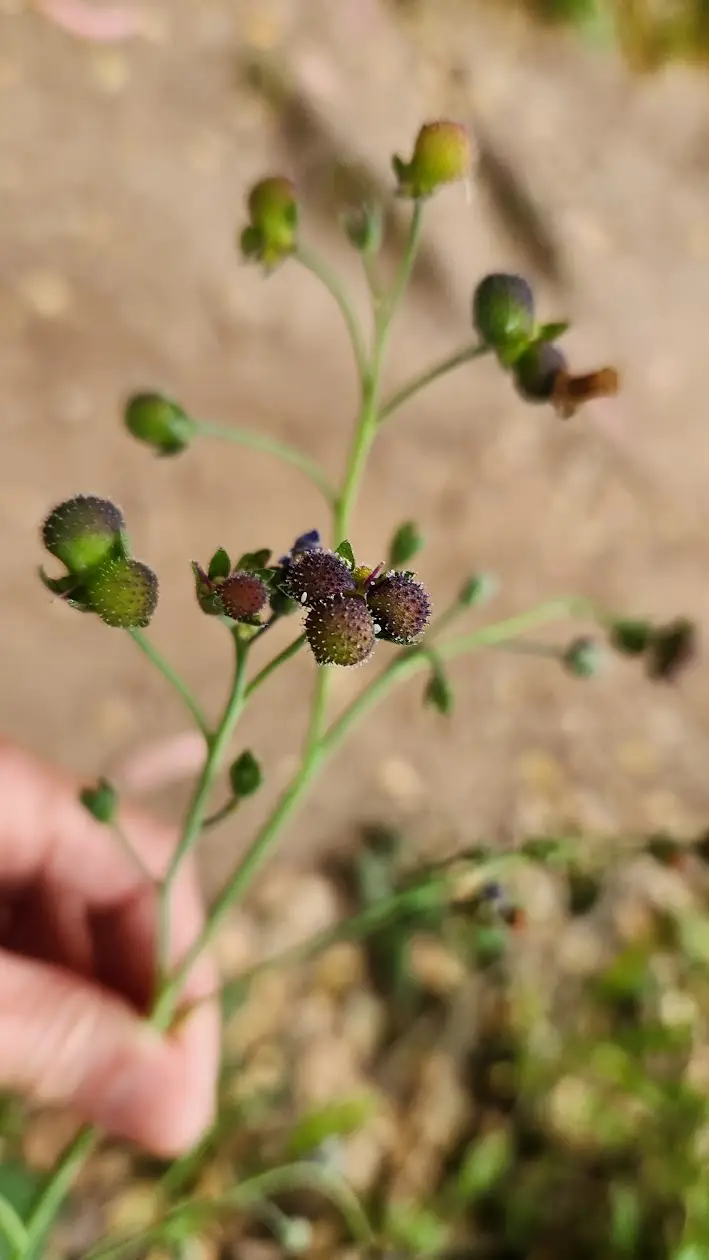
Tiny nutlets in groups of 4. Covered in small hooks to facilitate dispersal by passing animals.
Habitat
Shady areas in woodlands and chapparal.
Location / Range
All trails, in moist areas. Native in Western North America from British Columbia to California.
Lifespan
2 to 3 years
Fascinating / Fun Facts
Previous scientific name was Cynoglossum grande. Common names include Pacific Hound’s Tongue or Western Hound’s Tongue. Often confused with Forget-Me-Nots, an invasive non-native, pesky plant.