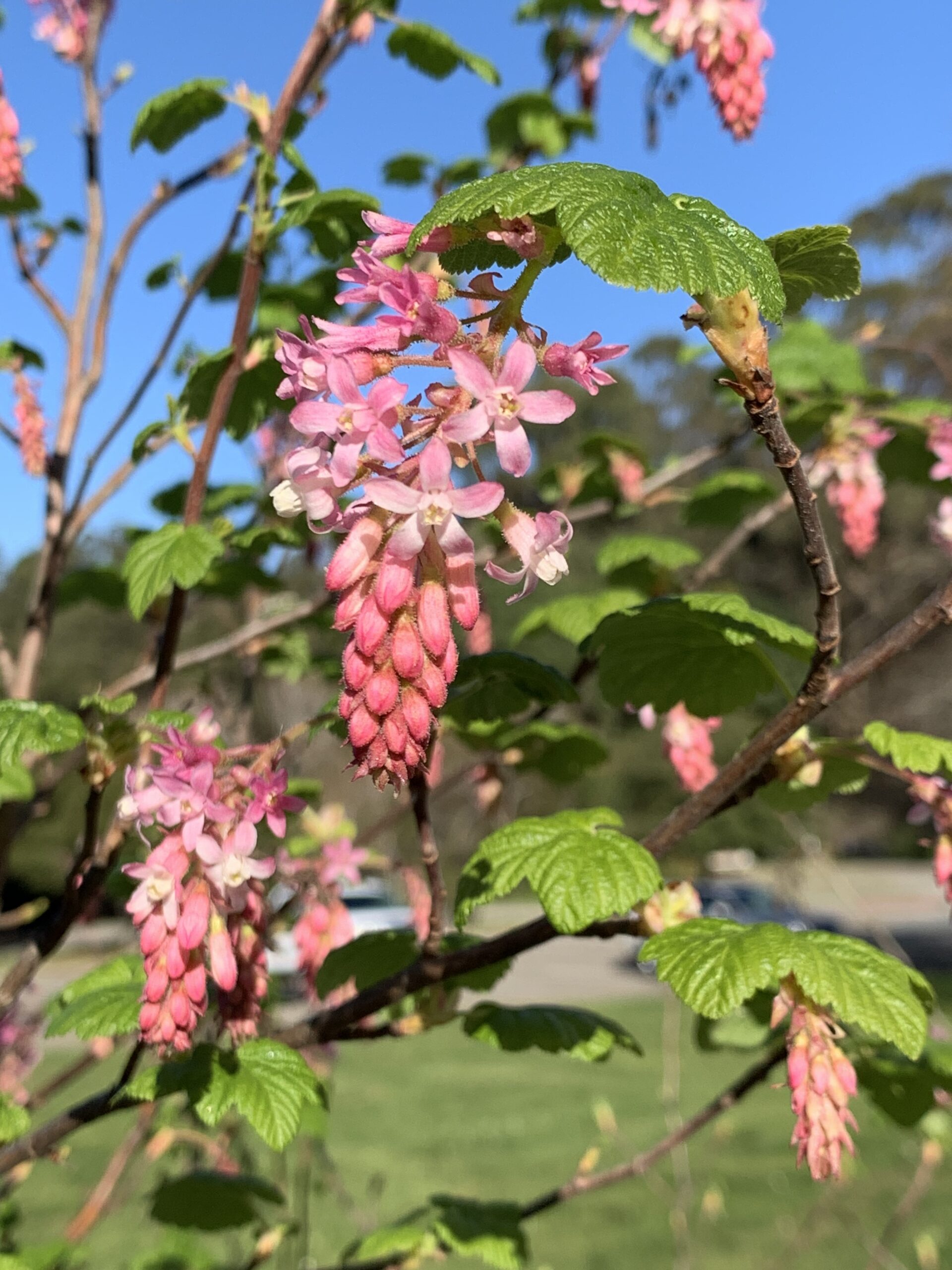
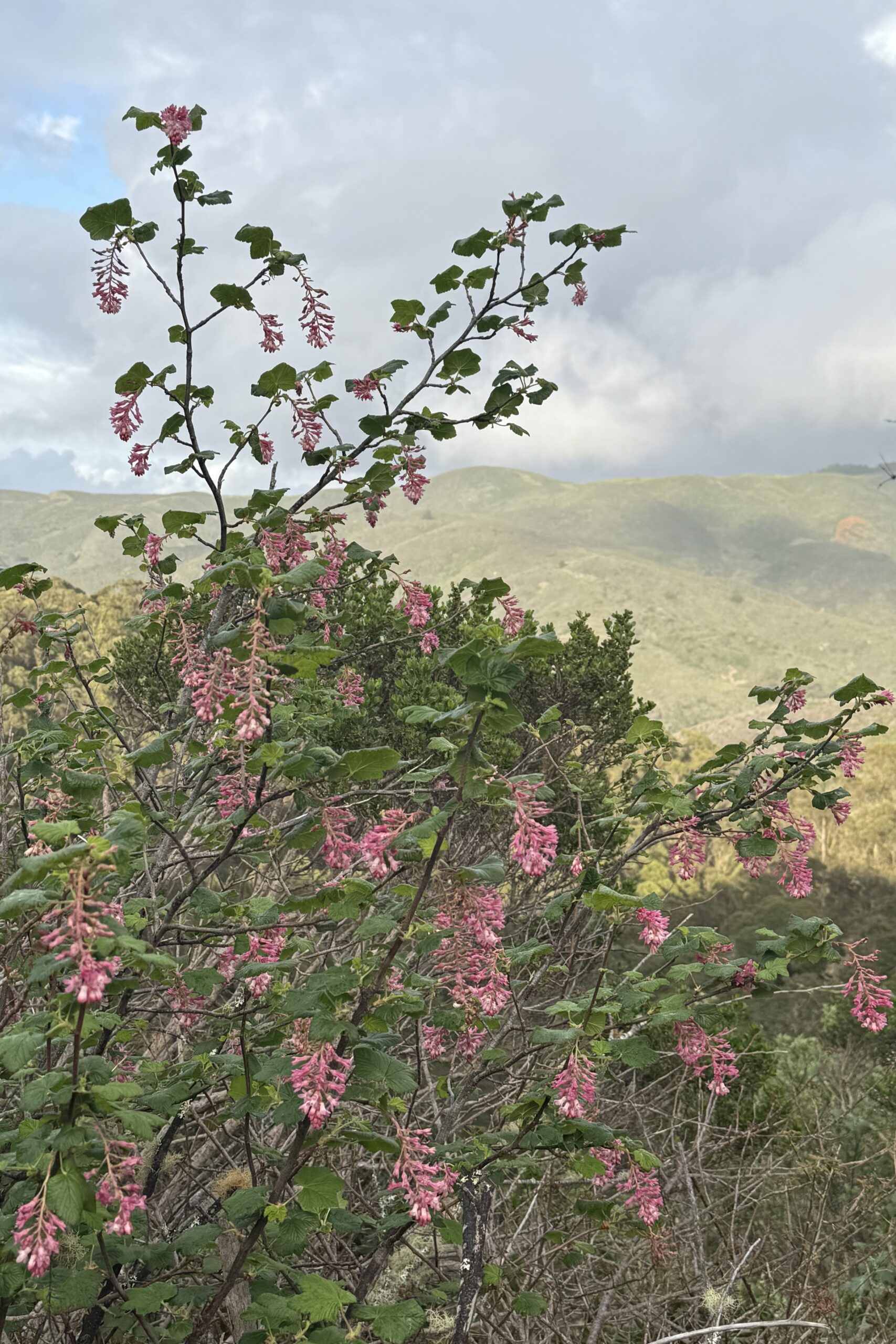
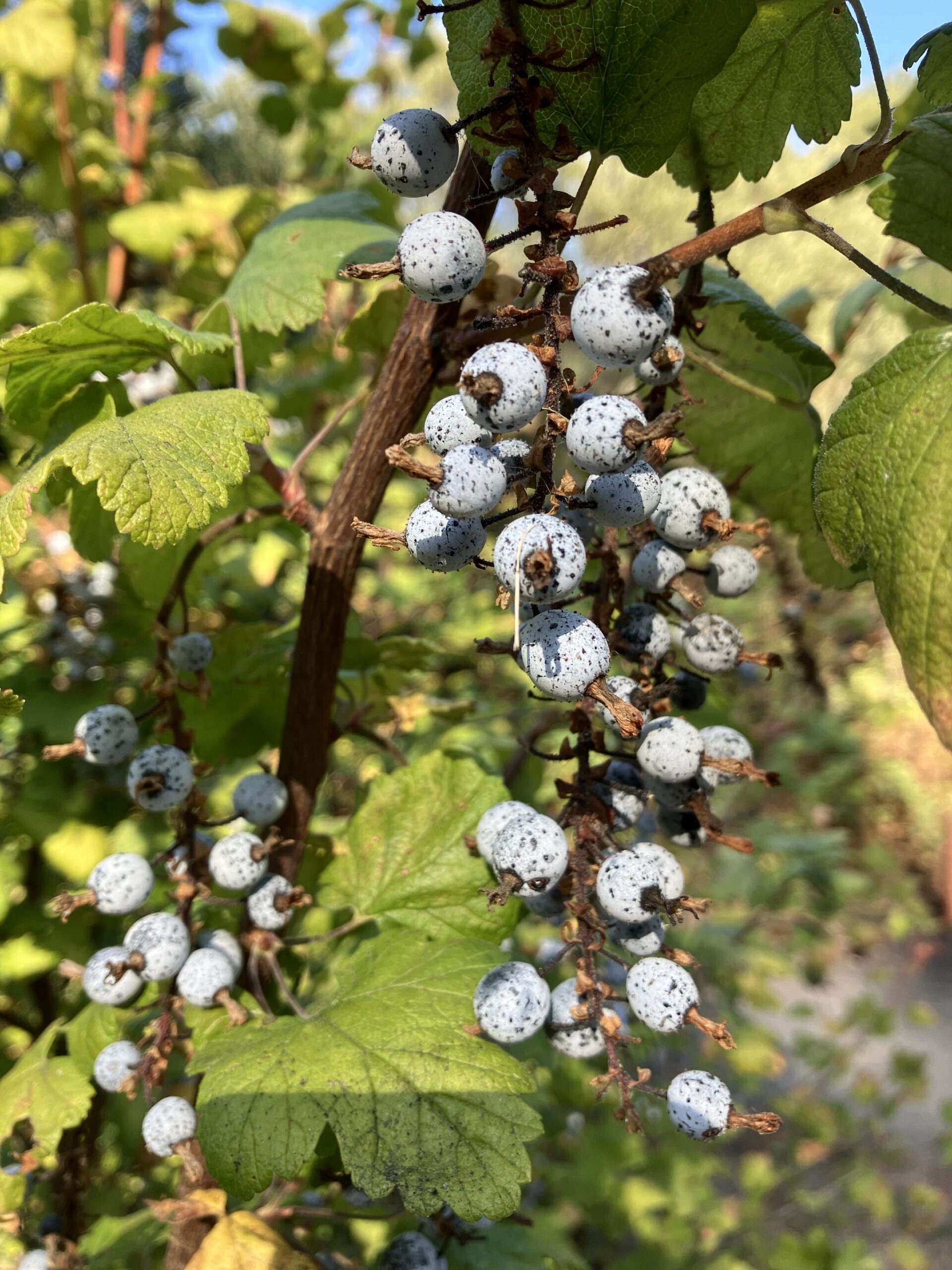
A woody shrub that has no spines. Tight hanging clusters of pinkish flowers that turn into dark purple berries.
Similar To
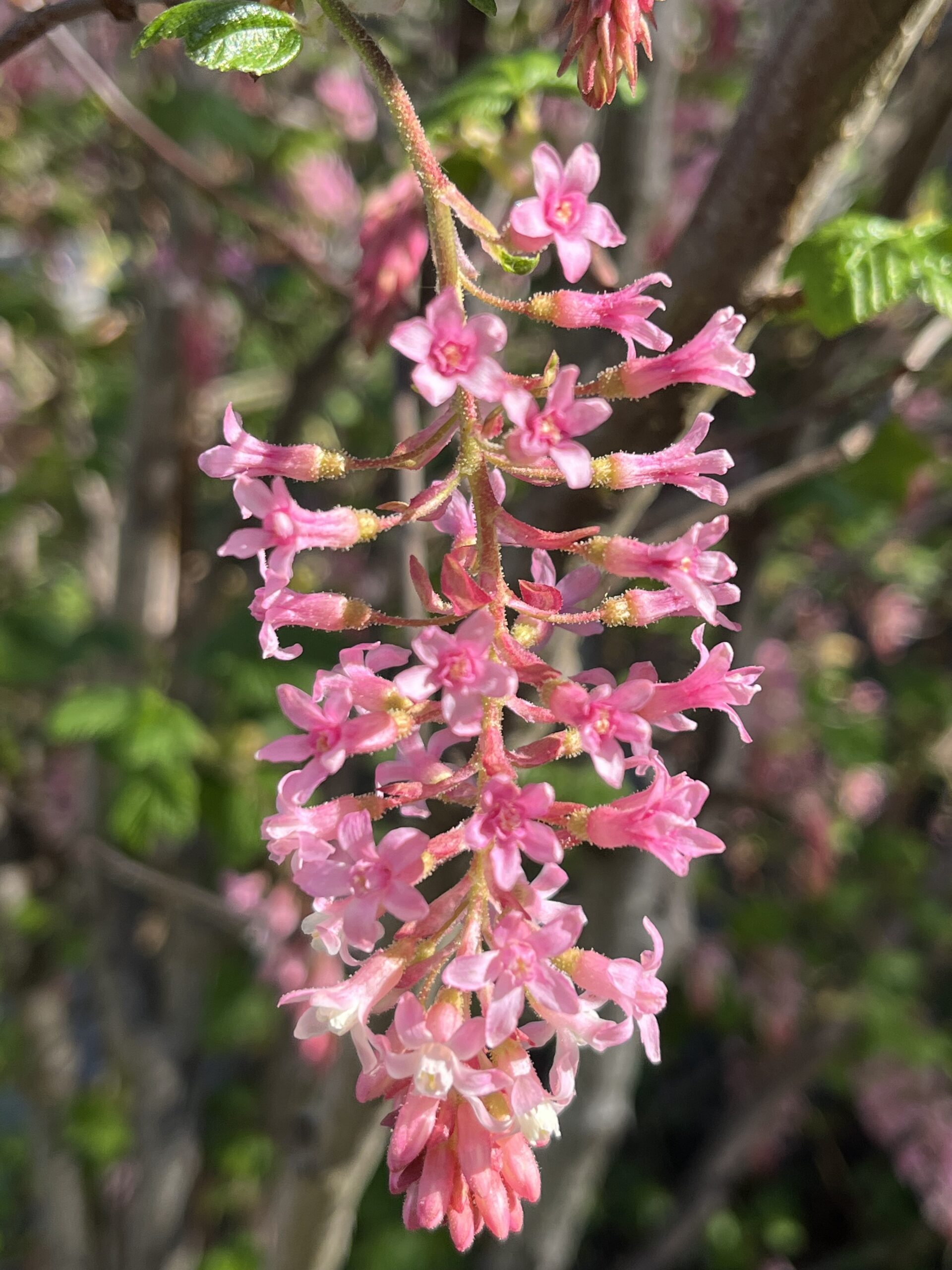
Chaparral Currant and Canyon Gooseberry. The inflorescence type for all species of Ribes is a raceme. Ribes sanguineum (Flowering Currant) produces racemes bearing ~10-20 flowers, which helps differentiate it from some other species of Ribes (particularly the gooseberries) such as R. menziesii, which typically has racemes bearing 1-3 flowers. Flowering currant plants do not have spines, whereas gooseberries do.
Height / Size
Grows to 13 feet tall and 7 feet wide.
Leaves
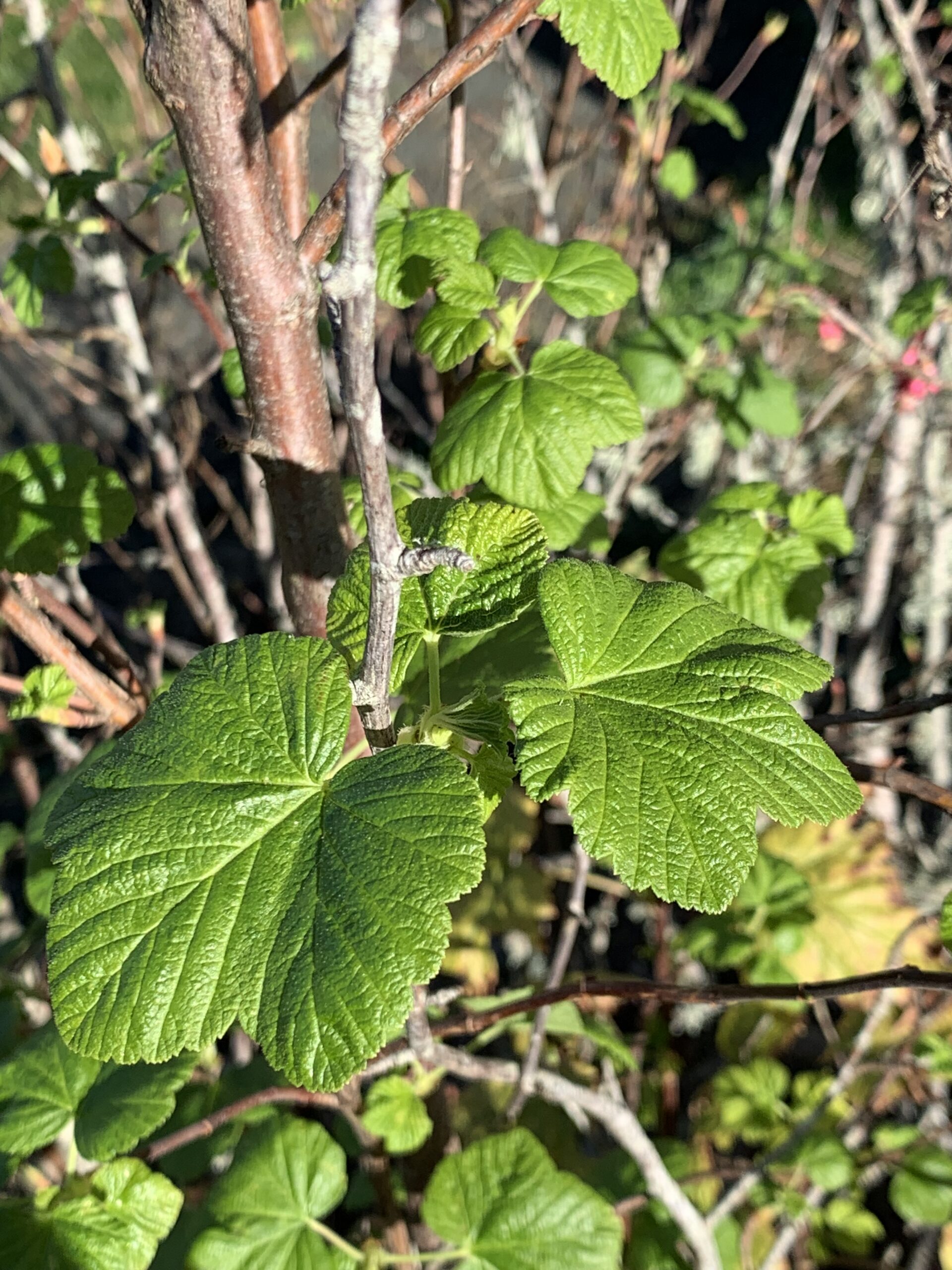
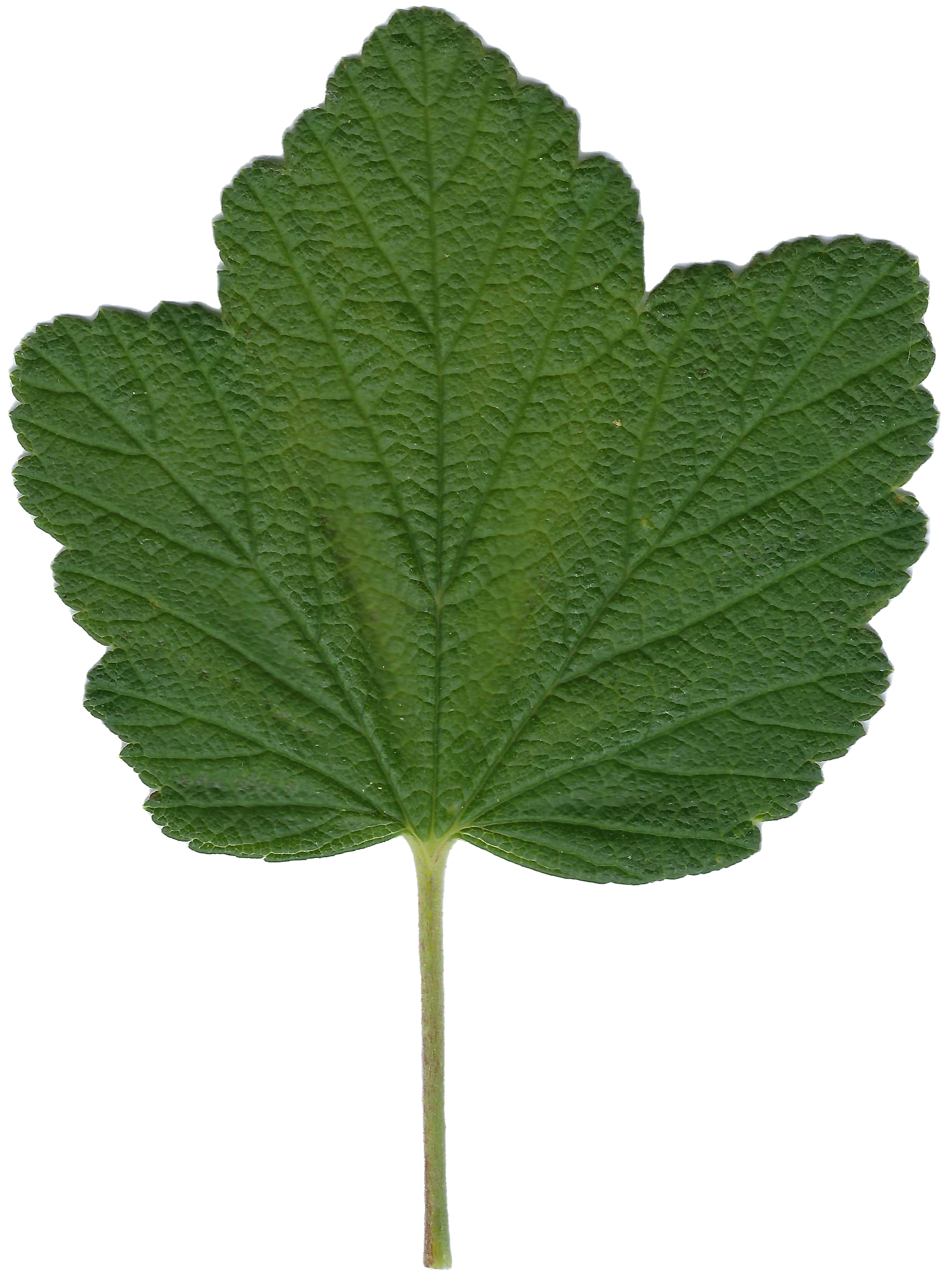
Leaves are wrinkled with many veins and have a resinous odor. Leaves are often deciduous during the summer dry season. New leaves typically emerge along with or immediately after the flower buds in the winter.
Flower
A red/pink flower with five petals grows in pendant clusters of 10-20 flowers at the top of the plant. The cluster of flowers is a raceme, or an unbranched inflorescence, where the flowers are borne on stalks (pedicels) and open from bottom to top. Bloom Time: January to May.
Fruit / Seed
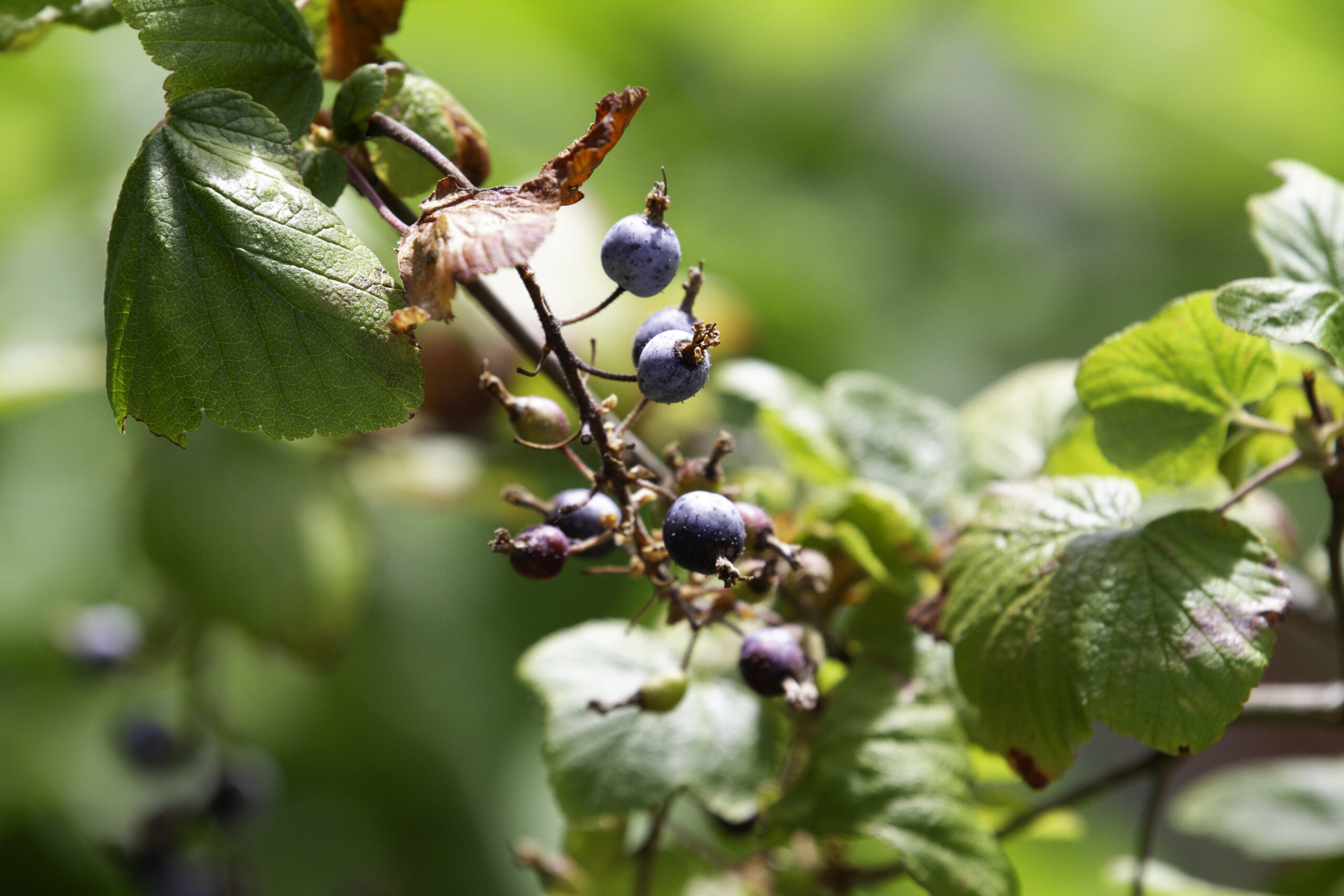
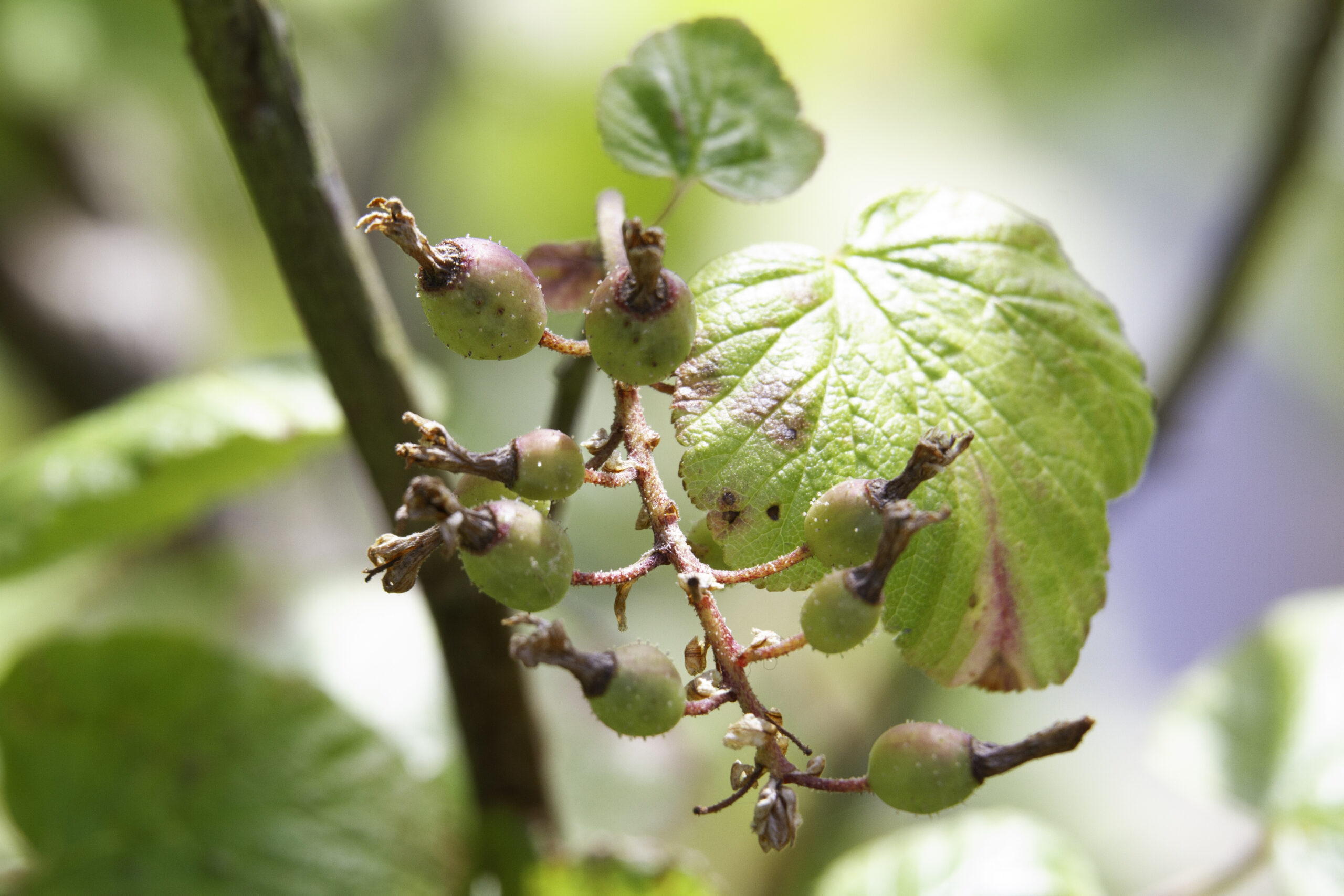
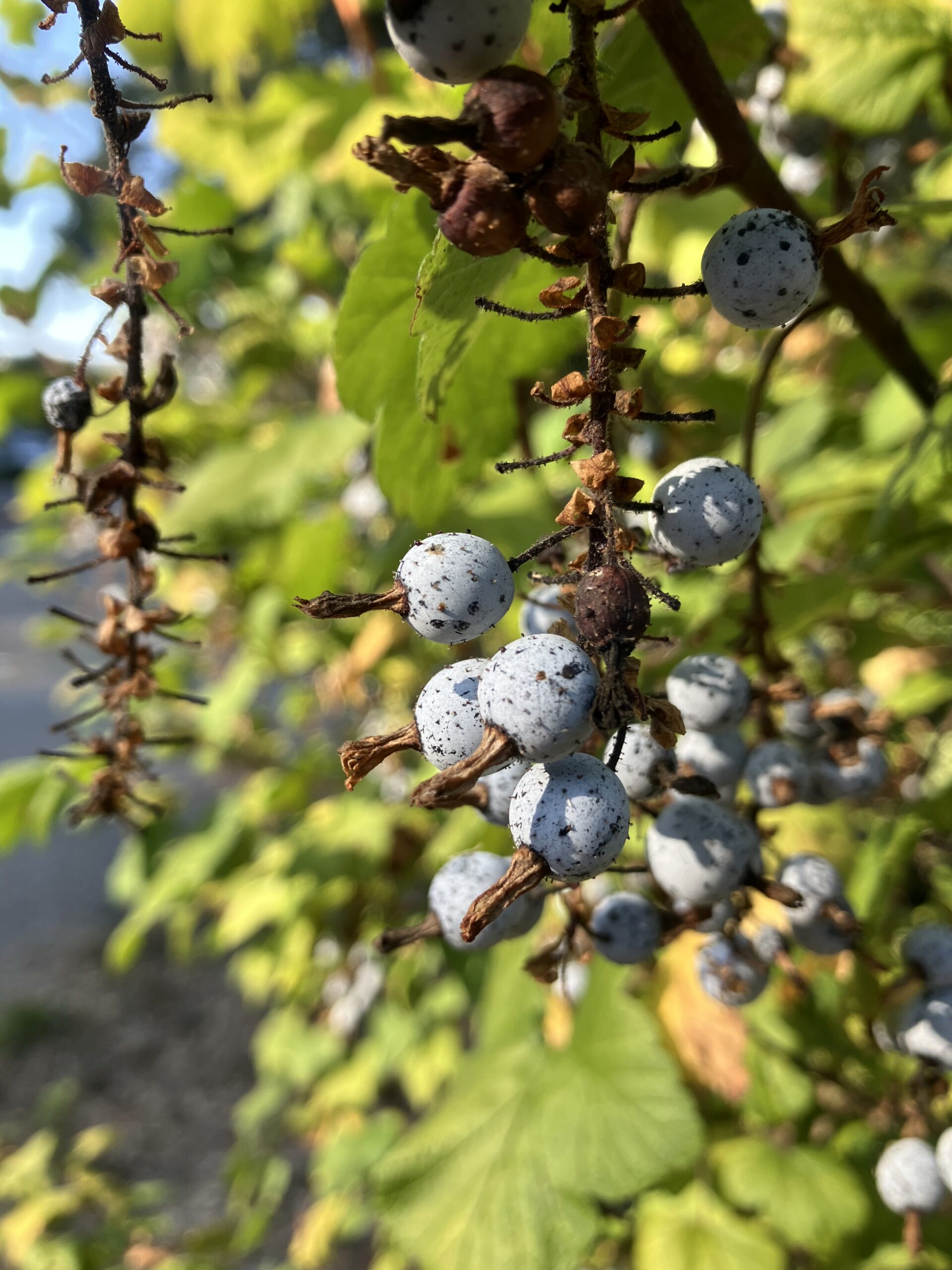
Berries are oval, dark purple and contain numerous seeds that can be used for propagation.
Habitat
Grows in partial sun to shade and well-draining acidic soils. Can grow in many habitats.
Location / Range
Can be found throughout the park. Flowering currant grows from Point Conception (southern San Luis Obispo County in the south) to southwestern Oregon, distributed throughout the coast ranges.
Lifespan
Can live 10 to 20 years.
Fascinating / Fun Facts
Also referred to as the blood currant and pink flowering currant. Flowering currant is one of our earliest native plants/shrubs to bloom. Some individuals will often start initiating the development of flower buds following the first significant rains of the year. It is a nectar source for pollinators like hummingbirds and butterflies, and has a role in supporting various insects and animals in the ecosystem.
Ethnobotany
Uses by Pacific Northwest tribes include as a food source – berries eaten fresh, dried, or in soups.