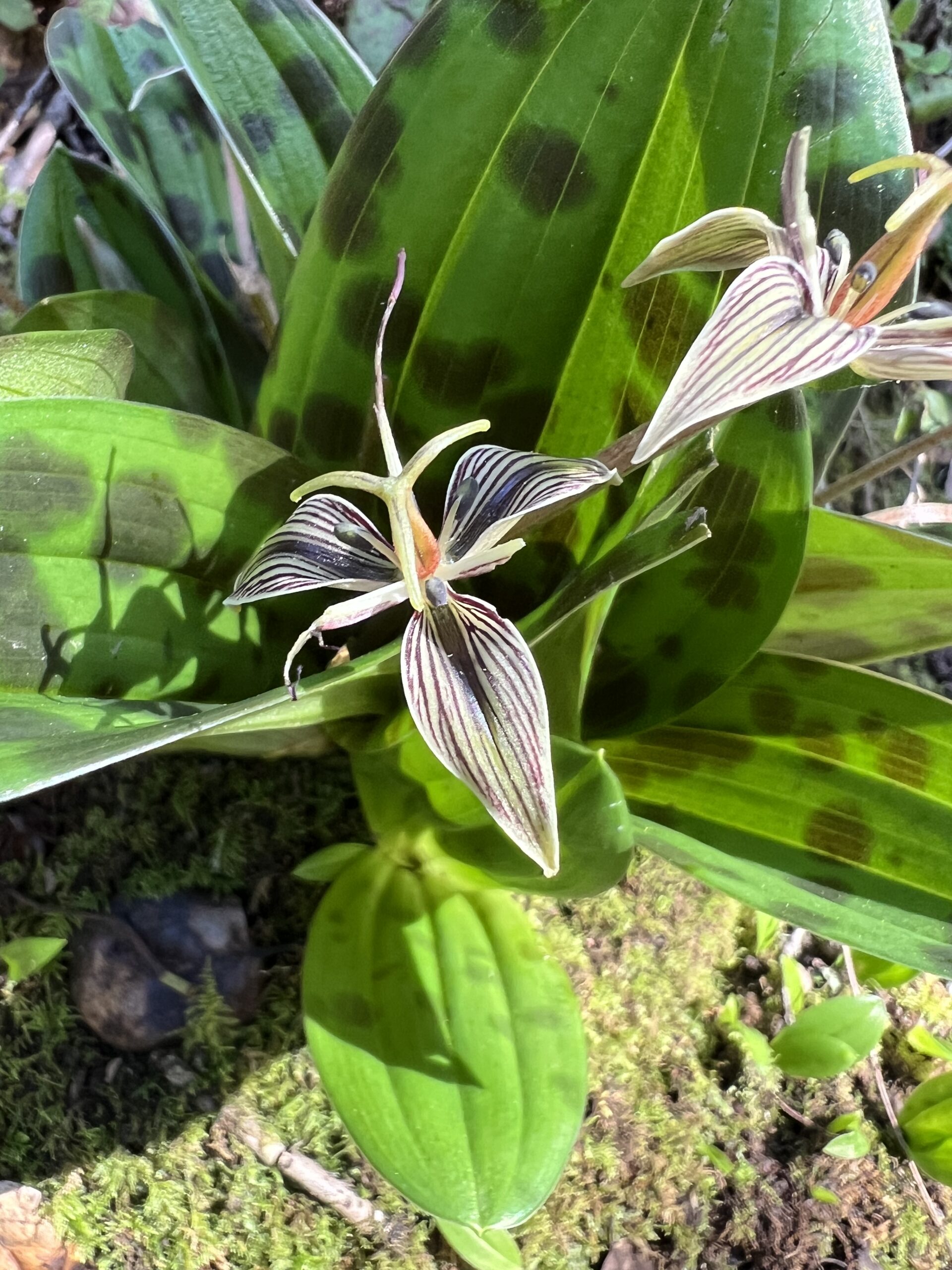
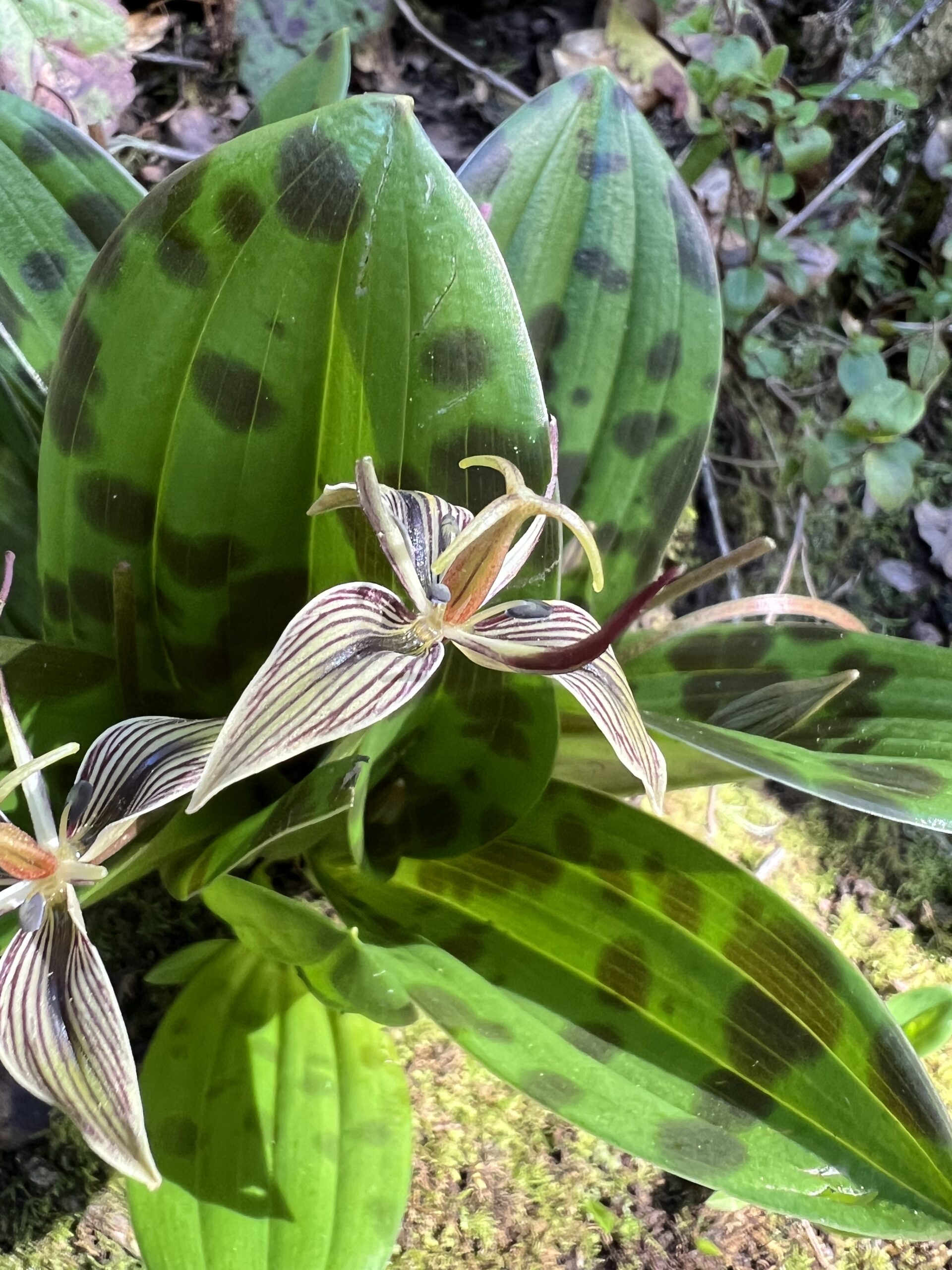
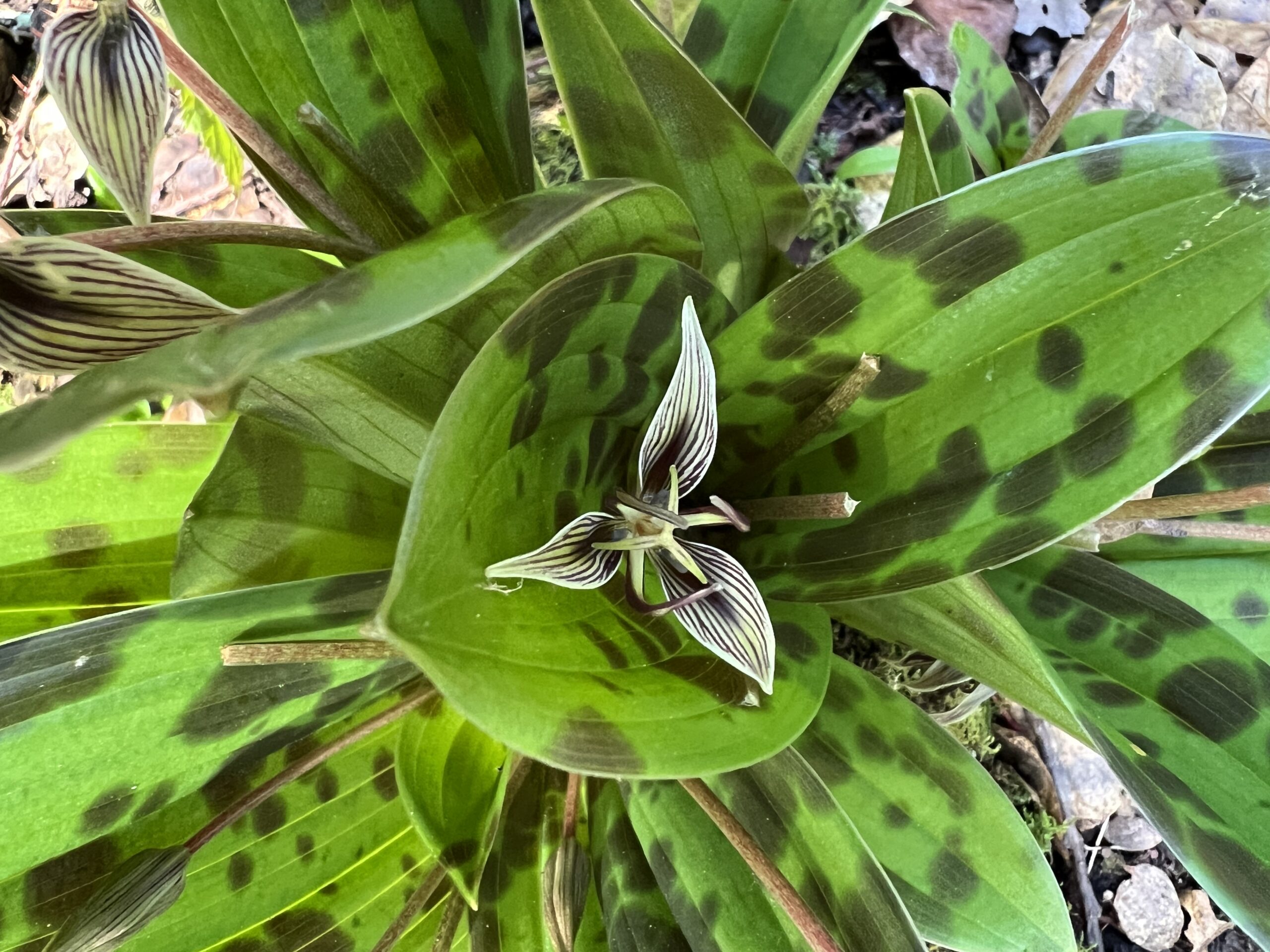
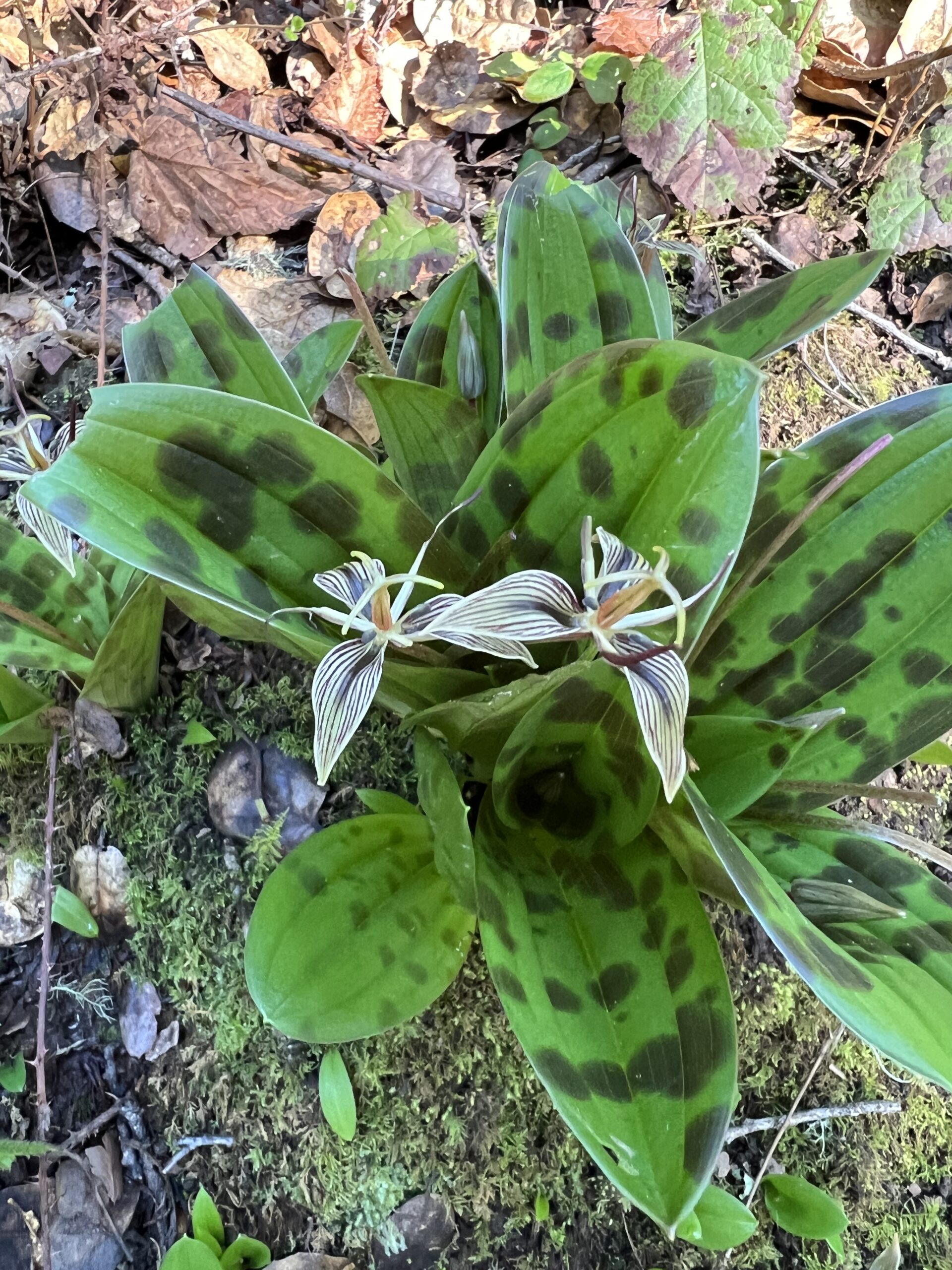
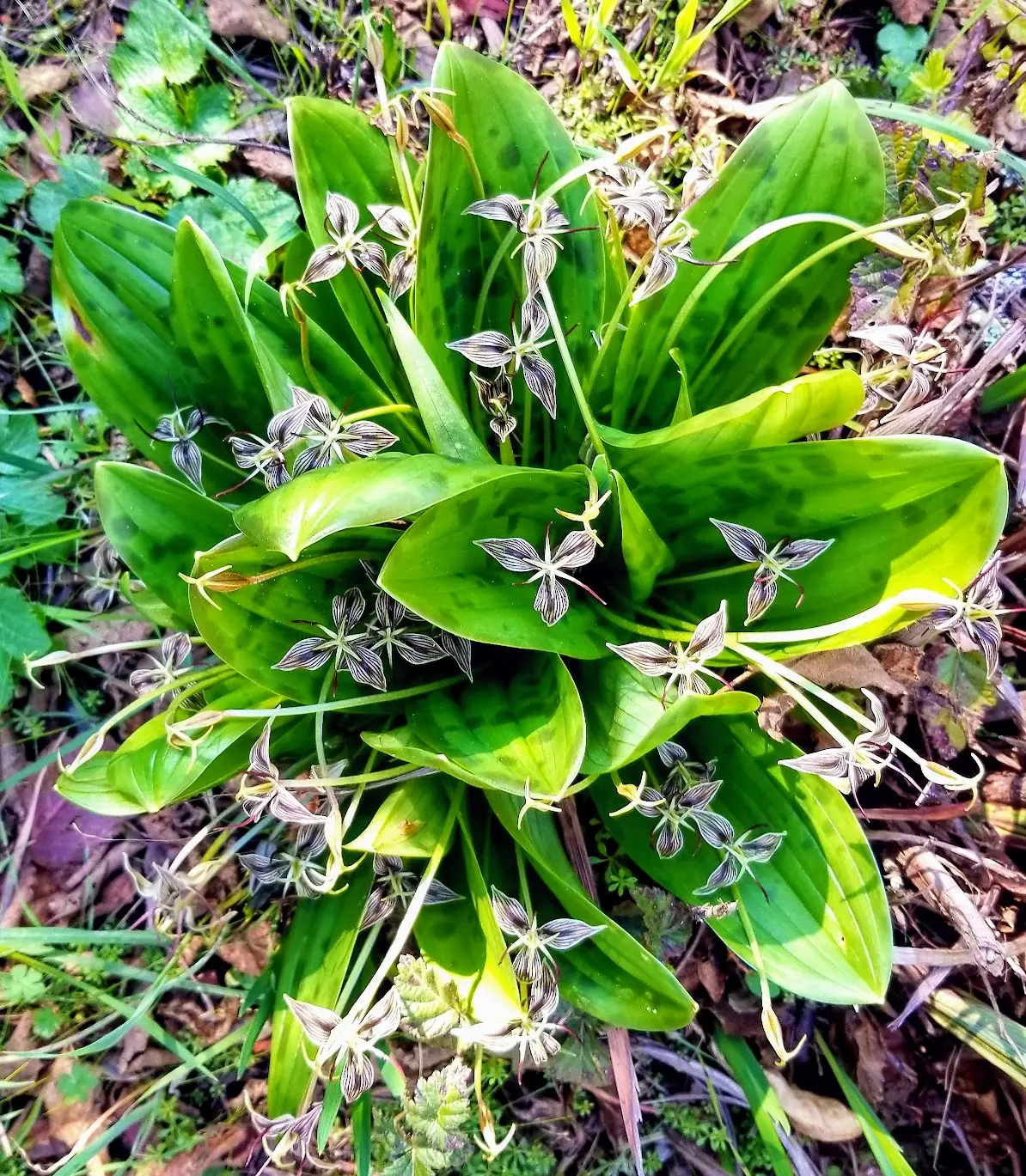
Small, early blooming woodland plant with 2 broad, glossy, mottled leaves and 3-part flowers that have a bad odor.
Height / Size
6 to 8 inches
Leaves
Each plant has 2 leaves, occasionally 3. Leaves are up to 10 inches long, 4 inches wide, and glossy with several longitudinal veins. Leaves are green in color with darker green or purplish mottling. Leaves lay close to the ground with the leaf stem (petiole) underground.
Flower
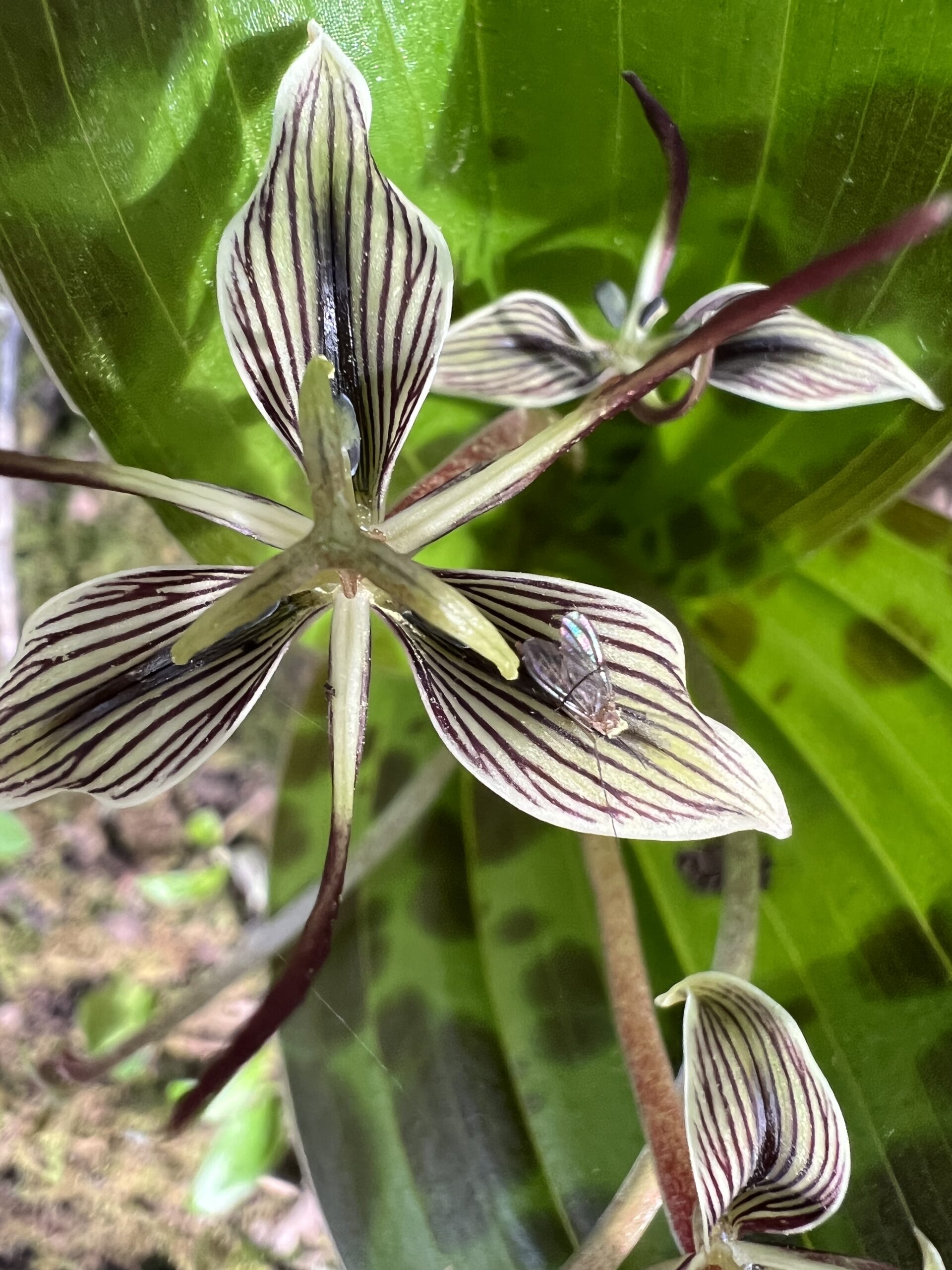
Each plant has a cluster 1 to 12 flowers arising from the center of the plant, each on a thread-like stem (pedicel) about 6 inches long. The inflorescence is actually an umbel (flowers emerge from a central point) but the flower stalk (peduncle) is very short (subsessile) and underground. The flowers are ill-scented, hence “fetid” in the common name. Each flower has 3 flat spreading pale green sepals with dark purple veins, 3 narrow dark purple (maroon) fingerlike petals, and three short stamens attached to the sepals. The pistil has a 3-branched stigma on top of a 3-angled ovary.
Bloom time: Late January thru March.
Fruit / Seed
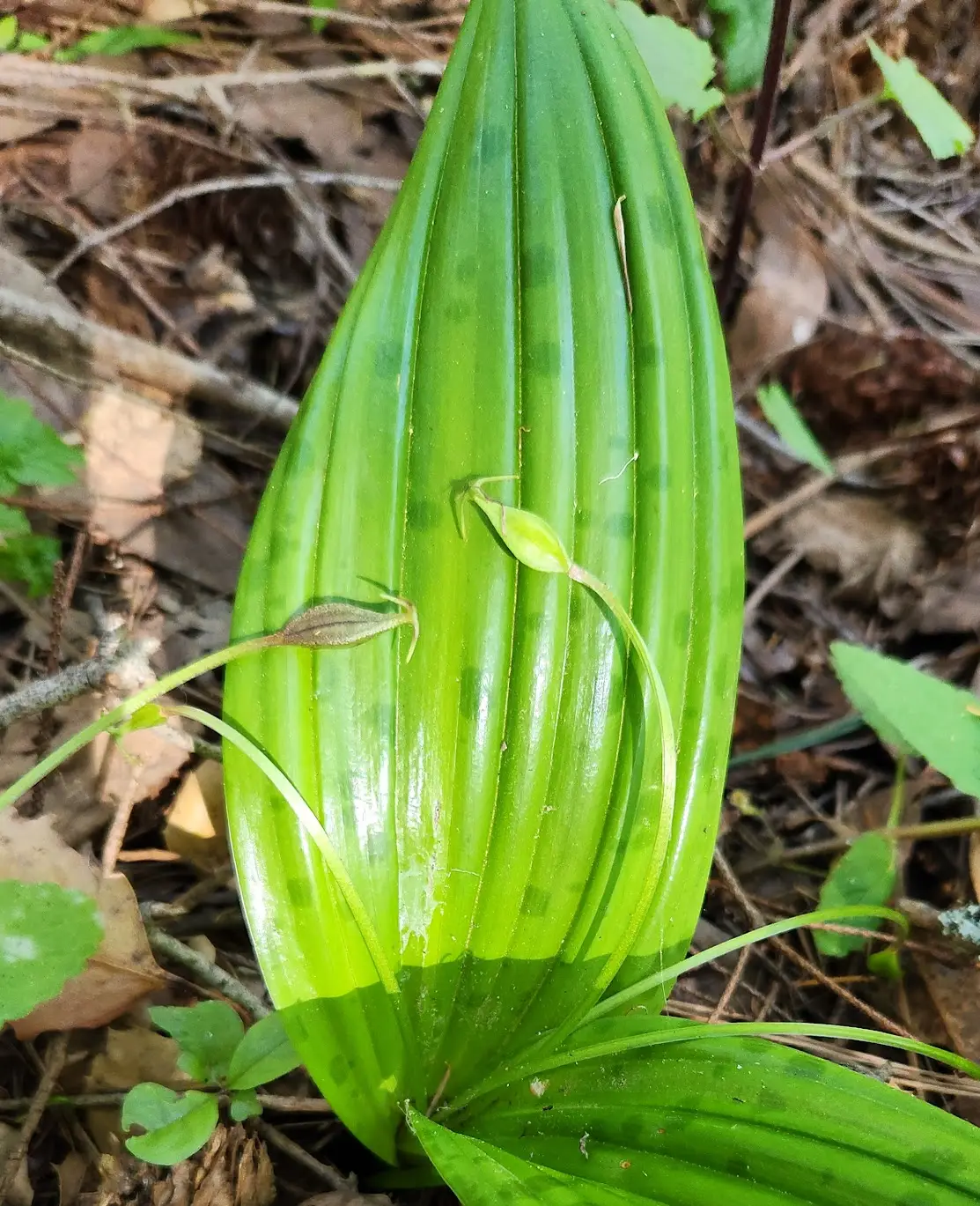
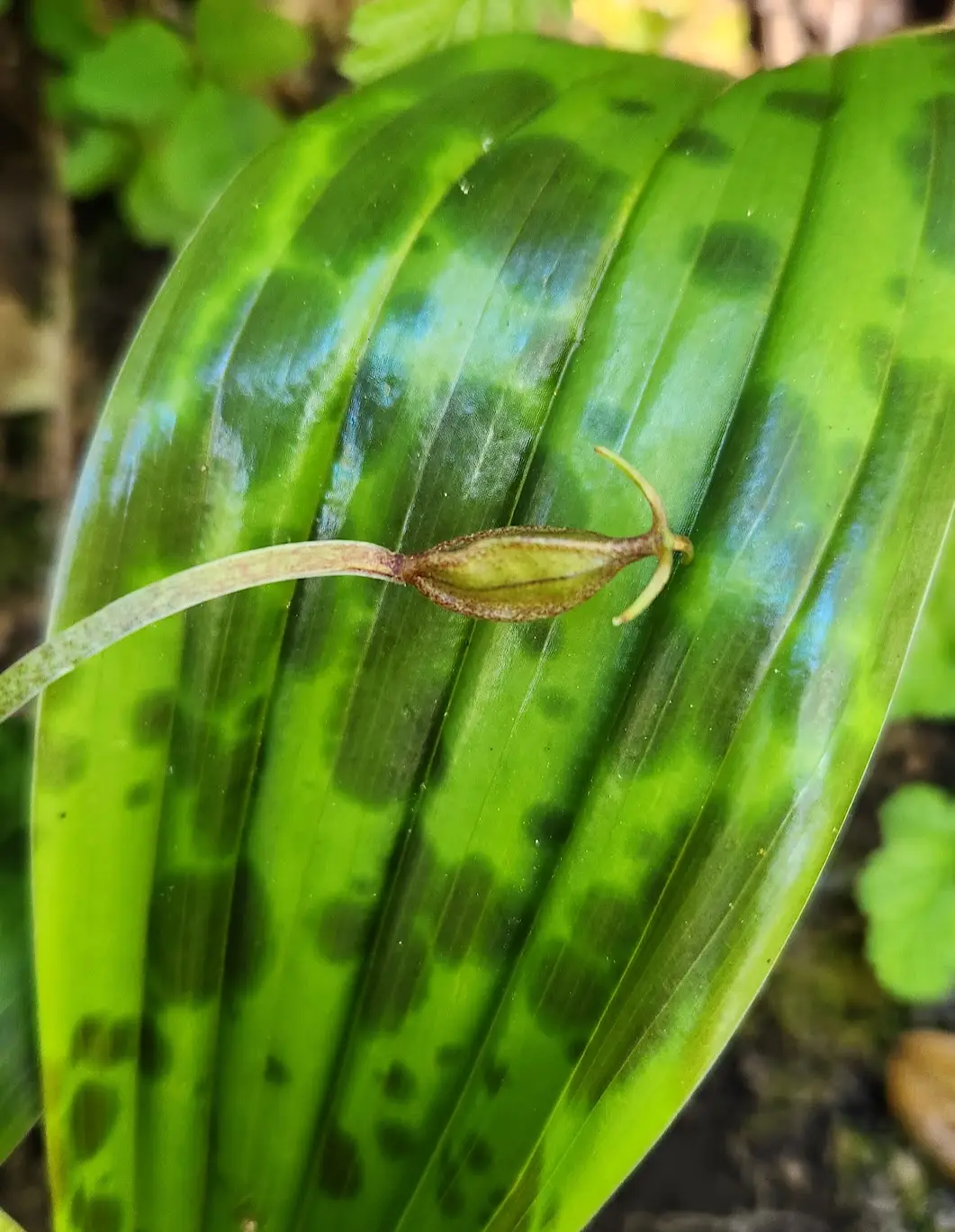
The fruit is a capsule. After pollination, the petals and sepals fall off and the thin pedicel droops or slinks downward, bringing the seed pod in contact with the ground, leading to the other common name for the plant, “Slink Pod”.
Habitat
Grows in mossy, shady, moist places, and often found in coastal mixed conifer and redwood forests.
Location / Range
Hazelnut Trail, Montara Mountain Trail and Brooks Creek Trail. Its range is the coastal fog belt from Santa Cruz to the Oregon border.
Lifespan
Perennial. The leaves appear above ground in late January and die back in late spring after the flowers have produced seeds.
Fascinating / Fun Facts
It’s one of the first plants to bloom after the beginning of the rainy season. Pollination is by fungal gnats likely attracted to the flower’s fetid smell. The mature seed pod droops to the ground where it decays, releasing its seeds. Slugs may play a role in seed release by eating the seed pod walls. Elasiosomes (a fatty snack attached to the seeds) facilitate seed dispersal by ants that carry the seeds into their underground nests where they can germinate away from the parent plant. However, the plant can also be found growing in clusters when the seeds are not dispersed from the mother plant.
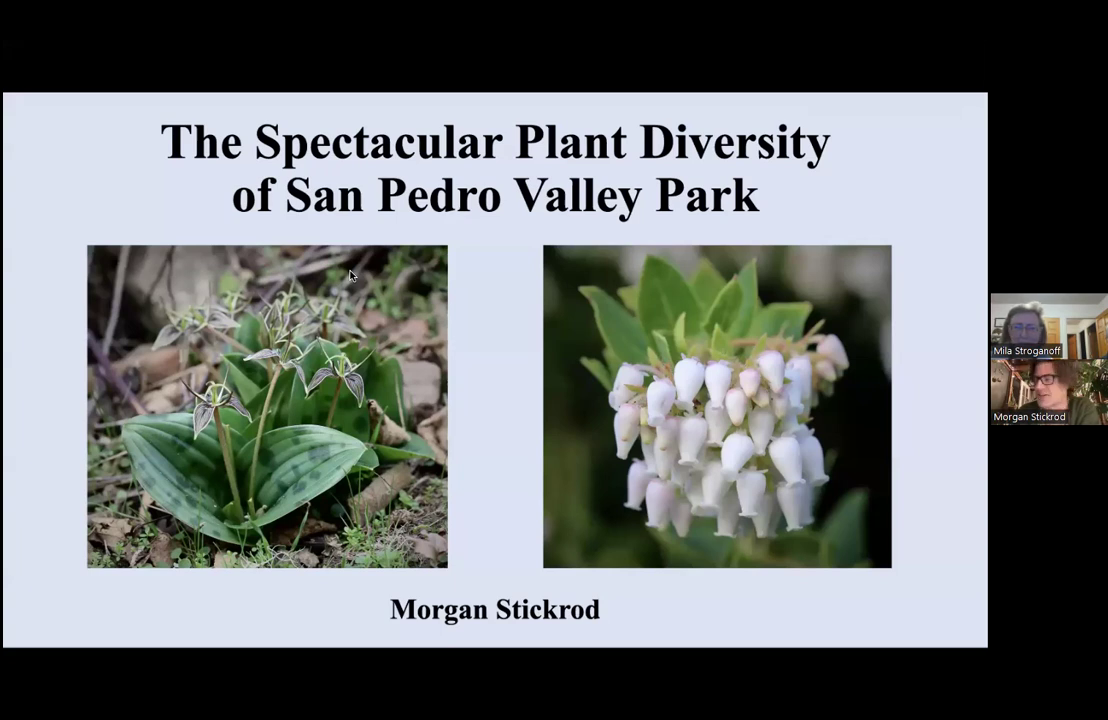
The Friends of San Pedro Valley Park welcomed Morgan Stickrod, a botanist and plant ecologist with over 10 years of experience doing research and field...