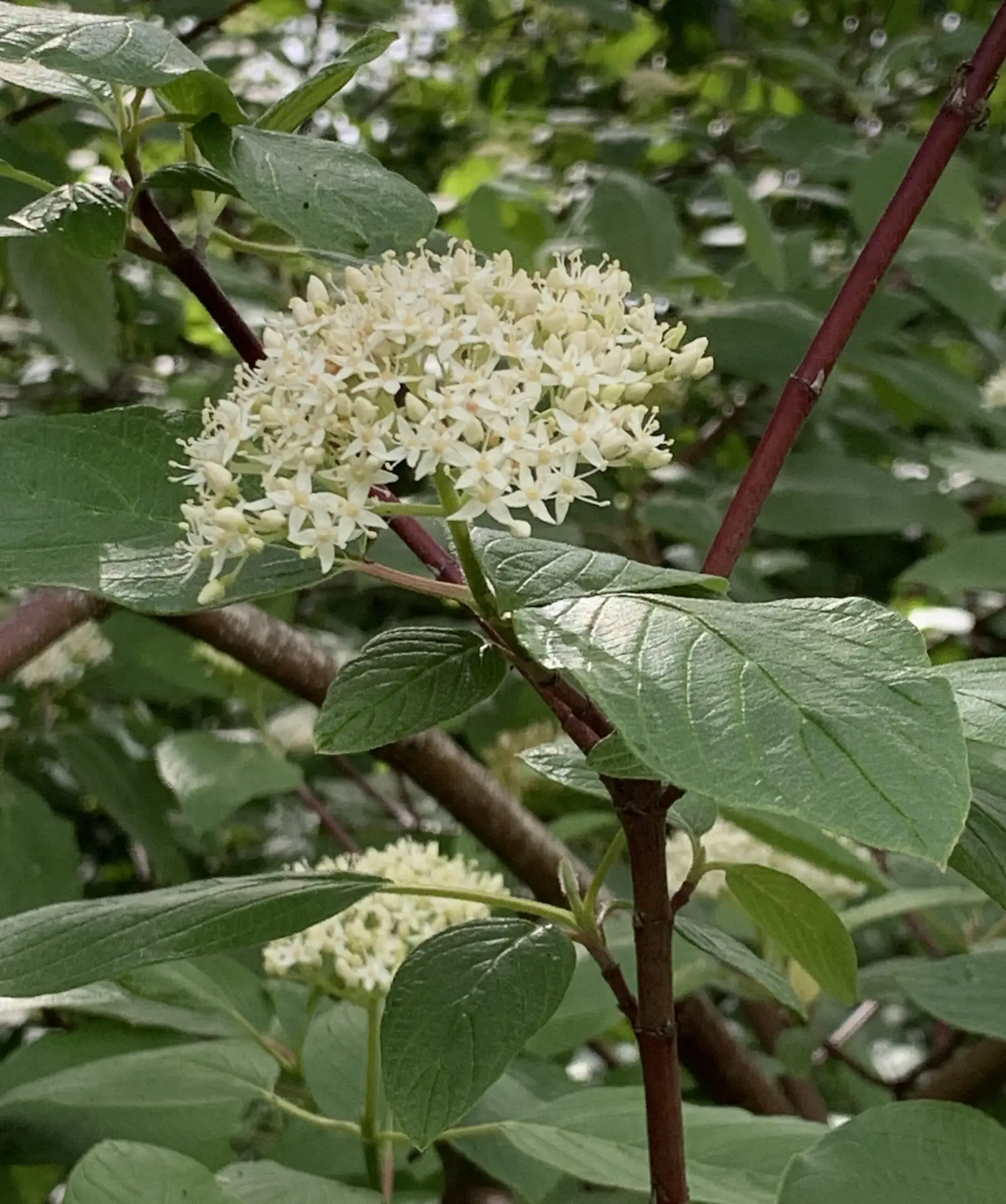
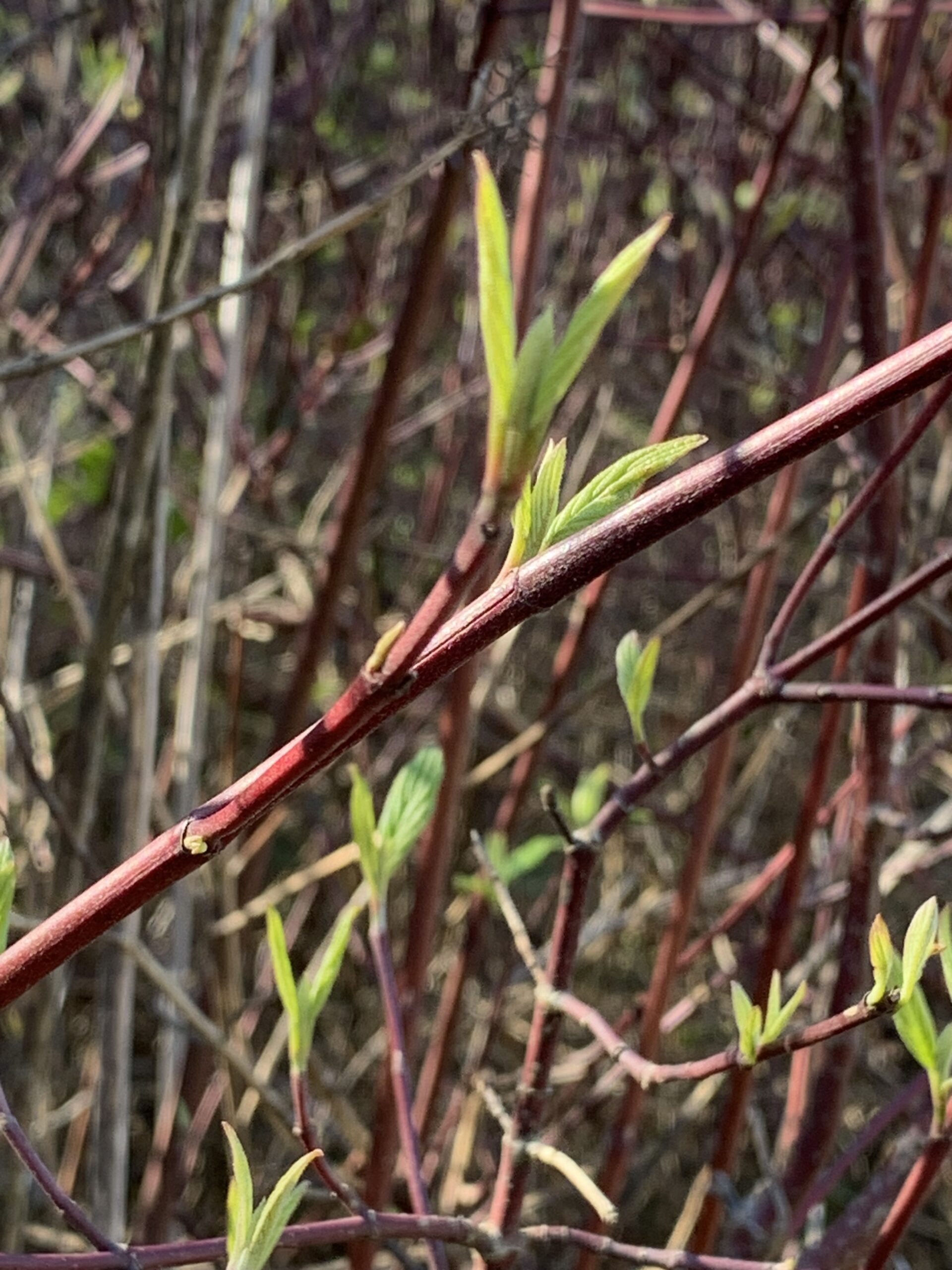
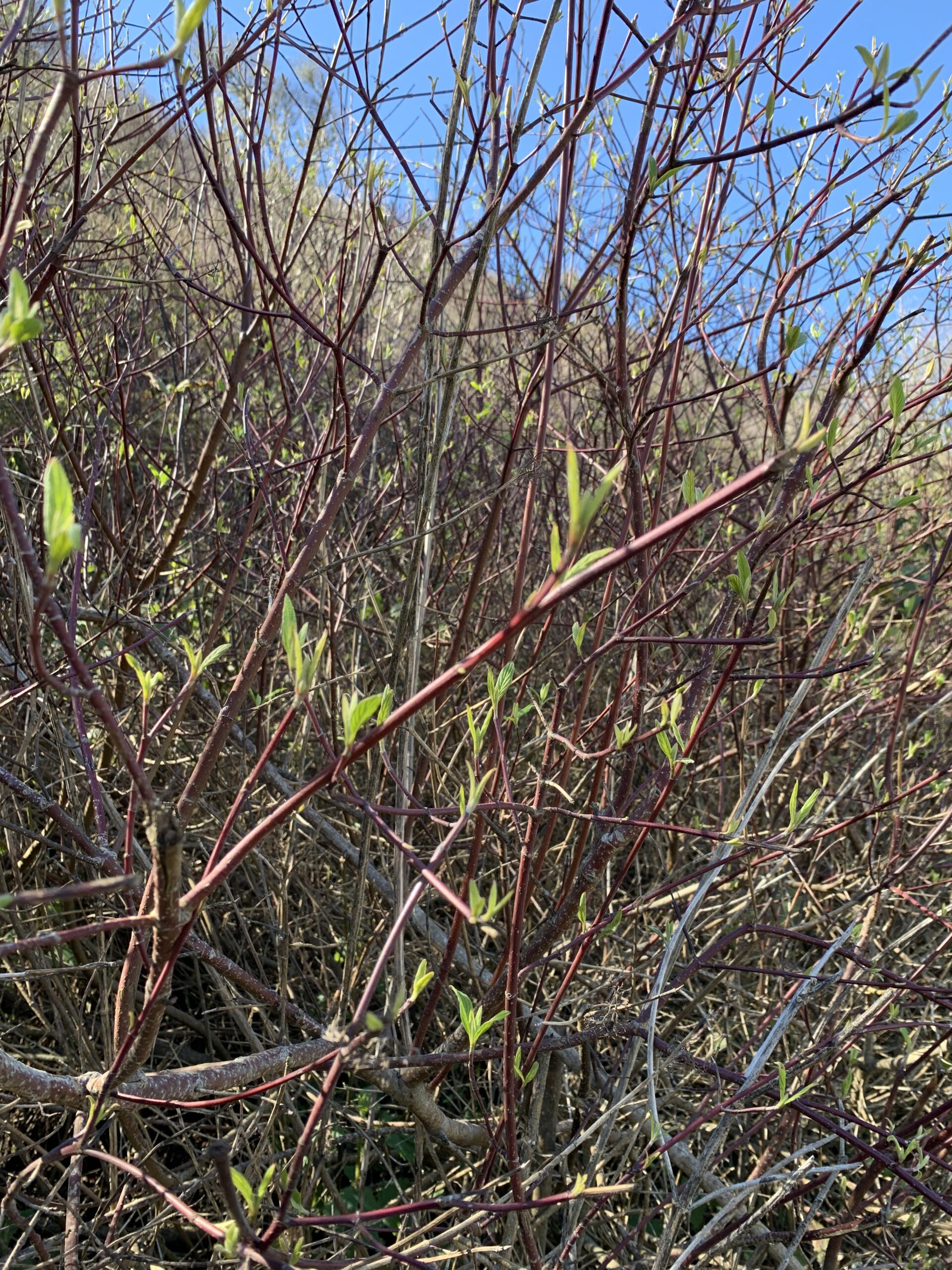
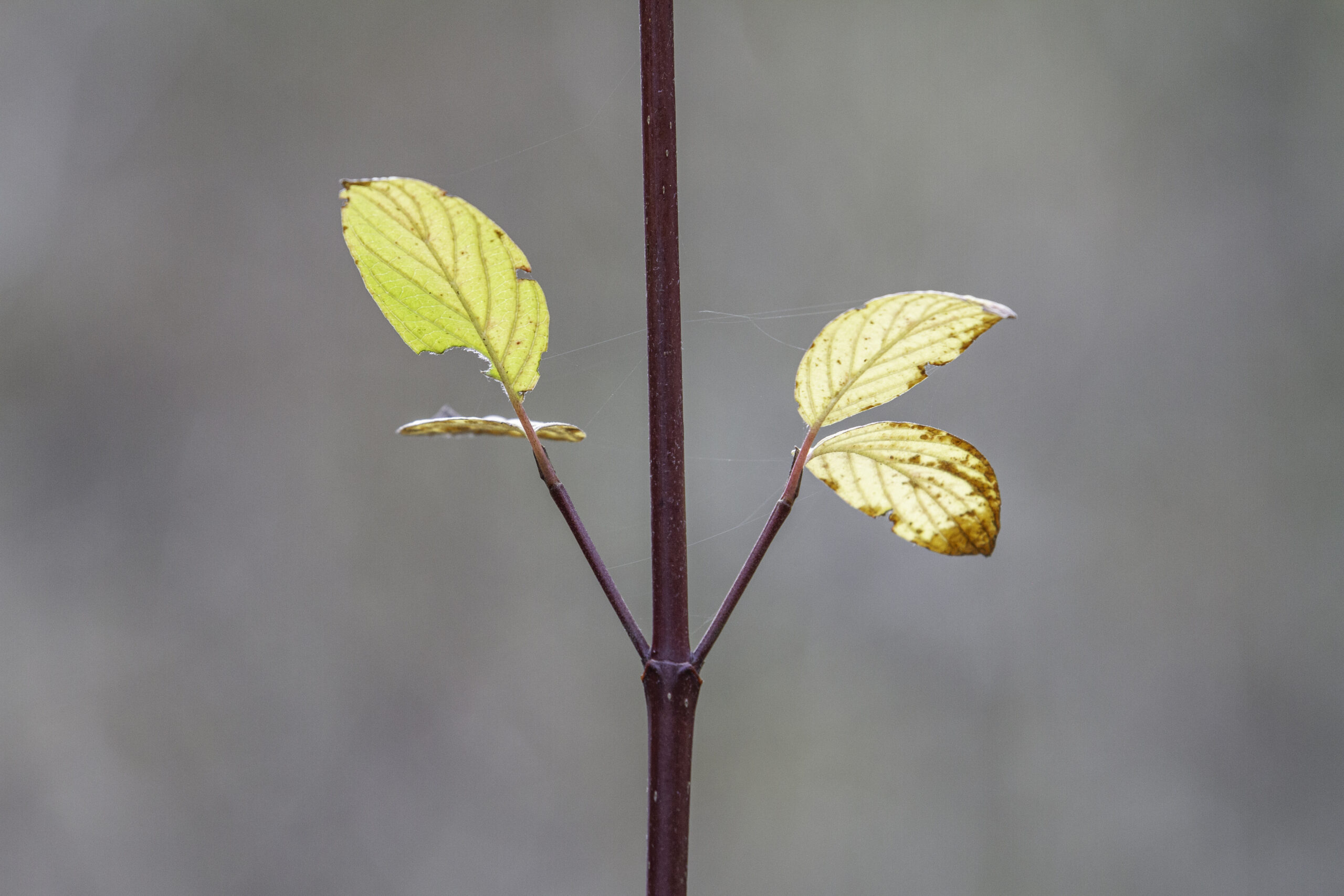
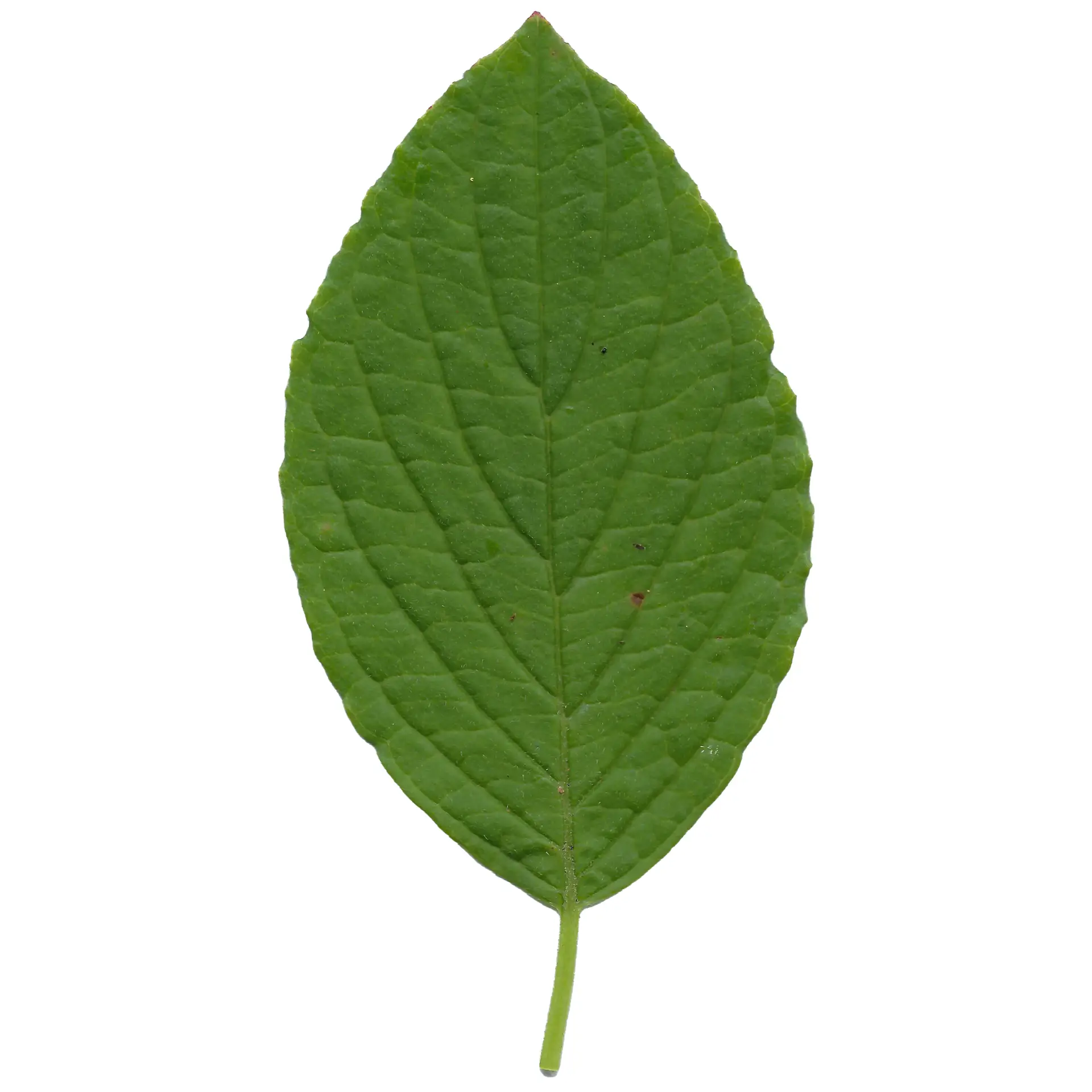
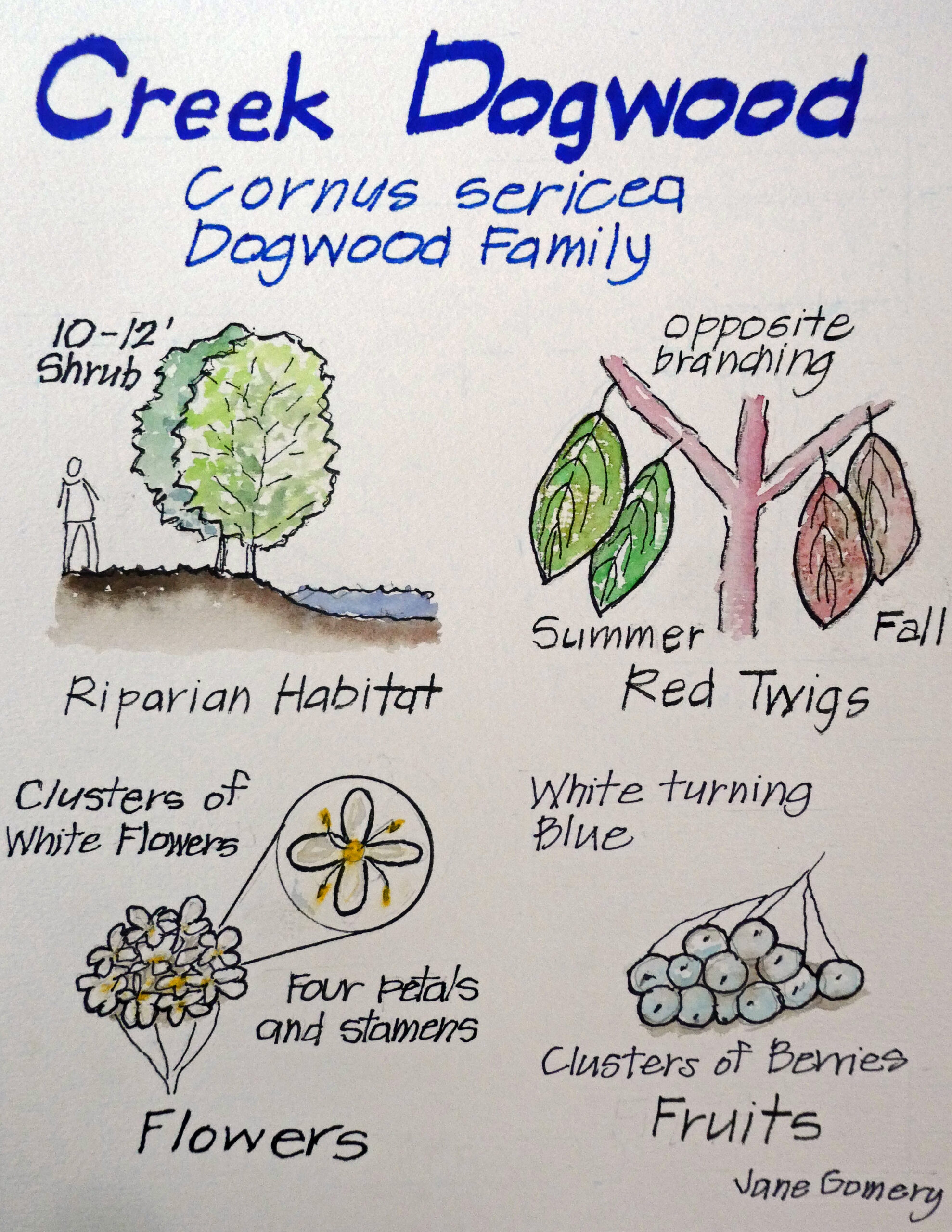
Large shrub in upright, spreading form with red, opposite branches, leaves with pronounced midrib and veins that are parallel to leaf edge, and clusters of small white flowers in spring.
Similar To
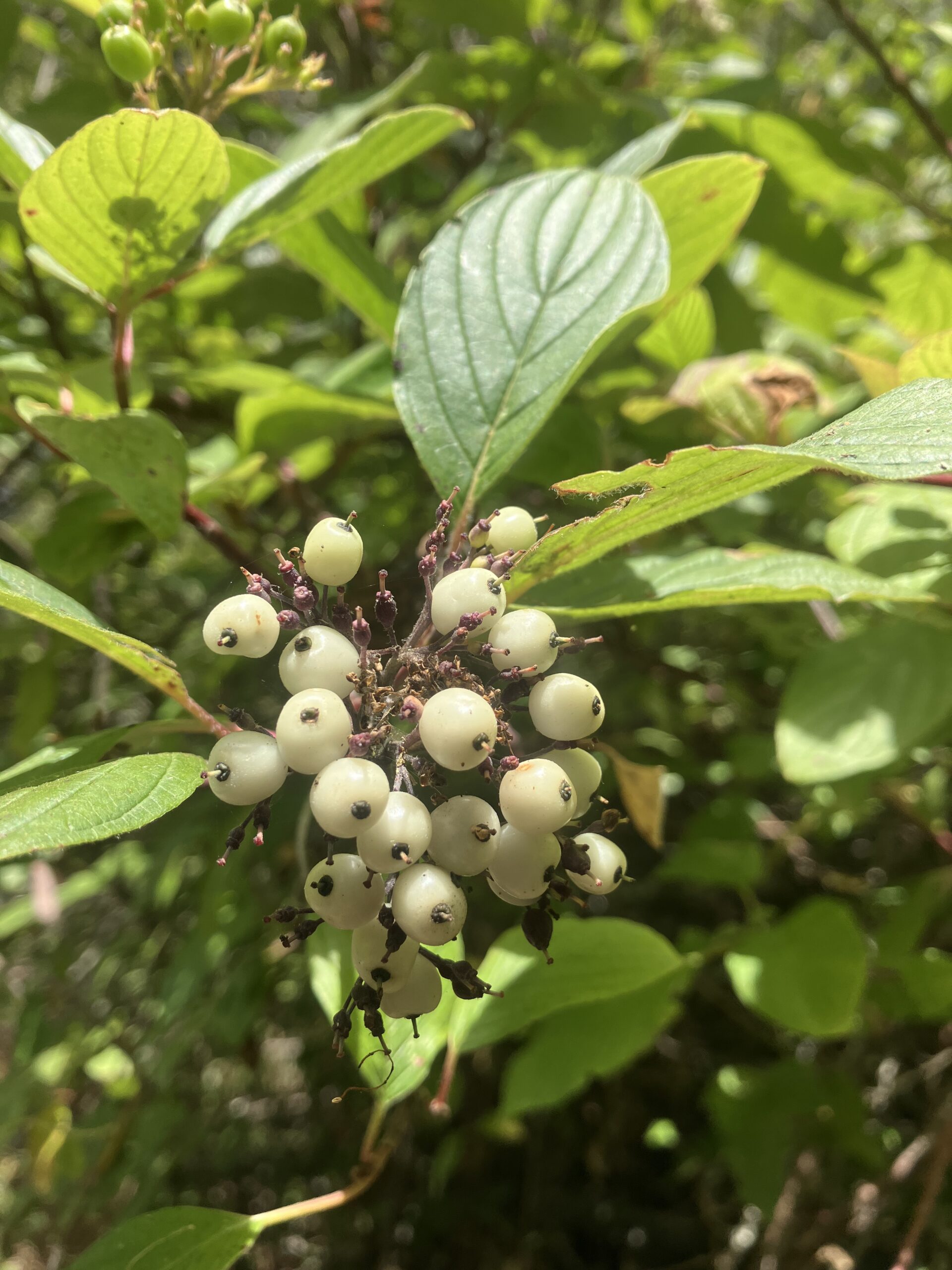
Cornus sericea is highly variable complex with two supspecies, ssp.sericea and ssp.occidentalis, both of which occur in San Mateo county. The differences between the species are densely hairy vs. glabrous leaf undersides, and smooth or ribbed seeds. Plants in SPVP mostly key out to ssp. sericea, but some plants can exibit characteristics of both subspecies.
Height / Size
4 to 15 feet tall, 12 feet wide
Leaves
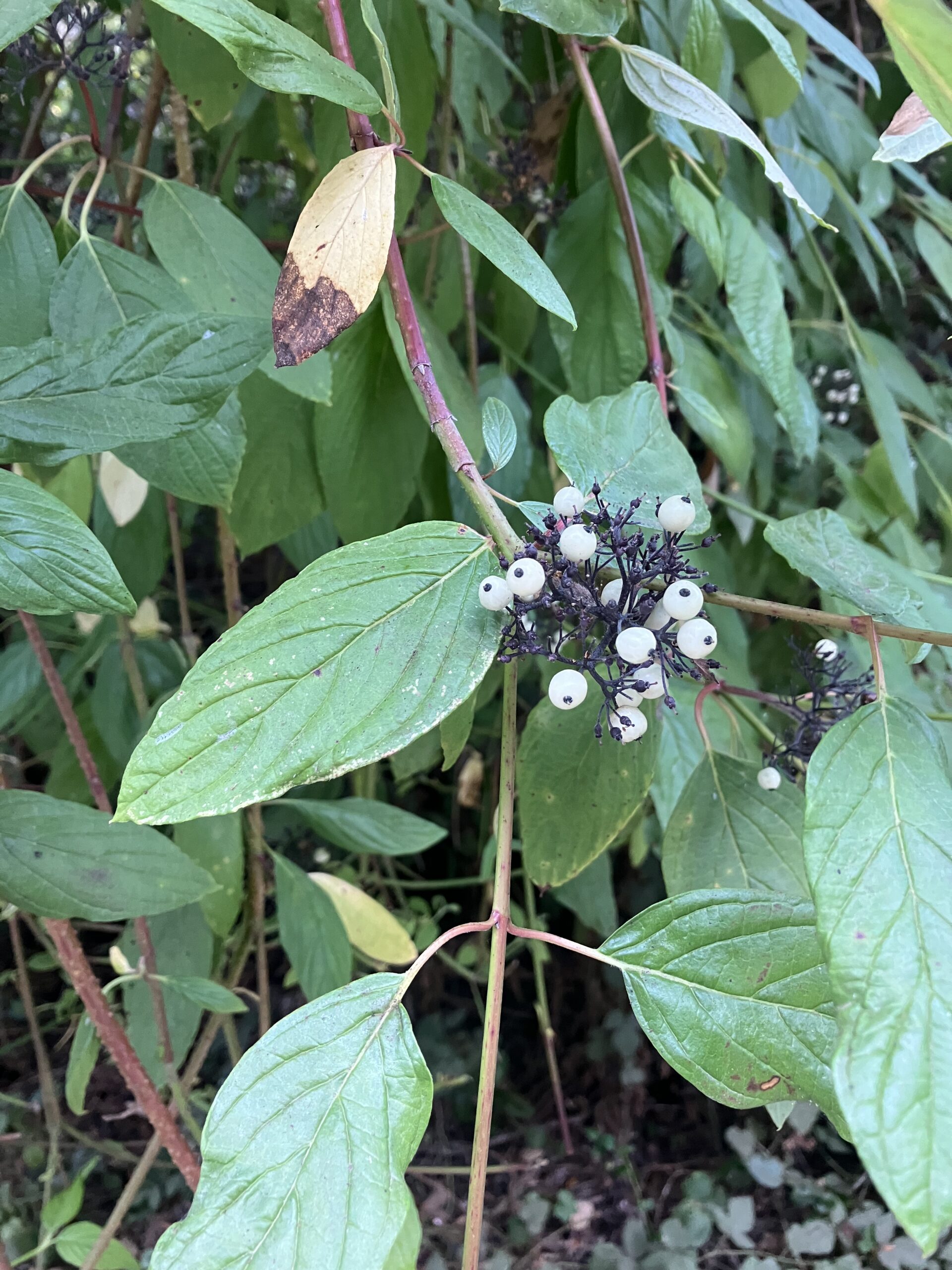
Leaves are medium green, deciduous, opposite, and smooth-edged with a pronounced midrib and arcurate venation, where the veins that curve parallel with the leaf edge towards the tip, creating a heart-shaped arrangement. This leaf arrangement is diagnostic for plants in the Dogwood family. Colorful in the fall.
Flower
Tiny white flowers with 4 petals and 4 stamens in dense round top clusters. Inflorescence is a cyme, a flat topped, branched inflorescence where the top or central flower blooms first.
Bloom Time: March to May
Fruit / Seed
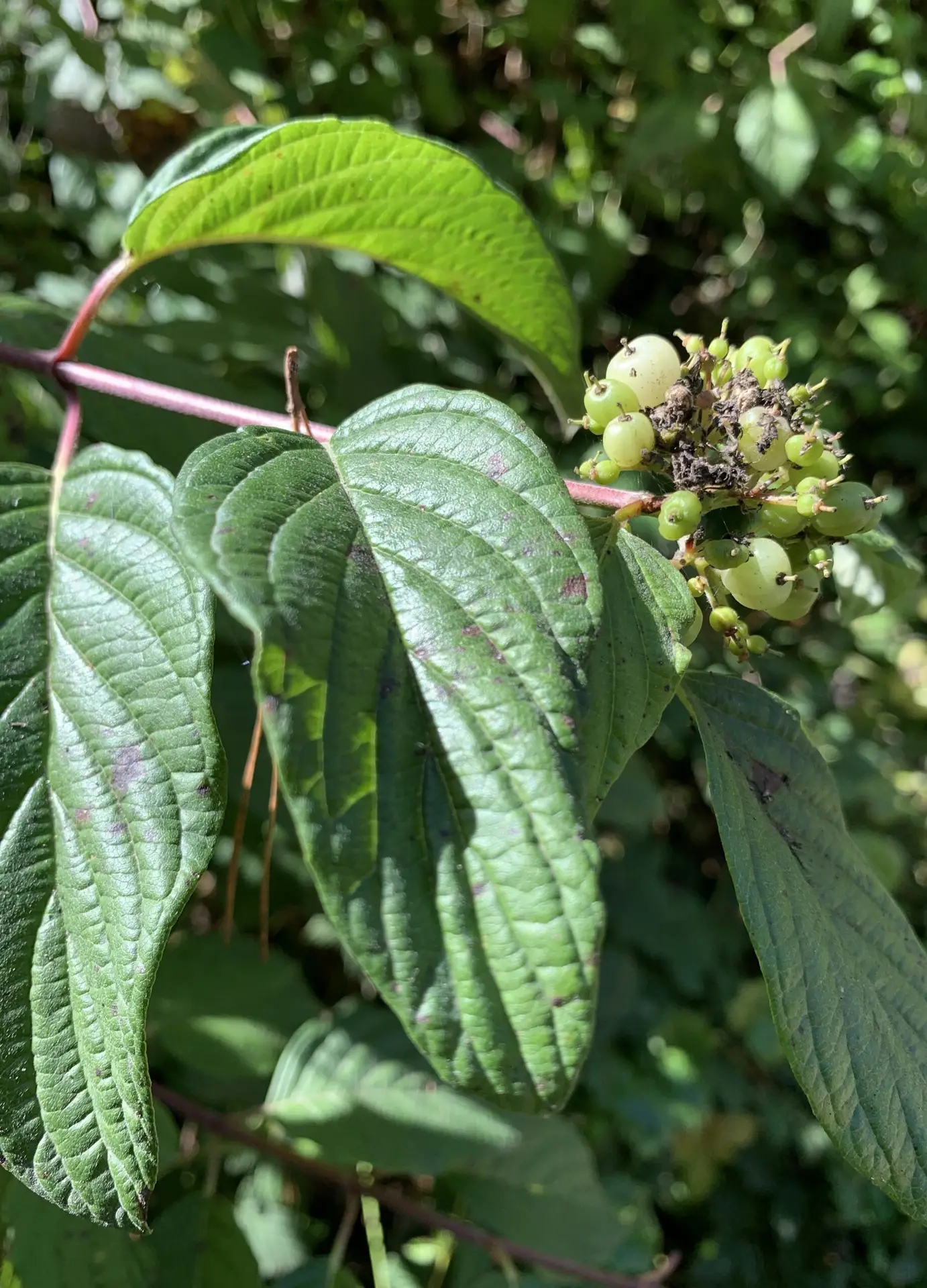
Small round berries ranging from white to gold to blue appear in umbrella like clusters.
Habitat
Riparian habitat with moist soils and part shade.
Location / Range
Creekside trails, Plaskon Nature Trail. Found in northern, southern and central California and elsewhere in North America.
Lifespan
Moderately long lived.
Fascinating / Fun Facts
Also known as Red Osier Dogwood. The red branches are easy to spot in fall and winter when the leaves have dropped.