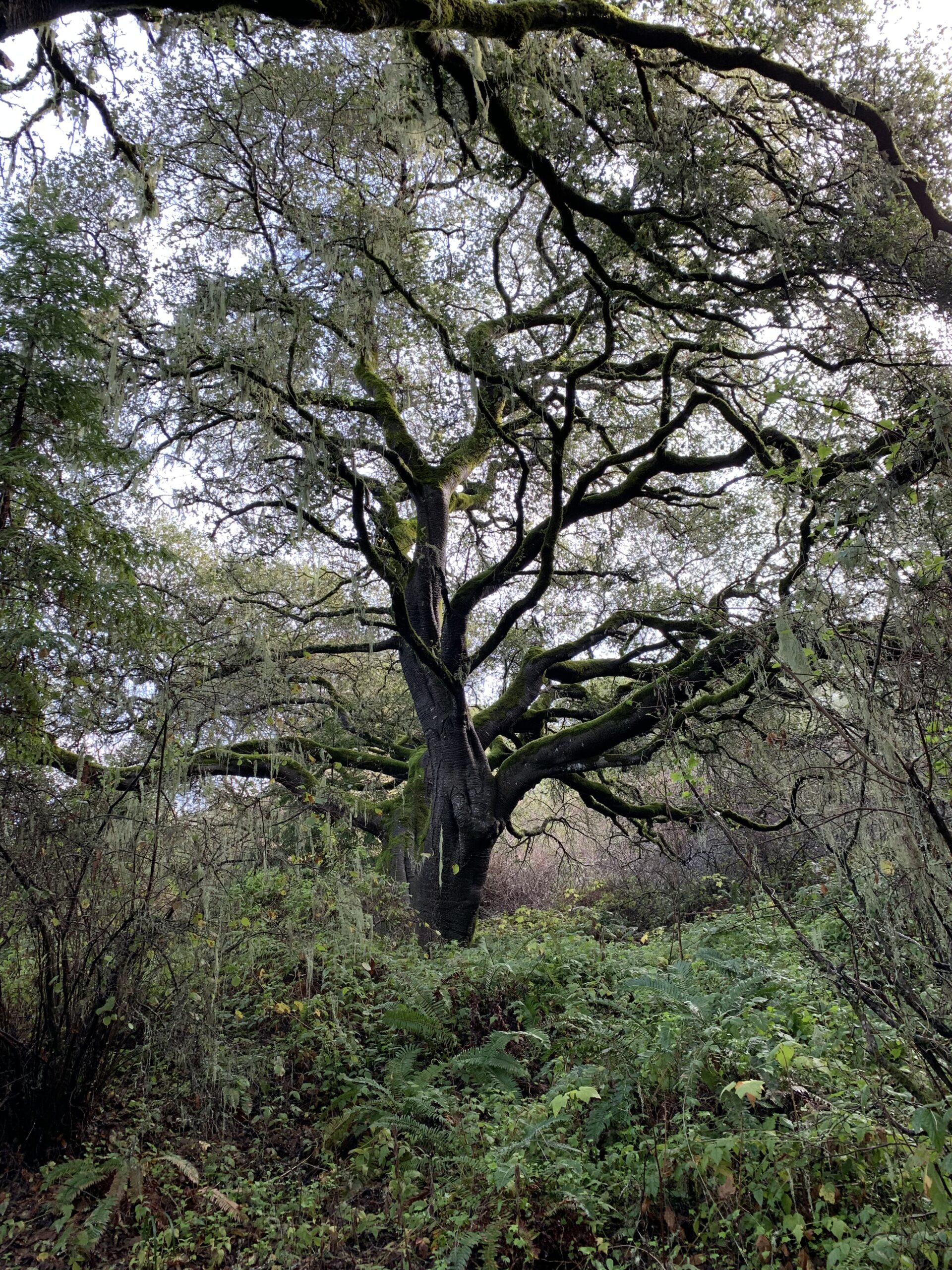
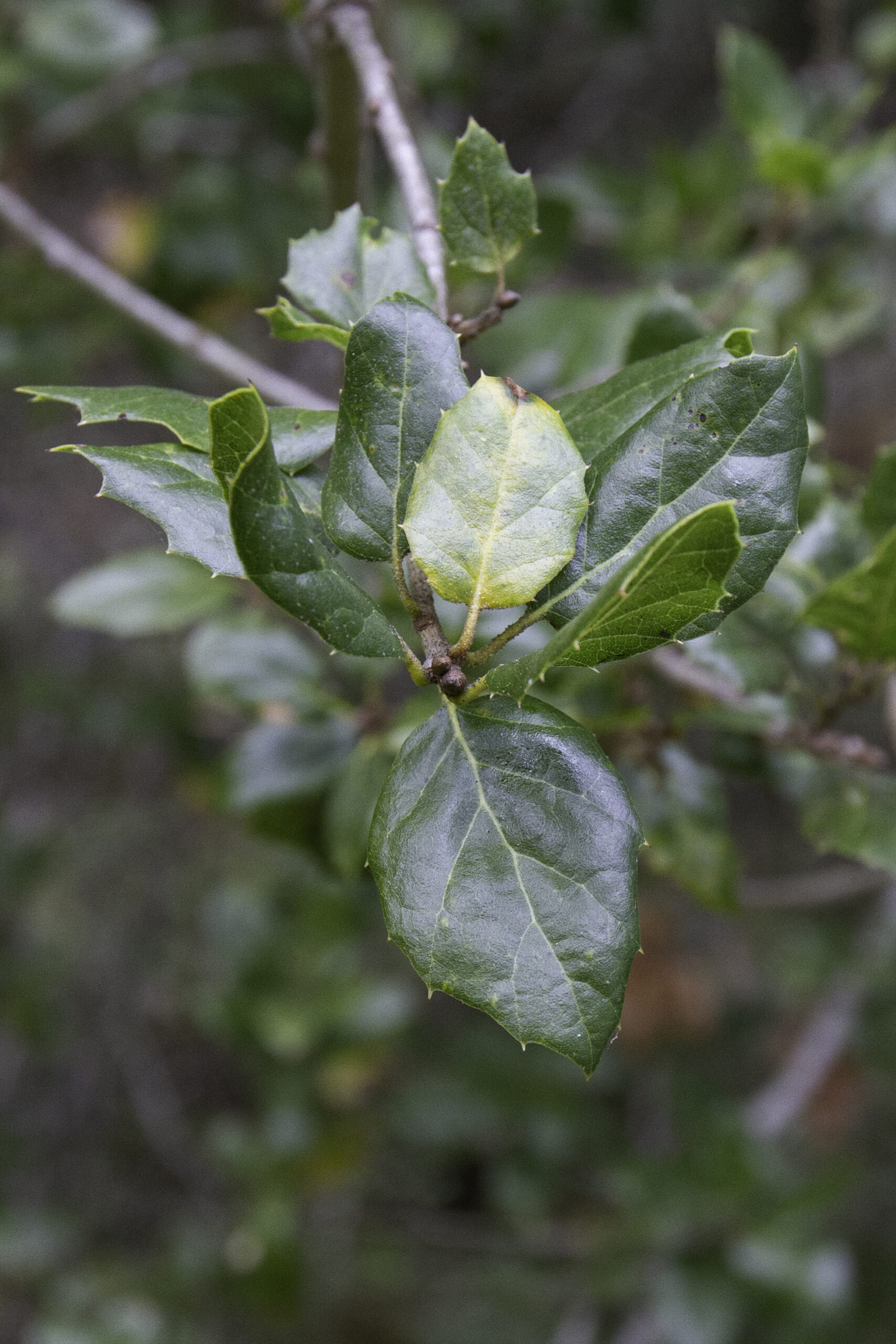
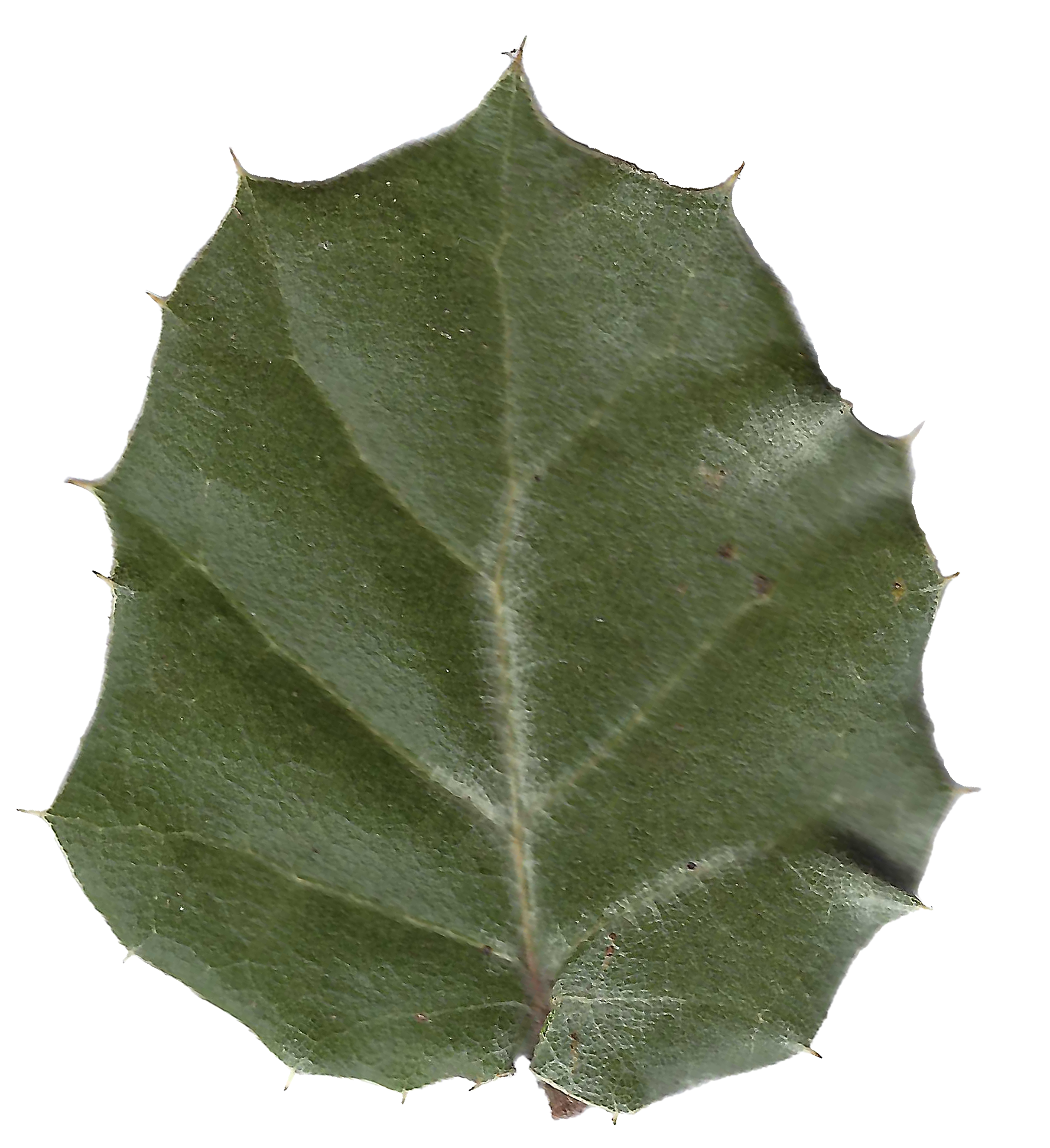
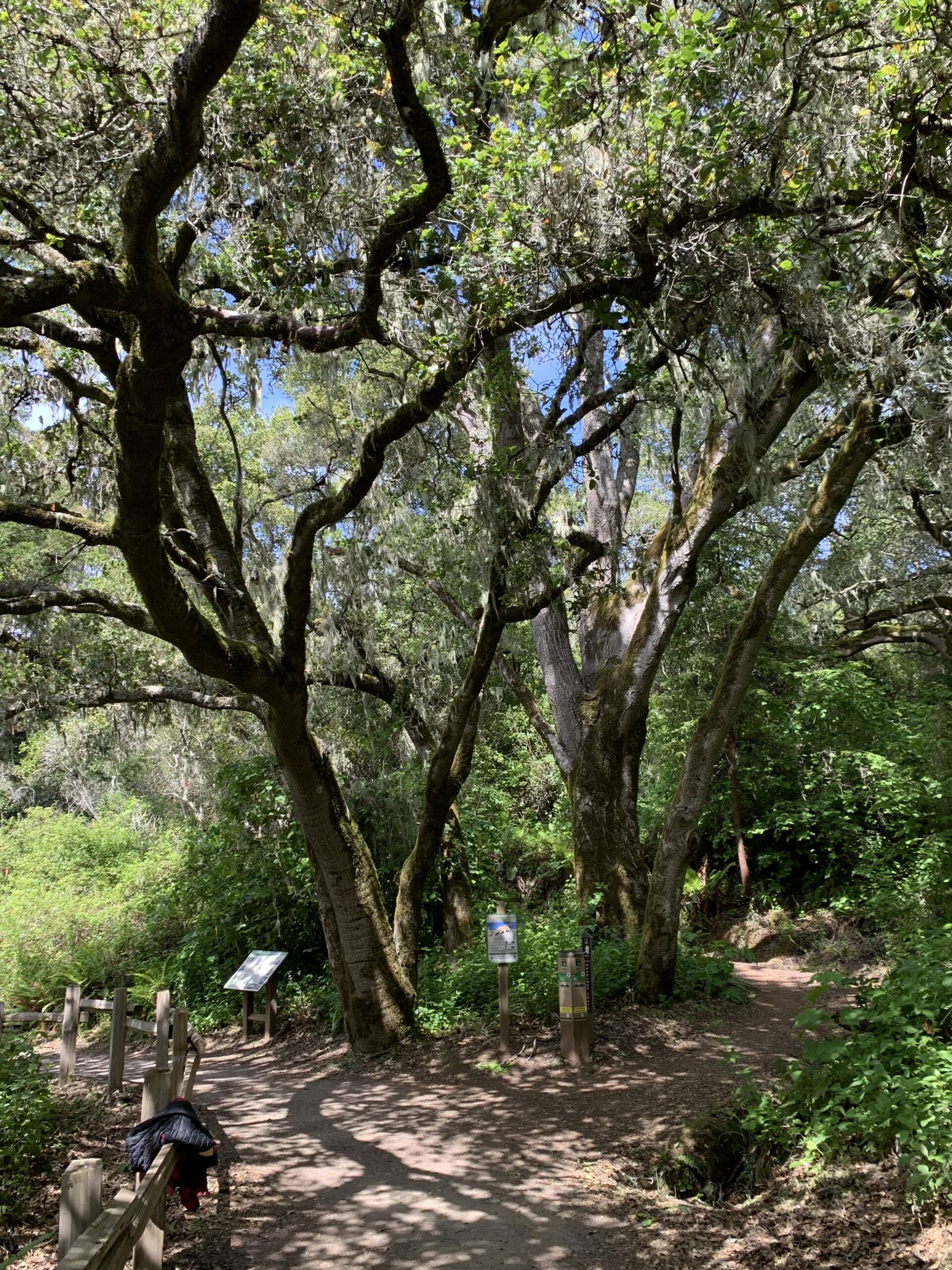
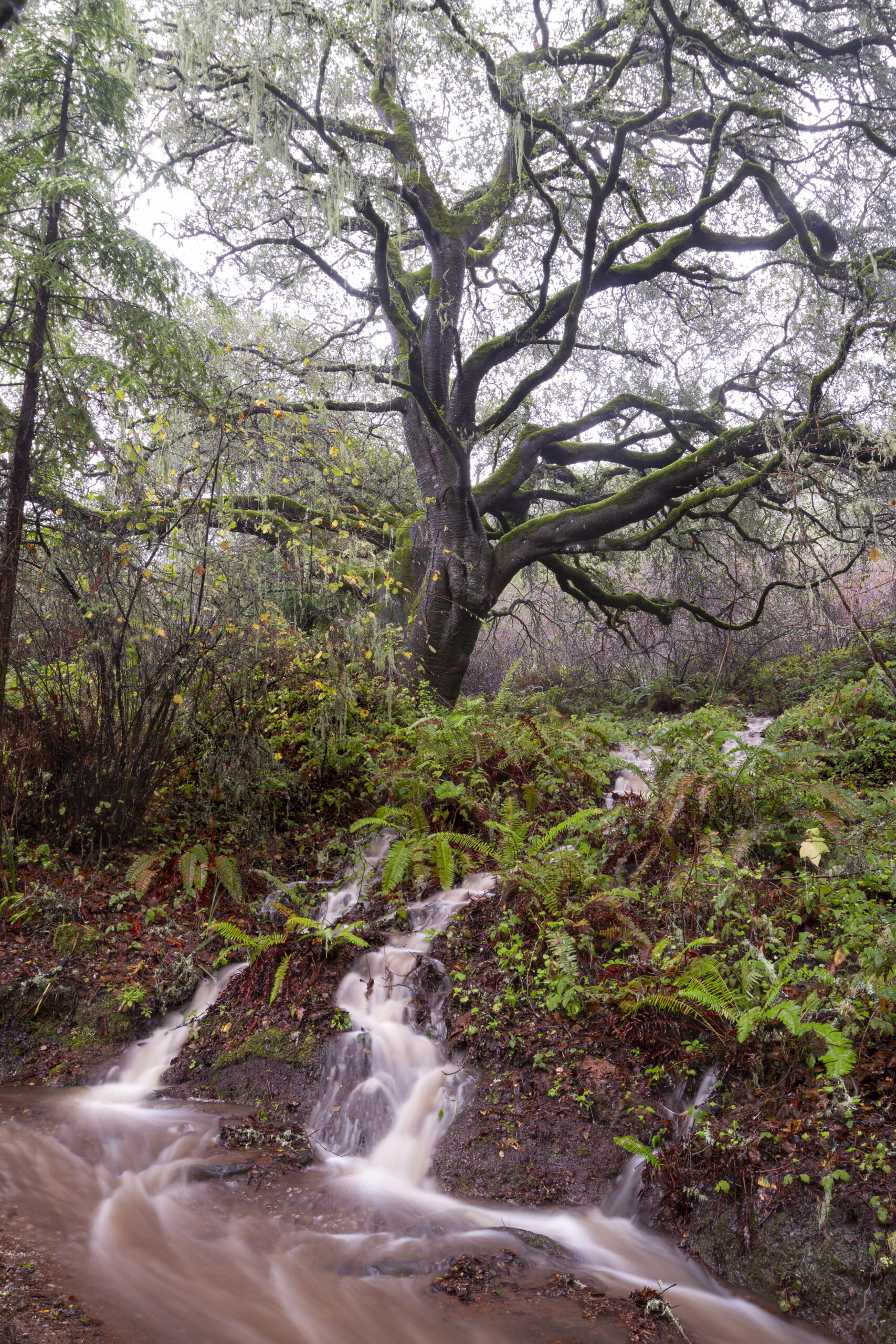
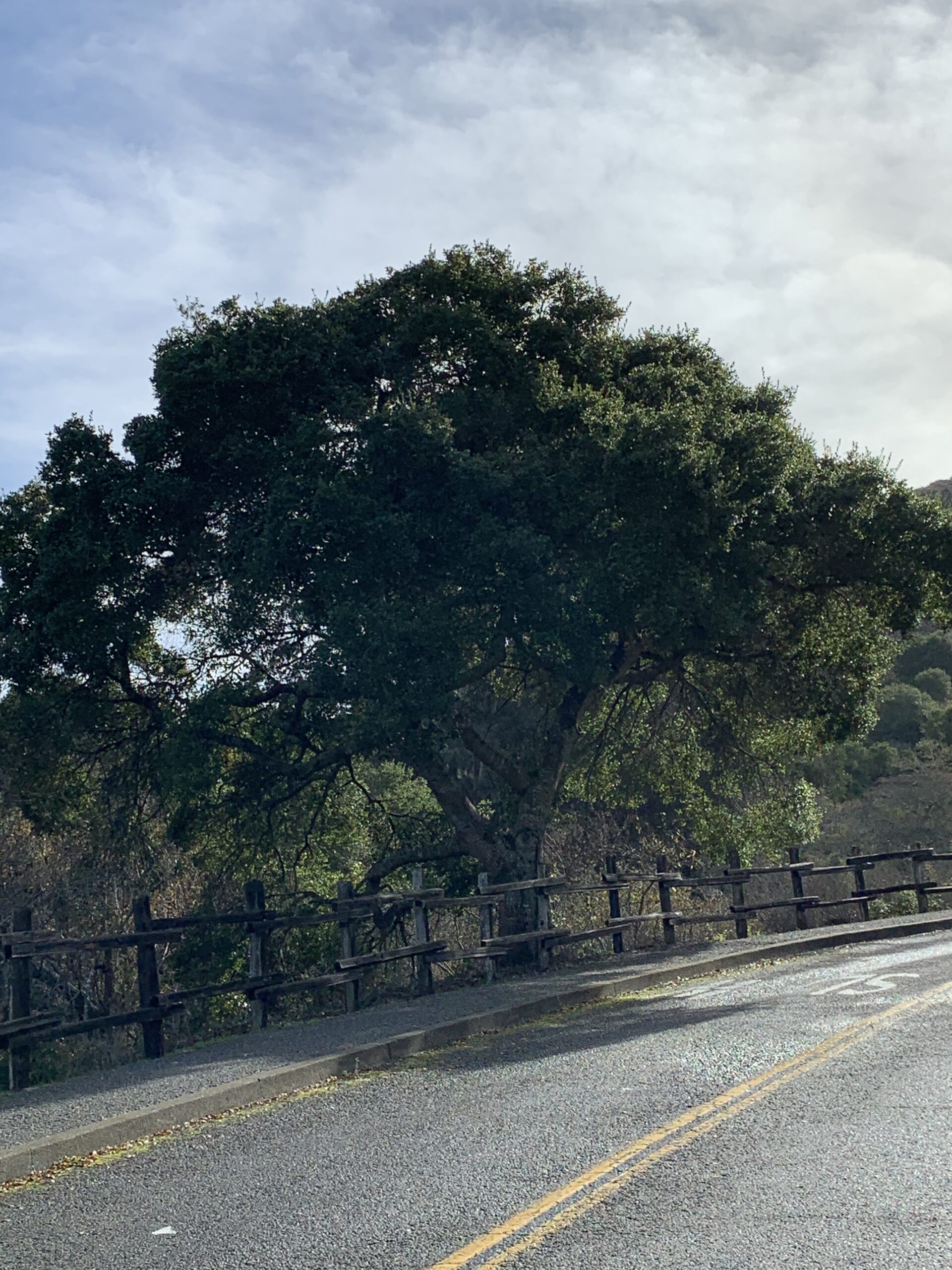
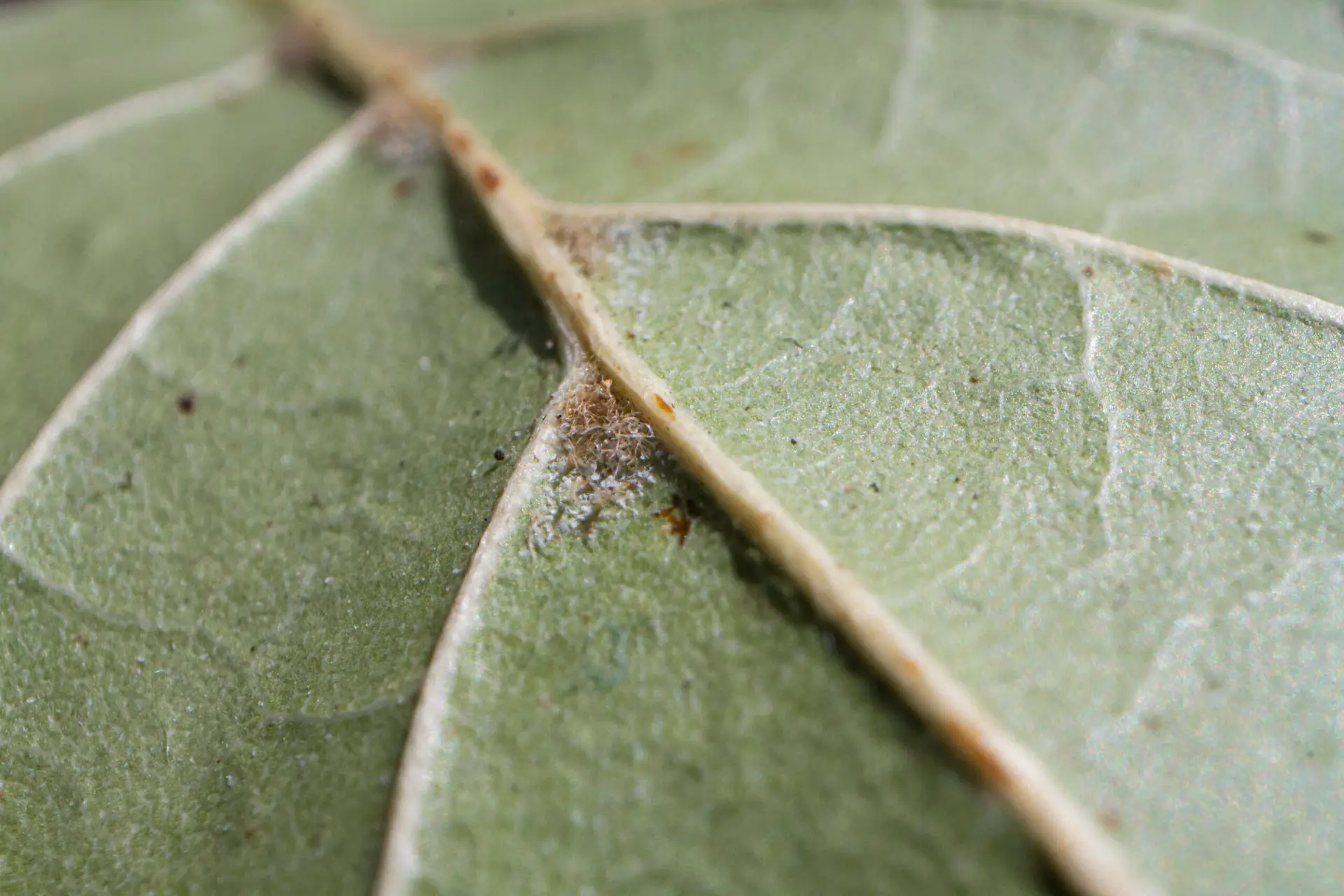
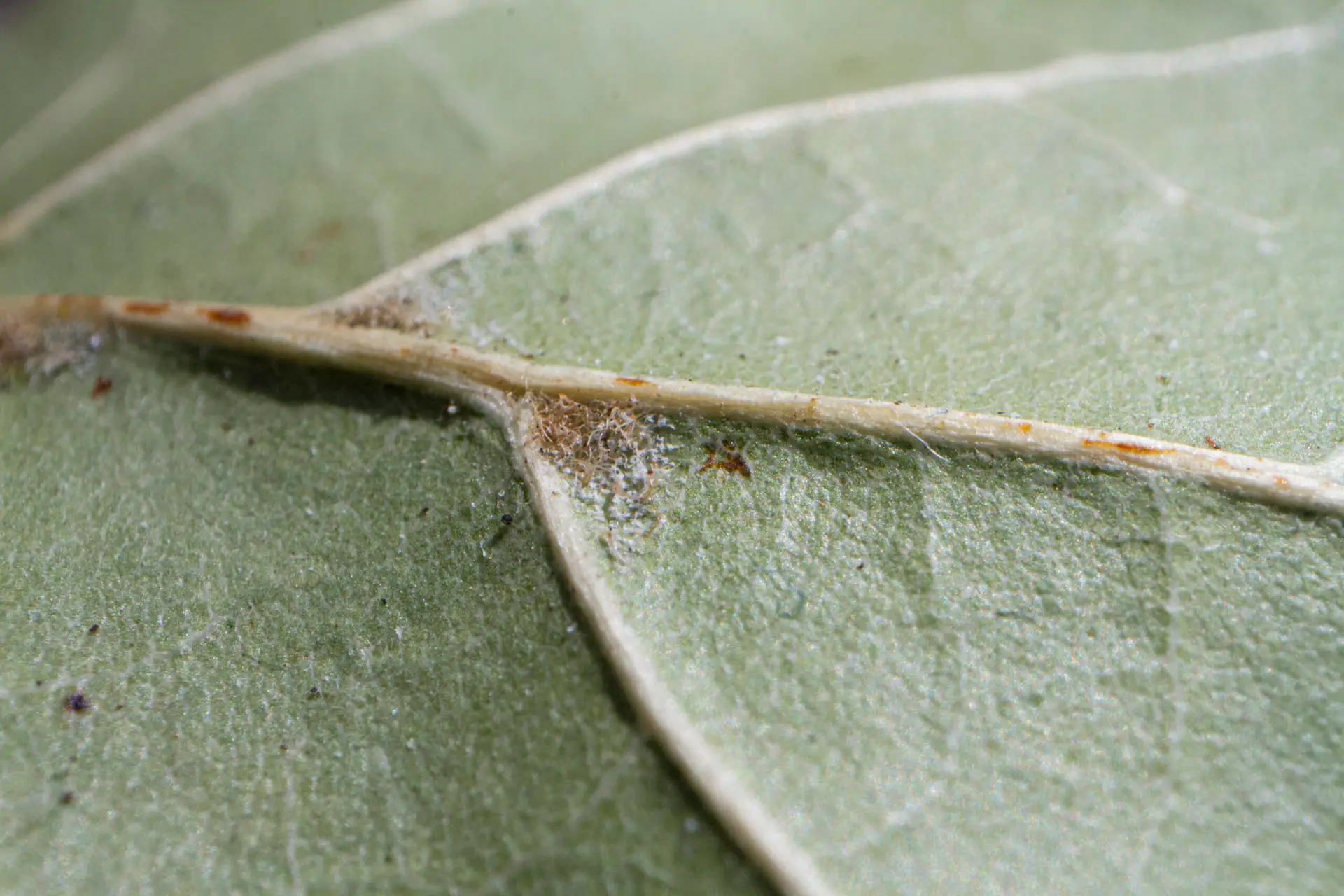
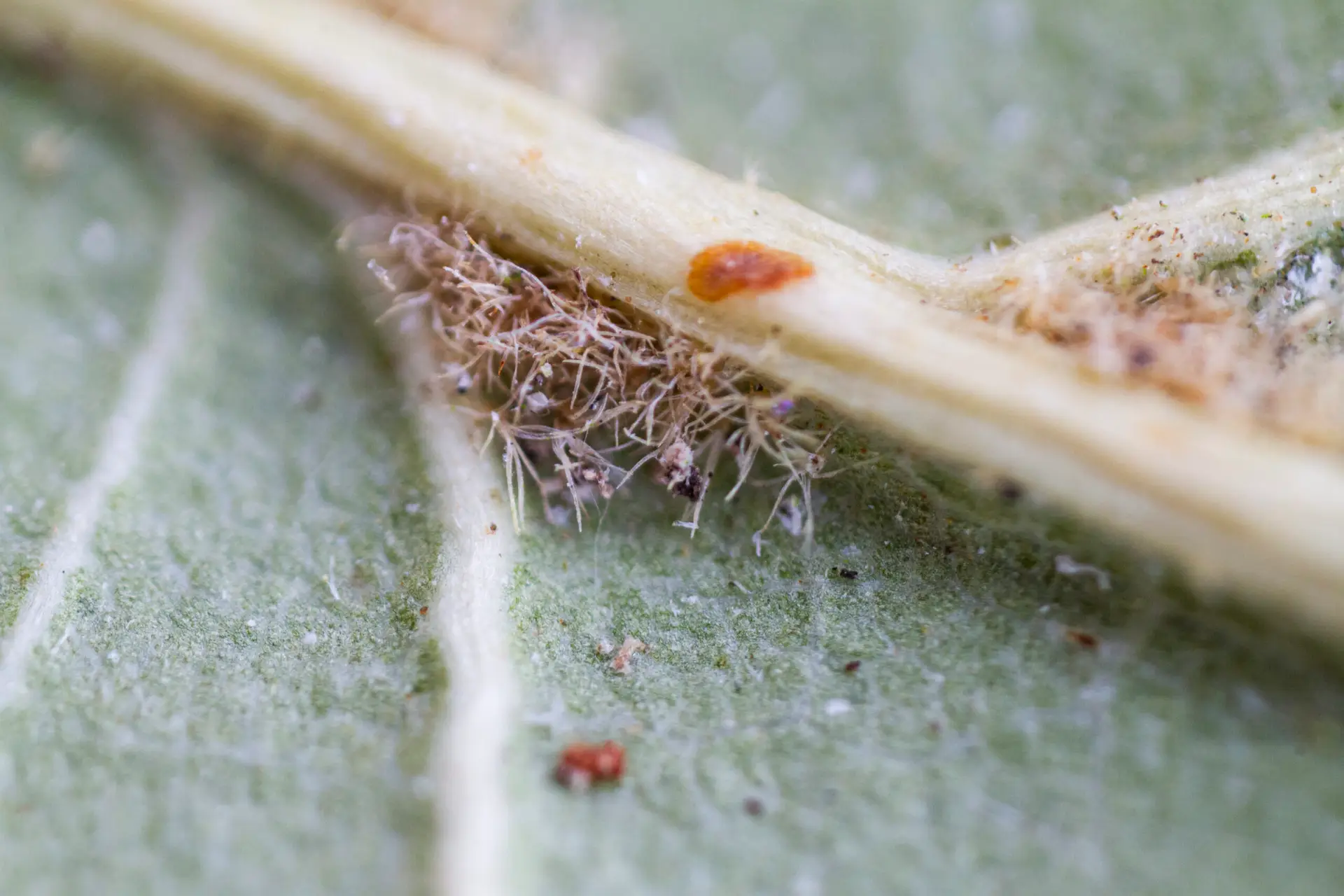
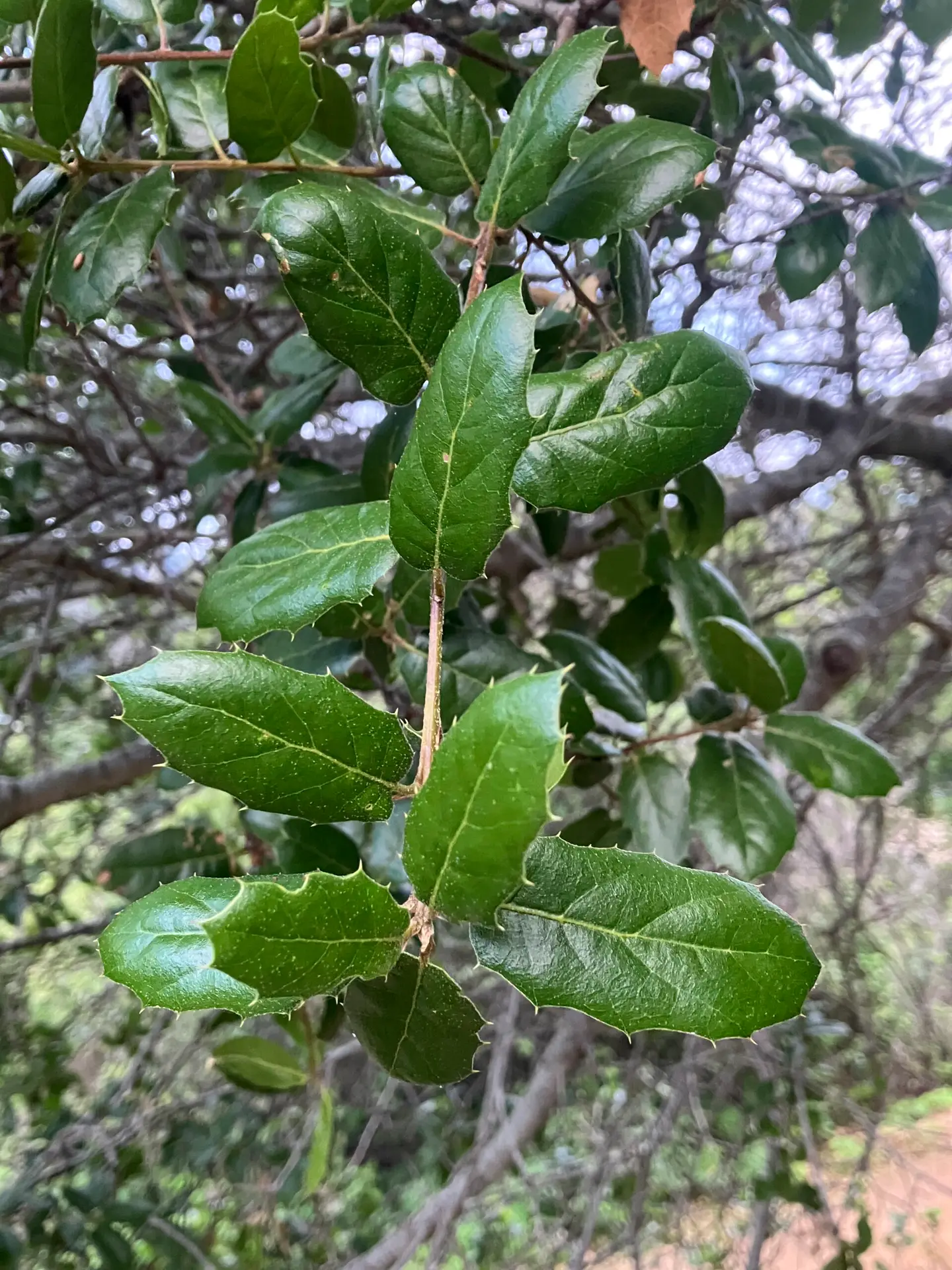
Evergreen oak with dark green leaves and arching branches . Many leaves have “hairy armpits” or small tufts of hair on the underside of leaves where the central and lateral leaf veins meet. Dominant oak along the immediate central and northern coast, it thrives in our coastal environment.
Height / Size
Height to 40 feet, or more, with crowns up to 130 feet across.
Leaves or Needles
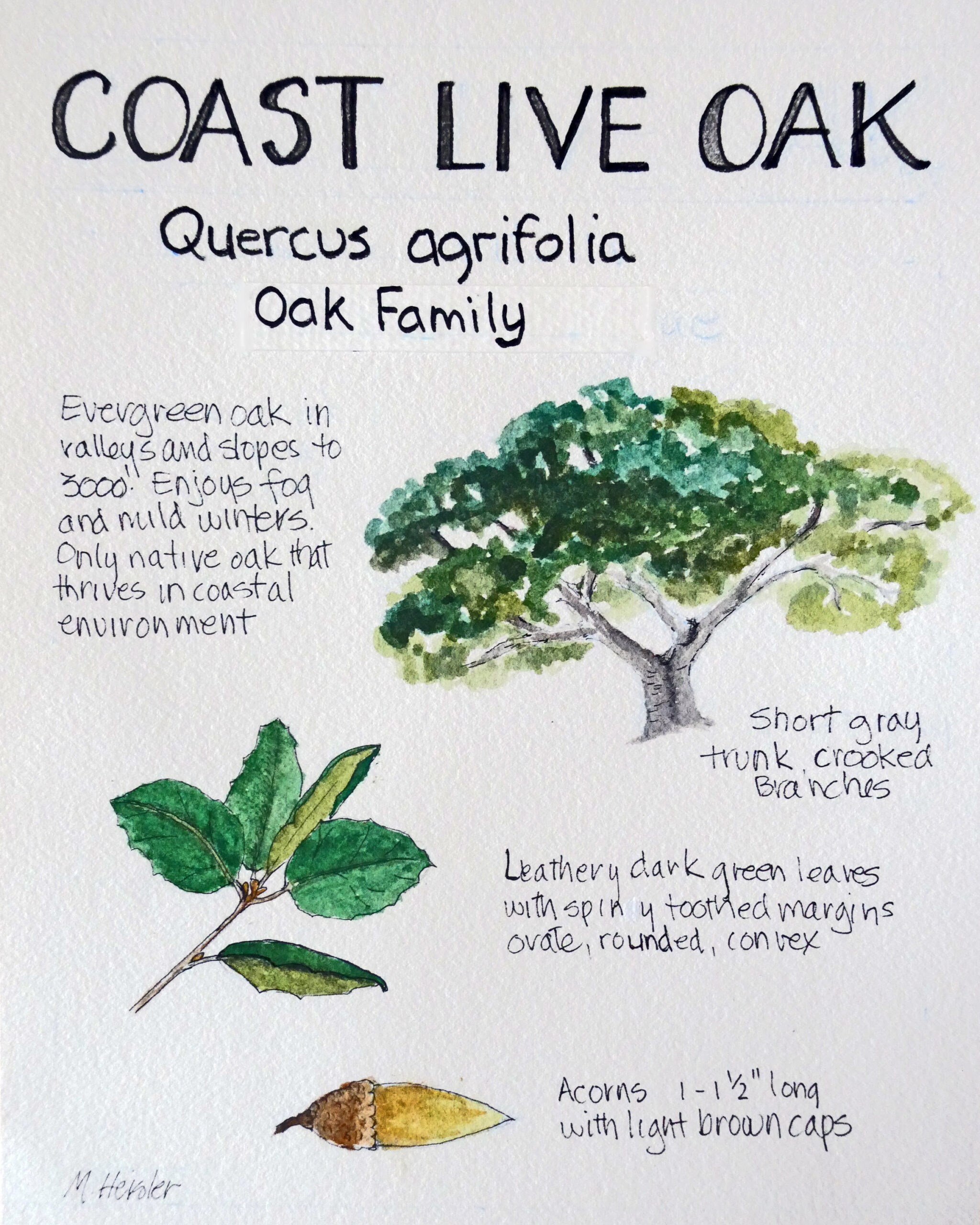
Leathery, dark green, round to widely-ellpitic leaves, often slightly convex and variably revolute (curved under) at the margins, with occasional to sparse spine-toothed margins. Tufts of hair typically occur on the underside of the leaf at central junction of leaf veins.
Bark / Trunk
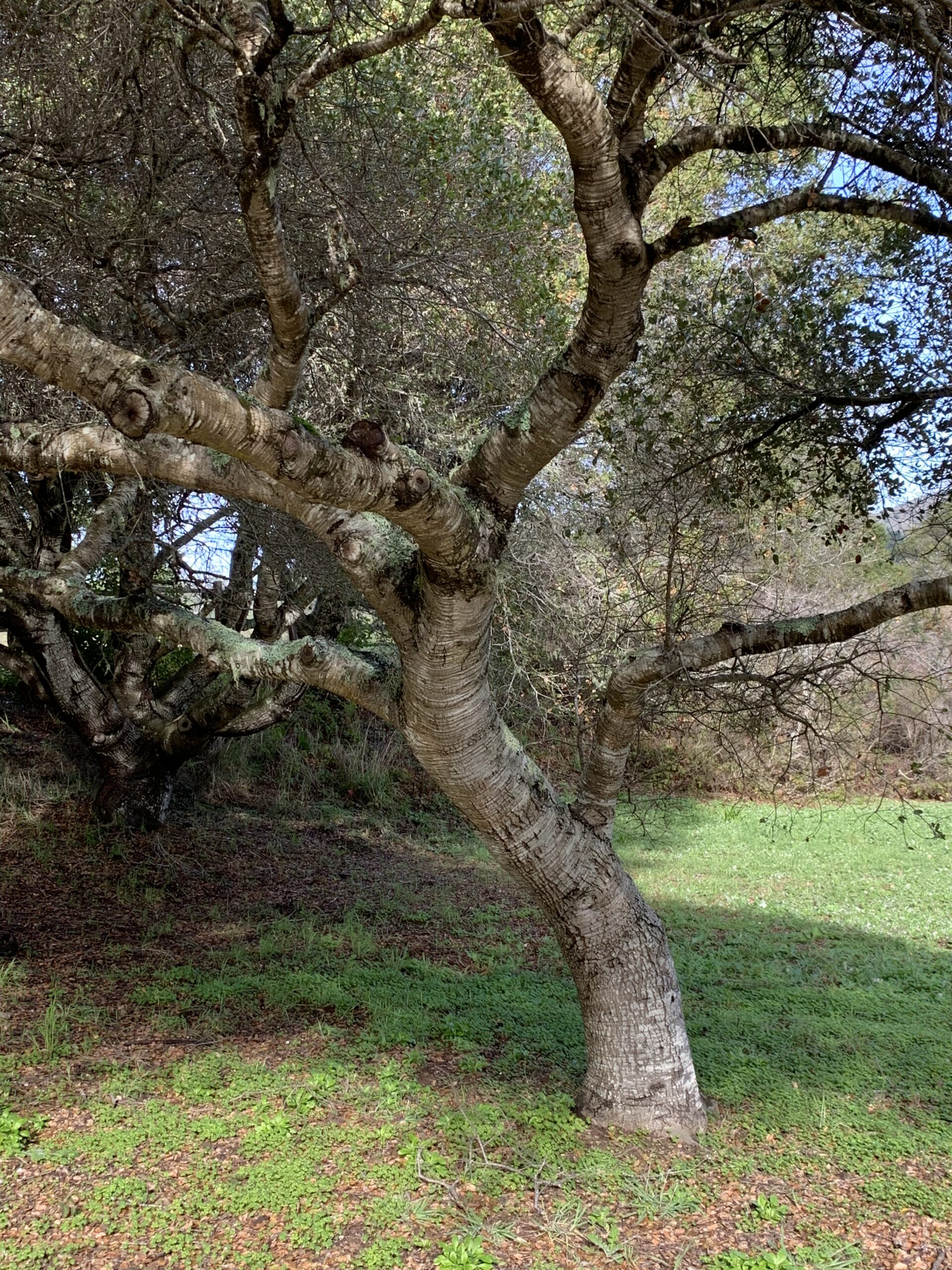
Short, silver-gray trunk from 1 to 4 feet in diameter, with arching, often gnarled branches.
Flower
Separate male and female flowers appear in February and March on the same plant (monoeious). Male flowers (staminate inflorescence) are pale green pendant catkins. Female flowers (pistillate infloresence) are small and inconspicuous, forming at the base of new leaves. Bloom time: February to April
Fruit / Seed / Cone
Acorns are 1 -1 1/2 inches long, slender and pointy with light brown caps. Caps have flat scales, layered like shingles. The inside of the acorn cap is hairless (whereas it’s quite hairy for Interior Live Oak (Quercus wislizeni) acorns. Acorns are nestled among this year’s leaves, at the end of the twig, and mature in the first year. On the other hand, Interior Live Oak acorns take two years to grow, so by the time they develop they’re found behind this year’s leaves on the twig.
Habitat
Valleys, hillslopes, mixed-evergreen forest, and woodlands.
Location / Range
Coast Live oaks can be found on all trails in the park and surrounding the parking areas. Endemic to the California Floristic Province; occurs from coastal northern California to northern Baja California, Mexico.
Lifespan
Long lived tree, often more than 250 years.
Fascinating / Fun Facts
Early explorers to California called this the ‘holly leafed oak’ because of its shiny sharp-toothed leaves. The acorns are an important food staple (several applications) for a number of indigenous groups throughout the extent of the tree’s range. Oaks are a keystone species, supporting many plants and animals.
The Friends of San Pedro Valley Park welcomed Morgan Stickrod for a lecture on “Native Trees of California.” He has previously given us lectures on the...