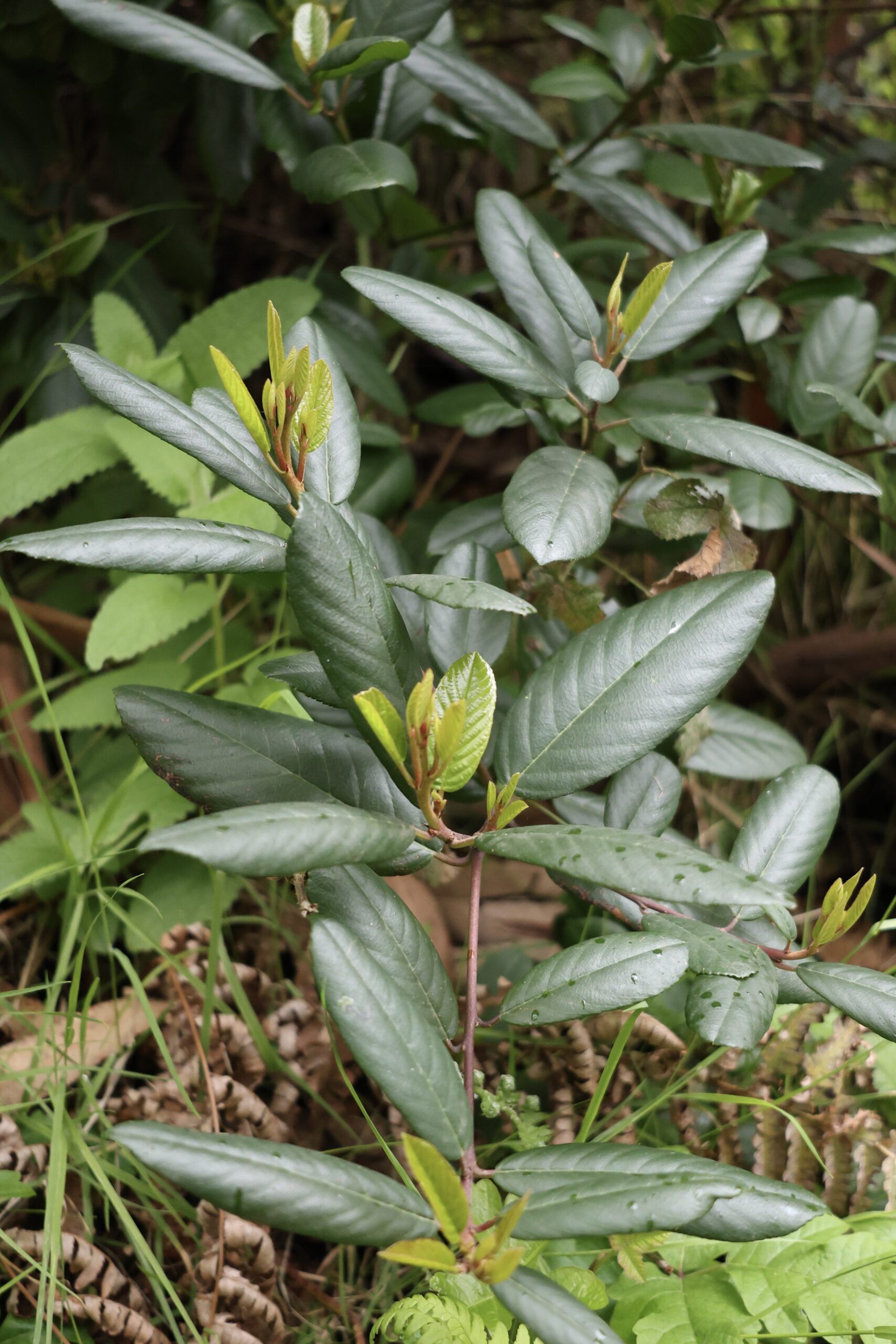
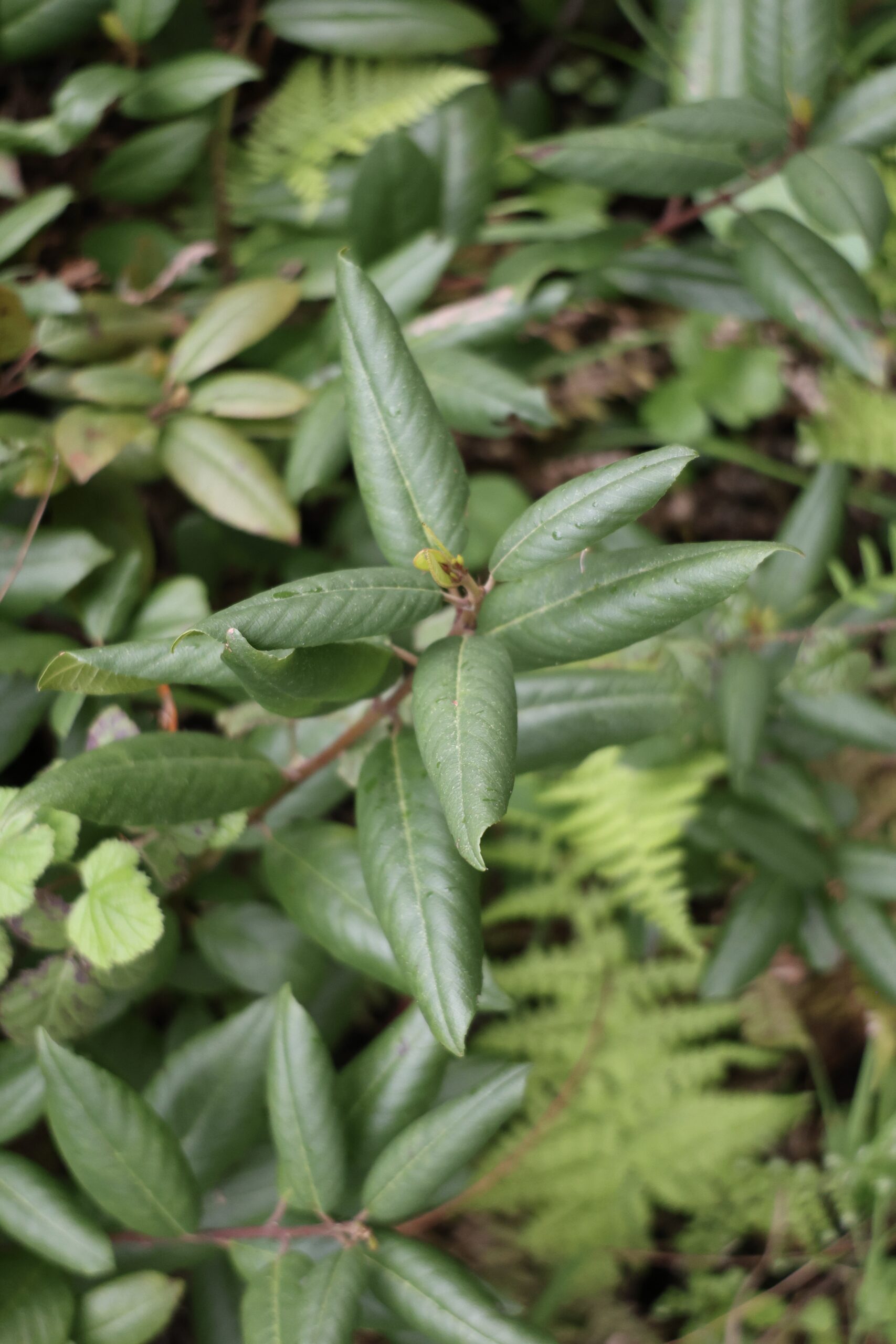
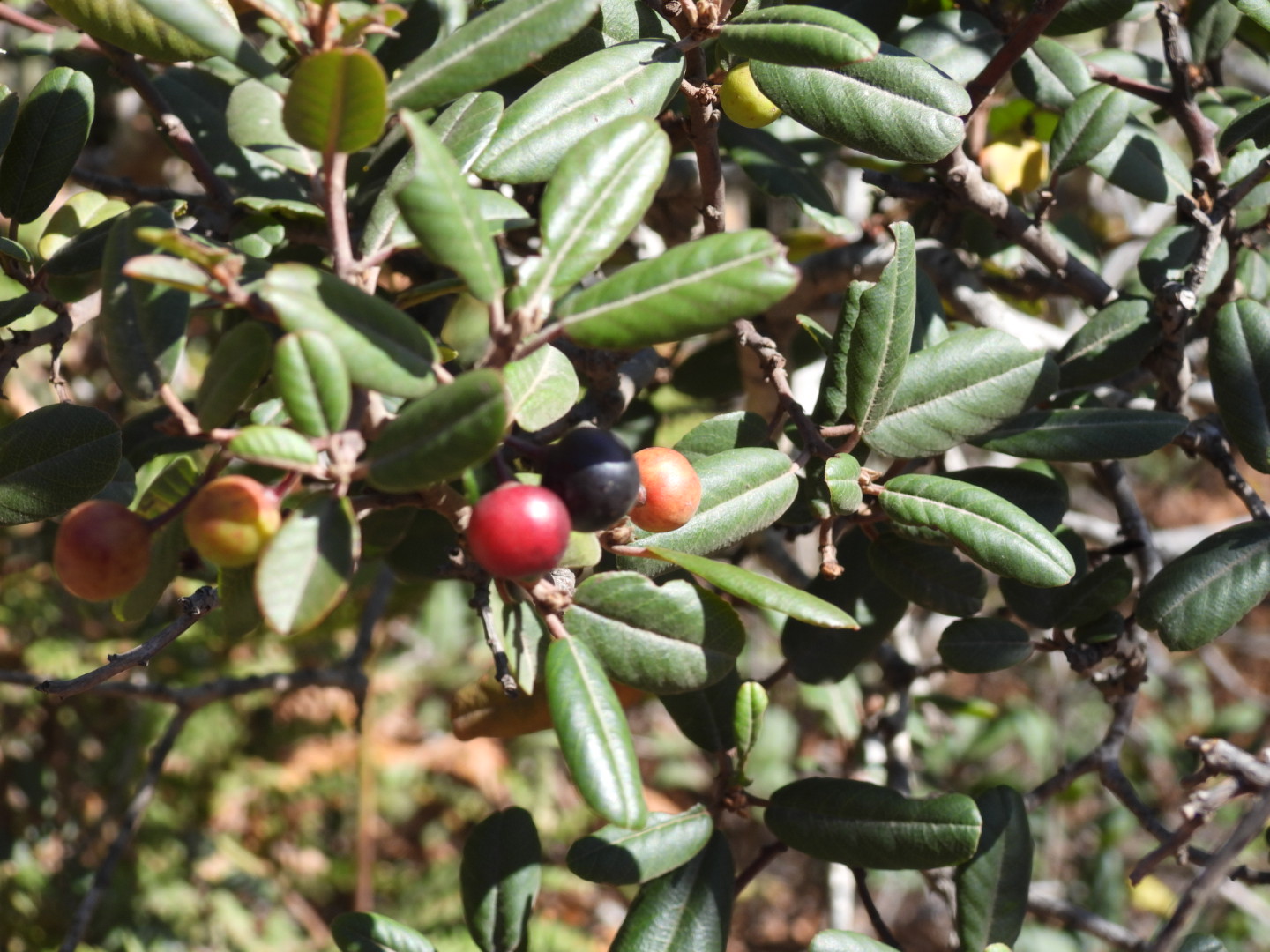
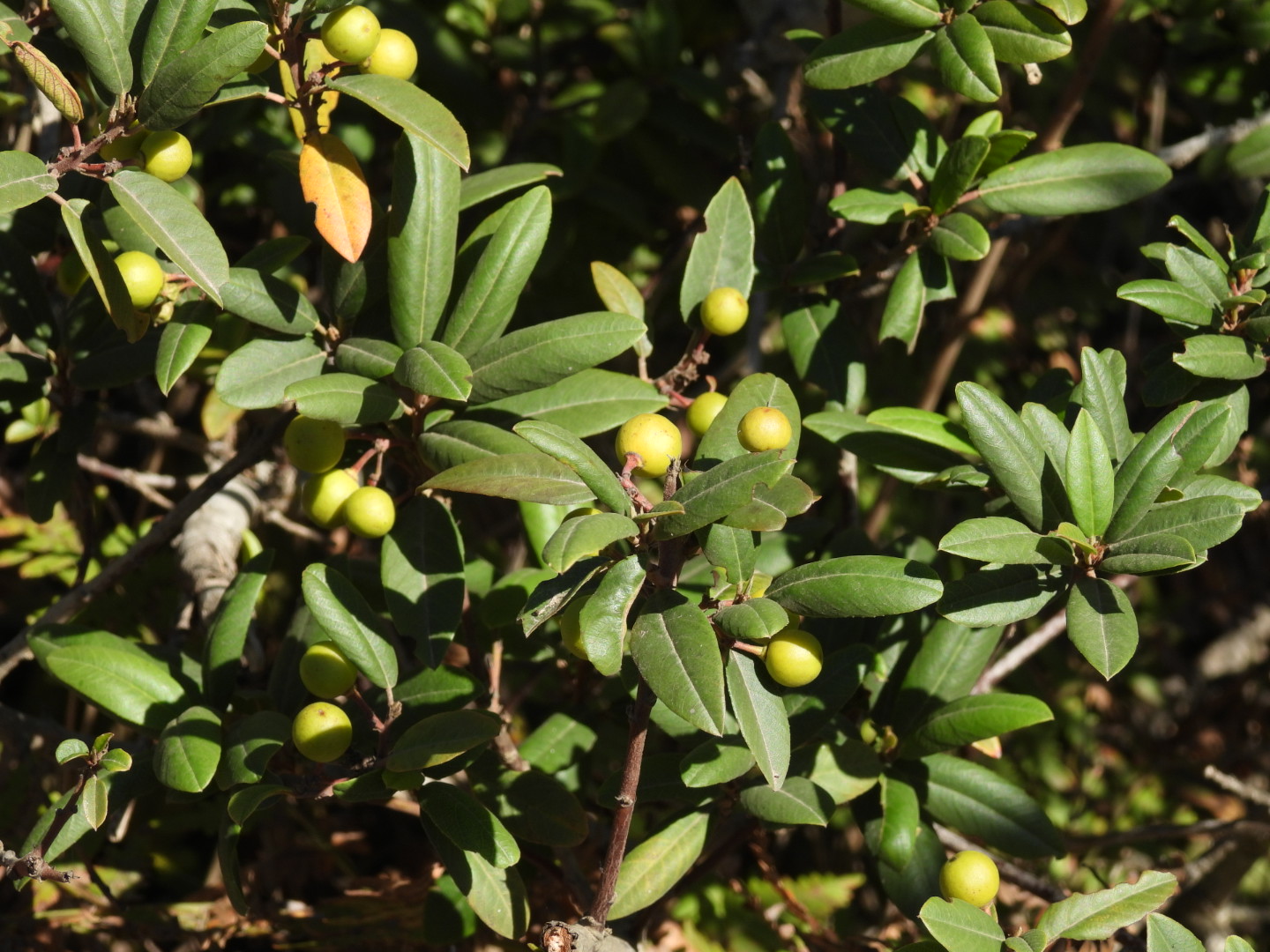
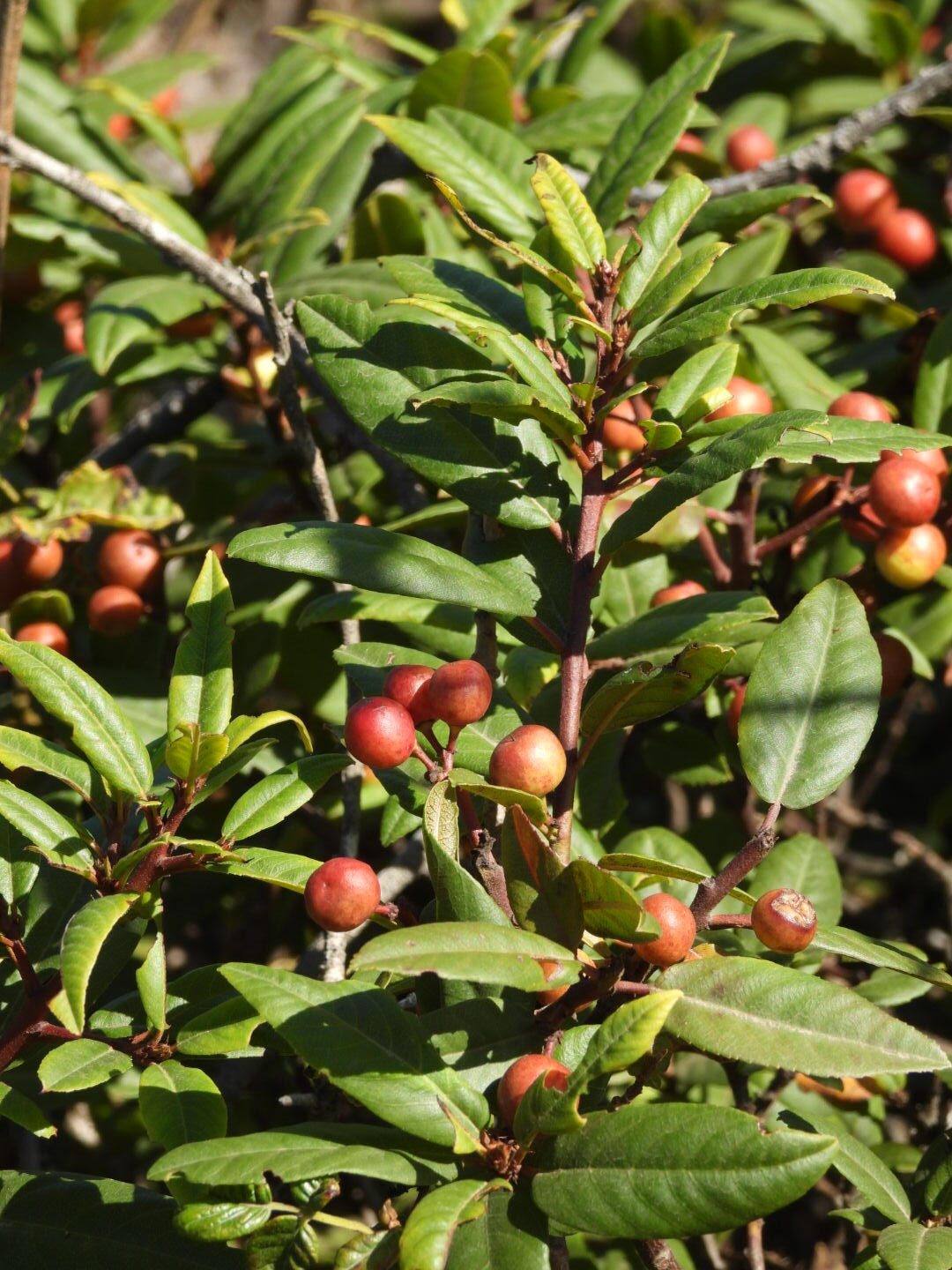
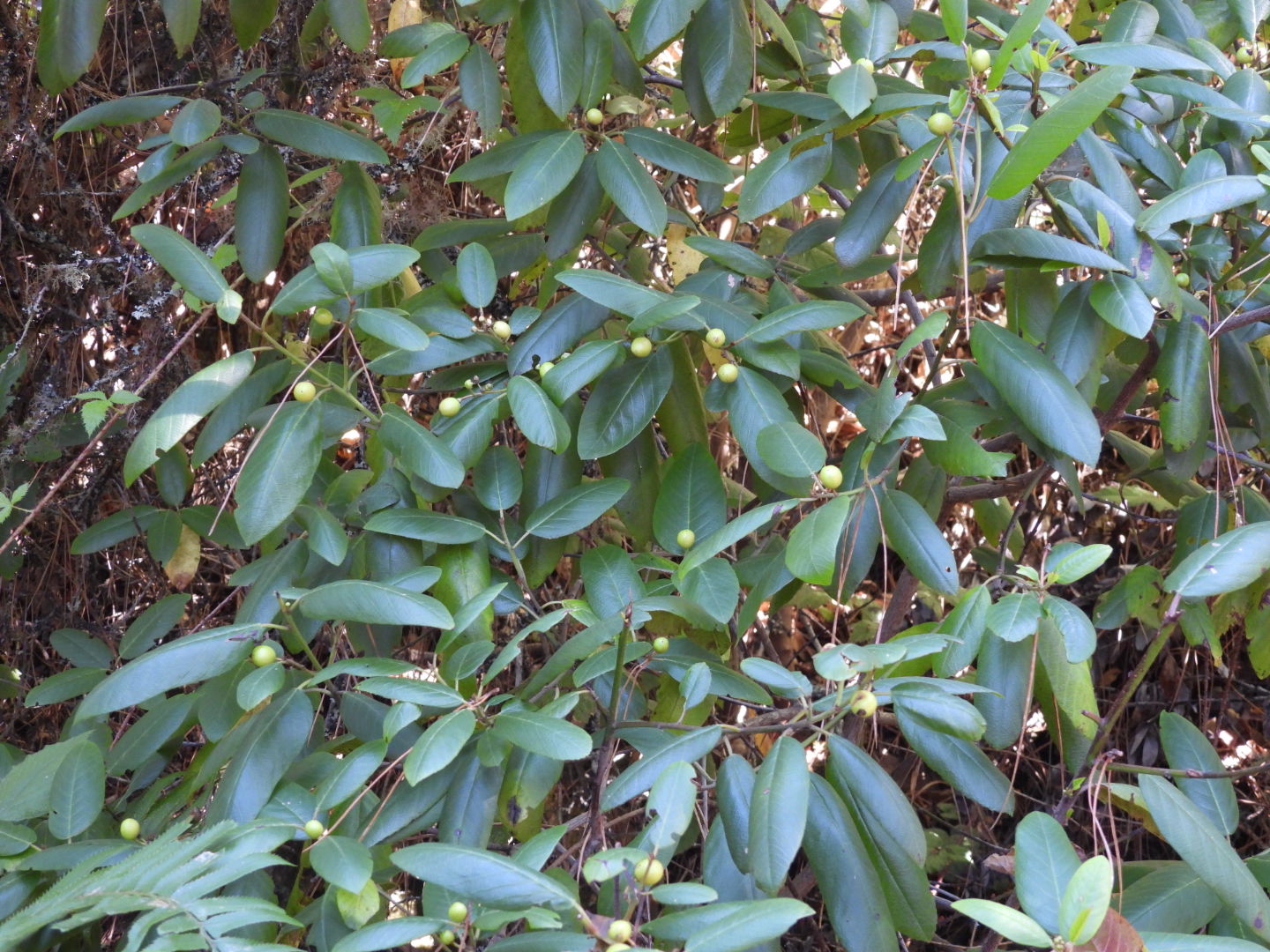
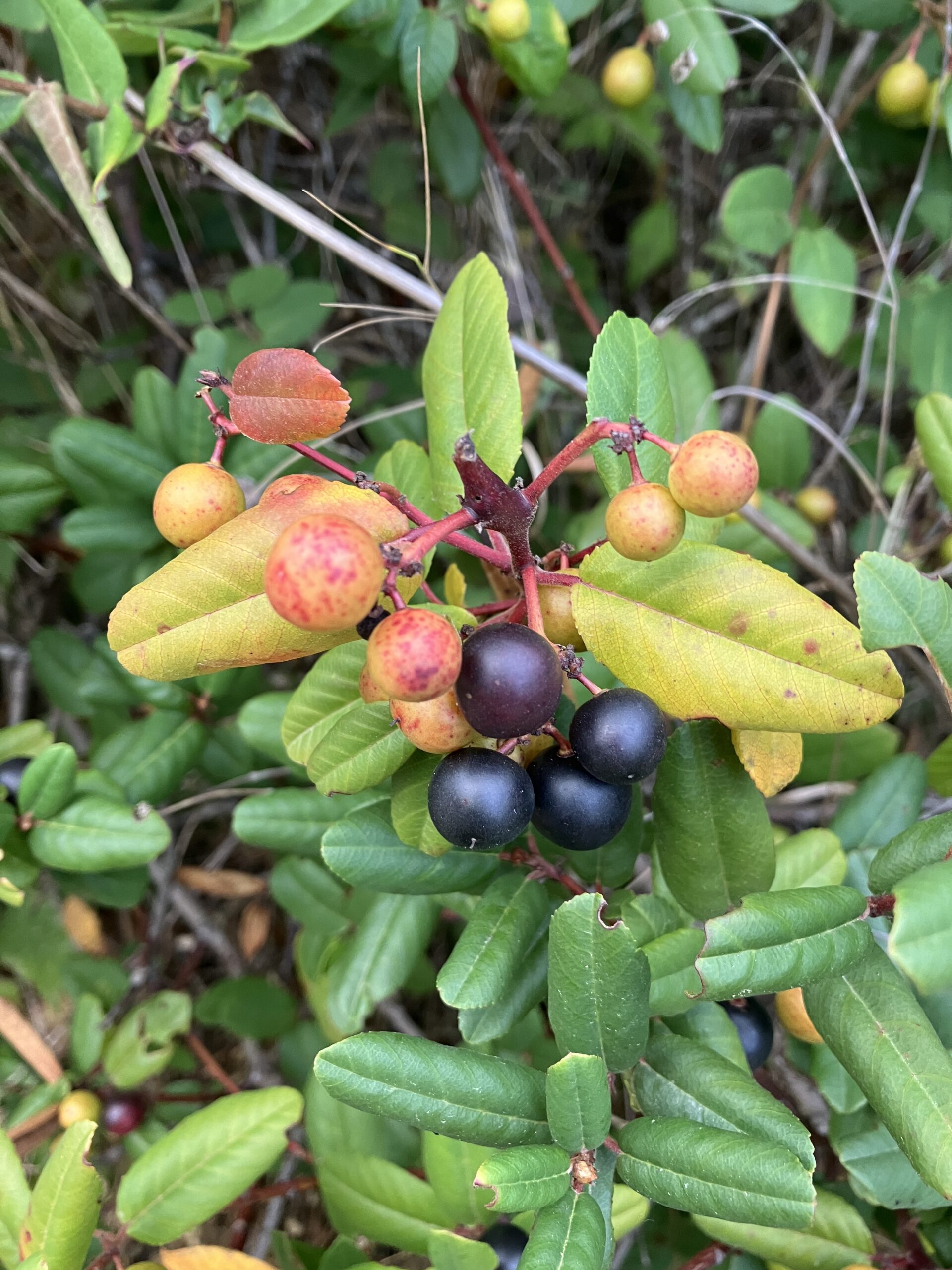
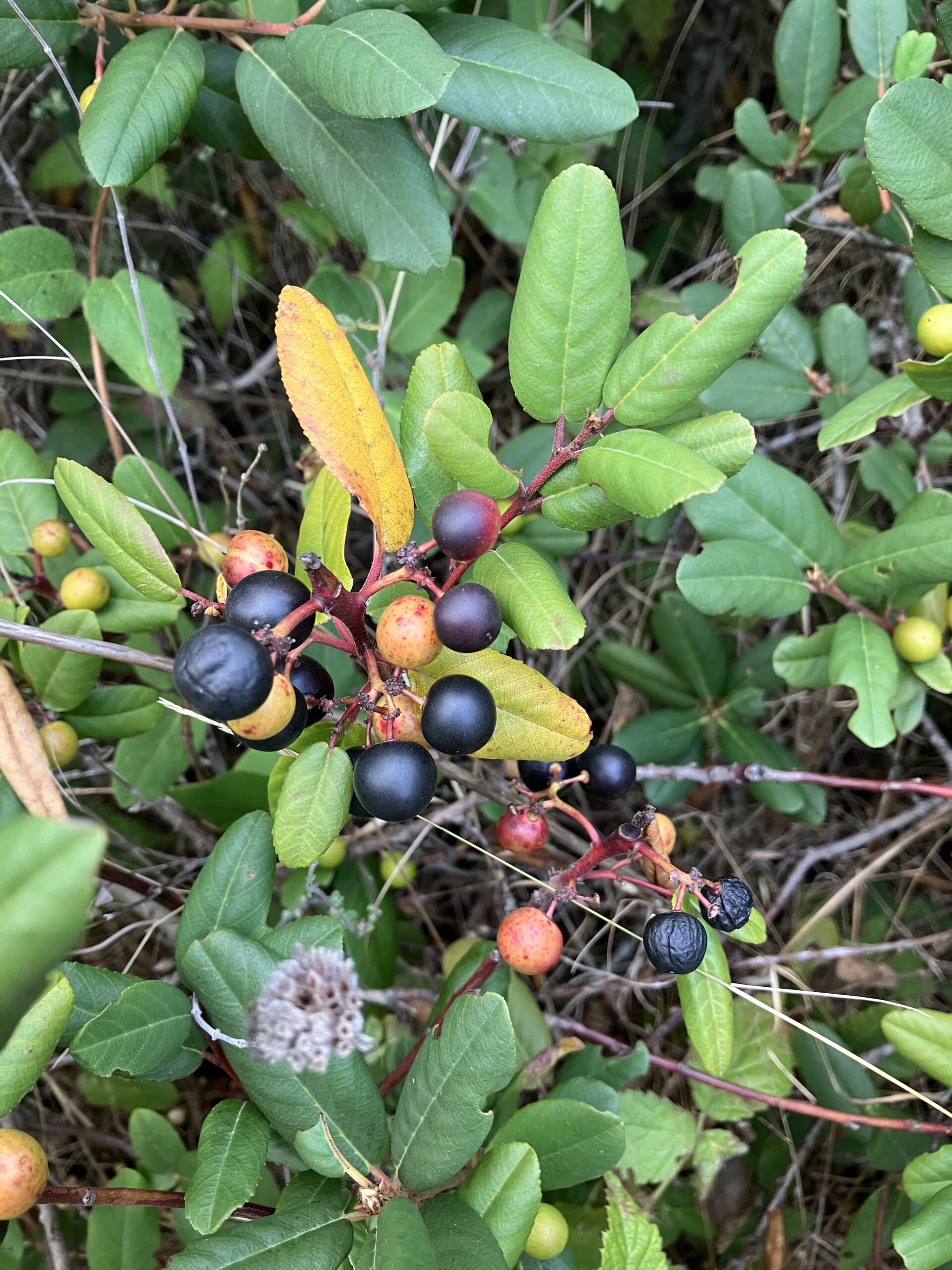
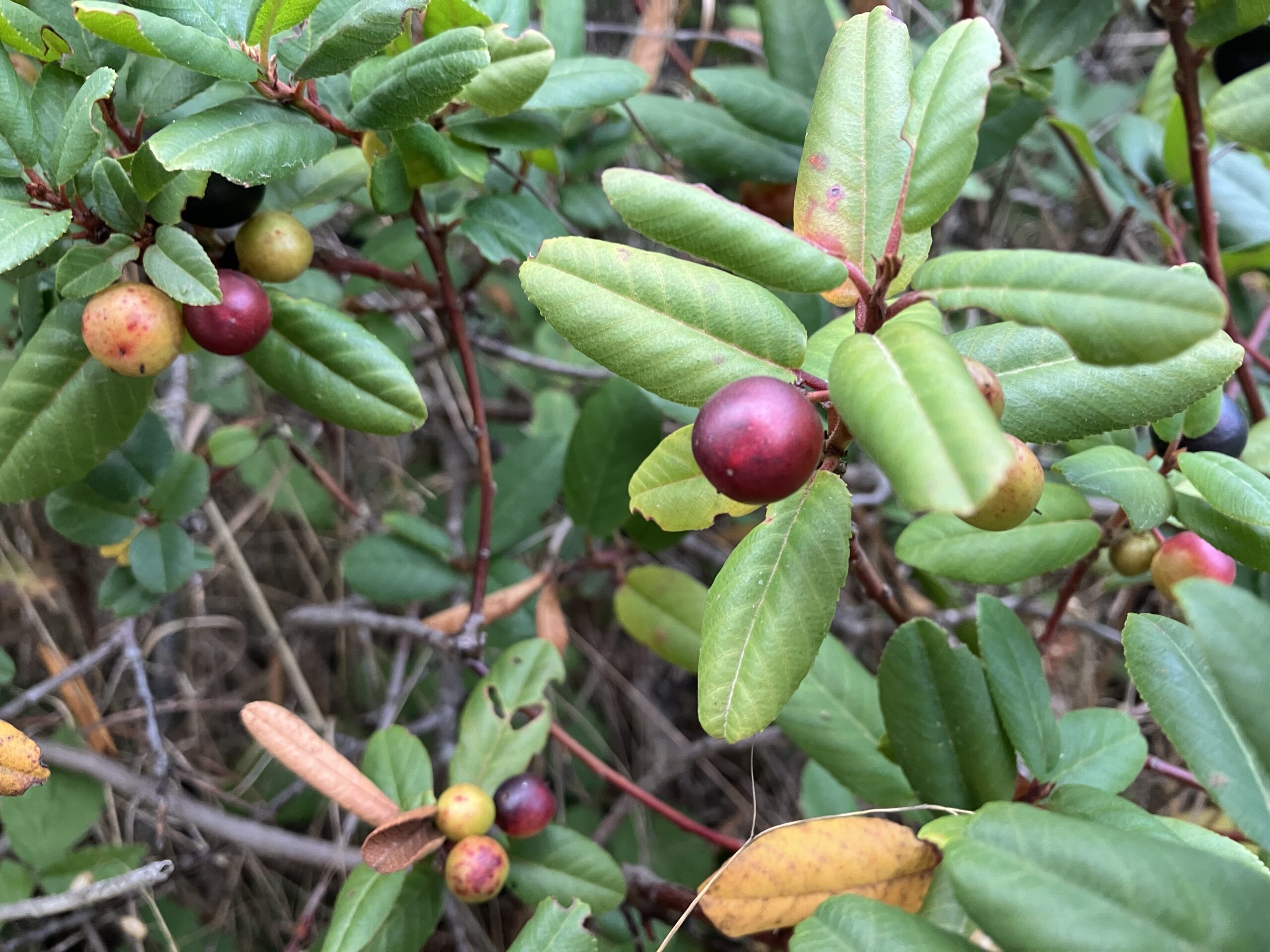
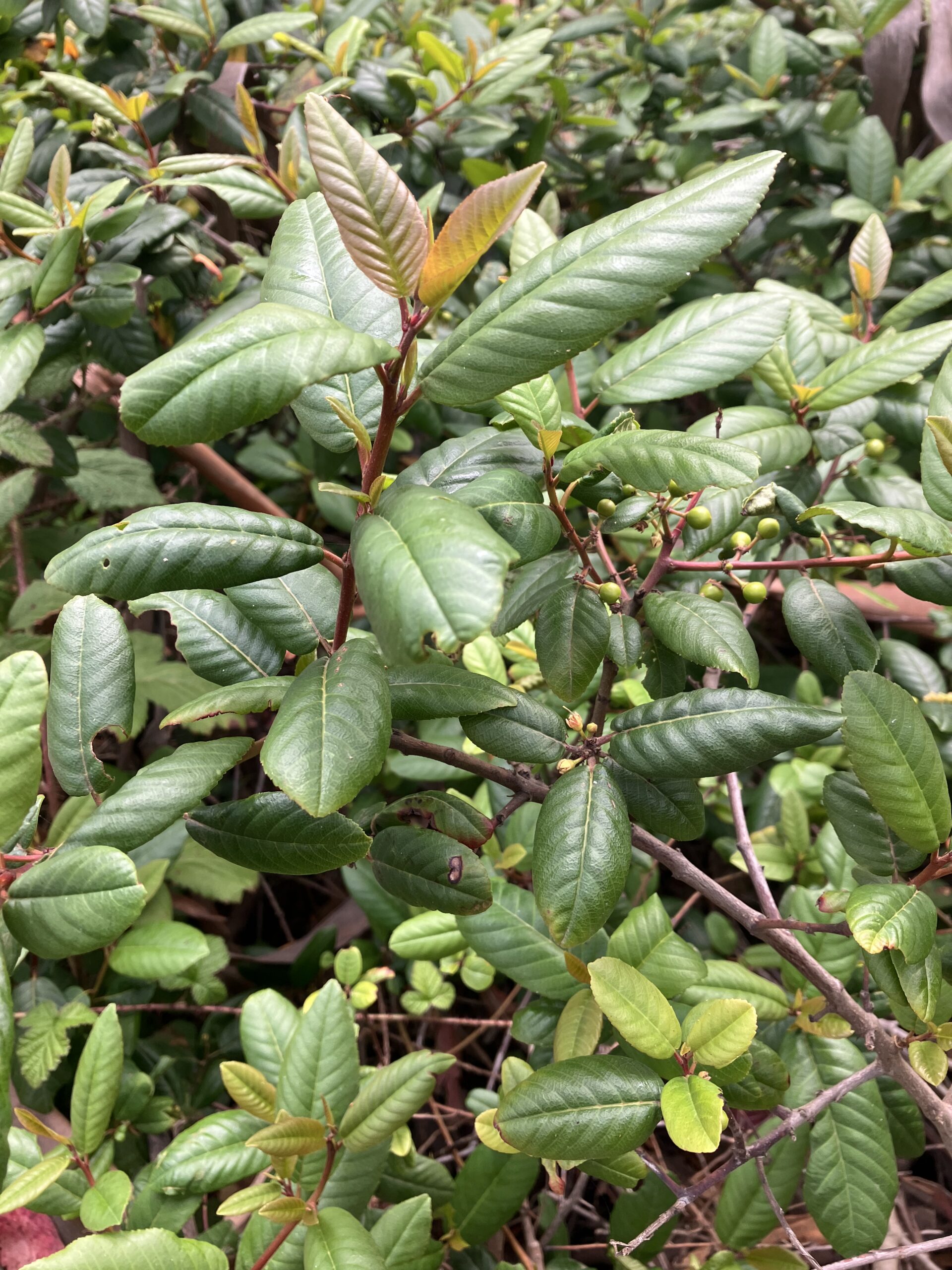
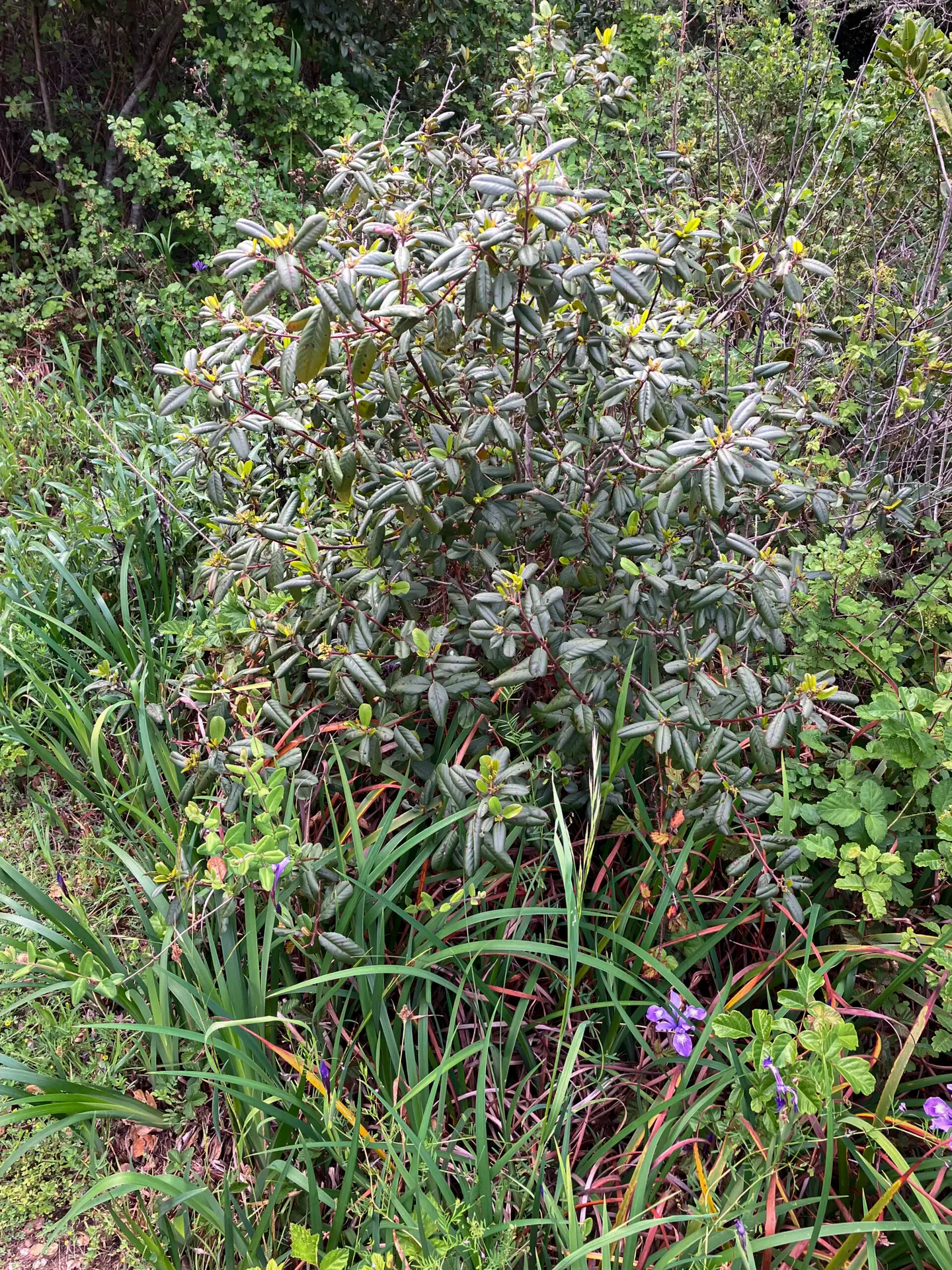
Evergreen shrub with leathery dark green leaves that are oval-shaped with inconspicuos leaf veins. Flowers are small and not showy. Distinctive red to black berries appear in fall.
Height / Size
5 to 16 feet. Bark is grey/brown. Stems and new growth may be red.
Leaves
Oval, dark green leaves with pointed tips, approximately 3 inches long. Leaves are evergreen with inconspicuous leaf veins.
Flower
Clusters of small green and white flowers appear in late spring, early summer. Each flower has 5 sepals, 5 petals and 5 stamens and produces a bad smelling (fetid) odor and nectar.
Bloom Time: April to July
Fruit / Seed
Round berries, approximately 1/2 inch in diameter, occur from August to October. The berries turn from green to red to black as they mature.
Habitat
Found in coastal-sage scrub, desert scrub, chaparral, and forest woodland below 9000 feet.
Location / Range
All trails. Native to California, it spans the coast from the Oregon border to Orange county.
Lifespan
100 to 200 years
Fascinating / Fun Facts
Formerly called Rhamnus californica ssp. californica. Coffeeberry is related to Blue Blossom (Ceanothus thrysiflorus). But while Ceanothus is celebrated for its showy inflorescence and fragrant flowers, Coffeeberry has small flowers that produce a somewhat fetid odor and nectar to attract its associated pollinators, such as flies, beetles and predatory wasps. Dried, ground bark is used by native Costanoans as a laxative in a tea.
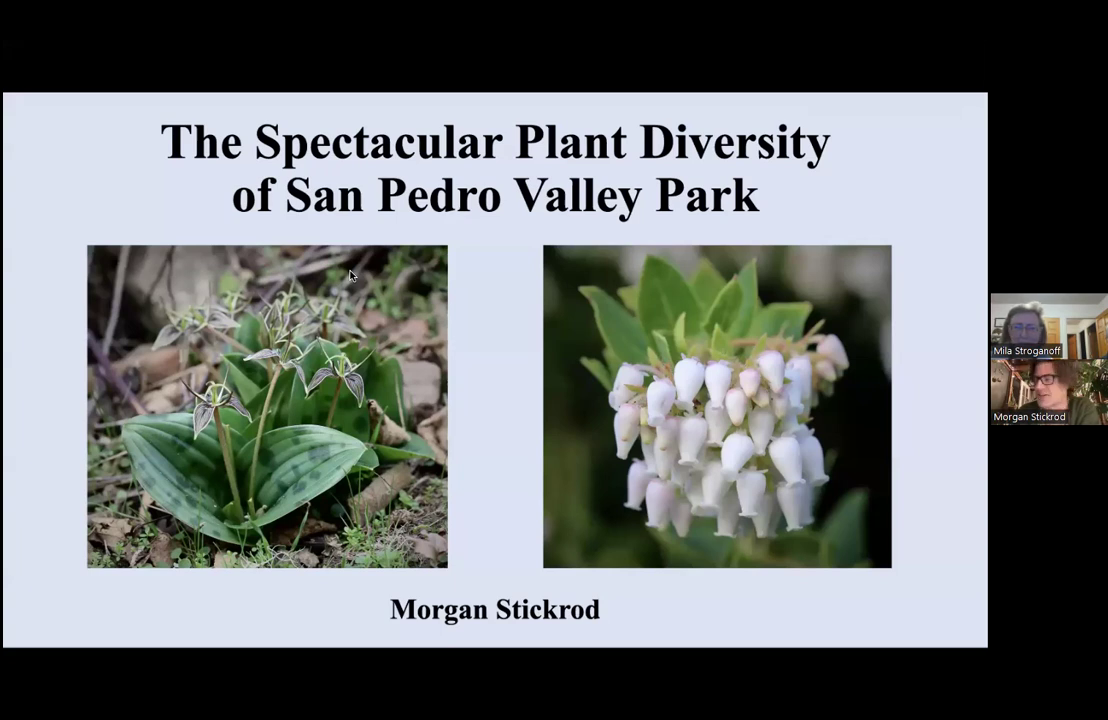
The Friends of San Pedro Valley Park welcomed Morgan Stickrod, a botanist and plant ecologist with over 10 years of experience doing research and field...