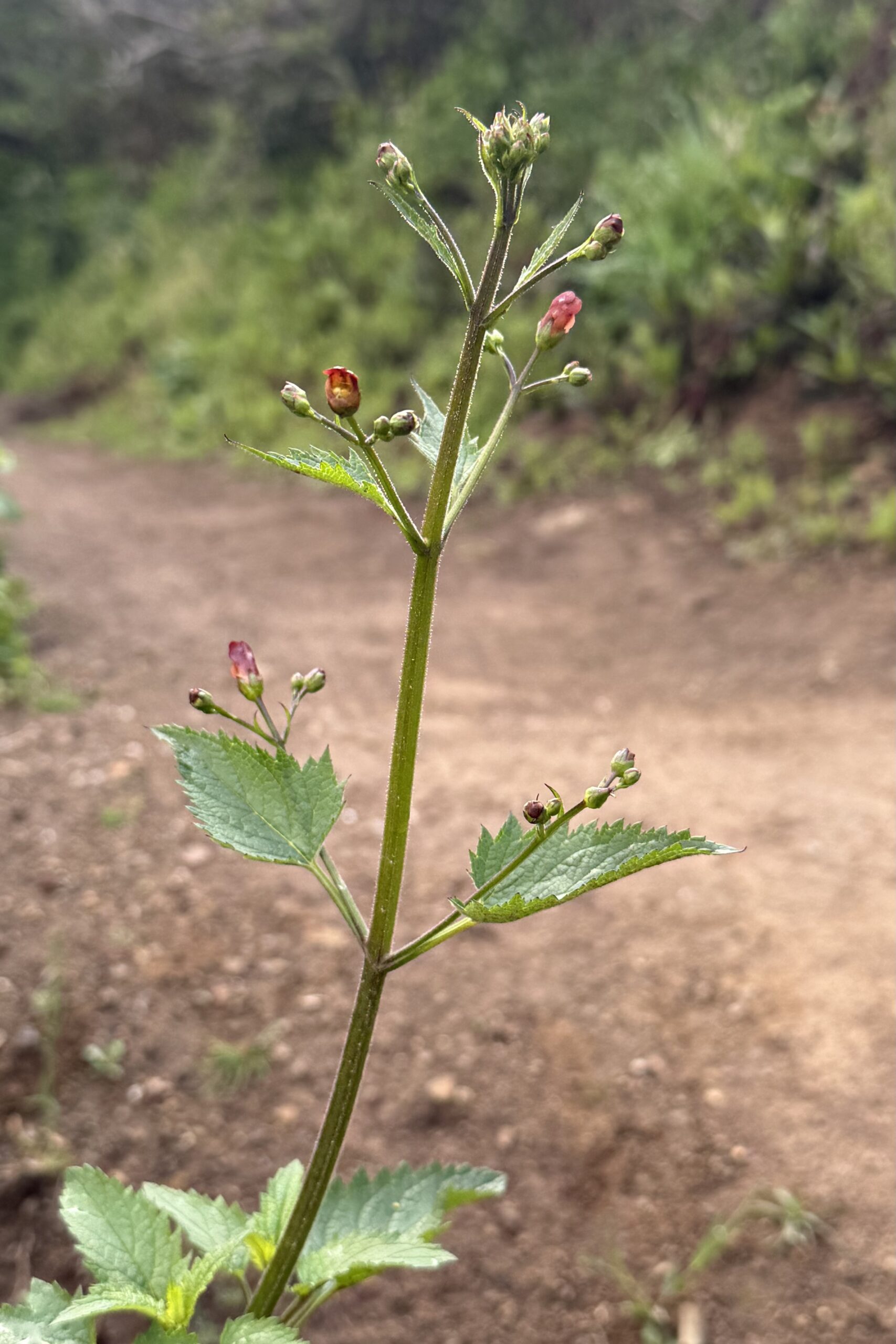
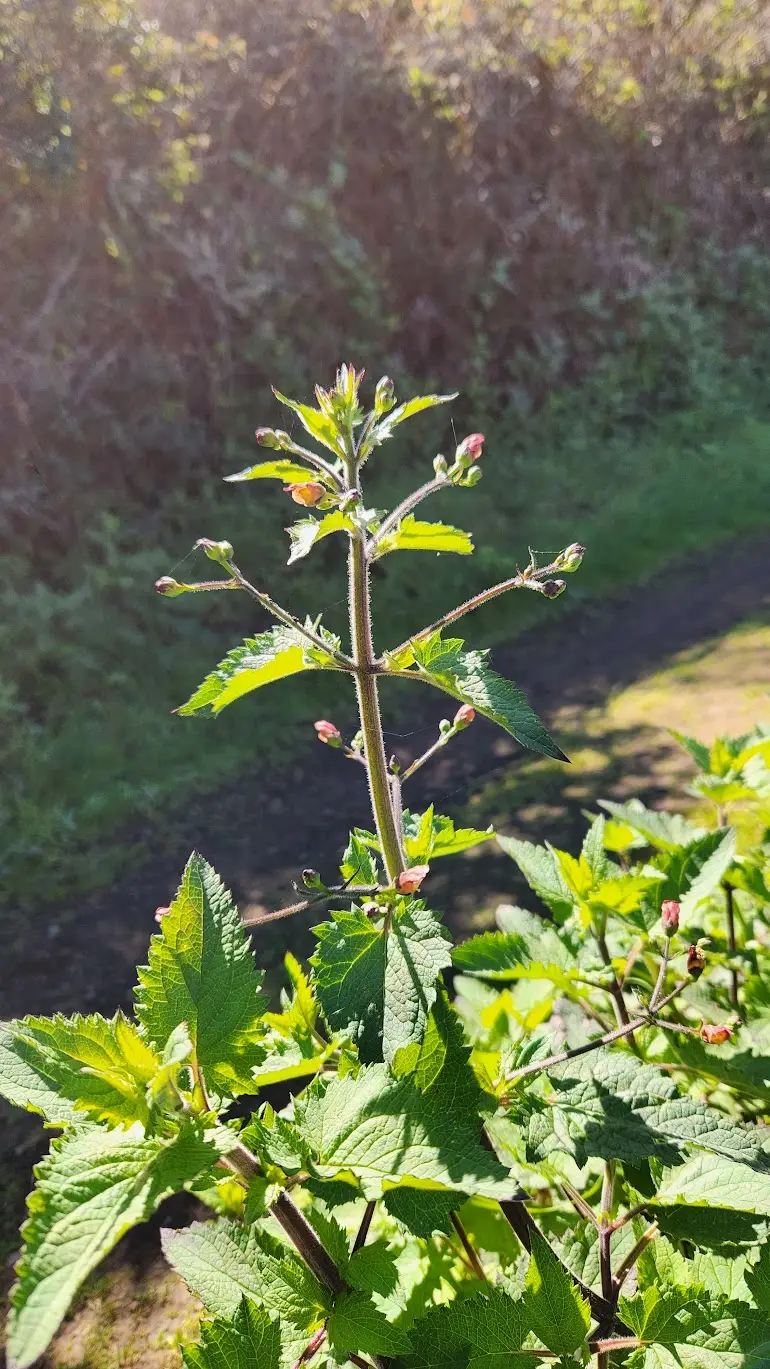
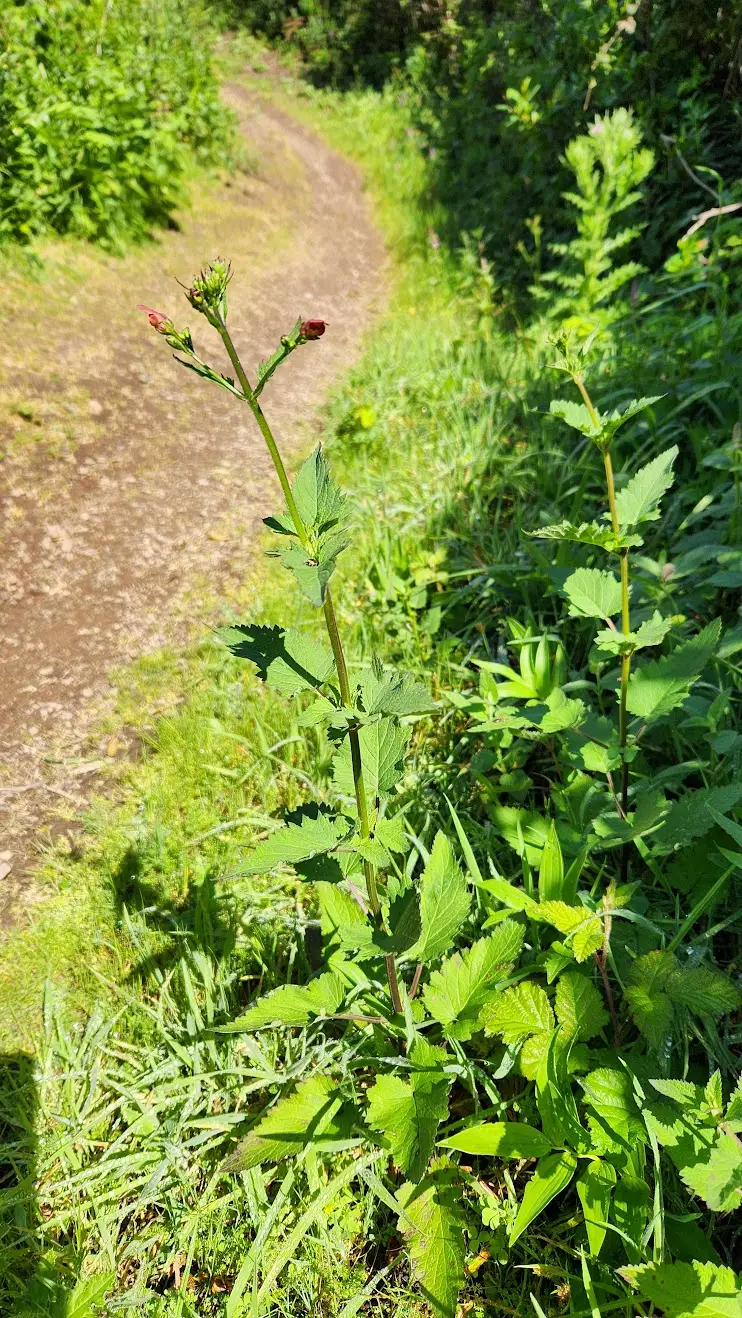
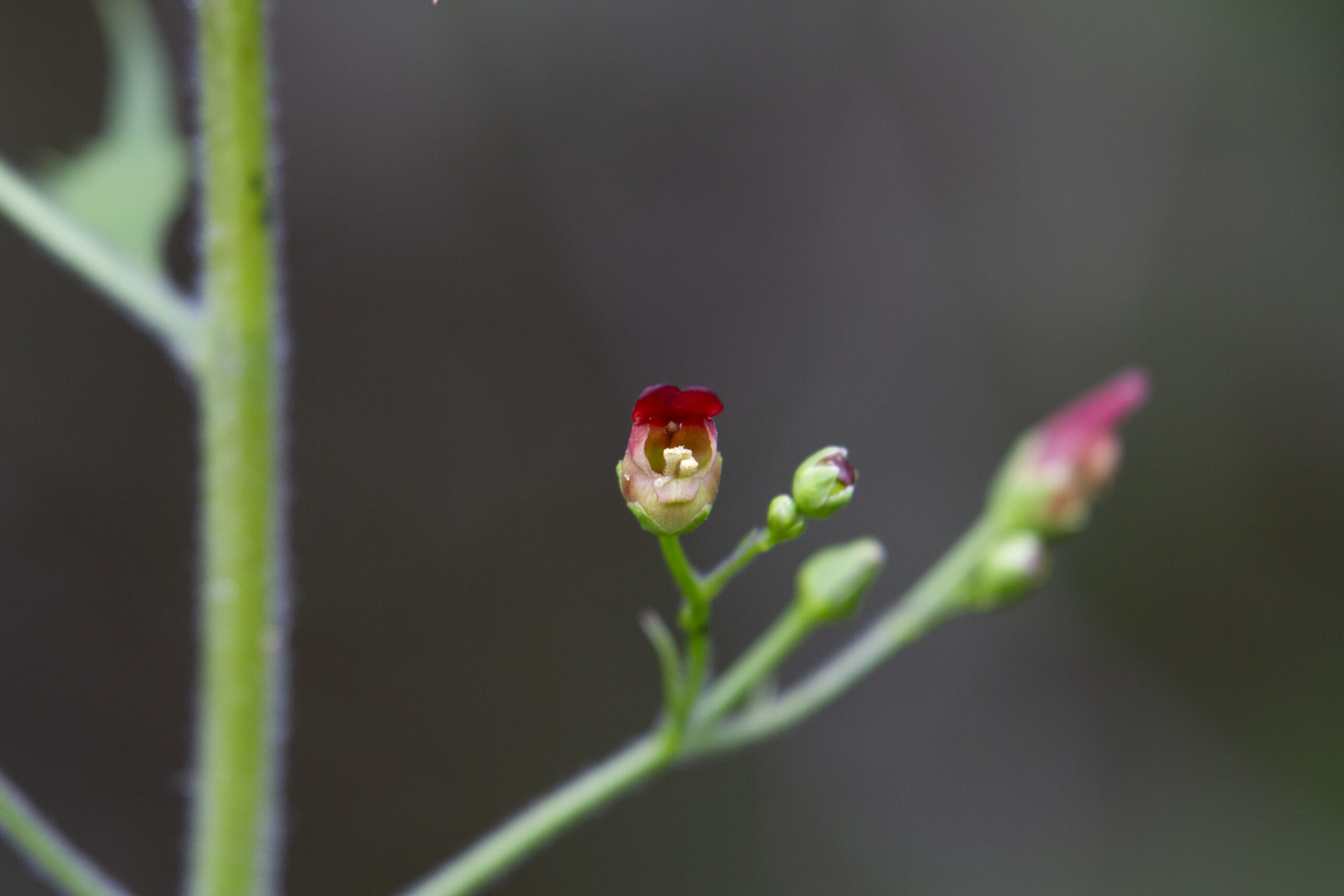
California Bee Plant is a tall, gangly plant with opposite leaves that stick straight out from the stem, and tiny deep red flowers that can be easy to miss. Flowers grow from a single stem in opposite branching.
Height / Size
2 to 4 feet tall.
Leaves
Opposite leaves are sharply toothed with pointed tips and have stalks (petioles) connecting to hairy, often purple, square stems. Veins on the leaves are indented and stand out on the underside of the leaves.
Flower
Small, irregular flowers, less than 1/2 inch across, have 2 petal lobes up, 2 on the side and 1 folded out like a tongue. Flowers are deep red in color, and very attractive to pollinating bees. Inflorescence is a panicle of cymes, which means it is twiced branched. The first branching matures from the bottom up (raceme). On the second branching, the top flower matures first.
Bloom Time: February to May.
Fruit / Seed
The fruit is a dry, brownish ovoid capsule that splits open when mature, releasing numerous small, dark seeds.
Habitat
Common in coastal sage scrub, chaparral, and riparian areas.
Location / Range
All trails. Native to the western United States and British Columbia, it is found in moist places below 8,000 feet.
Lifespan
Perennial.
Fascinating / Fun Facts
The California Bee Plant is also known as the California Figwort. Even though the Bee Plant has square stems and opposite leaves, it is not in the Mint Family and lacks a strong smell. California bee plant is a host for the spiny, black red and yellow larvae of the variable checkerspot butterfly. Bee plants contain a type of glycoside that is unpalatable or toxic to vertebrates. This compound is sequestered by the caterpillar, protecting it from birds. The glycoside is carried into the adult stage giving the adult butterfly protection as well.
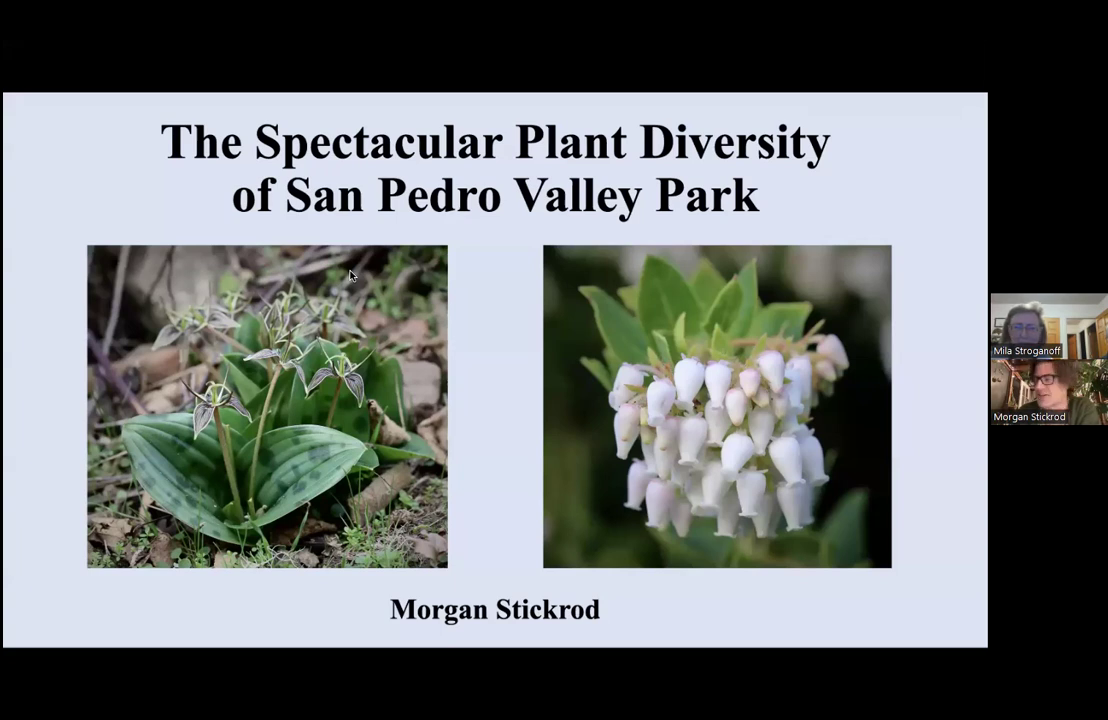
The Friends of San Pedro Valley Park welcomed Morgan Stickrod, a botanist and plant ecologist with over 10 years of experience doing research and field...