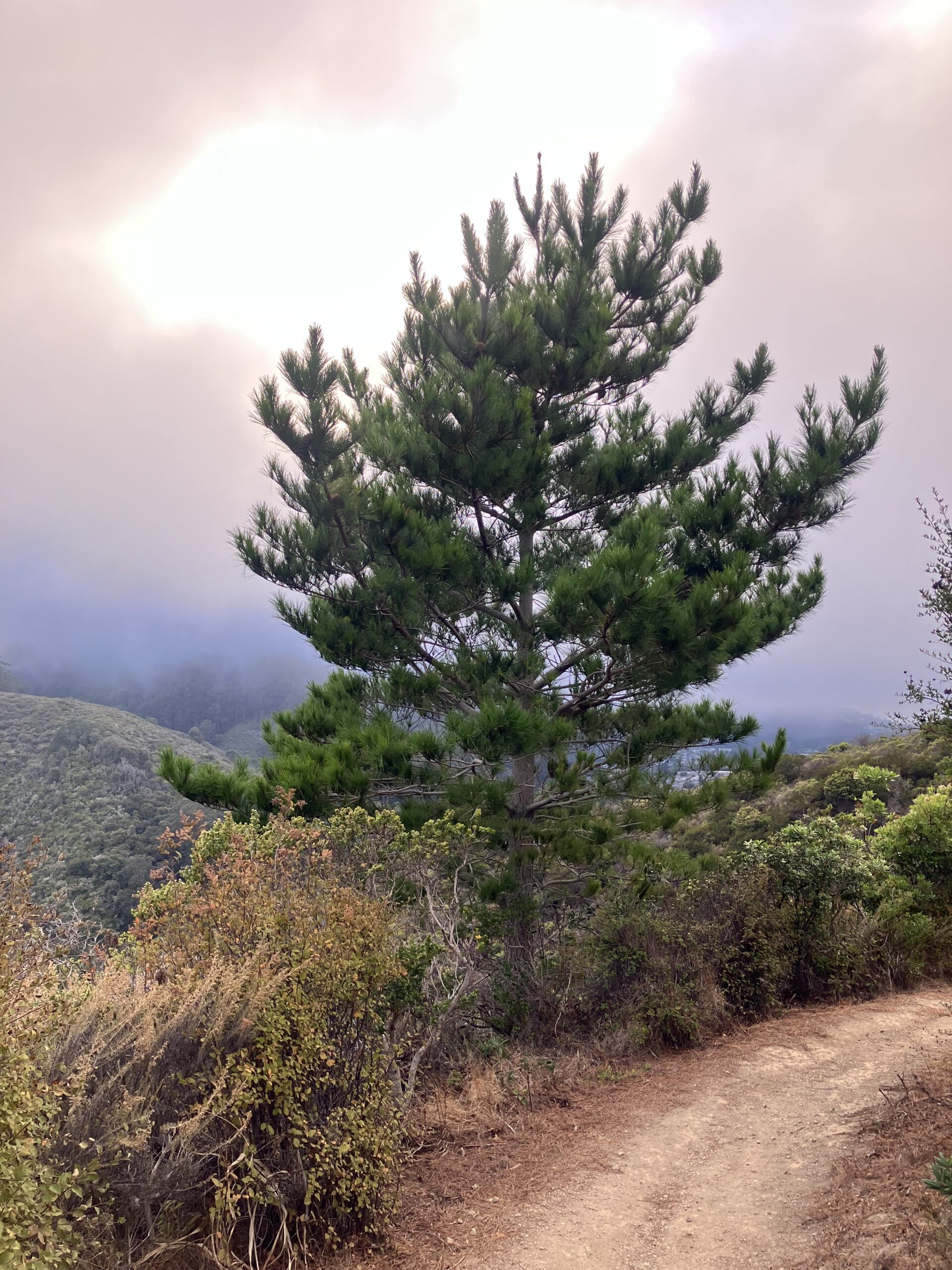
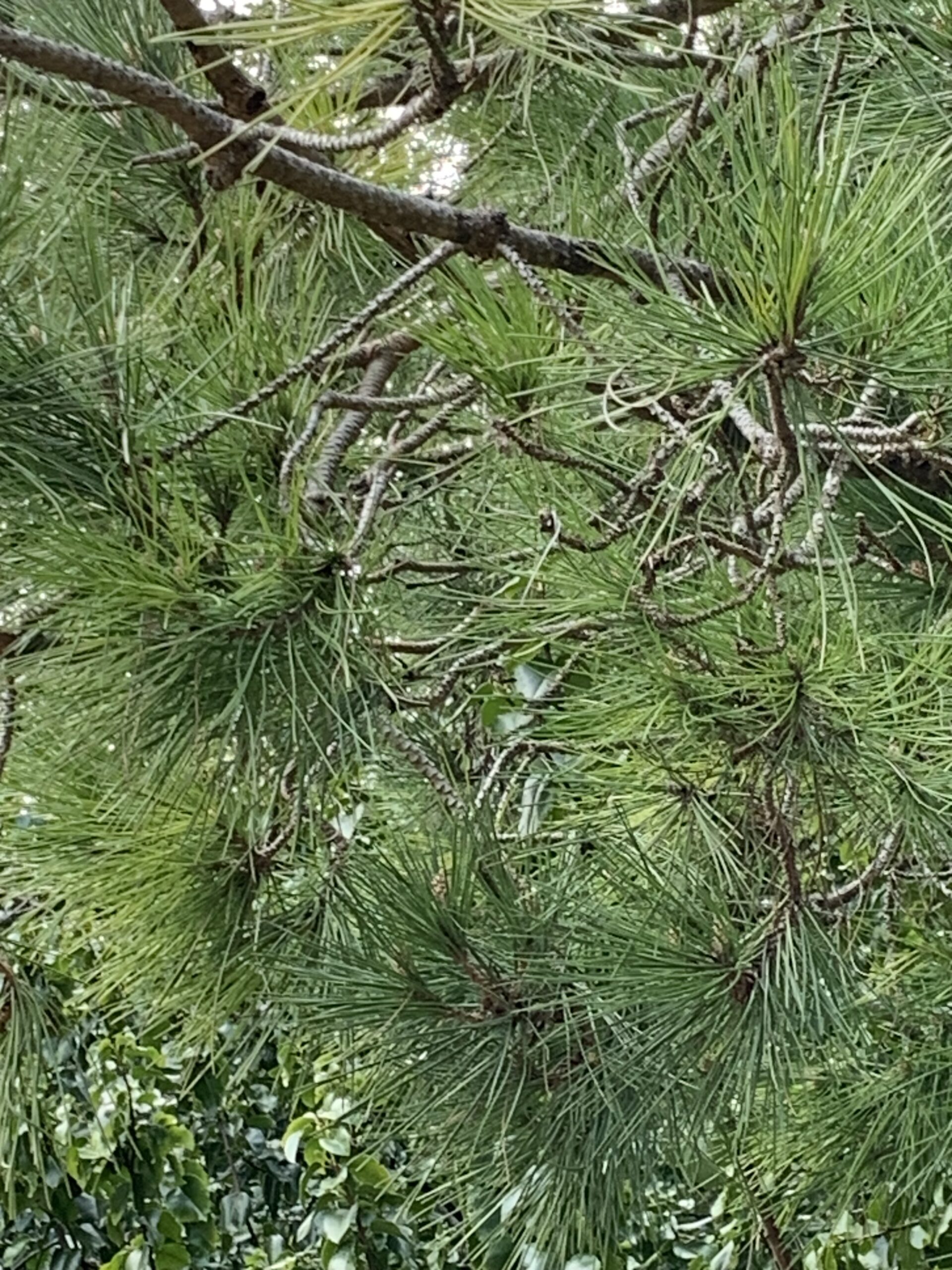
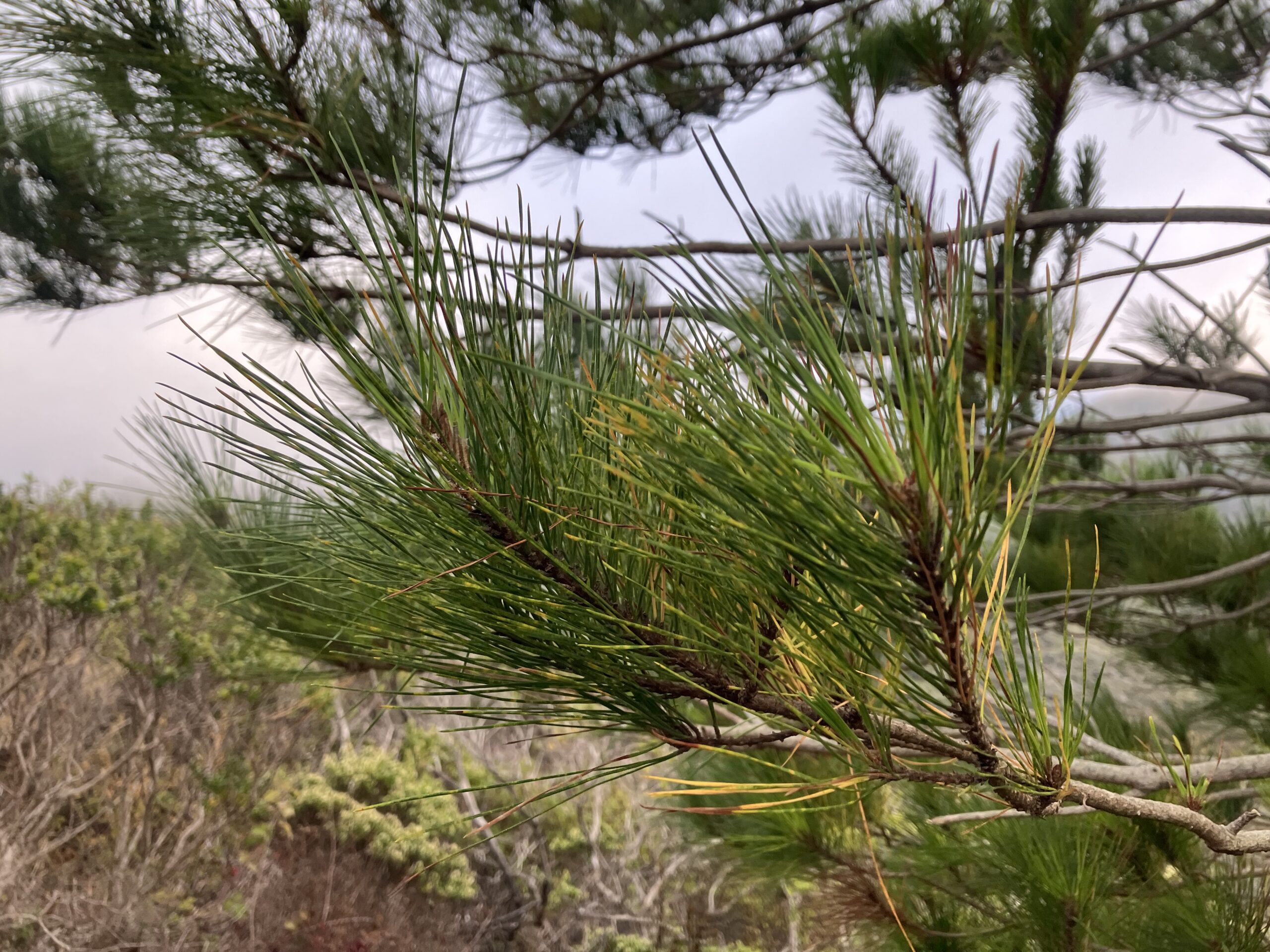
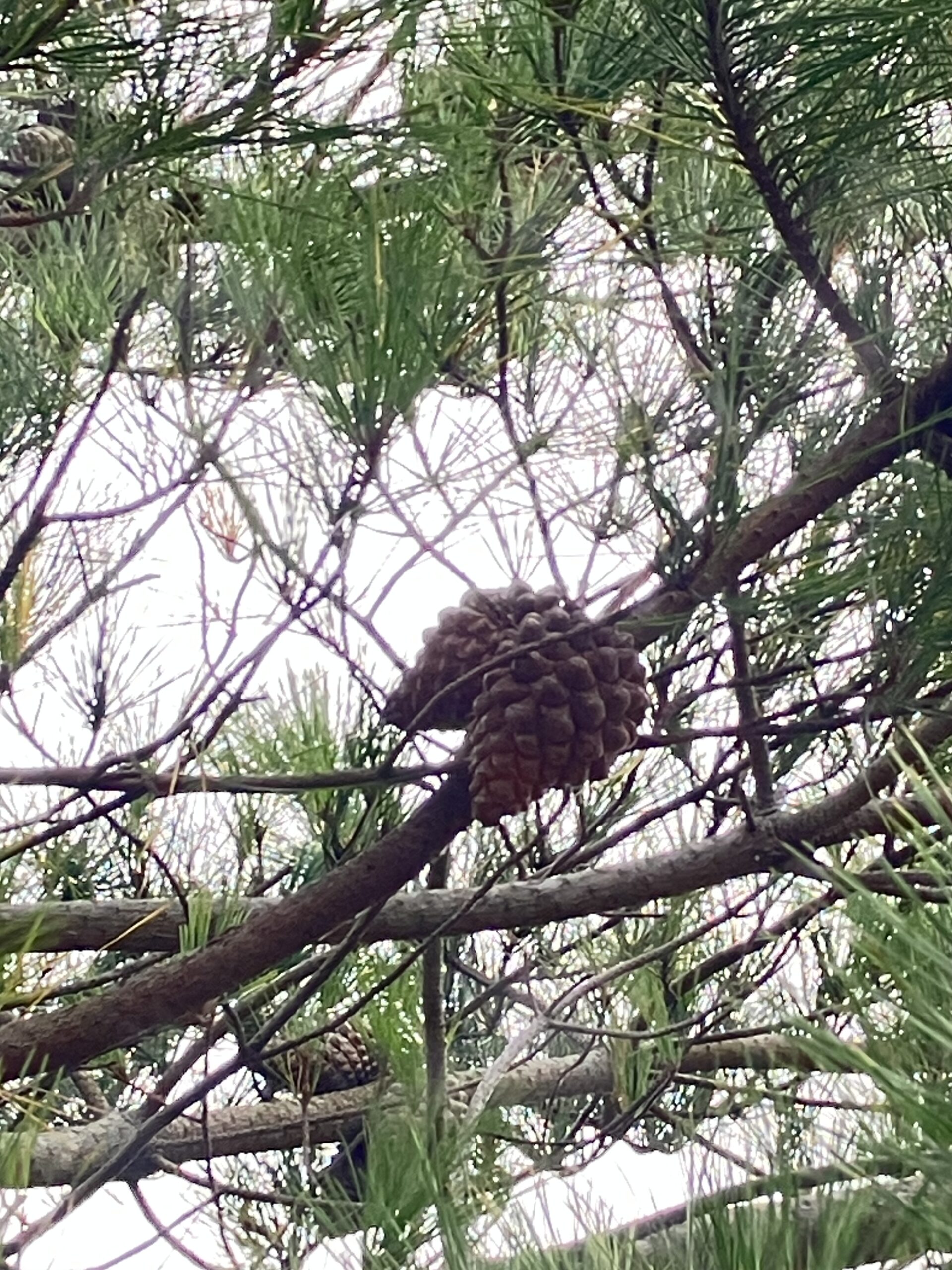
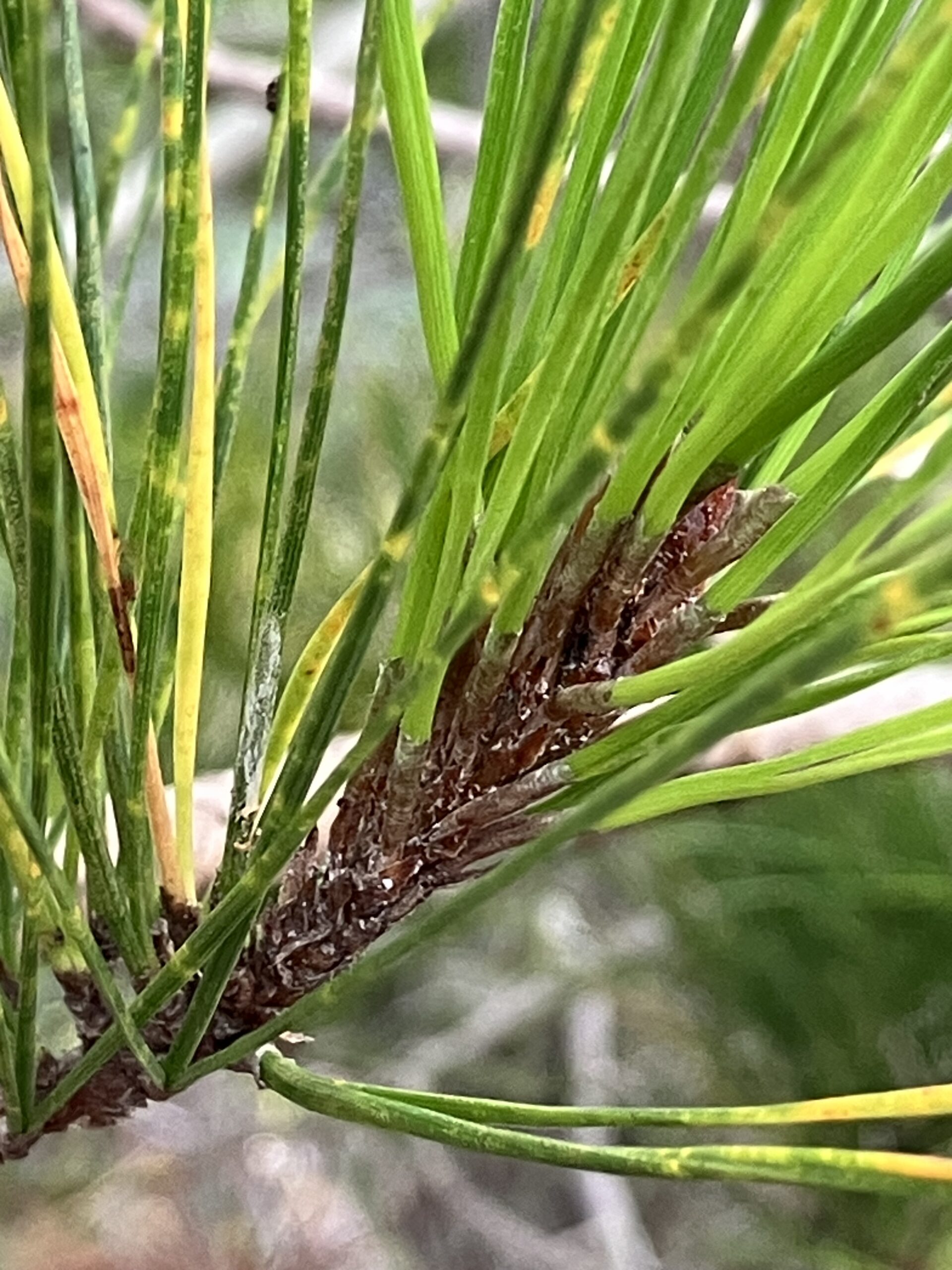
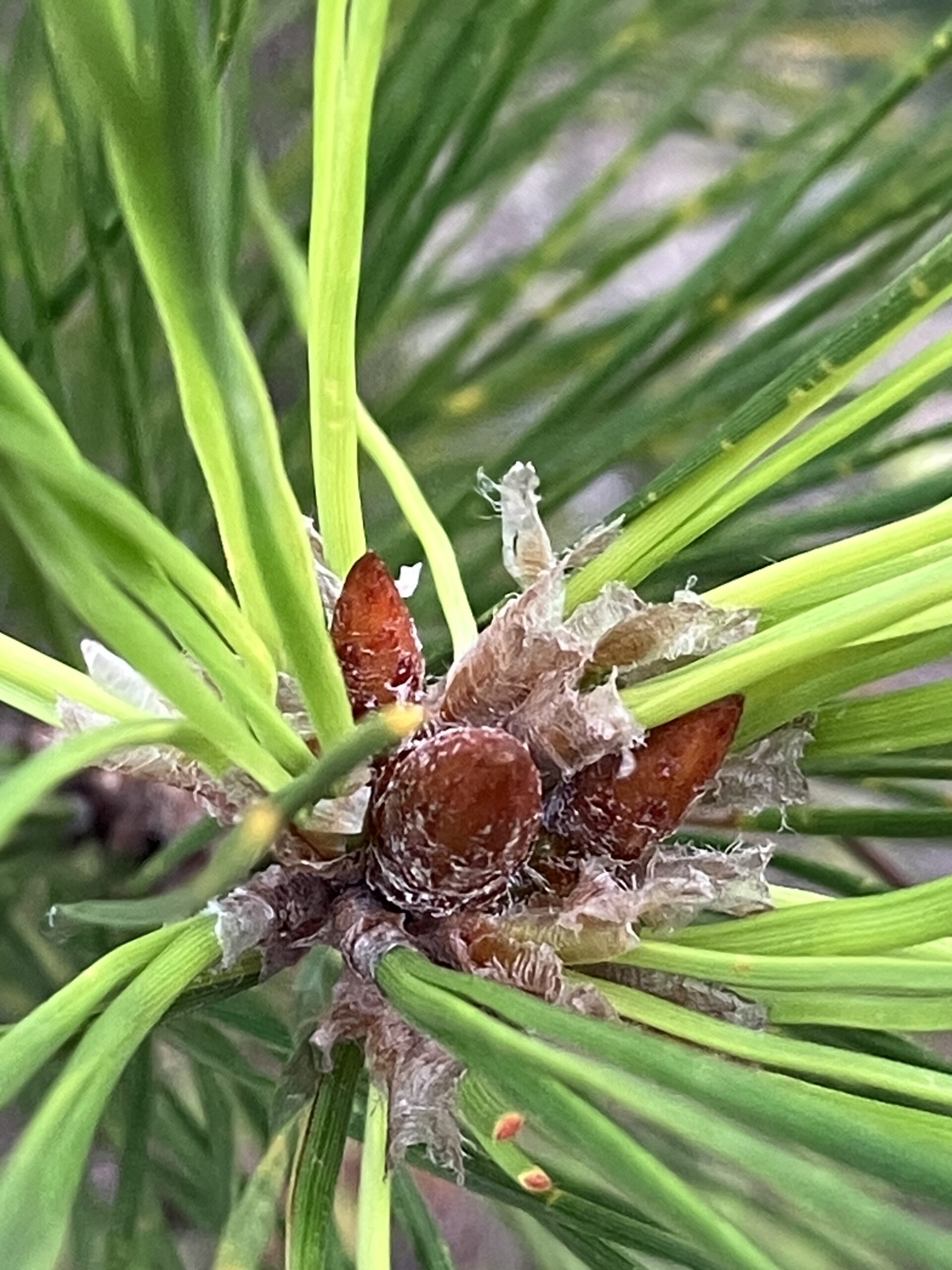
Evergreen conifer with a rounded top and needles in bundles of 3. Lopsided cones are recurved and asymetric and appear in clusters. It is similar to the Bishop Pine (Pinus muricata) but that pine has needles in bundles of 2. There are no Bishop Pines in SPVP.
Similar To
Monterey Pine is similar to the Bishop Pine (Pinus muricata) but that pine has needles in bundles of 2. There are no Bishop Pines in San Pedro Valley Park.
Height / Size
50 to 125 feet tall. 15 to 30 feet wide.
Leaves or Needles
Dark green needles in bundles (fascicles) of three, 3 to 6 inches long, with blunt tips.
Bark / Trunk
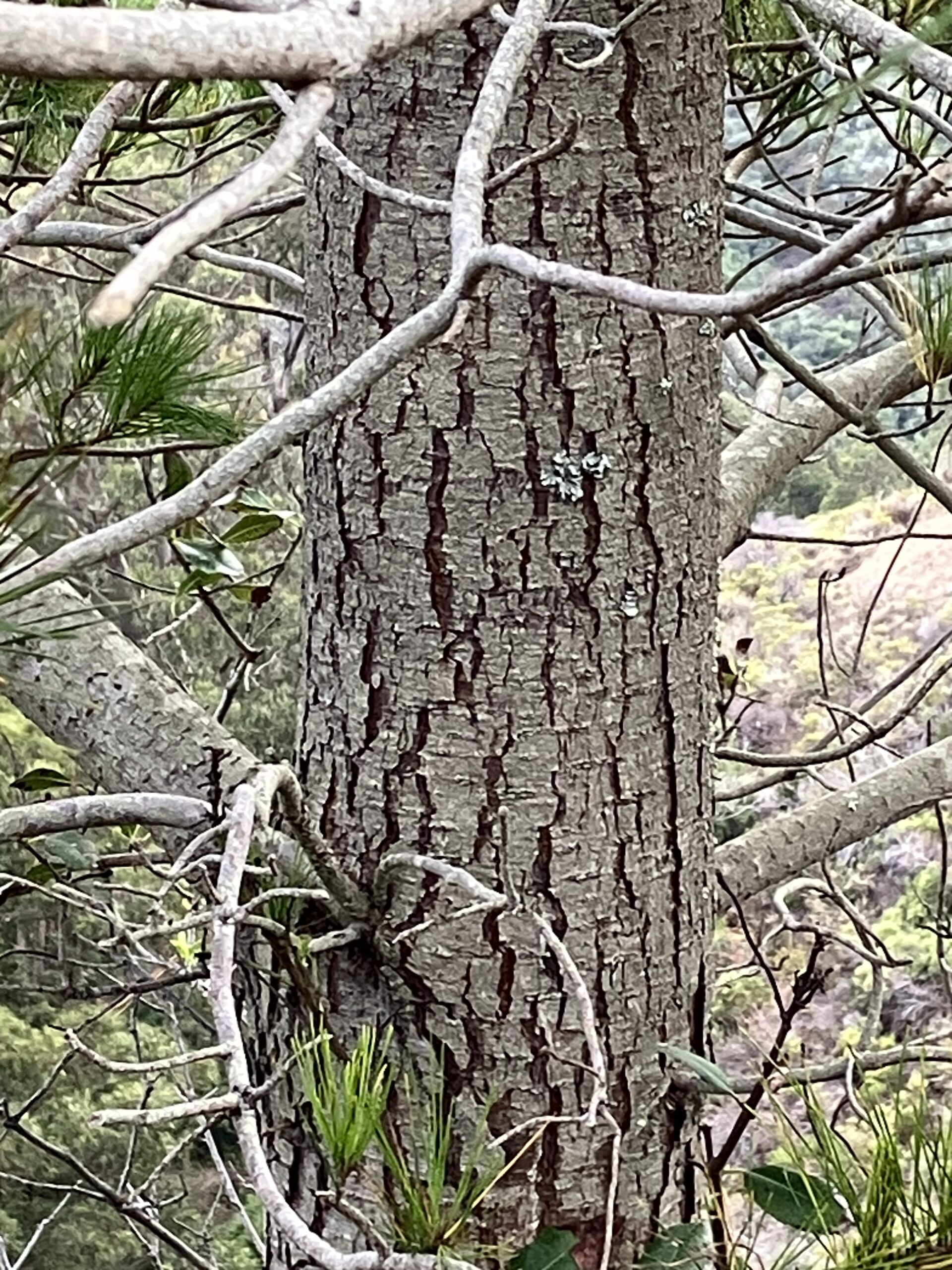
Bark is dark gray to brown, to black when mature, with deep grooves.
Flower
Pollen released from male cones in winter. Conifers do not produce flowers.
Fruit / Seed / Cone
Closed cones are recurved and asymmetrical and 3 to 6.5 inches long, in clusters around the stems. Cone scales are less than 3/4 inch, rounded and minutely prickled. Cones are persistent, clinging to the tree for years and open to release seeds when exposed to fire or on hot days (serotinous). Recent studies have shown that passive solar heating can cause cones to reach sufficient temperatures (above 113 degrees F) to release seeds even when ambient air temperature is still in the 80’s.
Habitat
Slopes with coarse, somewhat sandy soil.
Location / Range
Coastal central California, near Monterey, to 1000 feet. Monterey pines are not native to park, but were planted by ranchers in the mid-to-late 1800’s.
Lifespan
Relatively short lived, 80 to 90 years.
Fascinating / Fun Facts
Monterey Pine is one of California’s serontinous pines, also known as ‘fire pines’. It is considered both rare (in the wild) and invasive (outside of Pacific Grove/Monterey peninsula). Recent studies suggest that the natural populations were likely far more widely distributed throughout the immediate coastal ranges of California but now have patchy distributions due to its reliance on periodic fire for dispersal and germination.
Ethnobotany
Ohlone and likely other coastal tribal groups use the seeds as food in a wide range of dietary applications. The persistent, serotinous cones on trees provide a food source that could hypothetically be accessed any time of the year. Various means of extracting the seeds are used including building and tending a small fire at the base of the tree. The heat from the fire prompts the resin sealing the cone scales to melt, releasing the seeds to the ground below, where they are collected and harvested.