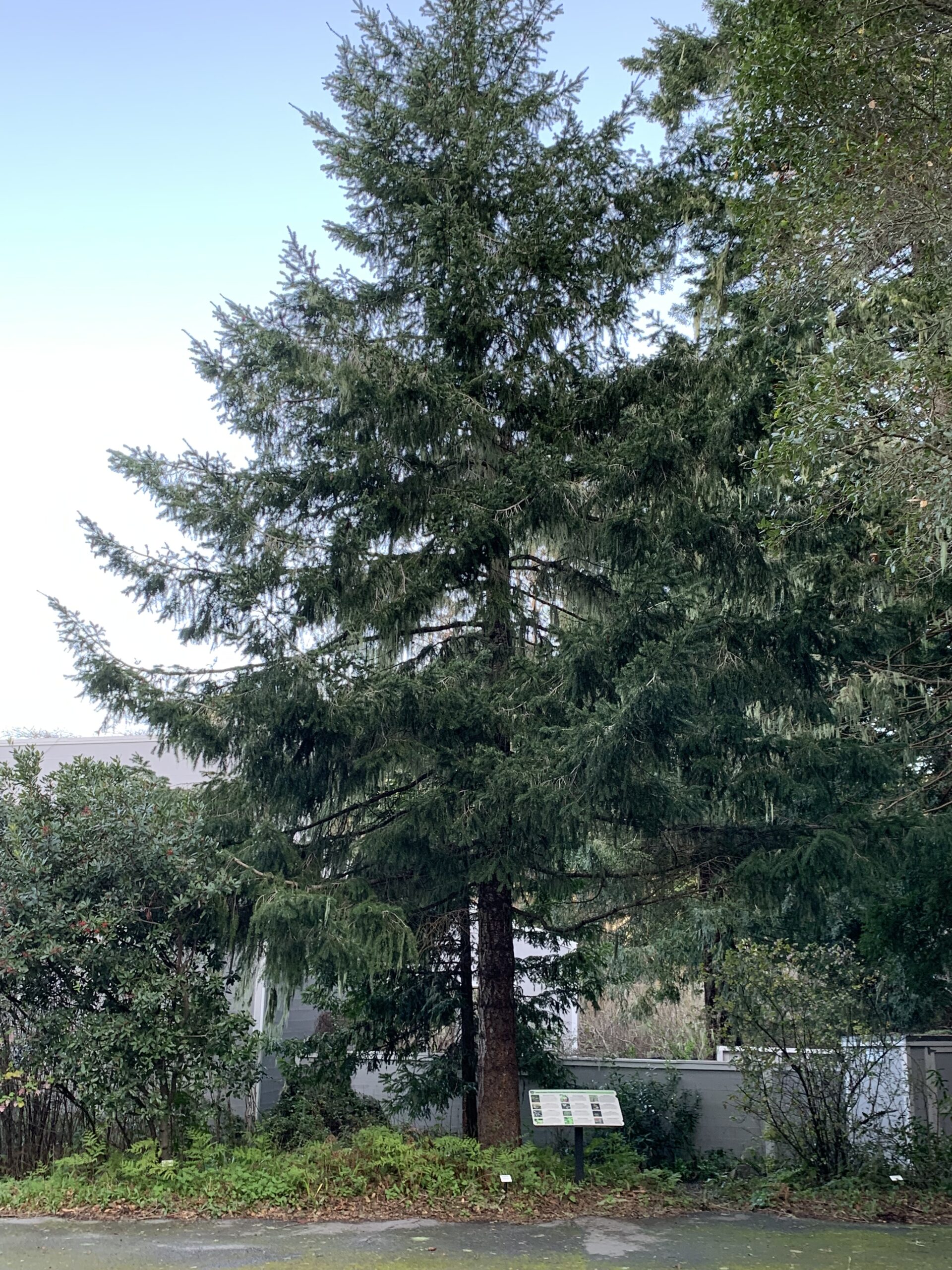
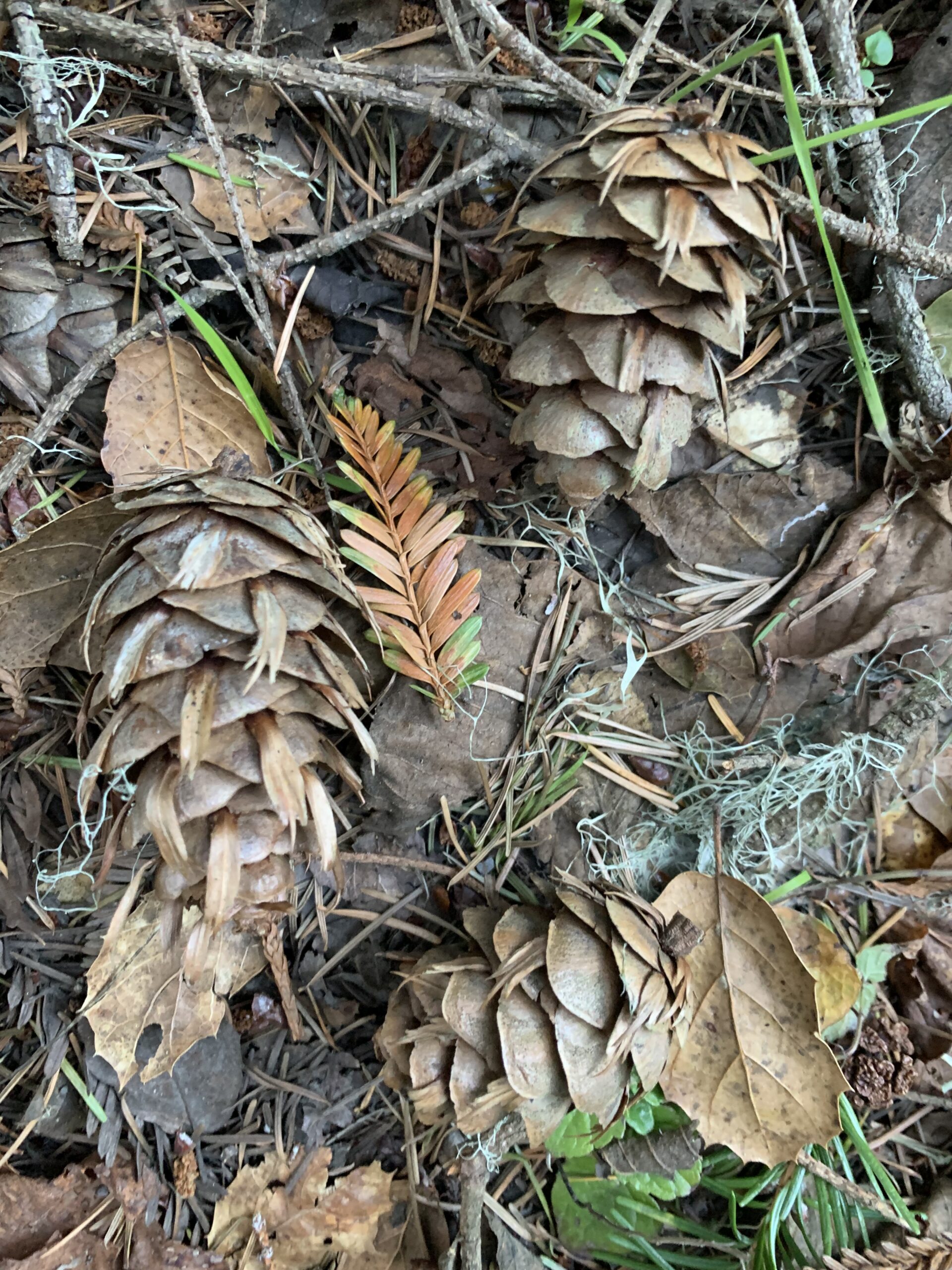
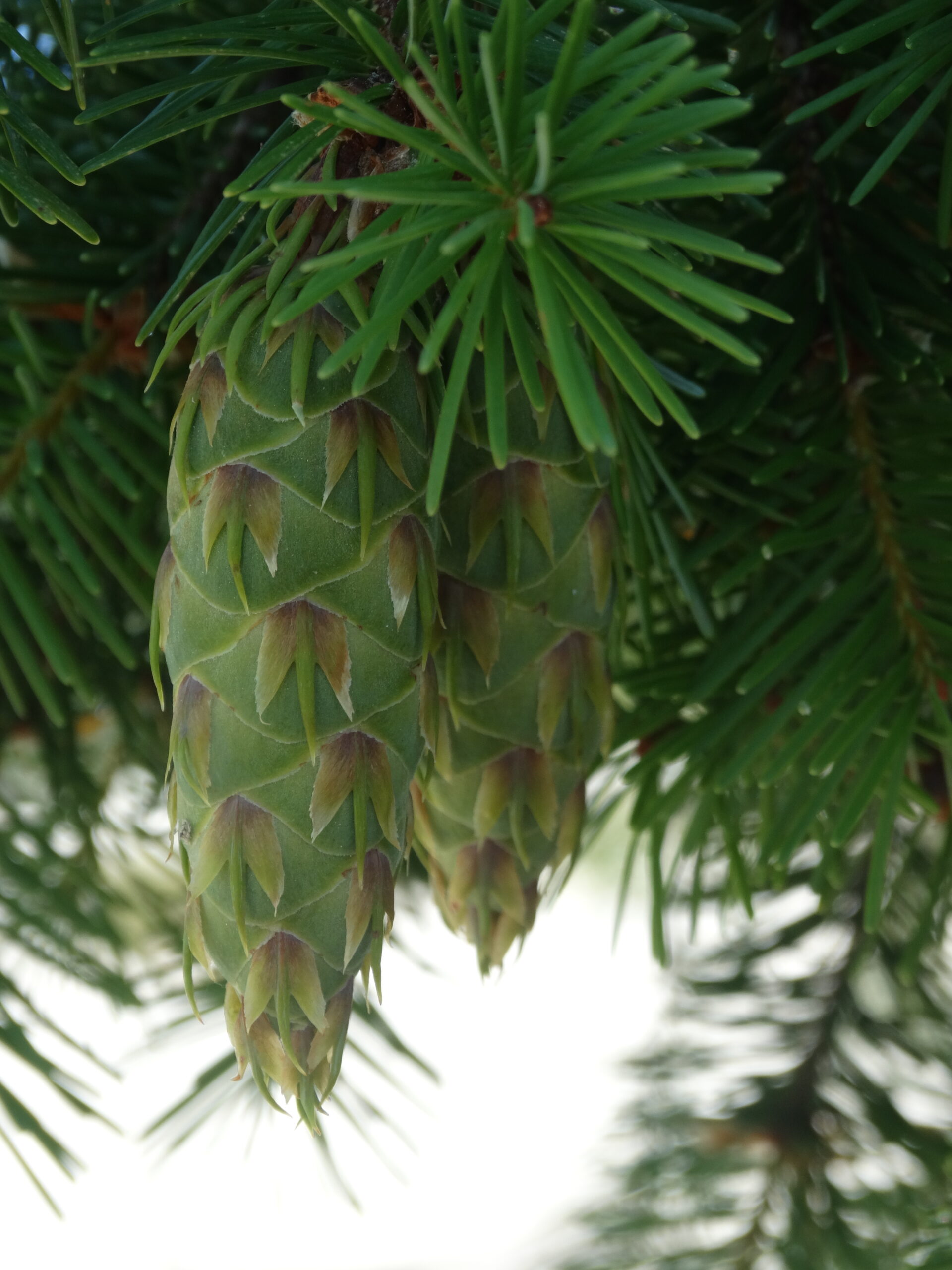
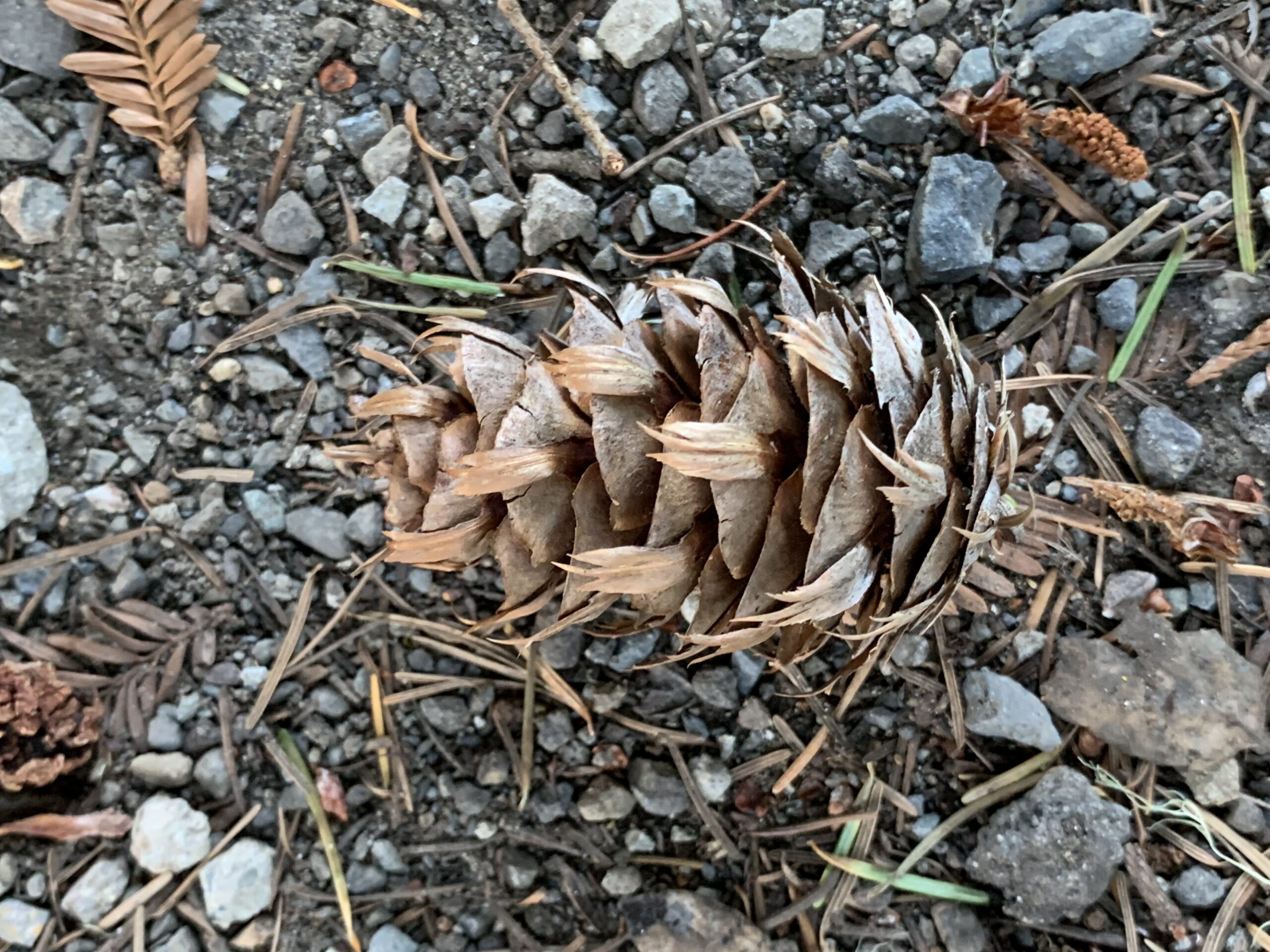
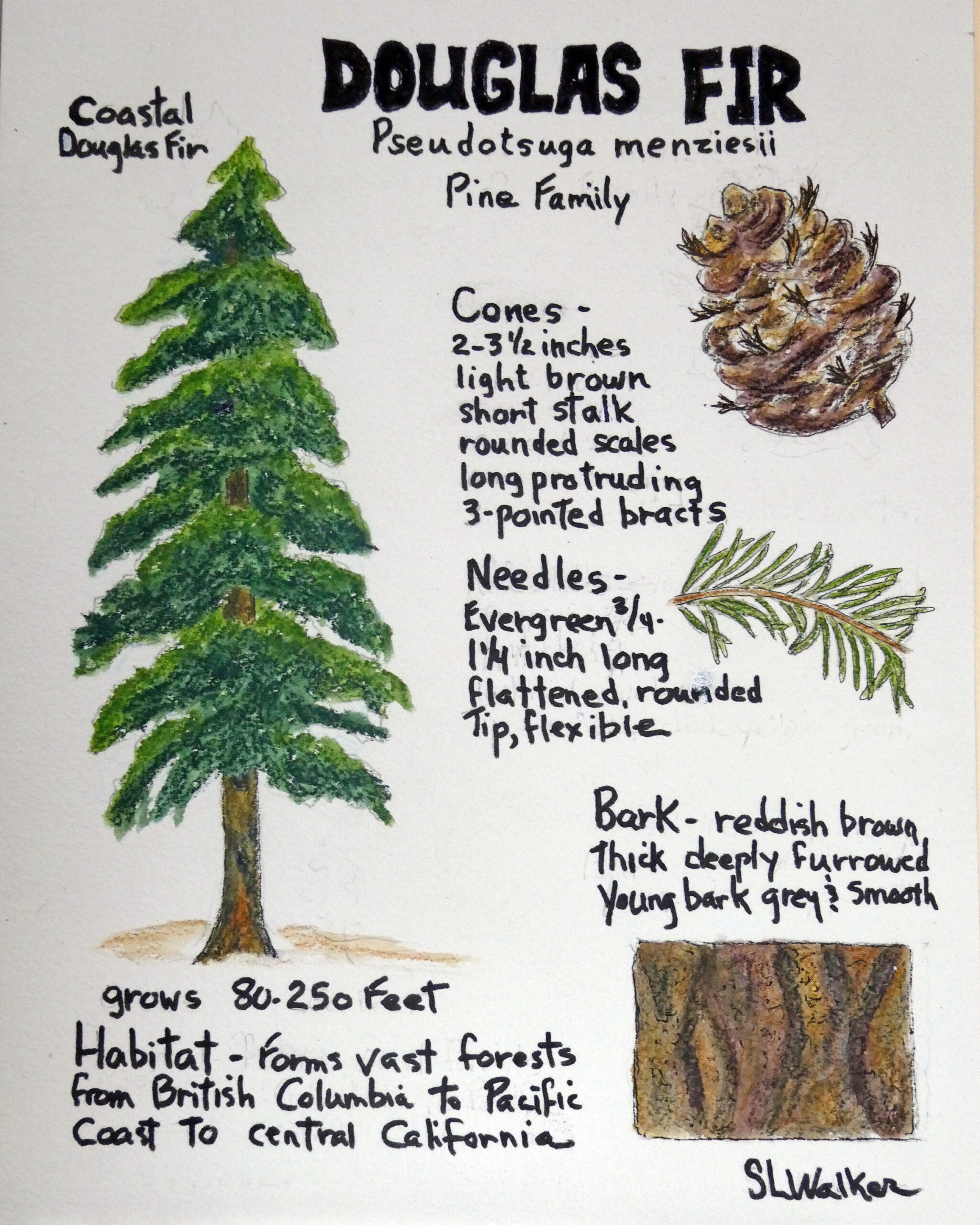
Tall, evergreen conifer with branches that are sweeping and stick out like ladder rungs. Soft flattened green needles about an inch long are arranged around the branchlets. Deciduous cones have three-lobed bracts between the scales that resemble the hind legs and tail of a mouse.
Similar To
Coast Redwood(Sequoia sempervirens) has needles in a flat plane.
Height / Size
Grows to 80 to 250 feet tall.
Leaves or Needles
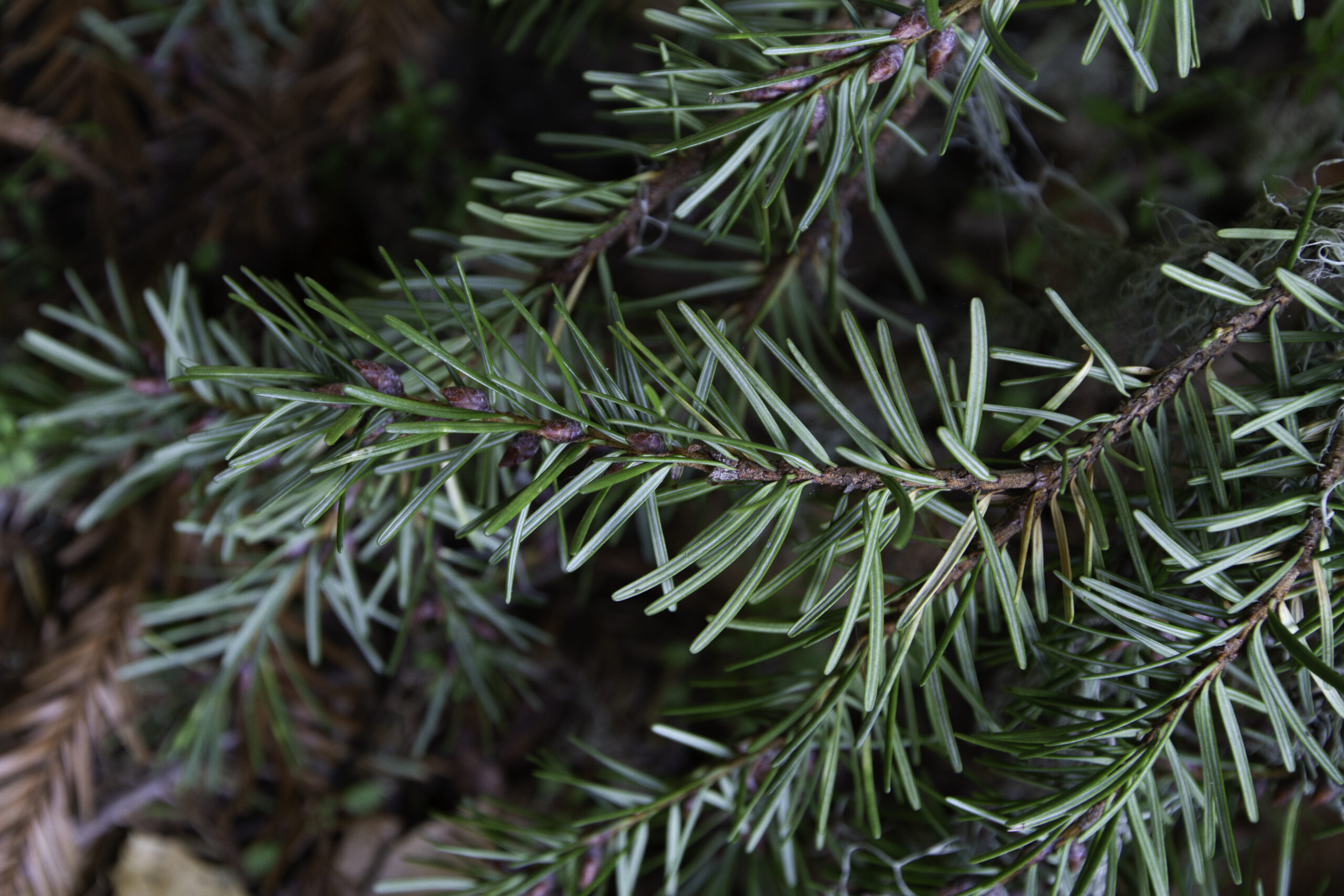
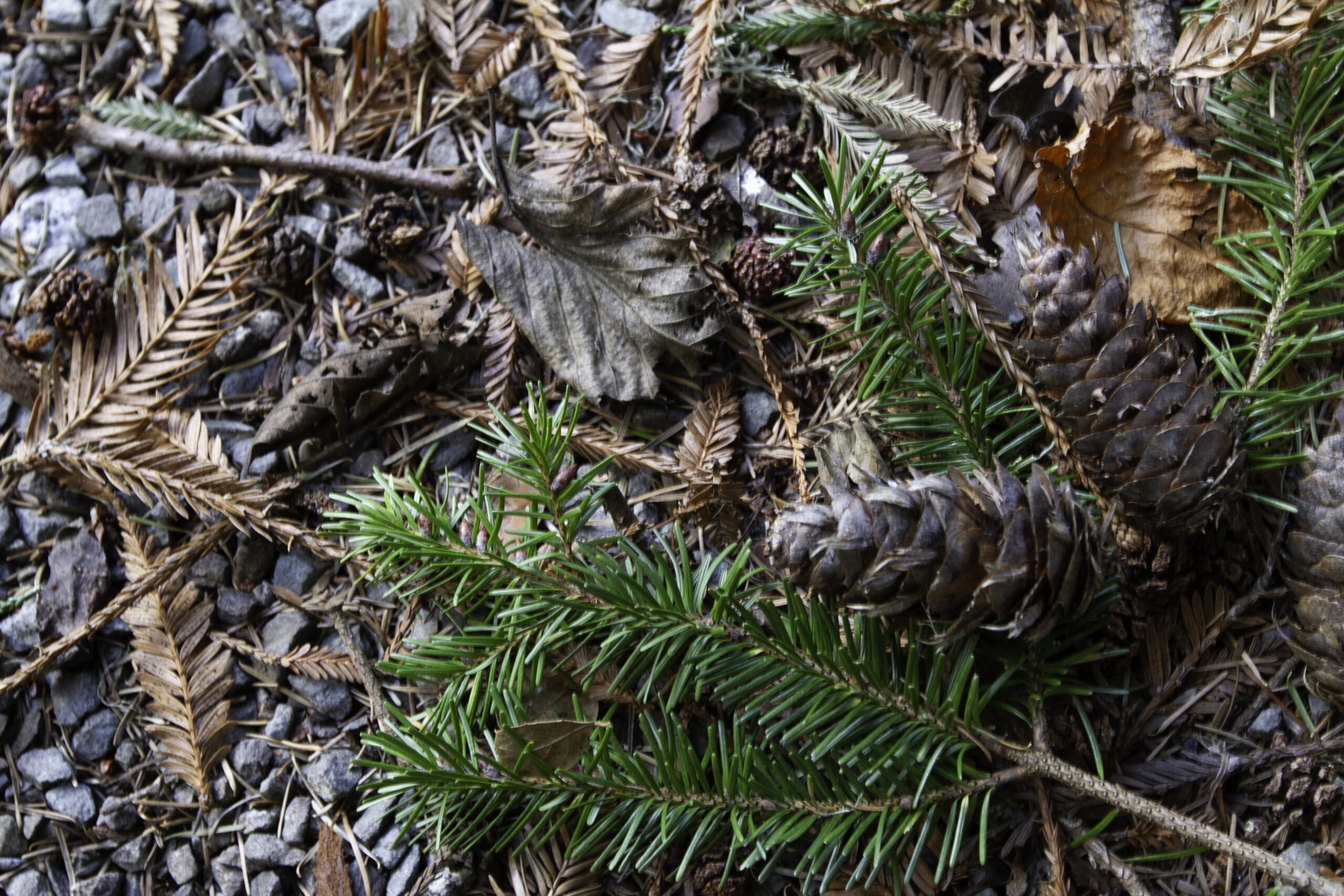
Dark green needles 3/4 to 1 1/4 inches long, flattened, rounded tip, and flexible. Needles occur singly, not in bunches and surround the branchlet.
Bark / Trunk
Bark is grayish-brown and scaly. Mature bark – deeply furrowed.
Flower
Conifers do not produce flowers. Male cones are very small and brown located on branch tips. Female cones are larger and reddish typically set higher in the tree.
Fruit / Seed / Cone
Male cones release pollen April to May. Seed cones (female) are 2″ to 3 1/2″ inches, light brown, with a short stalk, rounded scales, and long protuding 3-pointed bracts that resemble a mouse tail. Cones are deciduous and litter the ground indicating a tree is nearby.
Habitat
Woodland, ridges, on well drained soil.
Location / Range
Brooks Creek and Hazelnut trails. Coastal California and Northern Sierra to 7000 feet.
Lifespan
Lives to 500 years and occasionally more than 1,000 years.
Fascinating / Fun Facts
Douglas Fir is not a true fir. It is a member of the Pine Family. Due to fire suppression, Douglas Fir is able to rapidly encroach into adjacent grassland, coastal scrub and chaparral habitats on the coast ranges. It is very fire intolerant and historically, Douglas Fir populations were kept in check by regular natural fire occurrences. Without fire, it can quickly outcompete most native species in adjacent shrubland and grasslands. Indigenous people use it for lumber, harpoon shafts and other tools. Roots are used to weave baskets and leaves are used to make tea.
Sources:
Corelli, T. 2004. Flowering Plants of Edgewood Natural Preserve (2nd. ed.). Monocot Press, Half Moon Bay, California. VanderWerf, Barbara. 1994. Montara Mountain. Gum Tree Lane Books, El Granada, CA iNaturalist PlantID Calscape