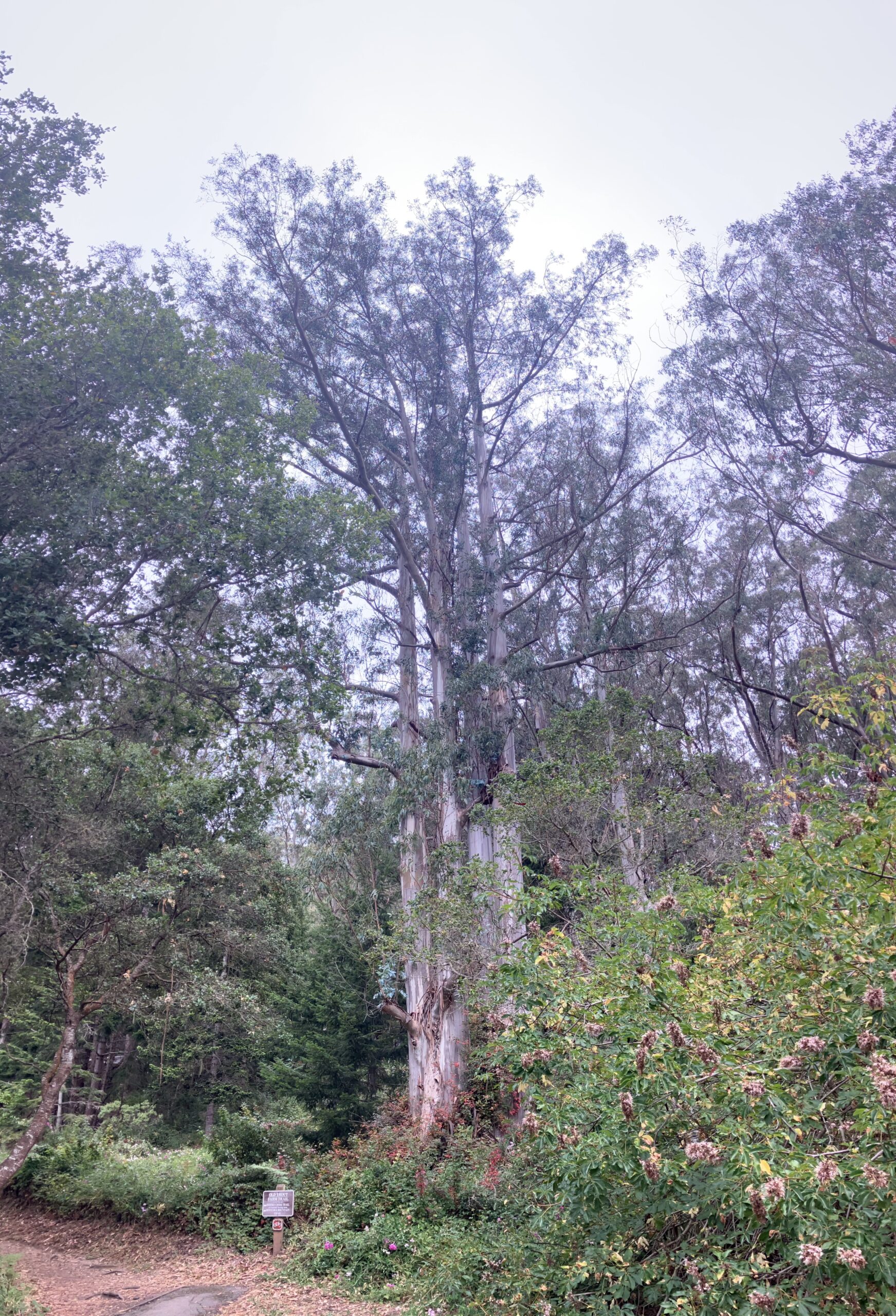
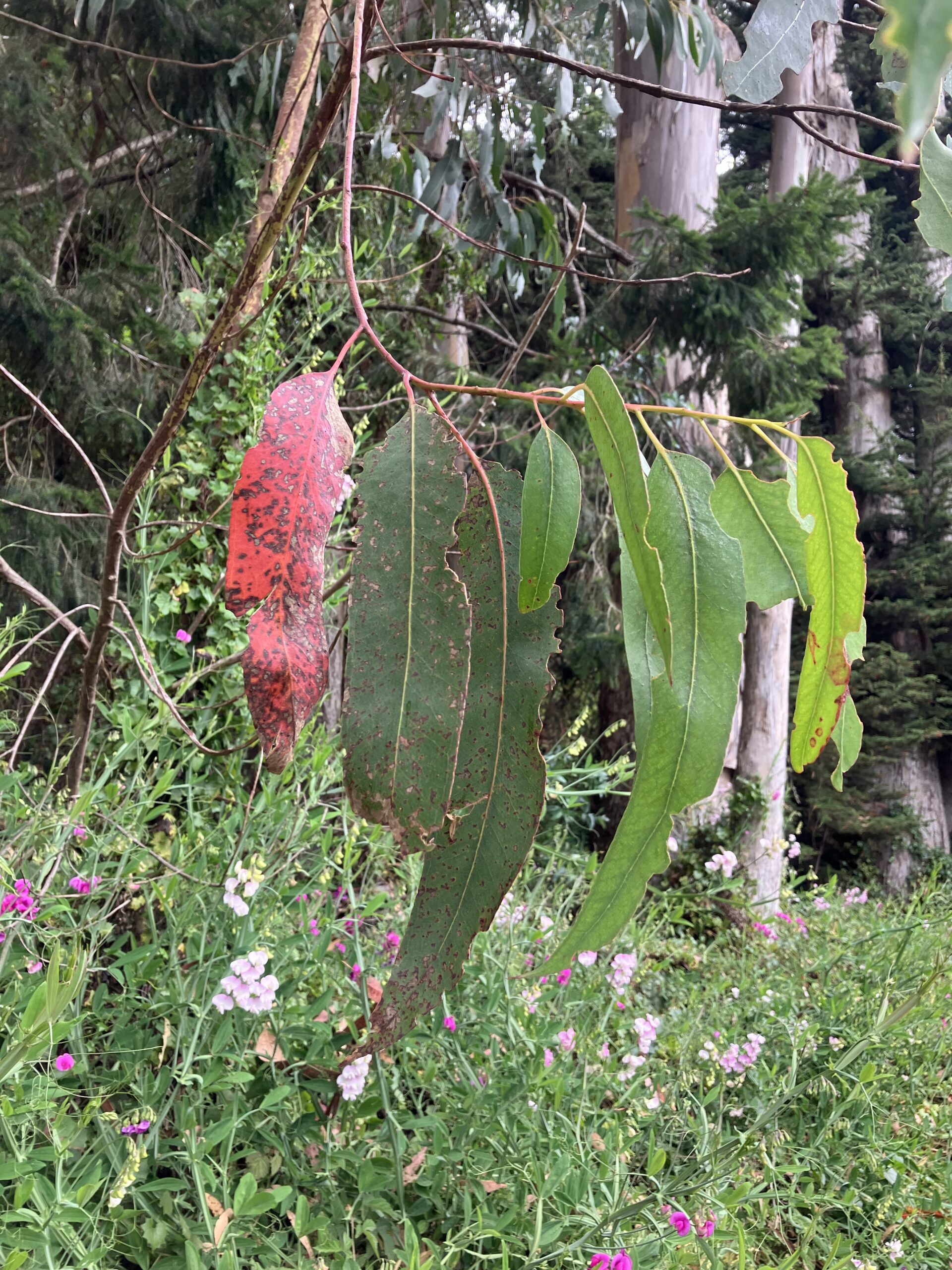
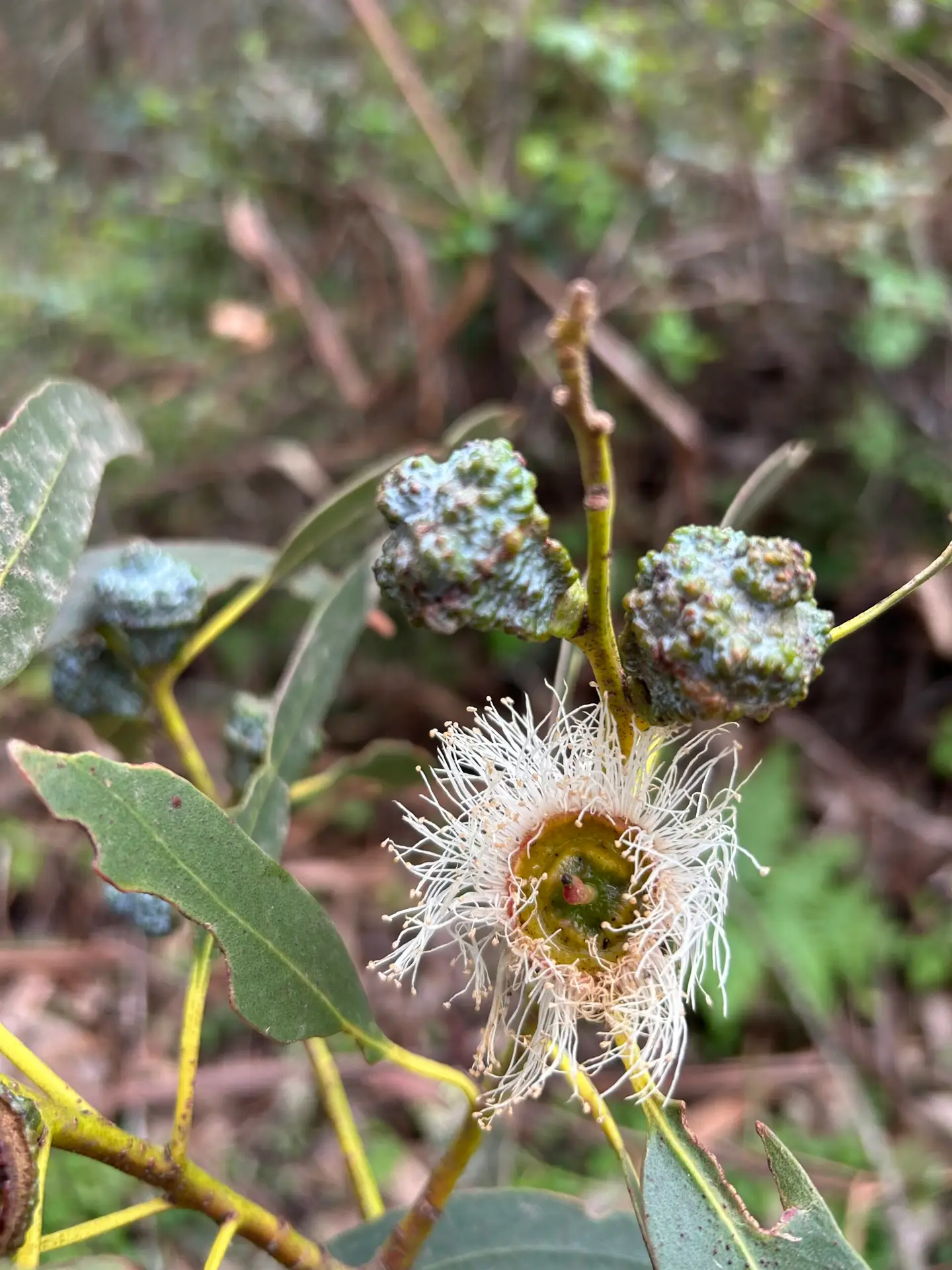
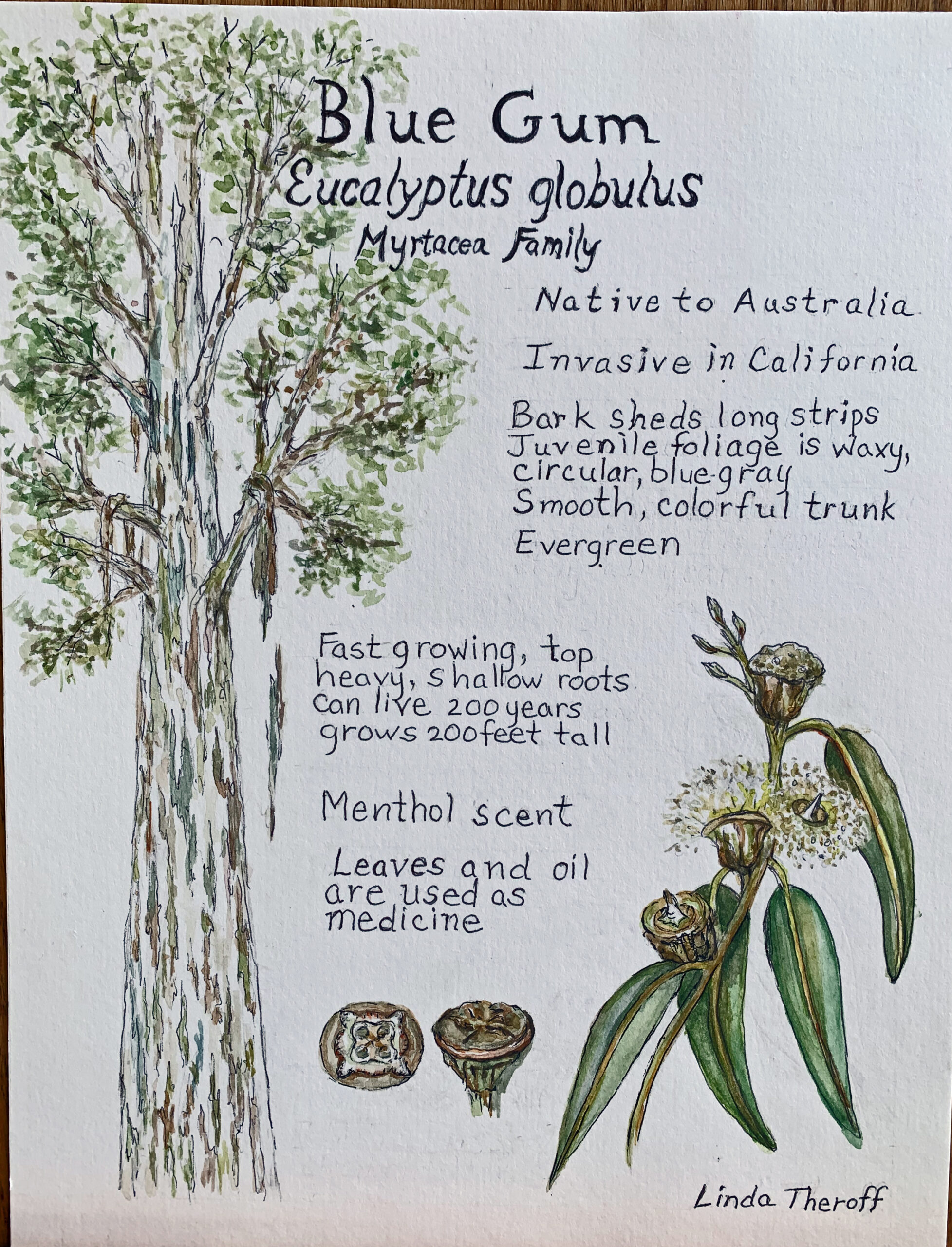
Tall evergreen tree native to Australia, with long narrow and curved leaves, white flowers.
Height / Size
Grows to 200 feet tall.
Leaves or Needles
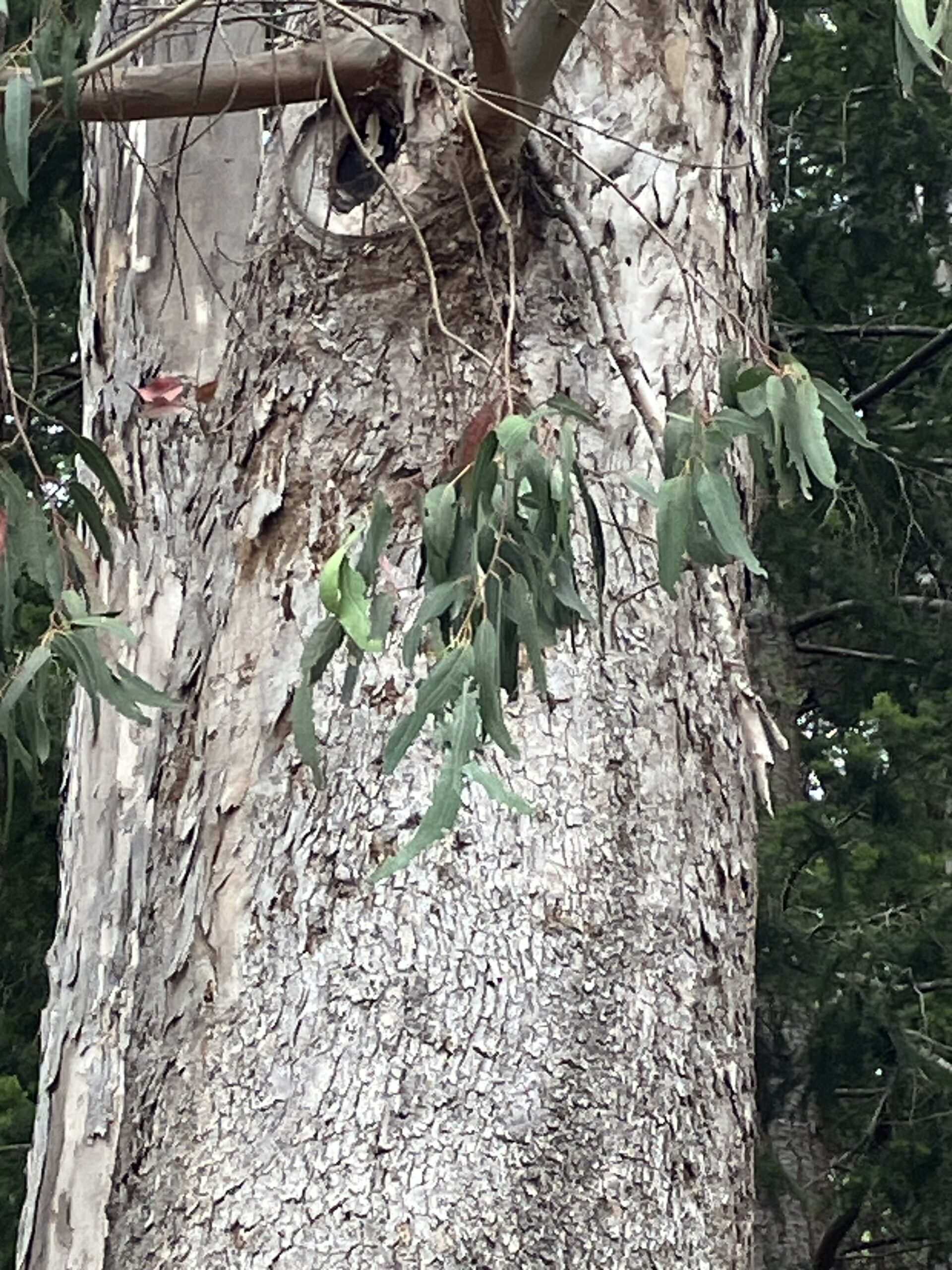
Mature leaves are narrow and curved, growing to a foot long. Both sides of mature leaves are nearly identical. Leaves of young stems are waxy, circular, blue-gray, and have a distinct top and bottom.
Bark / Trunk
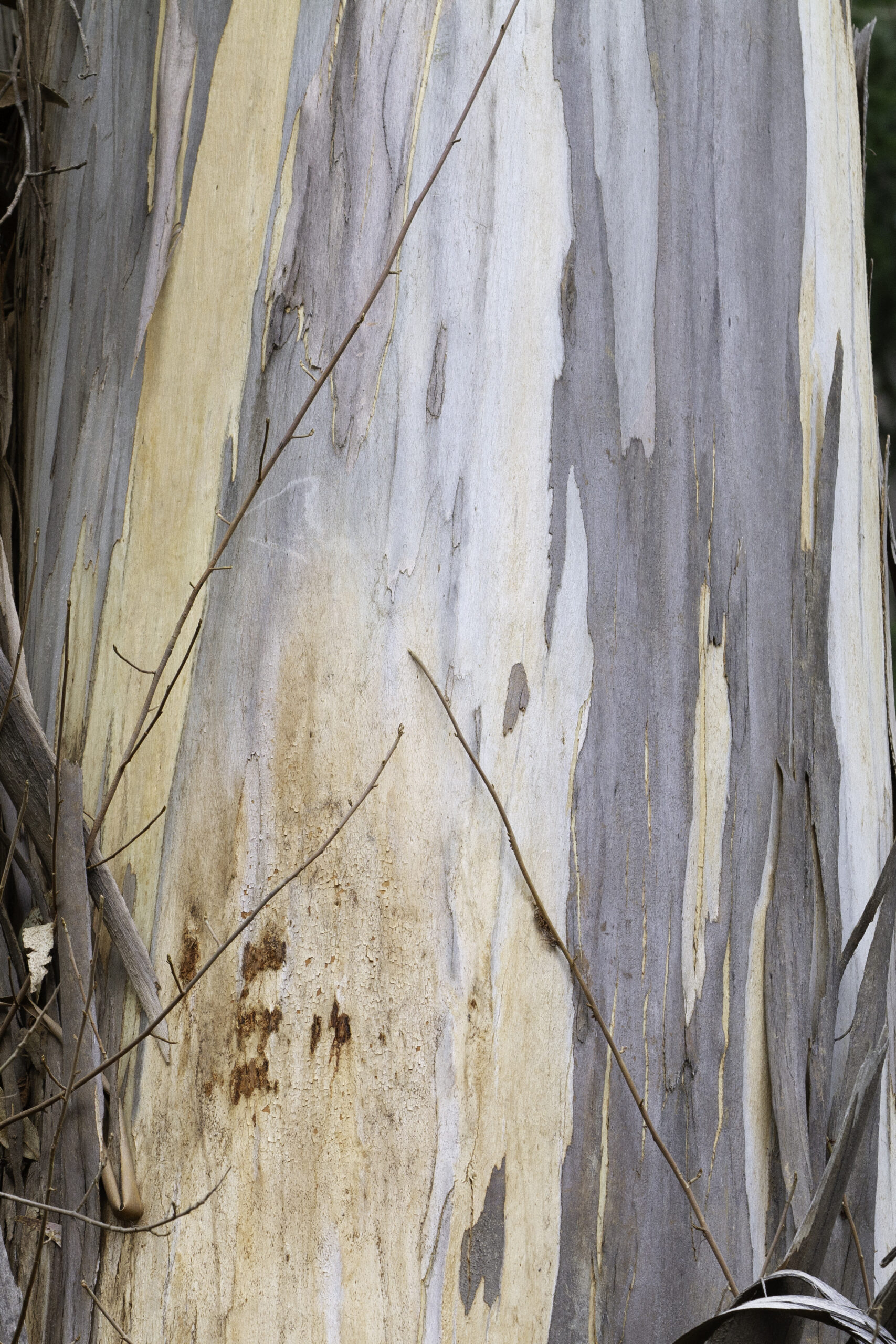
Bark sheds long strips and trunk is smooth and colorful. Base of older trees is often covered with persistent (normal-appearing) bark rather than strips.
Flower
Flower has many white stamens surrounding a central knob, but no petals, and smells of honey. Developing flowers are covered by a warty operculum (cap) that falls off when the flower matures.
Bloom Time: October to March.
Fruit / Seed / Cone
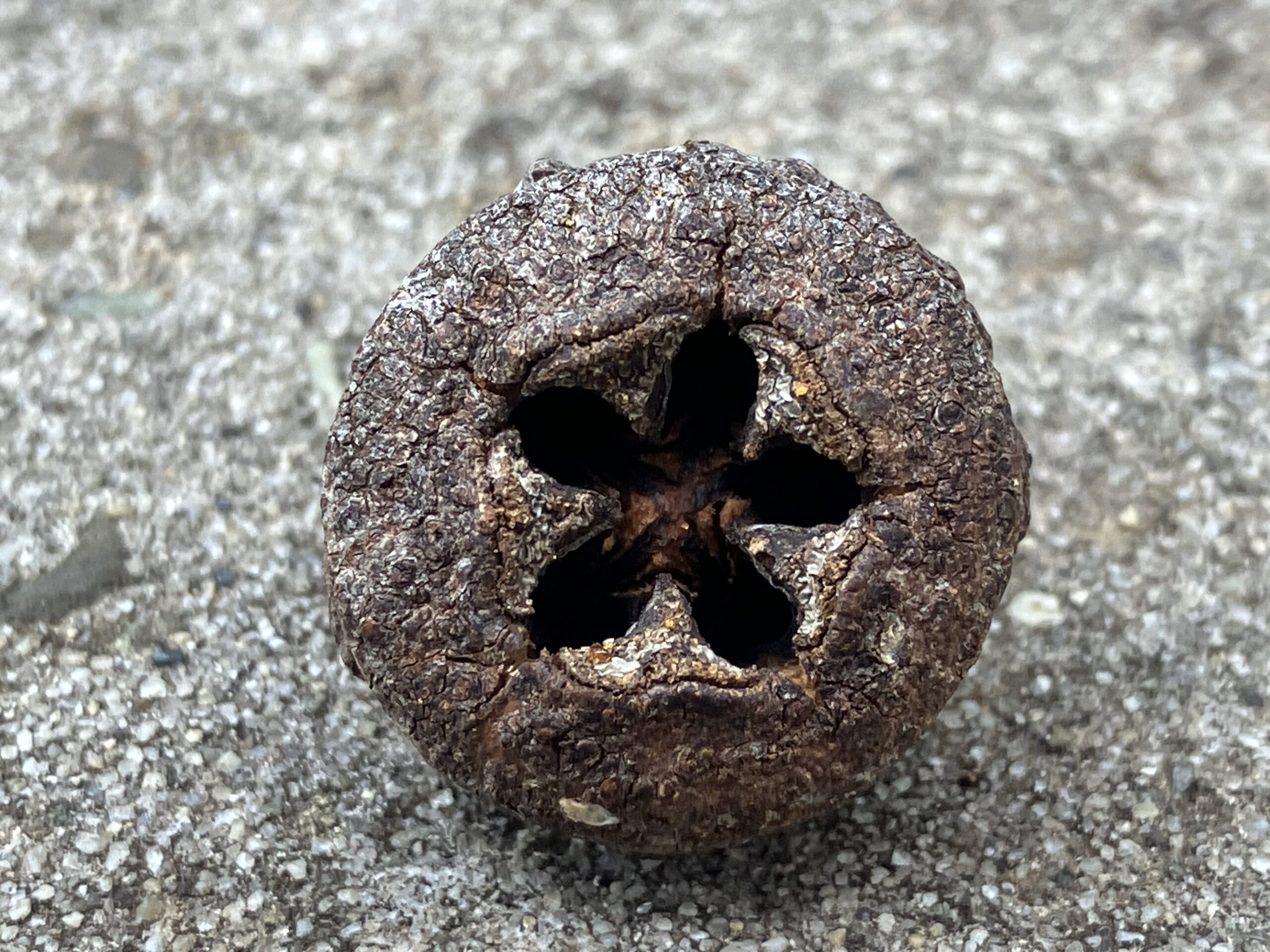
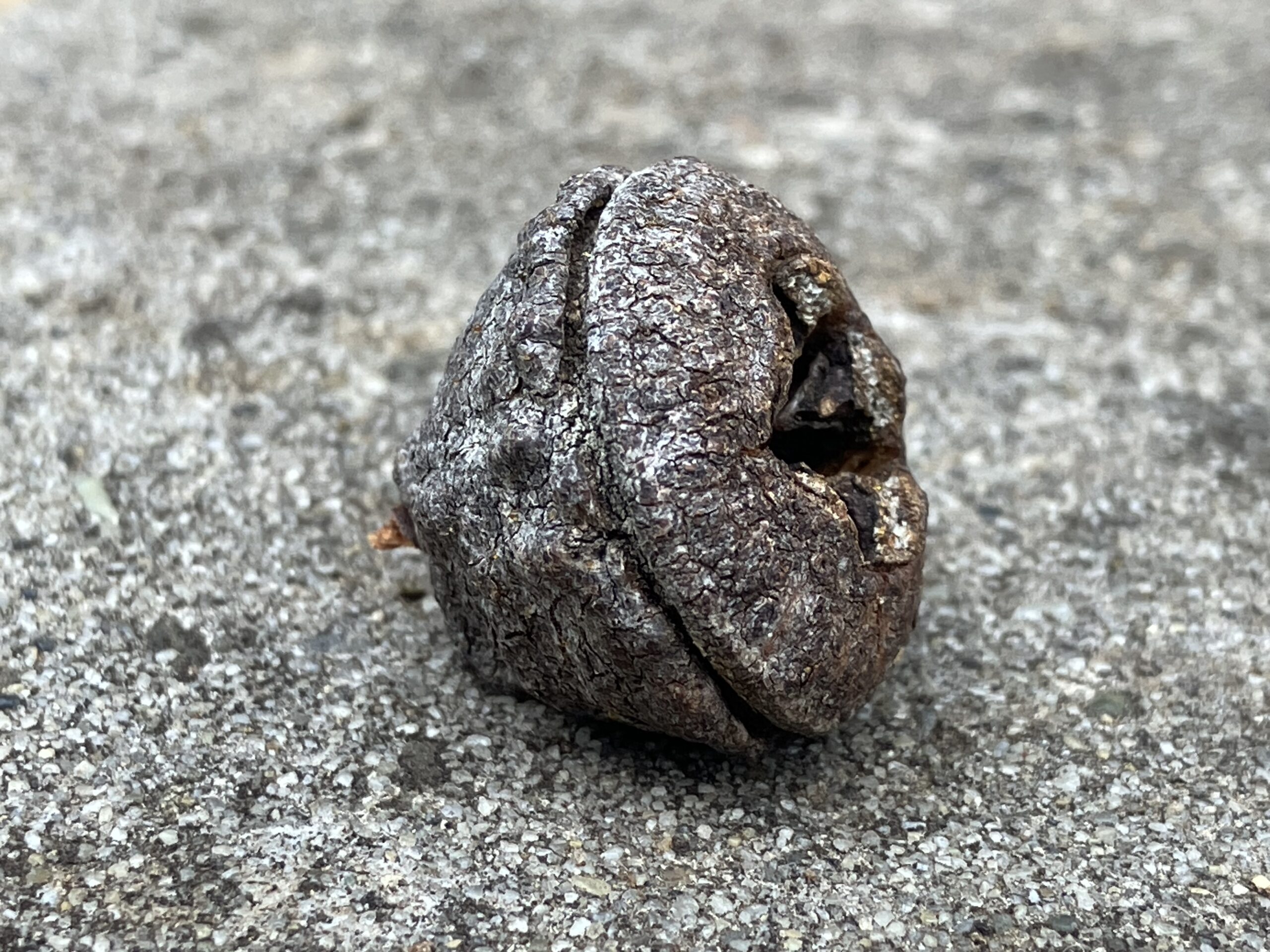
Woody fruits with up to five notches that grow to 1 inch across.
Habitat
Mild temperate locals with good drainage. Native to Australia and invasive in California.
Location / Range
Brooks, Hazelnut, Valley View, Weiler Ranch, and Montara Mountain Trails. Found throughout California, mostly near the coast and throughout the central valley. Somewhat invasive along the coast, where coastal fog enables it to reproduce.
Lifespan
Can live up to 200 years.
Fascinating / Fun Facts
Blue Gum Eucalyptus is harmful to surrounding native plants. Its leaves contain oily compounds called terpenes, which in addition to being a fire hazard, inhibit the growth of surrounding Coastal Scrub plants. It is a high soil nutrient and water consumer, further limiting growth in the understory. However, some native species, such as poison oak, do grow well under eucalyptus.