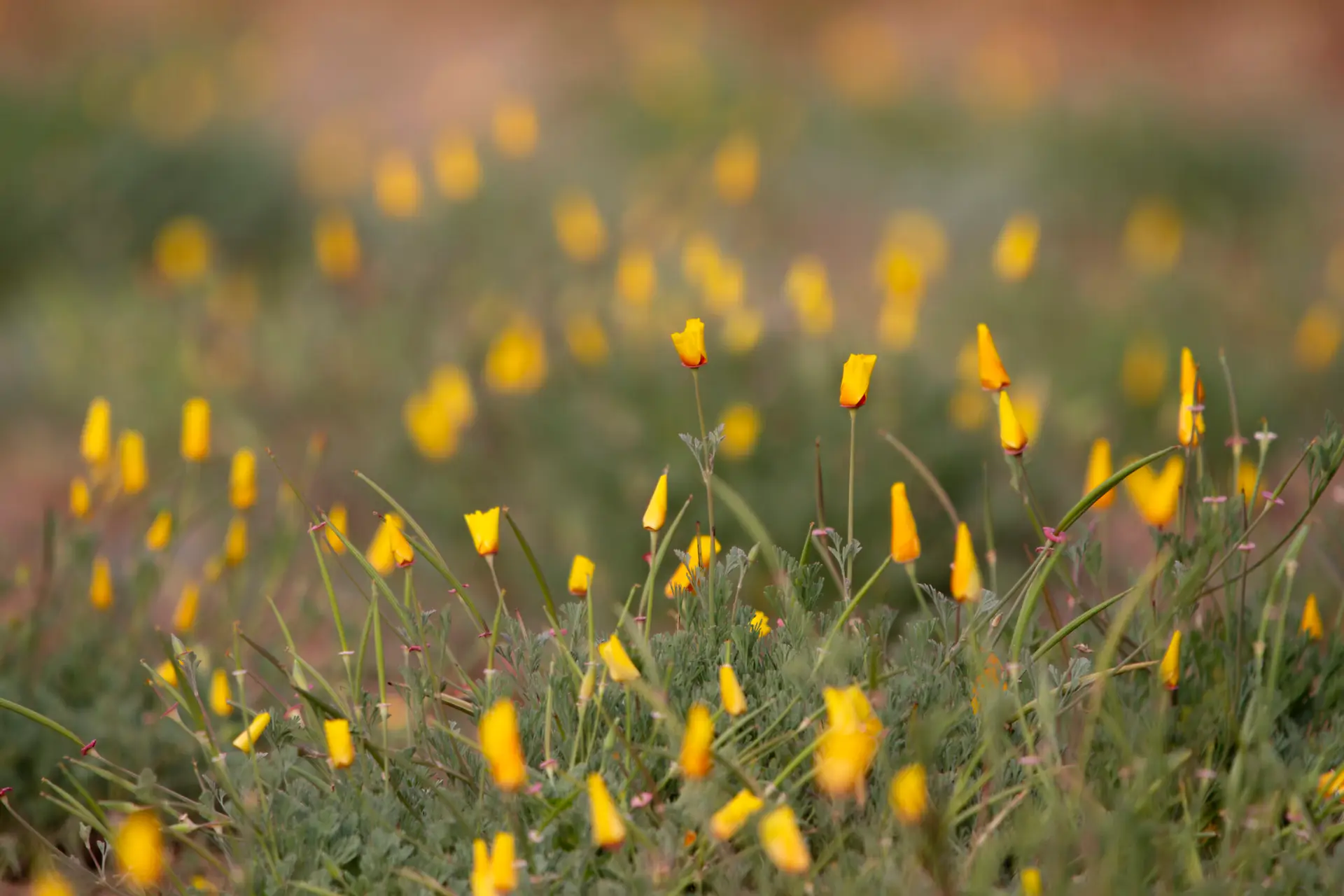
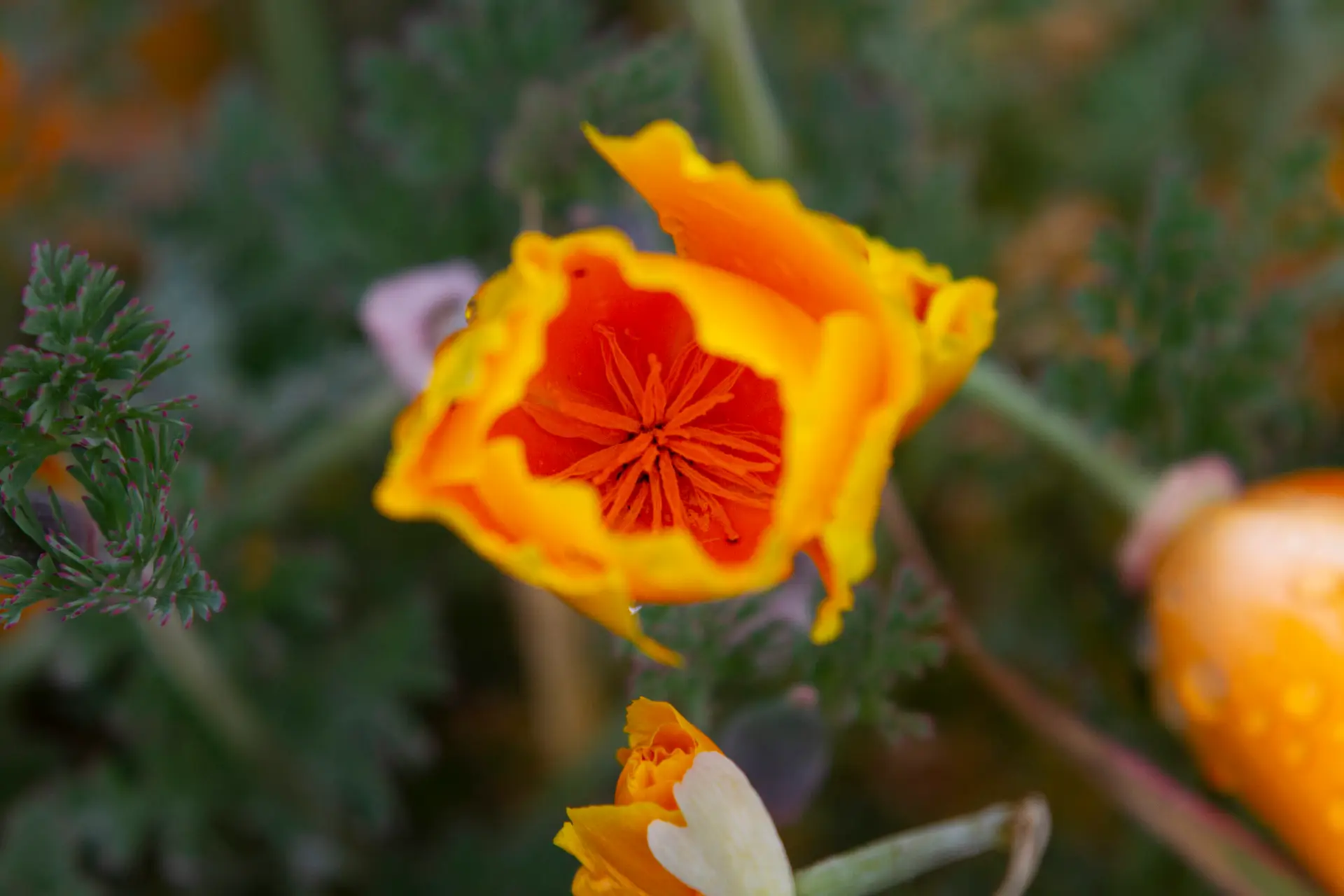
California poppies have vibrant, bright orange or yellow flowers above feathery gray-green leaves. They have long taproots, thrive in sunny, well-drained areas, and can cover undisturbed hillsides with broad displays of spring color.
Height / Size
2 to 24 inches tall and 1 to 2 feet wide.
Leaves
Alternate leaves are grey-green in color and finely divided.
Flower
Two fused sepals (calyptrate) fall off one piece as the flower blooms. Four large overlapping orange petals sit atop a circular pink disc or receptacle called a torus. The pistil has a four-pronged stigma, which is lighter orange in color. Many stamens provide lots of pollen. Stamens have black joints. Flowers close at night. Bloom Time: February to September (along the Coast)
Fruit / Seed
Fruit is an elongated, ribbed capsule above the receptacle that splits open (dehiscent) to release many tiny black seeds.
Habitat
Grows in sunny open areas including grasslands, sand dunes, and chaparral. Northern Coastal Scrub, Yellow Pine Forest, Red Fir Forest, Lodgepole Forest, Foothill Woodland, Chaparral, Coastal Prairie, and Valley Grassland
Location / Range
All Trails. Throughout California below 8000 feet.
Lifespan
California poppy plants can be annuals or perennials. Perennials can live to 3 years and even longer along the coast.
Fascinating / Fun Facts
The California Poppy is the state flower for California. Across California and in some western states, poppies blanket grassy sites during spring bloom time. Antelope Valley California Poppy Reserve is one of the locations that attracts many visitors to see large displays of poppies.