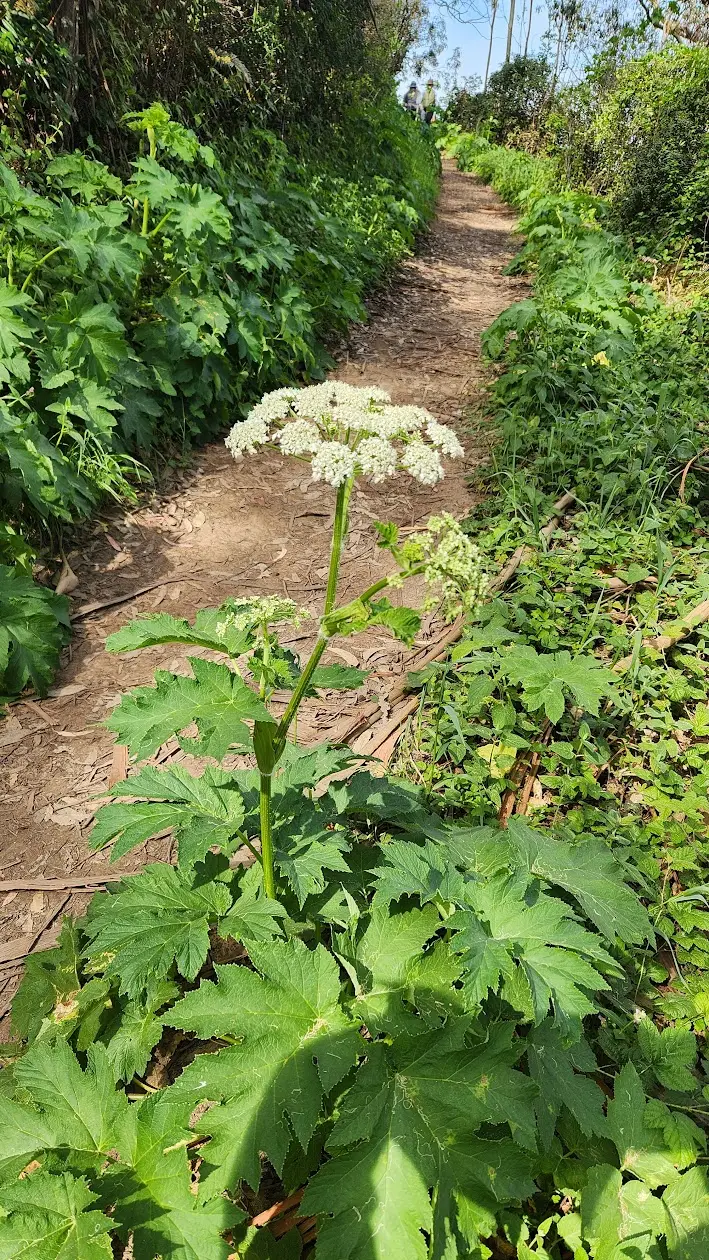
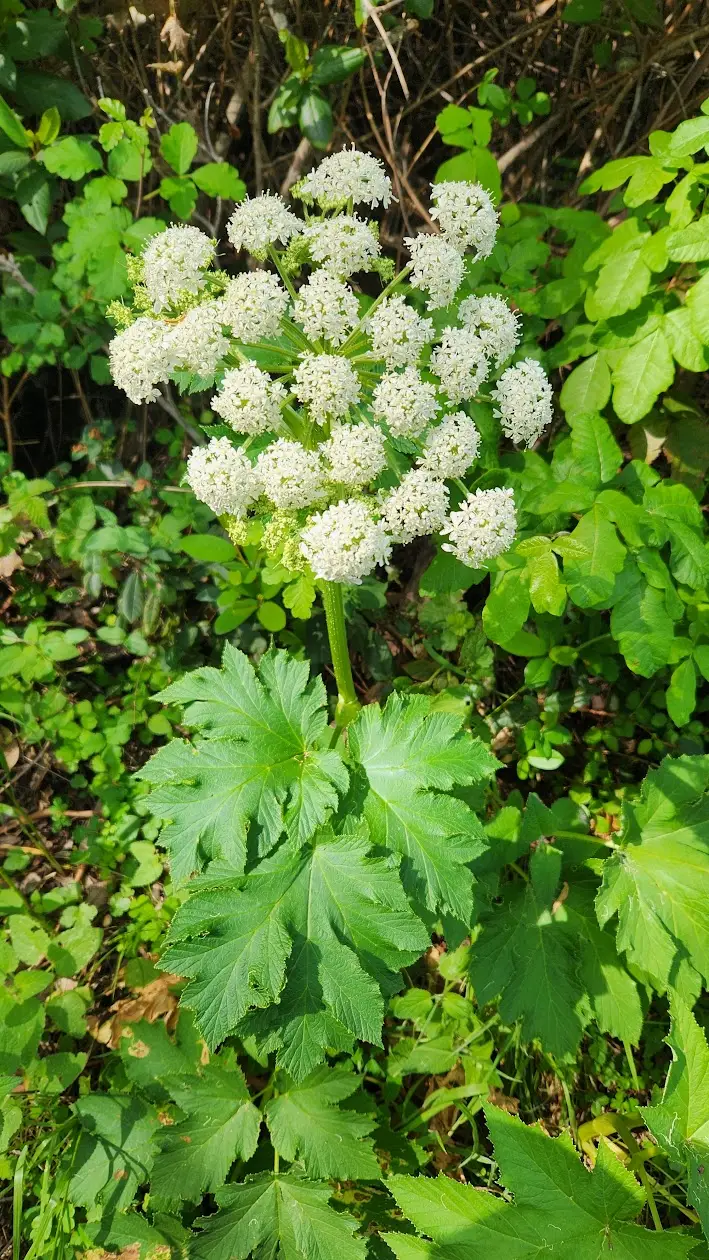
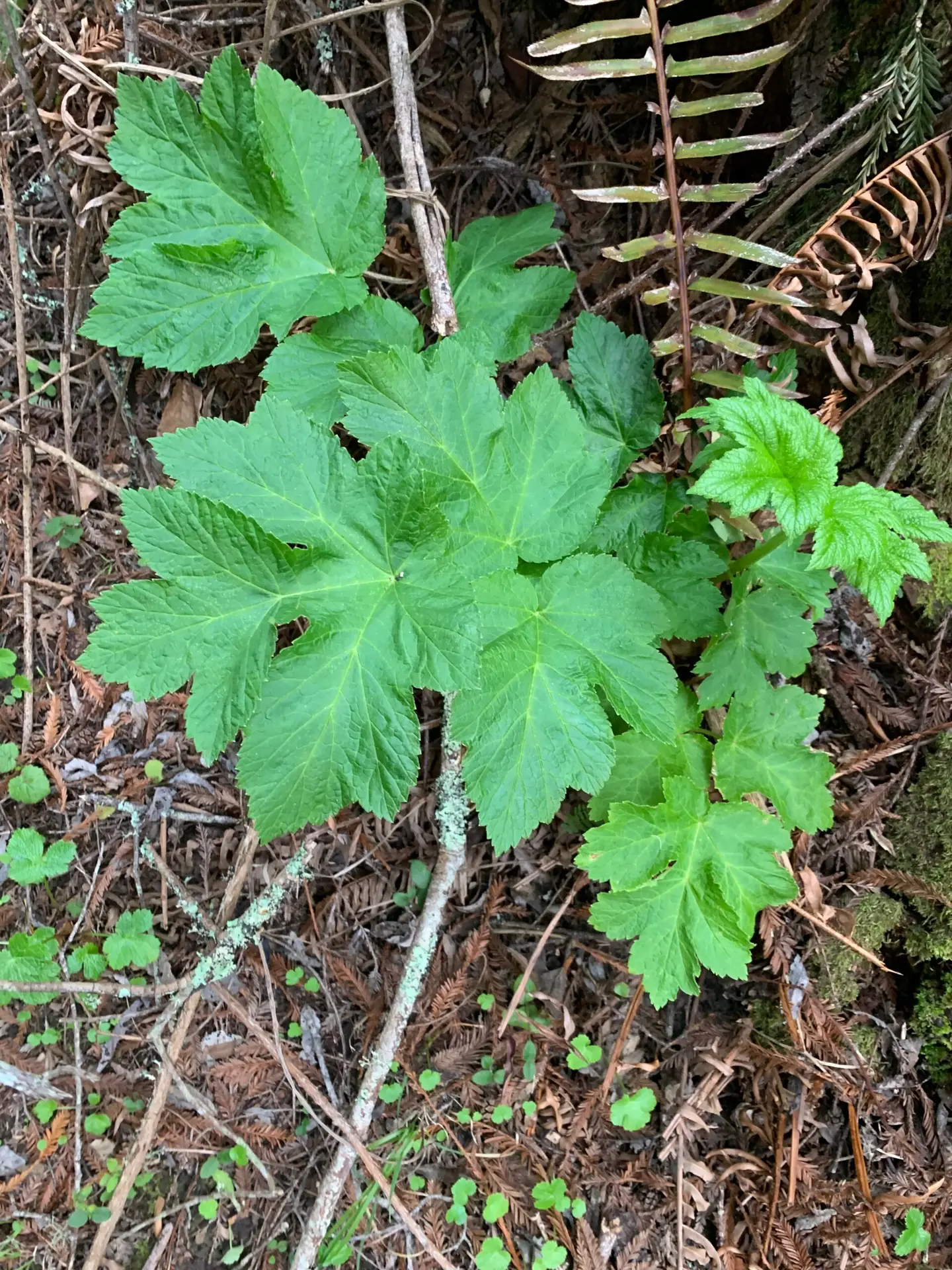
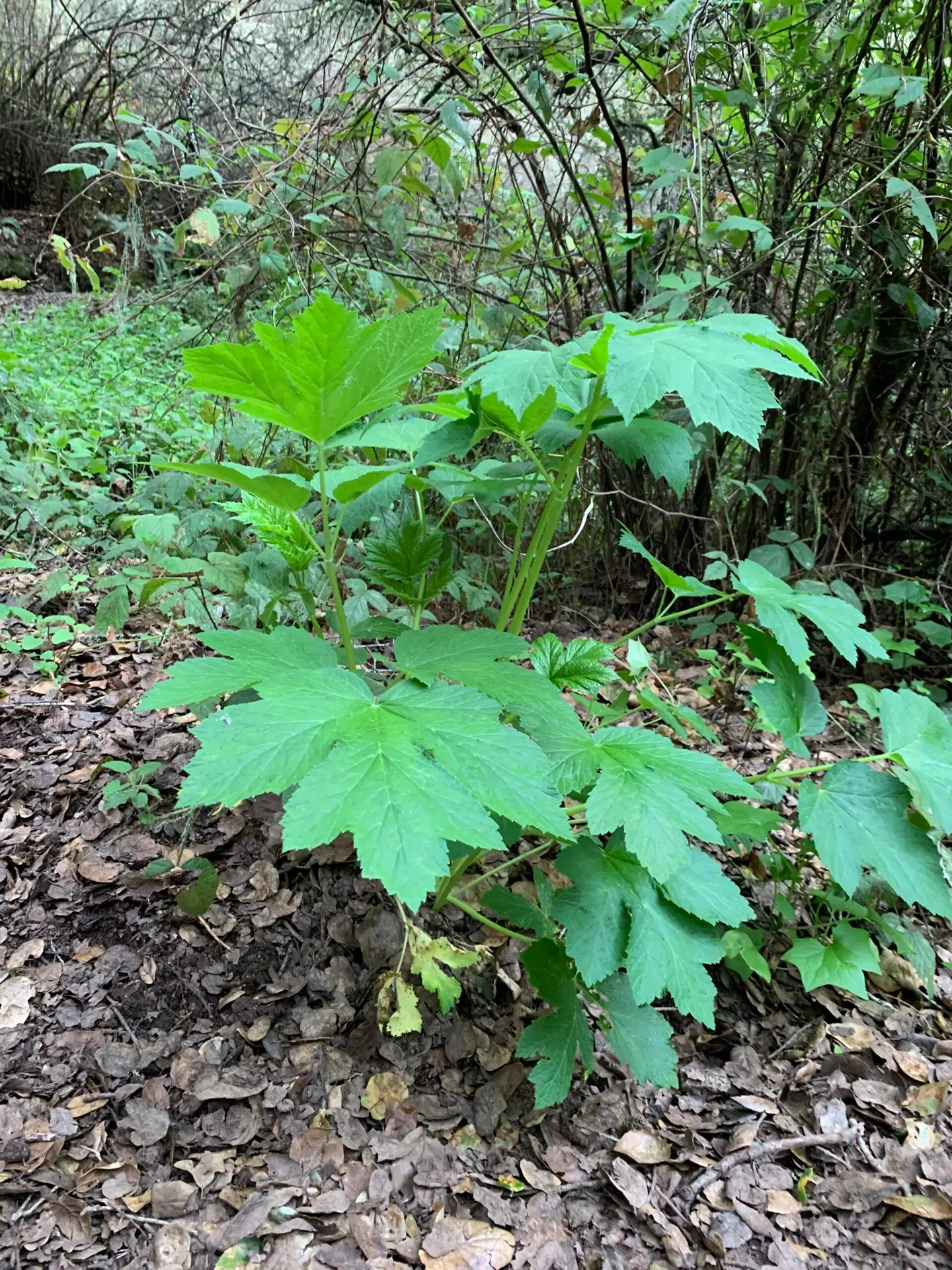
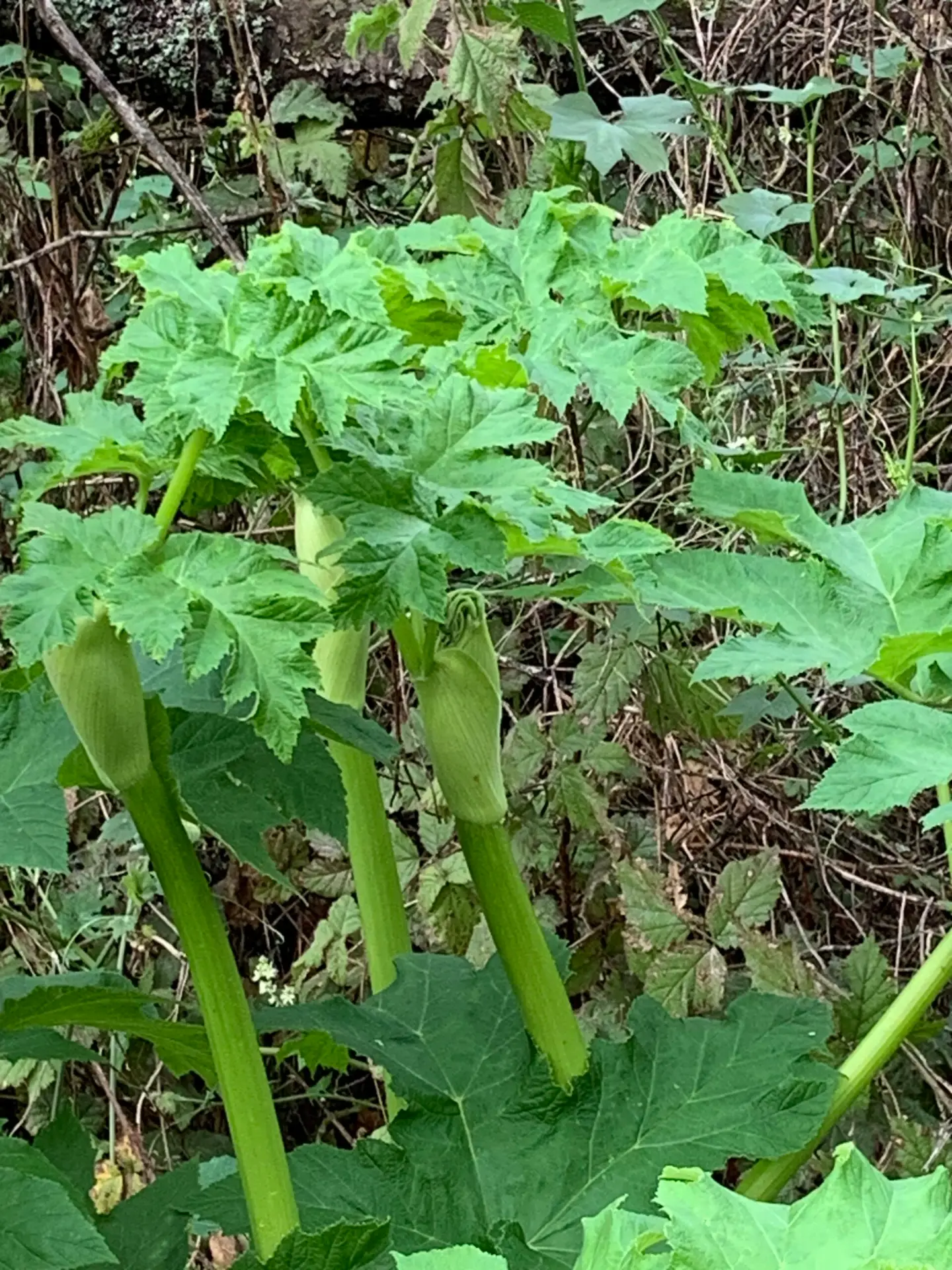
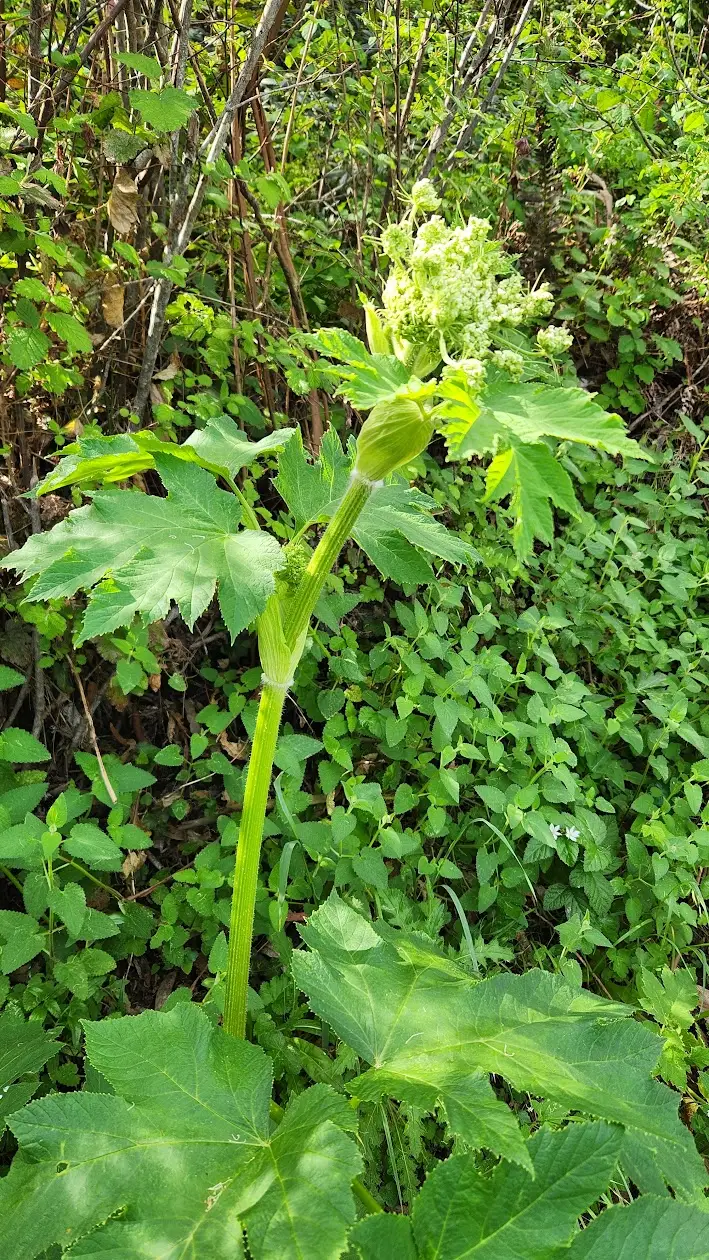
Cow parsnip is a large plant with thick, hairy and ridged, hollow stems and large, 3-lobed, maple-like, toothed leaves. It has a large, broadly convex cluster of small white flowers (an umbel).
Look at the leaves to tell them apart. Angelica has leaves with 5 or more lobes and are slightly toothed. Cow Parsnip leaves are 3 lobed and coarsely serrated.
Height / Size
Grows 4 to 8 feet tall.
Leaves
Leaves are large, lobed, and coarsely toothed. Leaves can be up to 12 inches across. Leaf stems (petioles) are heavily sheathed.
Flower
Inflorescence is a large flat-topped umbel of tiny white flowers, arranged in an umbrella shape. Bloom Time: April to July
Fruit / Seed
In August, the flowers turn into sunflower-like seeds. Seeds are flat and heart-shaped (ovobate, obchordate).
Habitat
Grows in moist areas that are wooded or open.
Location / Range
All trails. Common in California, and other North America areas, including Alaska, Arizona, and eastern United States.
Lifespan
Short-lived, typically no more than 2 years.
Fascinating / Fun Facts
The Cow Parsnip is used as a deer-resistant plant and is the only member of the genus Heracleum native to North America. While some people harvest the shoots and leaves for the table, the plants contain significant amounts of a phytophototoxic sap that causes the skin to be extra sensitive to ultraviolet light. This can result in a mild rash to severe blistering and permanent skin damage when exposed to sunlight. It is also known as American cow-parsnip, Satan celery, Indian celery, Indian rhubarb, poison turnip or pushki. It is edible, but does not taste good. Host plant for several swallowtail butterflies.
The Friends of San Pedro Valley Park welcomed Morgan Stickrod, a botanist and plant ecologist with over 10 years of experience doing research and field...