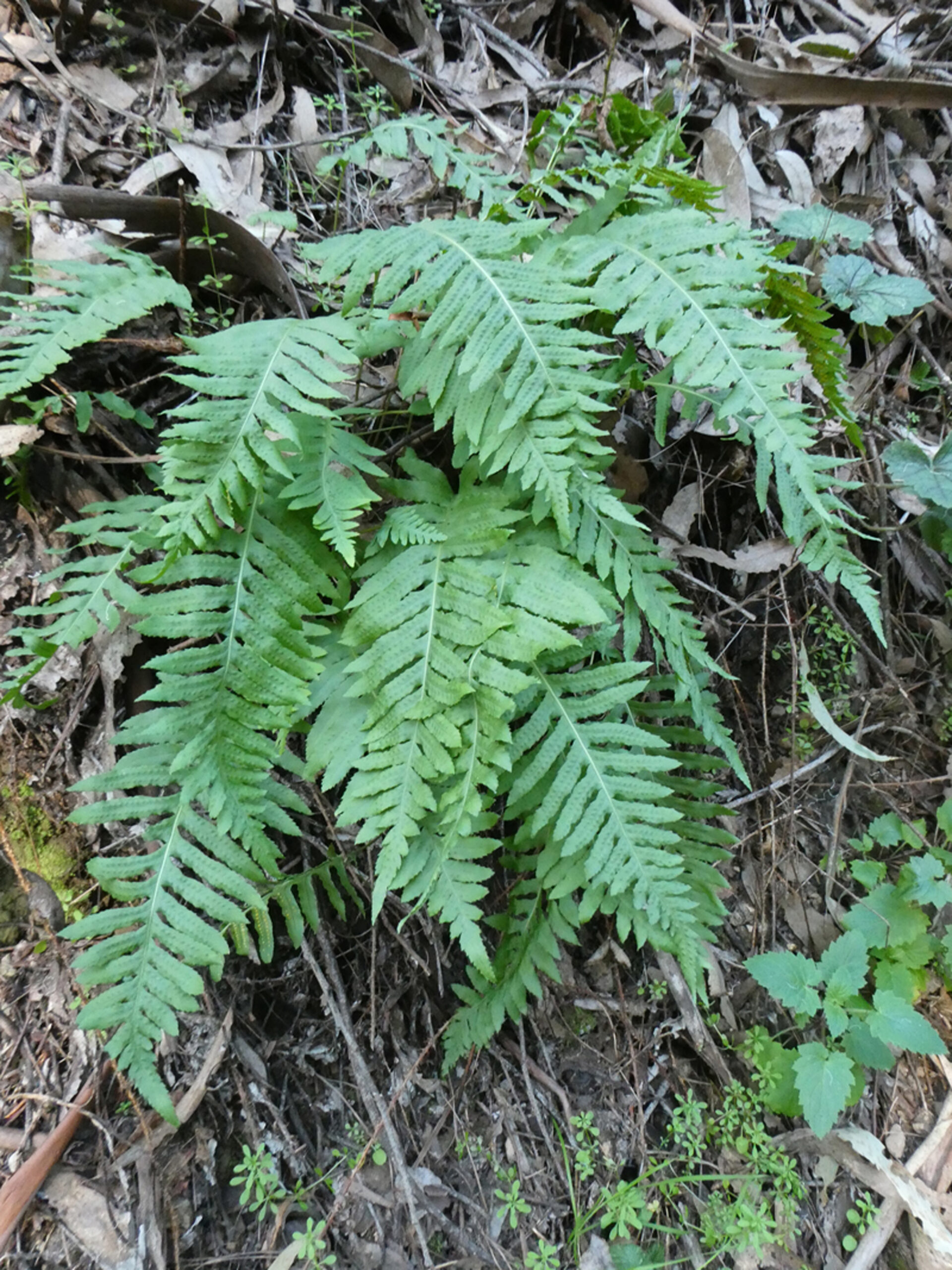
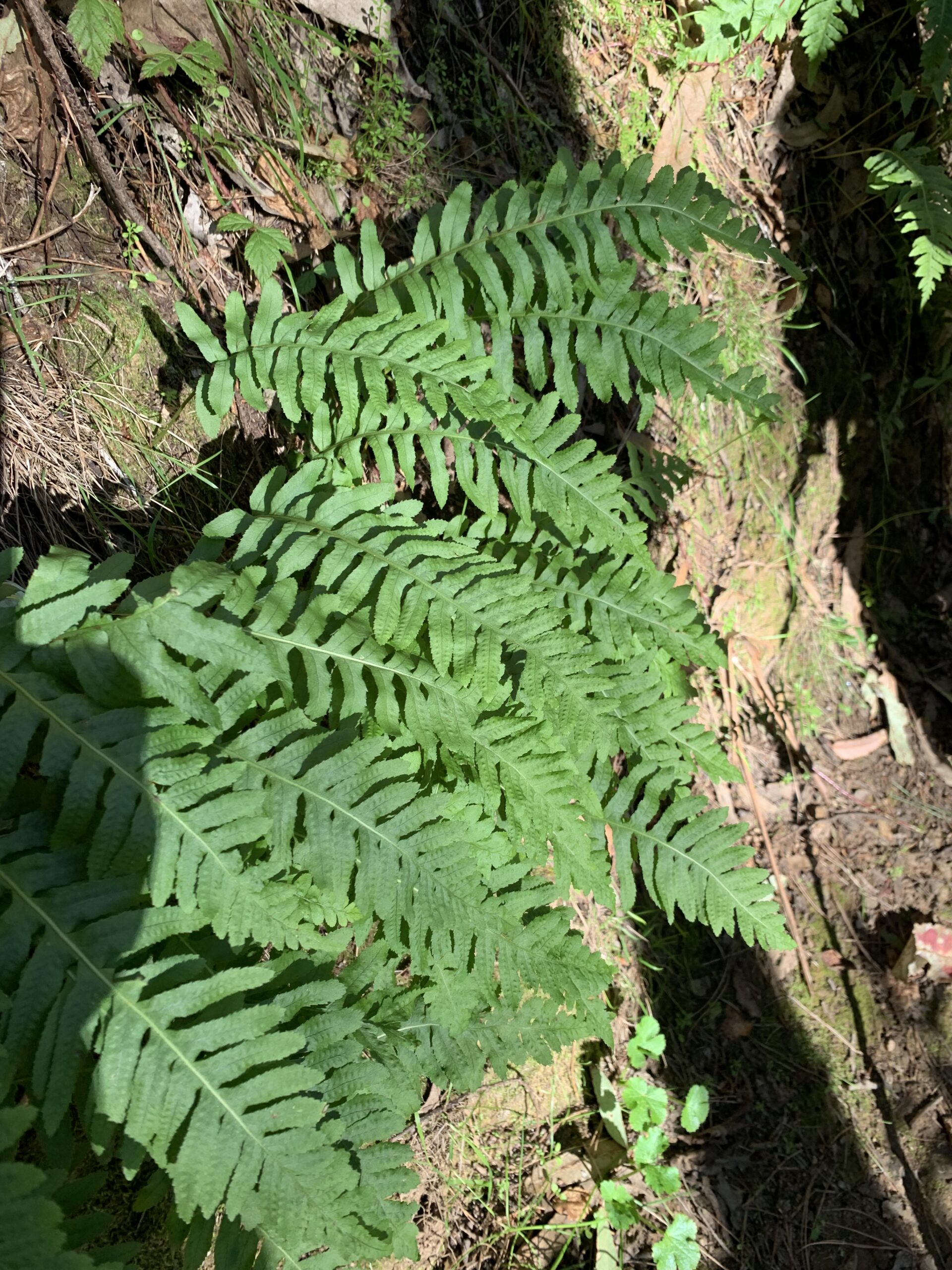
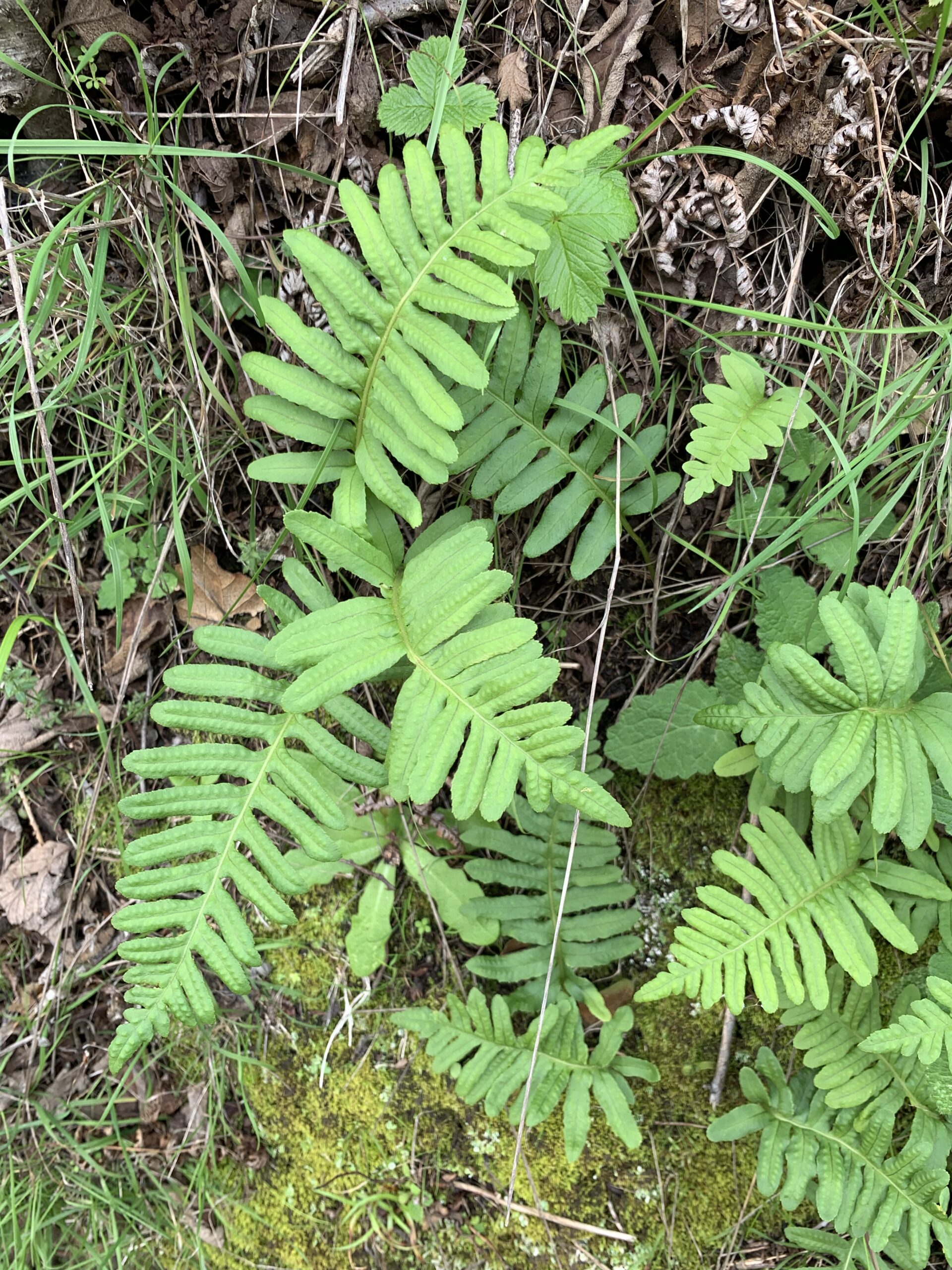
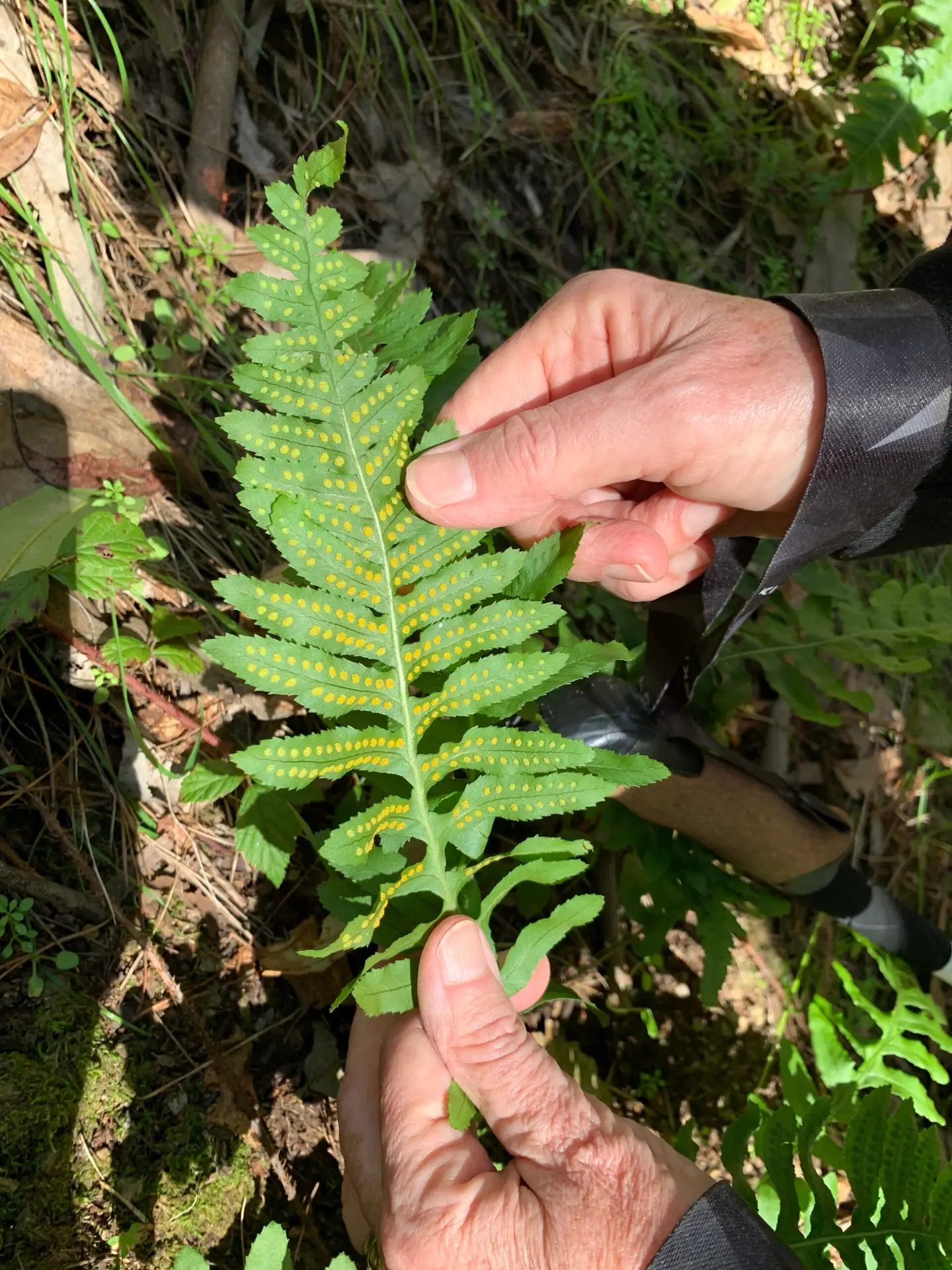
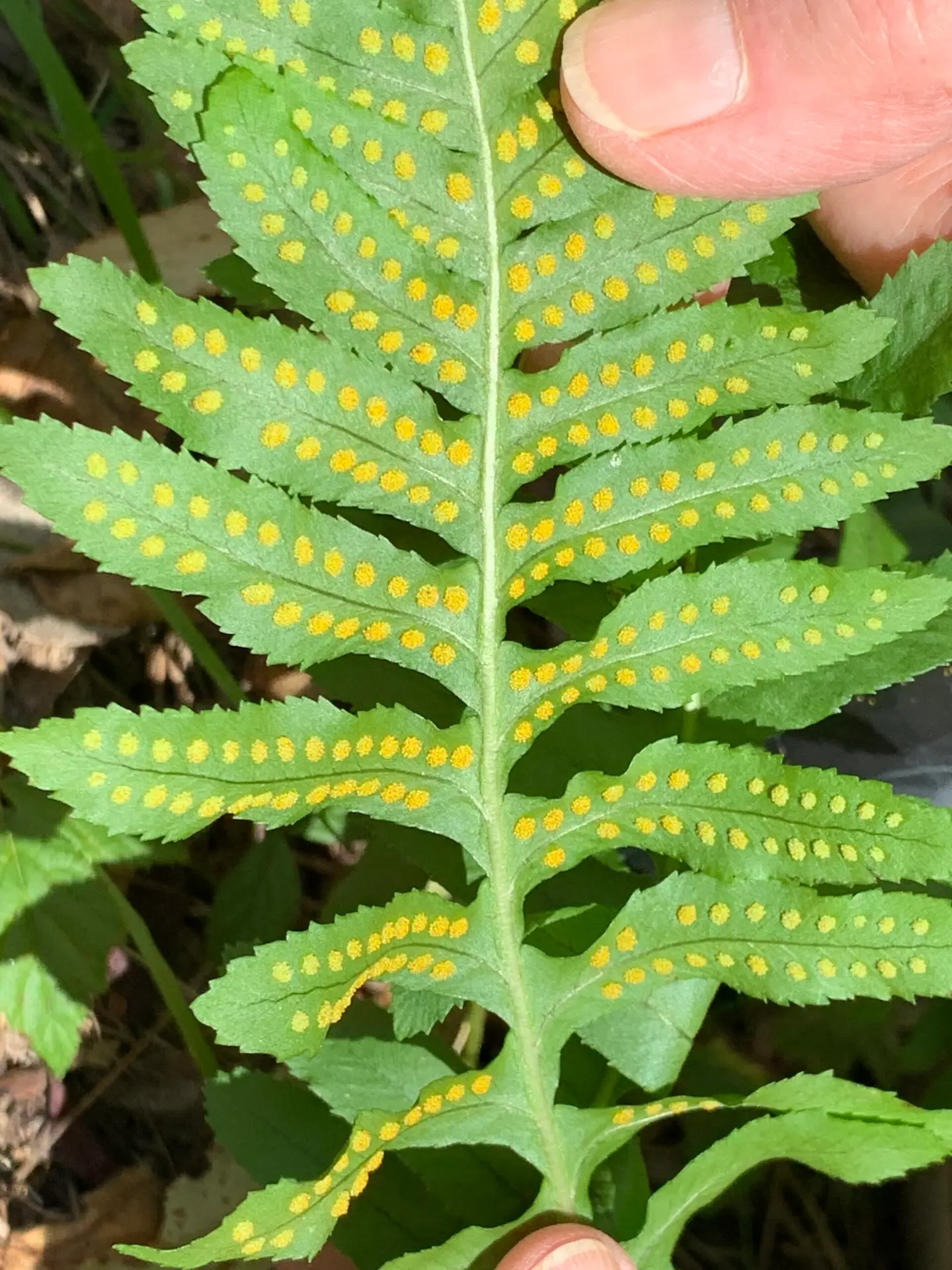
Common fern with long, wavy fronds without distinct separation between each pinnae at the midrib. Sori occur in two rows on the underside of the fronds.
Similar To
Acrid Fern (Polypodium calirhiza). Polypodies are very difficult to tell apart visually. While the lowest 1-3 pinnae are generally shorter than those above on P. calirhiza but longer than those above on P. californicum, the differences are often not clear.
Height / Size
Up to 2 feet tall.
Fronds
Fronds are up to 1 foot in length, once divided (1-pinnate) with light brown stems (rachis). Summer deciduous in dry areas.
Pinnae
Pinnae are wavy and slightly serrated. Each pinna is connected to the next near the midrib and tend to be alternate.
Sori
Sori are round to ovate, sunken, contain tiny yellow spores, and are arranged in two rows on the underside of the fronds.
Indusium
None
Habitat
Found in moist, rocky, shady banks.
Location / Range
Found on Trout Farm and Brooks Creek Trails. Common in canyons, streambanks and north facing slopes, from northern California to northern Baja California, at elevations from sea level to 4,000 feet.
Lifespan
Perennial. May live 10 to 20 years.
Fascinating / Fun Facts
The name for this fern family is derived from Ancient Greek: poly meaning “many” + podion meaning “little foot” because the fronds arise from many points along the creeping rhisome.
Ethnobotany
Yurok use California Polypody rhizomes as an antibiotic for infections. Pomo use an infusion of the rhizomes to treat sore eyes. Wailaki use root extracts topically for rheumatism. It is likely that the Ramaytush Ohlone peoples use the plant in a similar manner.
Sources
Calflora Calscape Wikipedia PlantID.net for San Pedro Valley CP (NRDB.org) VanderWerf, Barbara. 1994. Montara Mountain. Gum Tree Lane Books, El Granada, CA. pg. 100 Baker, Marc A., 1981, The Ethnobotany of the Yurok, Tolowa and Karok Indians of Northwest California, Humboldt State University, M.A. Thesis, page 46 Chestnut, V. K., 1902, Plants Used by the Indians of Mendocino County, California, Contributions from the U.S. National Herbarium 7:295-408., page 303 Monterey County Wildflowers, Trees & Ferns