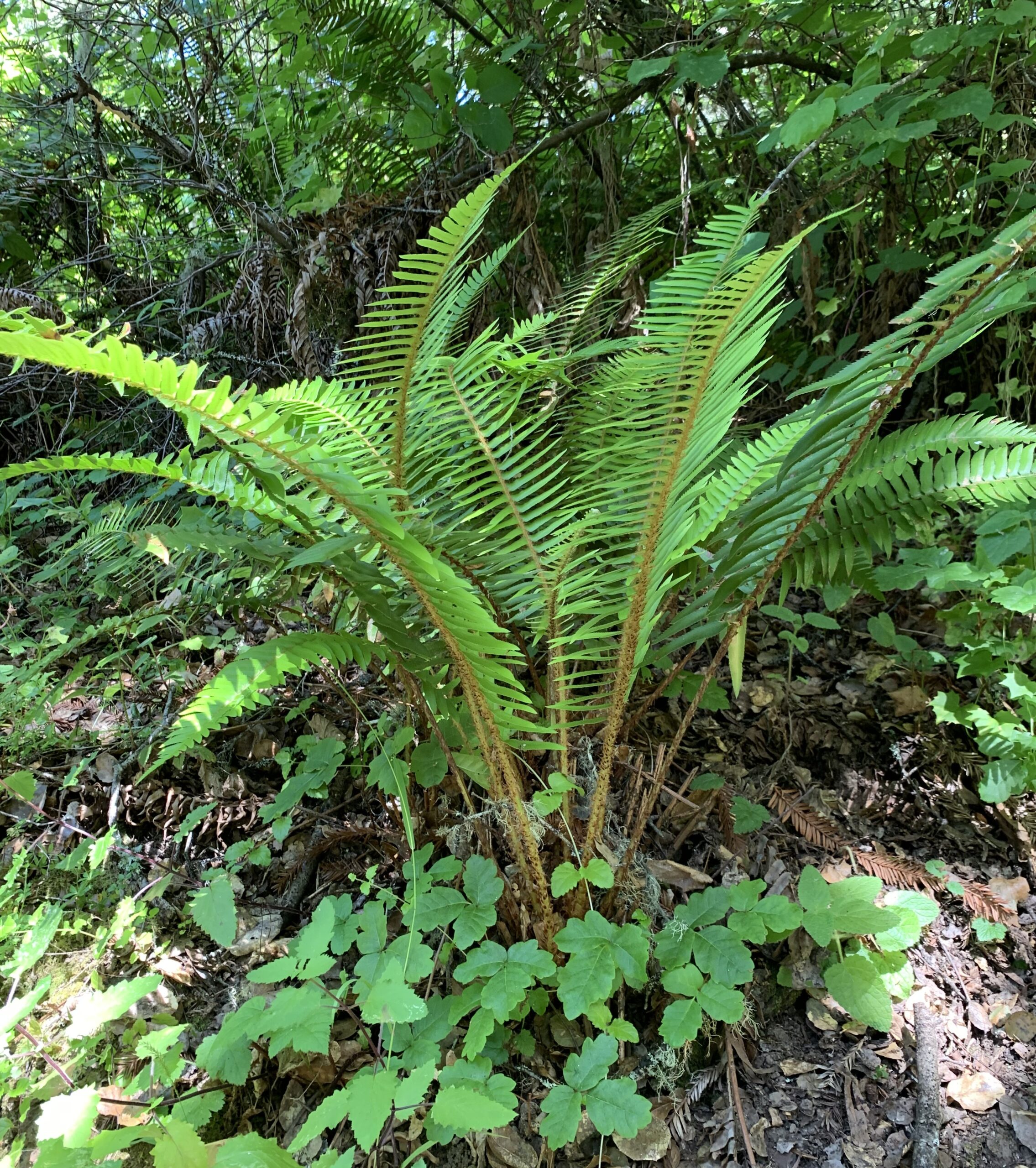
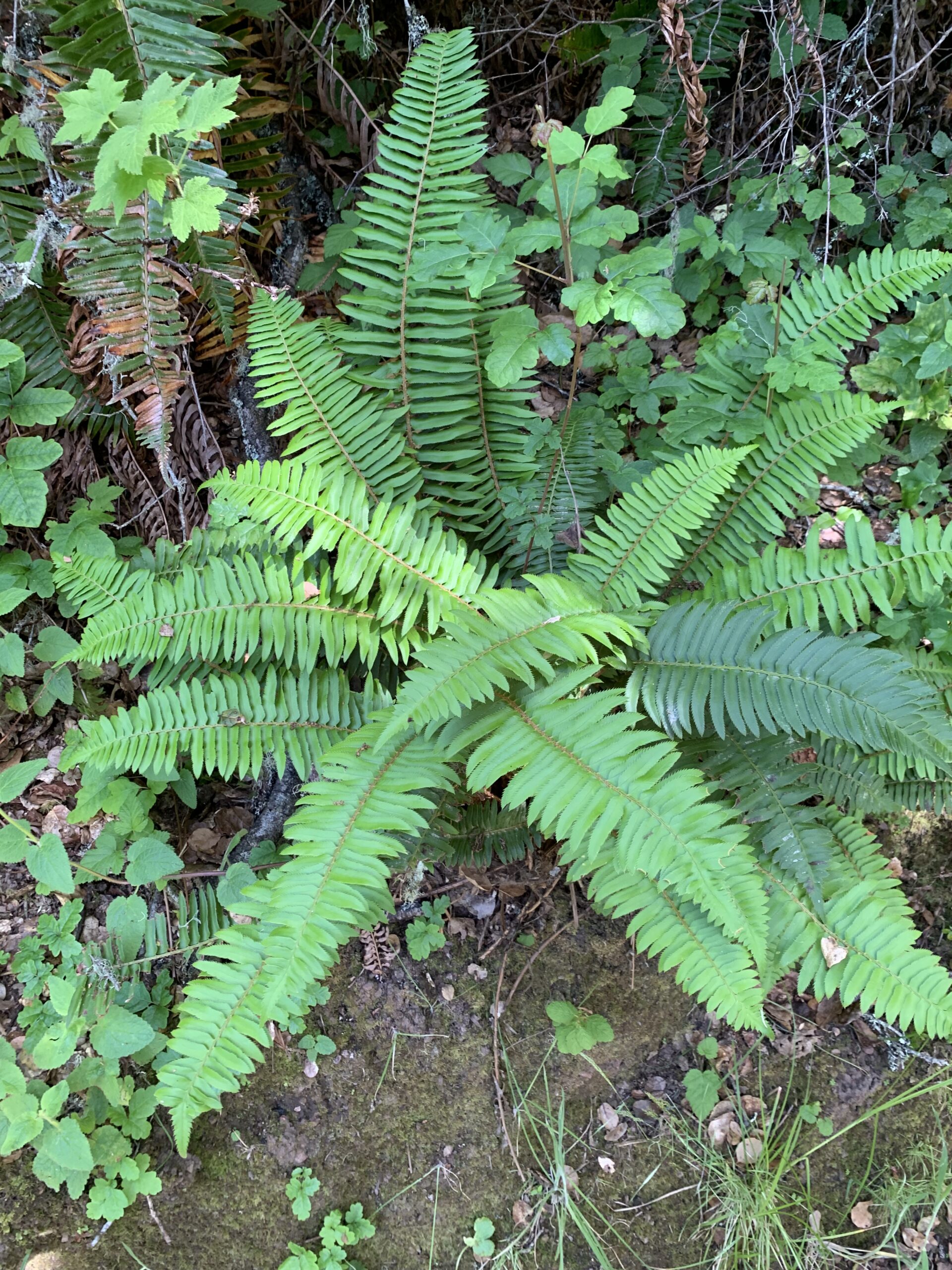
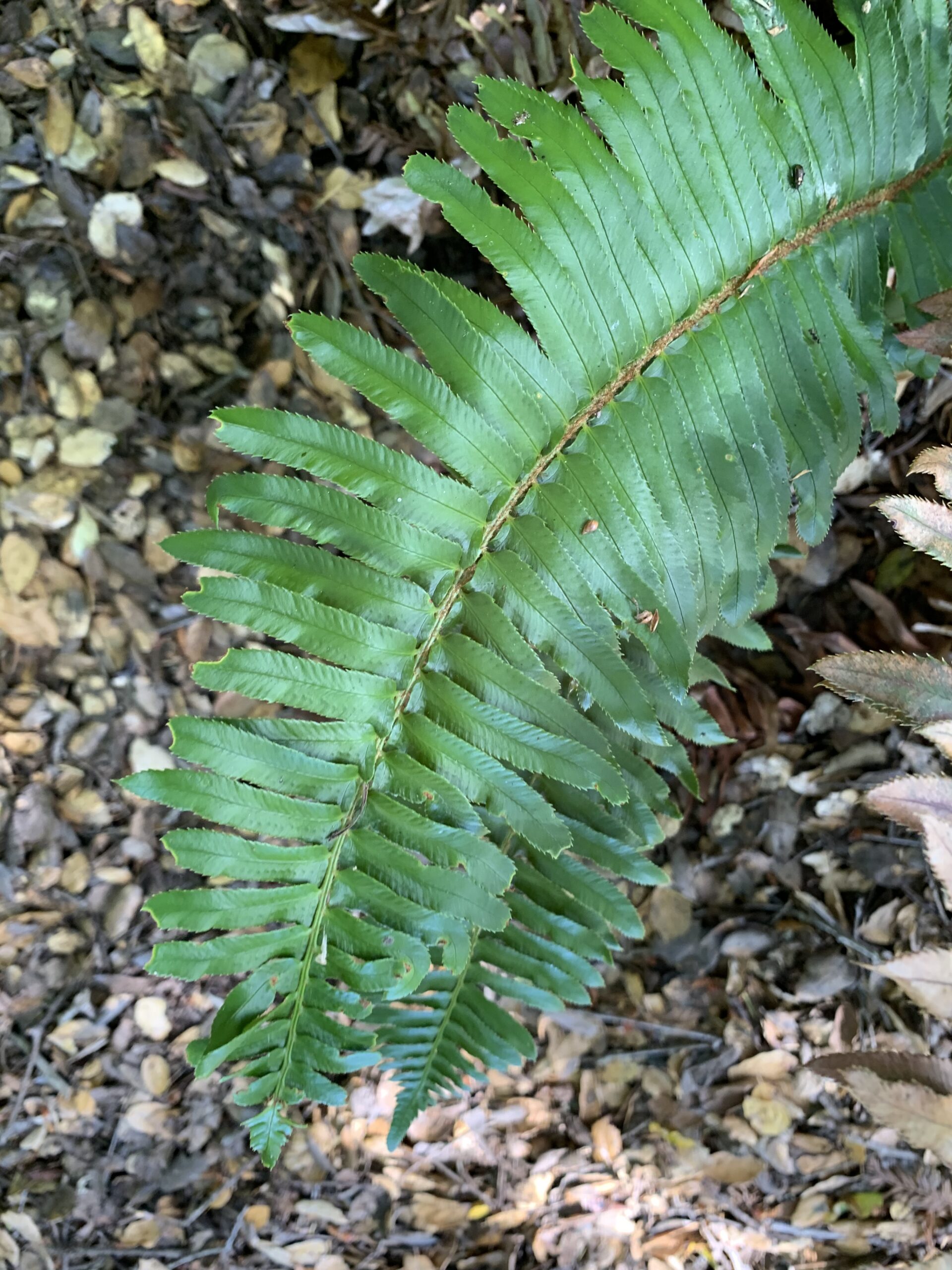
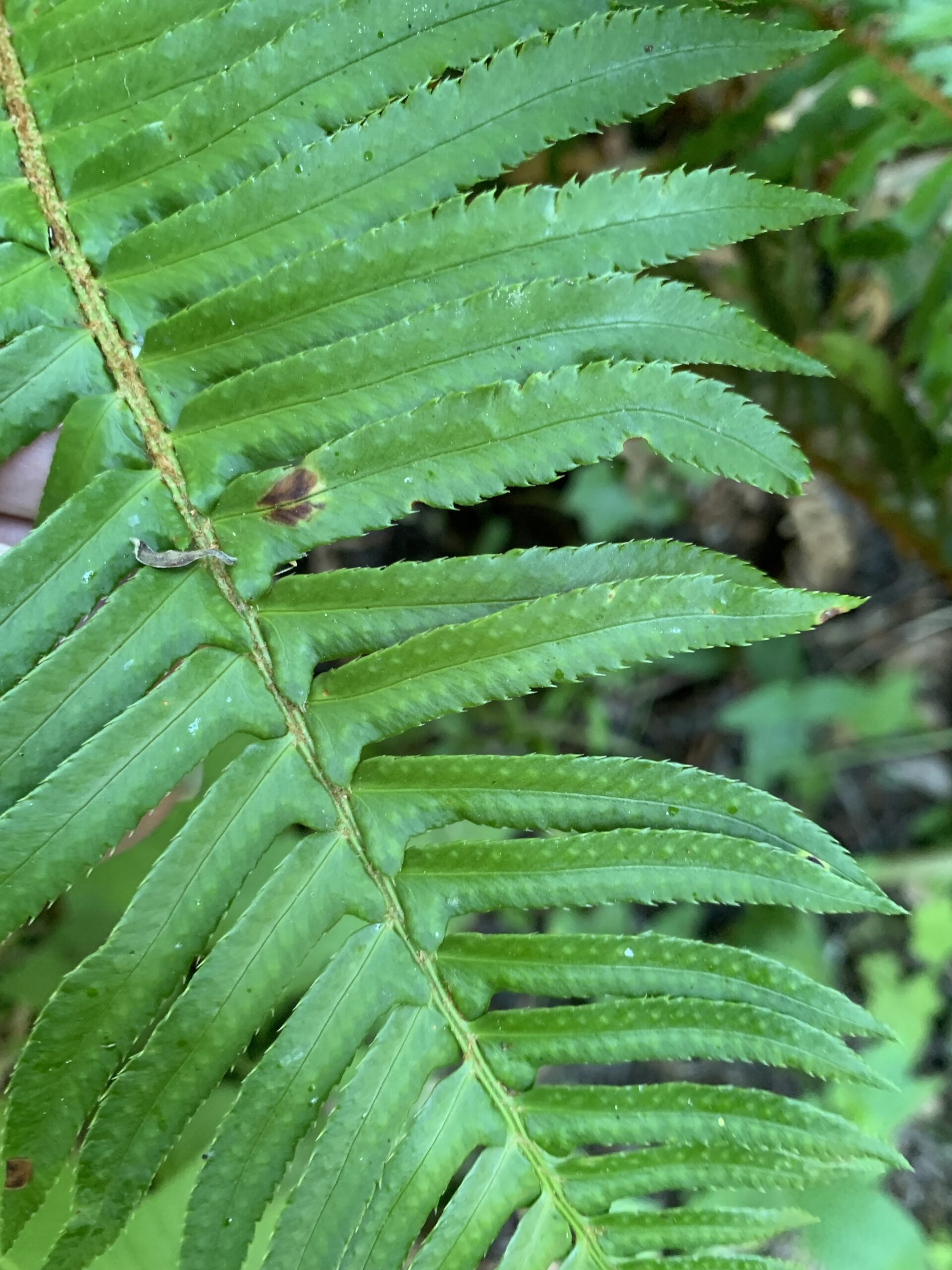
Large evergreen fern with dark green fronds (leaves) that grow out radially from the center. Each leaflet (pinna) has a small lobe, or ‘sword hilt’ at base where it attaches to stem (rachis).
Height / Size
2 to 6 feet tall
Fronds
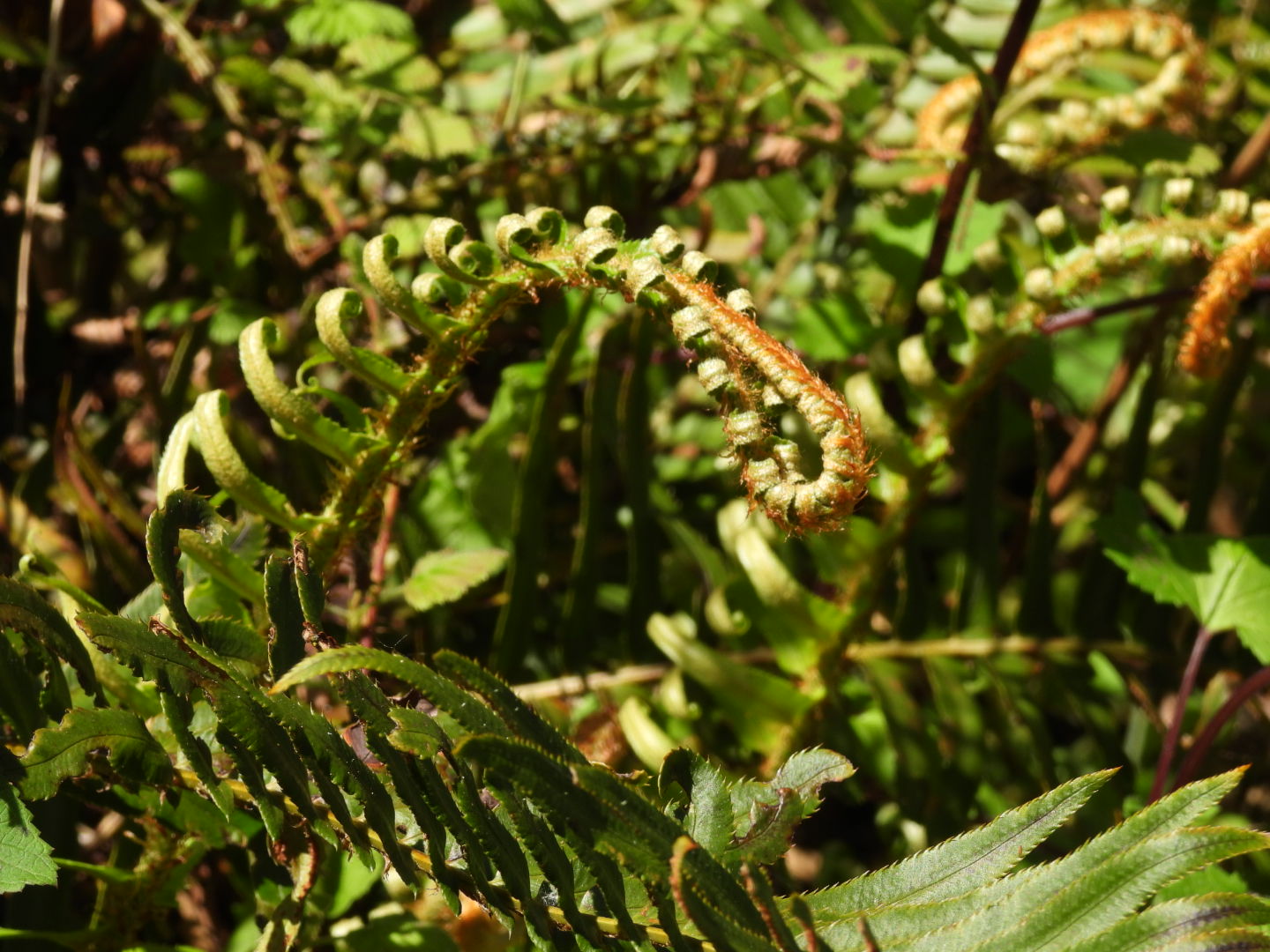
Fronds 2 to 4 feet long and once divided (1-pinnate). Brown scales on stipe and rachis.
Pinnae
Edges of each pinna are serrate to serrulate (finely serrate) and with bristly tips on the teeth. Small lobe or “sword hilt’ at base of pinna where it attaches to stem (rachis).
Sori
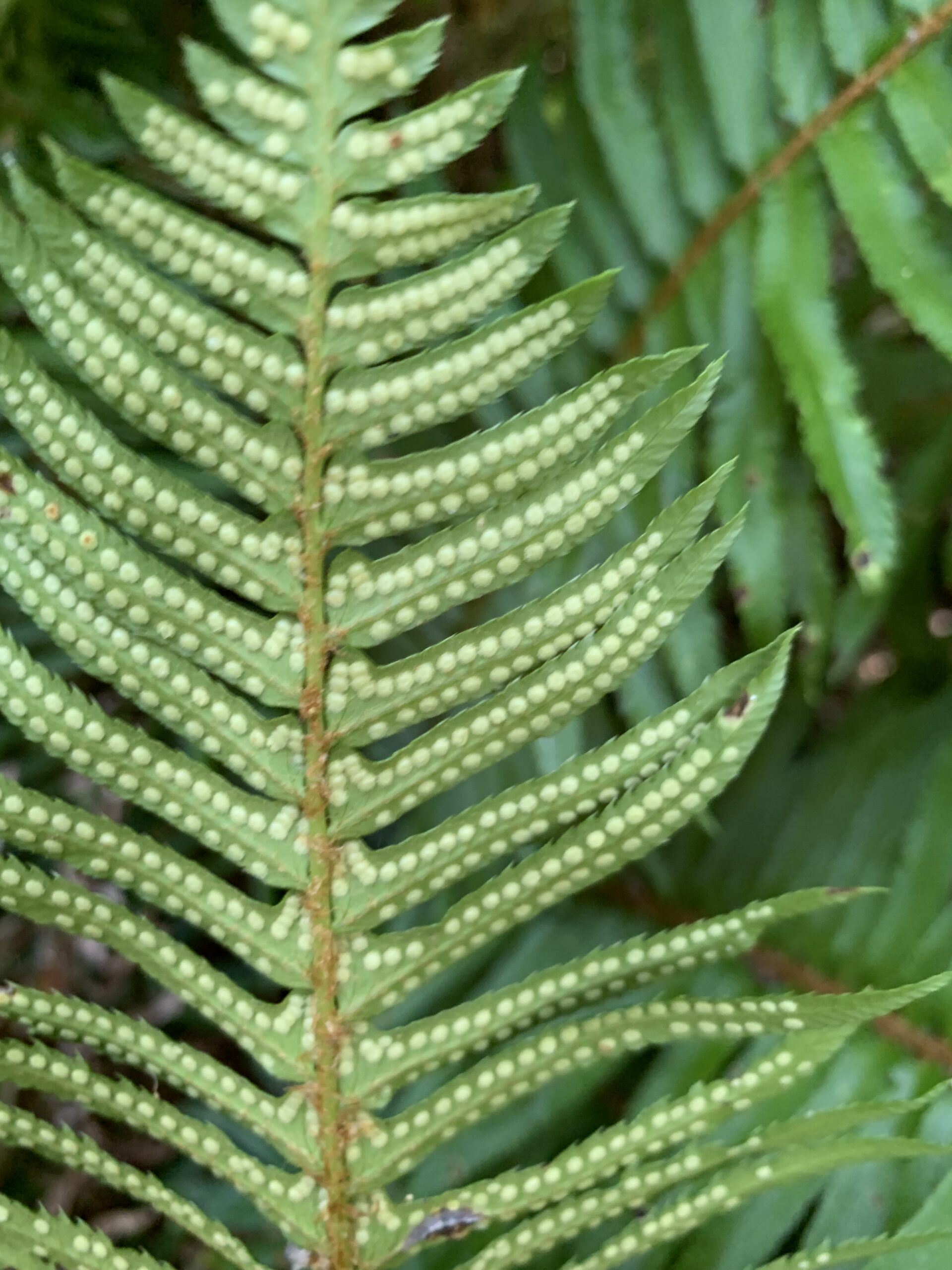
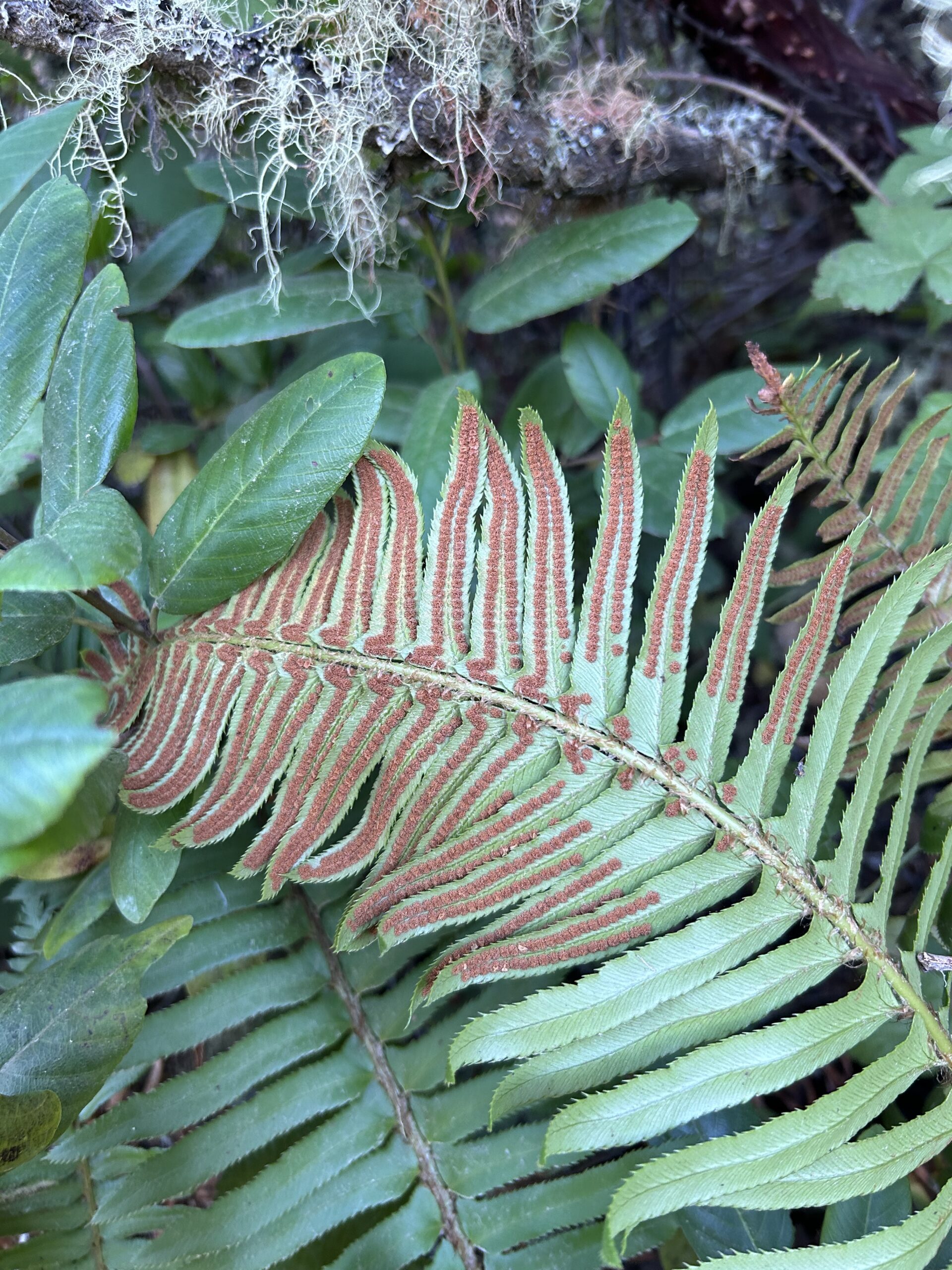
Sori are round and in two rows along the mid-vein on underside of each pinna. This is an easy way to distinguish from other members of the Wood Fern family (Dryopteridaceae) and other genera that are similar superficially.
Indusium
Sori covered by centrally-attached, round and hairy (ciliate), umbrella-like indusium with fringed edge.
Habitat
Relatively common in coastal woodland and maritime chaparral habitats. It often becomes locally dominant in the understory of mesic (moist) mixed conifer and redwood forest throughout the Coast Ranges of California.
Location / Range
All trails. Occurs along the Pacific coast from SE Alaska to southern California.
Lifespan
Perennial. Fronds live 1.5 to 2.5 years and remain attached to the rhyzome after withering. The term for this is marcescence.
Fascinating / Fun Facts
Sword ferns can reproduce by spores, but also spread through underground rhizomes, forming dense clonal colonies that can persist for decades. Sword fern gets it name because its leaflets (pinnae) have pointed tips and each pinna has a small lobe or “hilt” at is base, making it easy to identify.
Ethnobotany
There are many applications and uses for Western Sword Fern utilized by a wide range of tribal groups. To learn how the Ohlone people use this plant see: Native American Ethnobotany Database