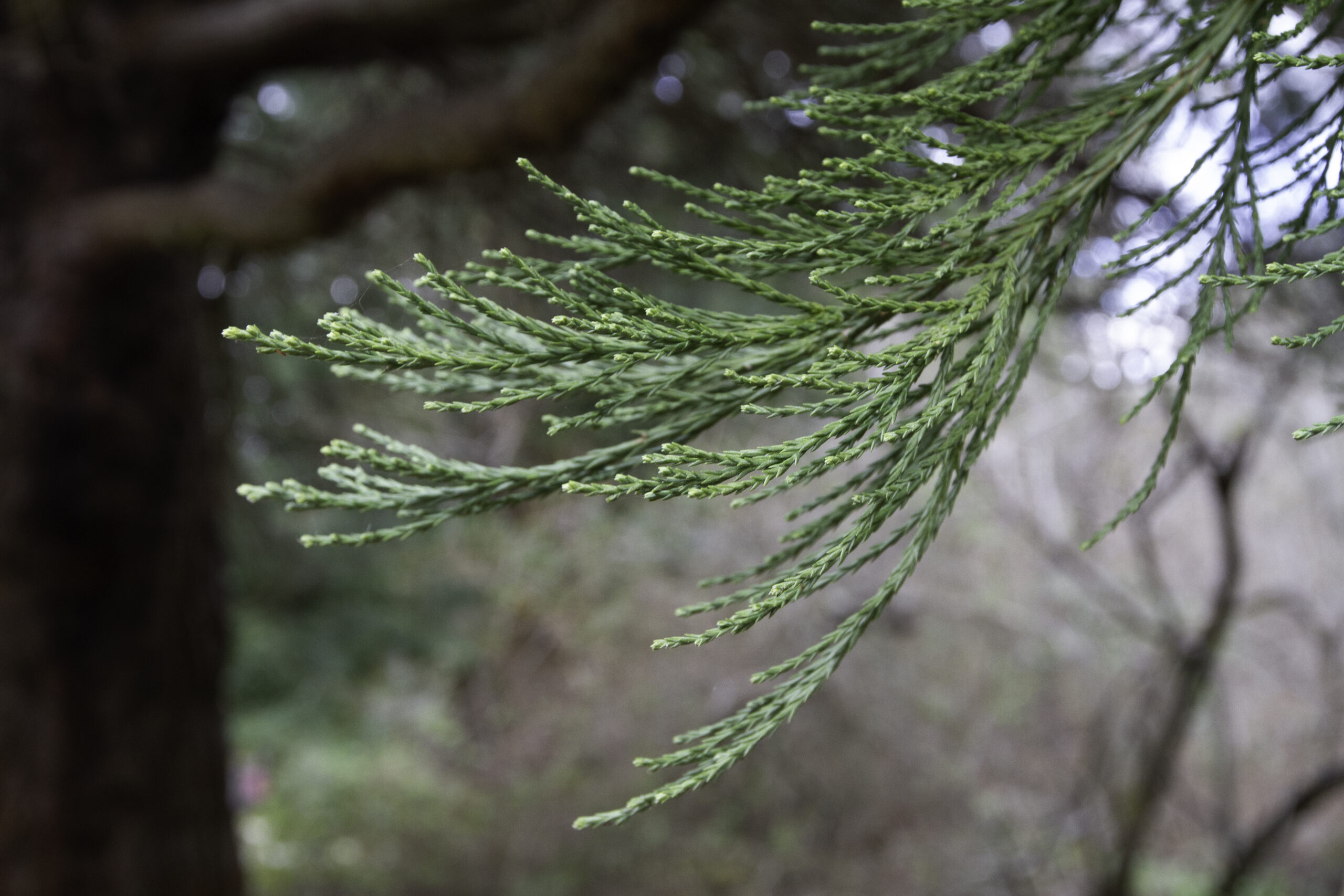
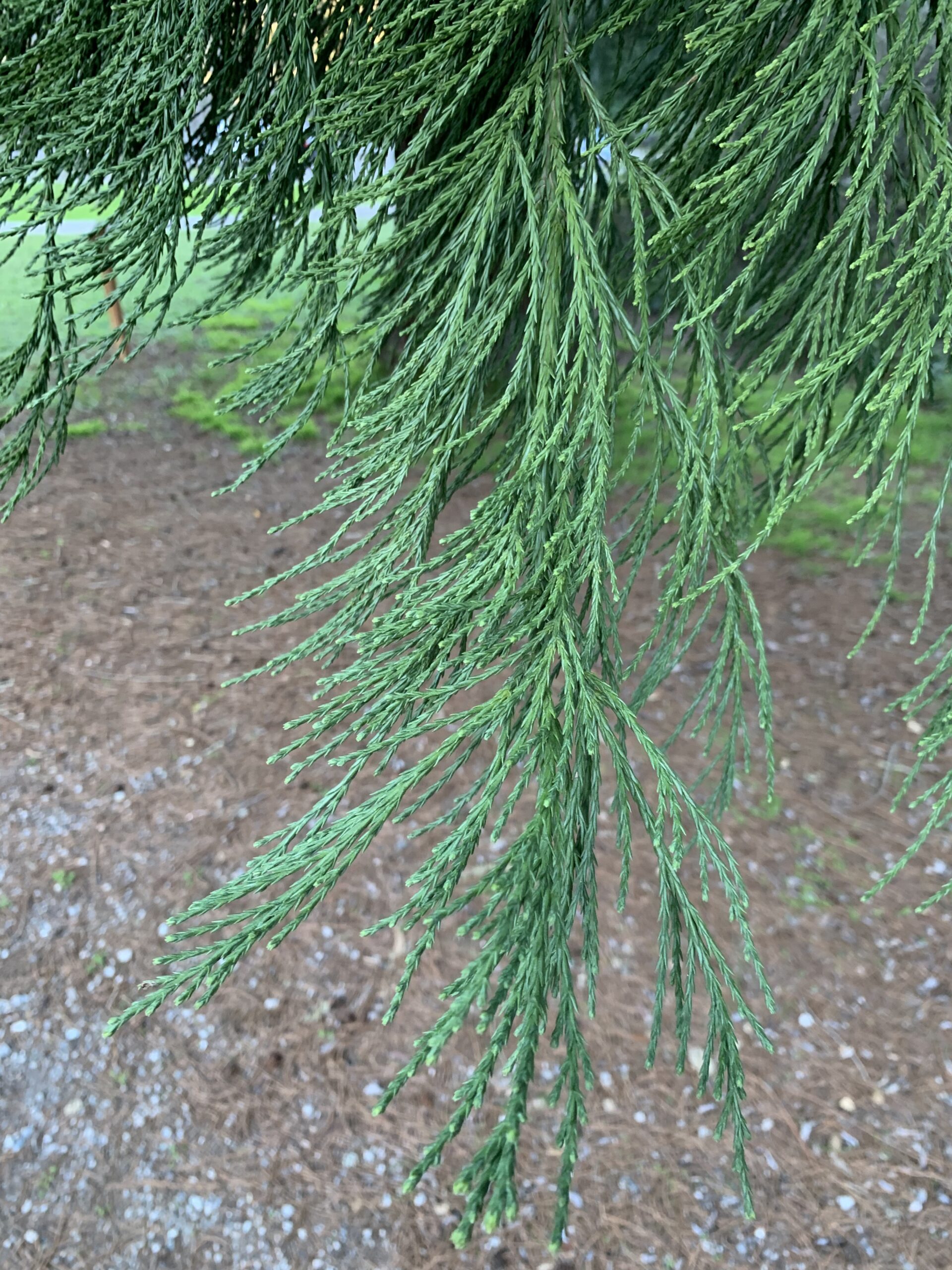
Scale leaves are bluish green and spreading when young, clasping and dark green when mature.
Bark / Trunk
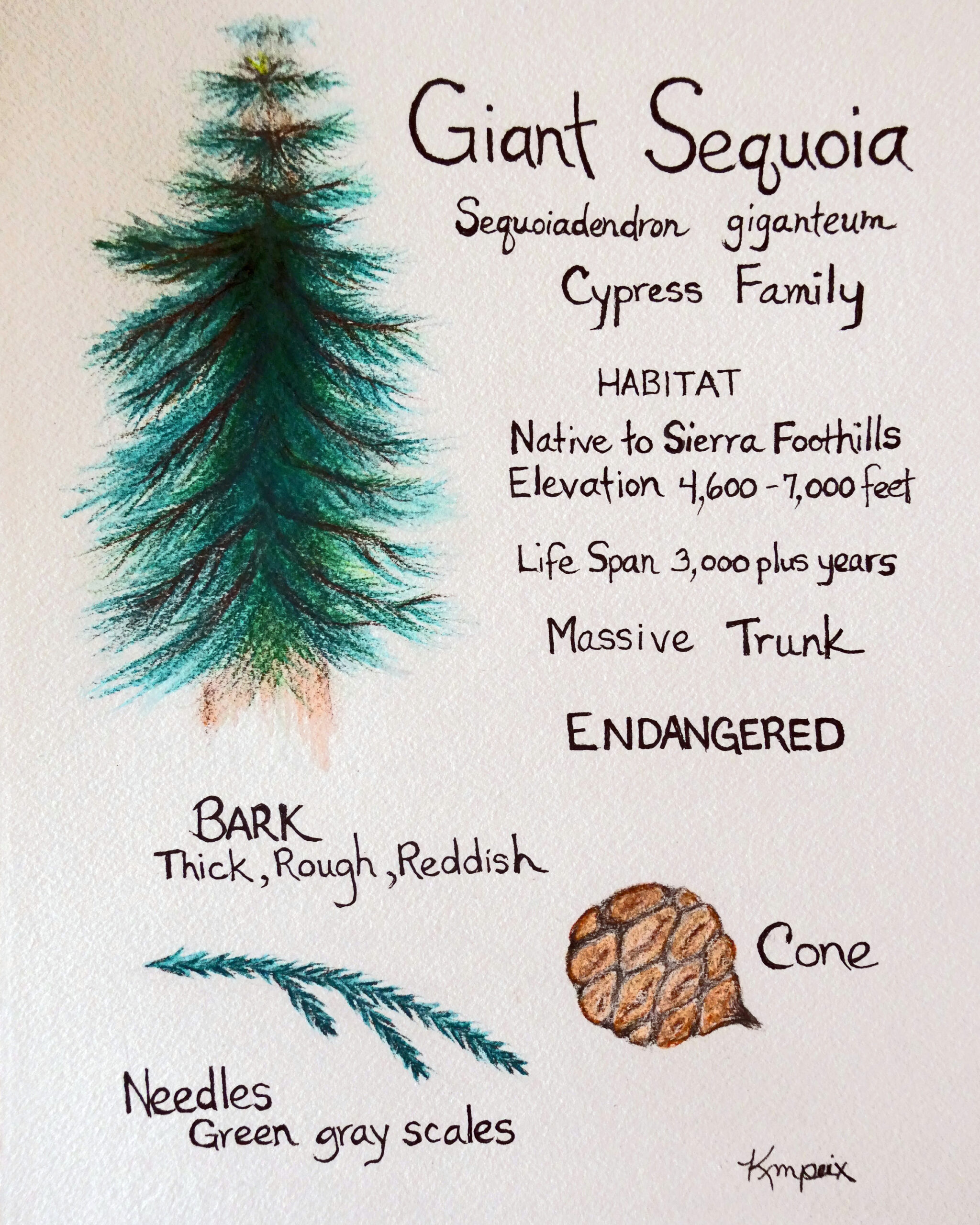
Thick fibrous bark, red brown in color with deep ridges up to 3 feet thick. Trunk can be 30 to 40 feet in diameter. Giant Sequoia does not resprout after high-intensity fires, leading to high mortality rates after wildfires.
Flower
Conifers do not produce flowers. Pollen released in April to May.
Fruit / Seed / Cone
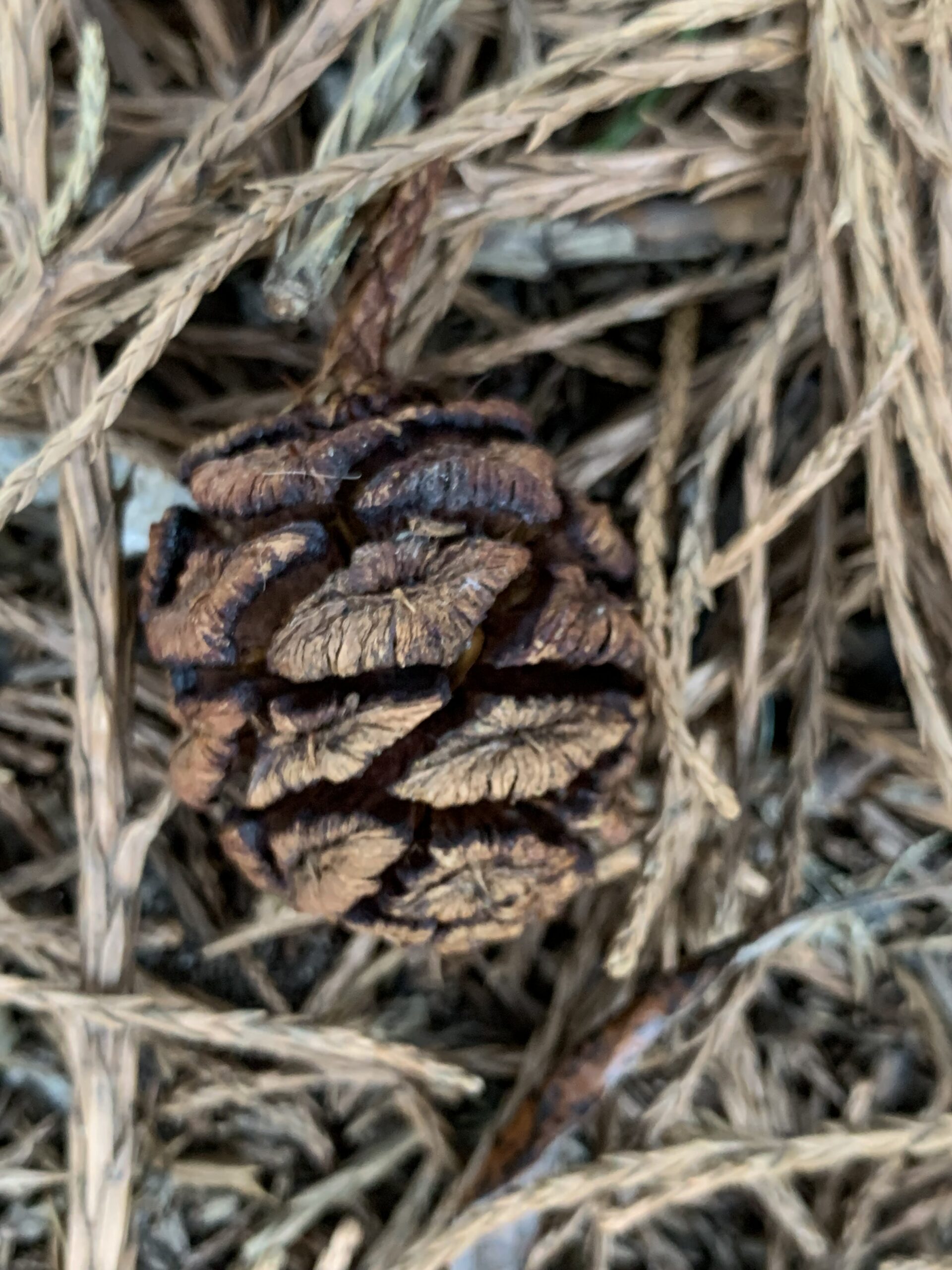
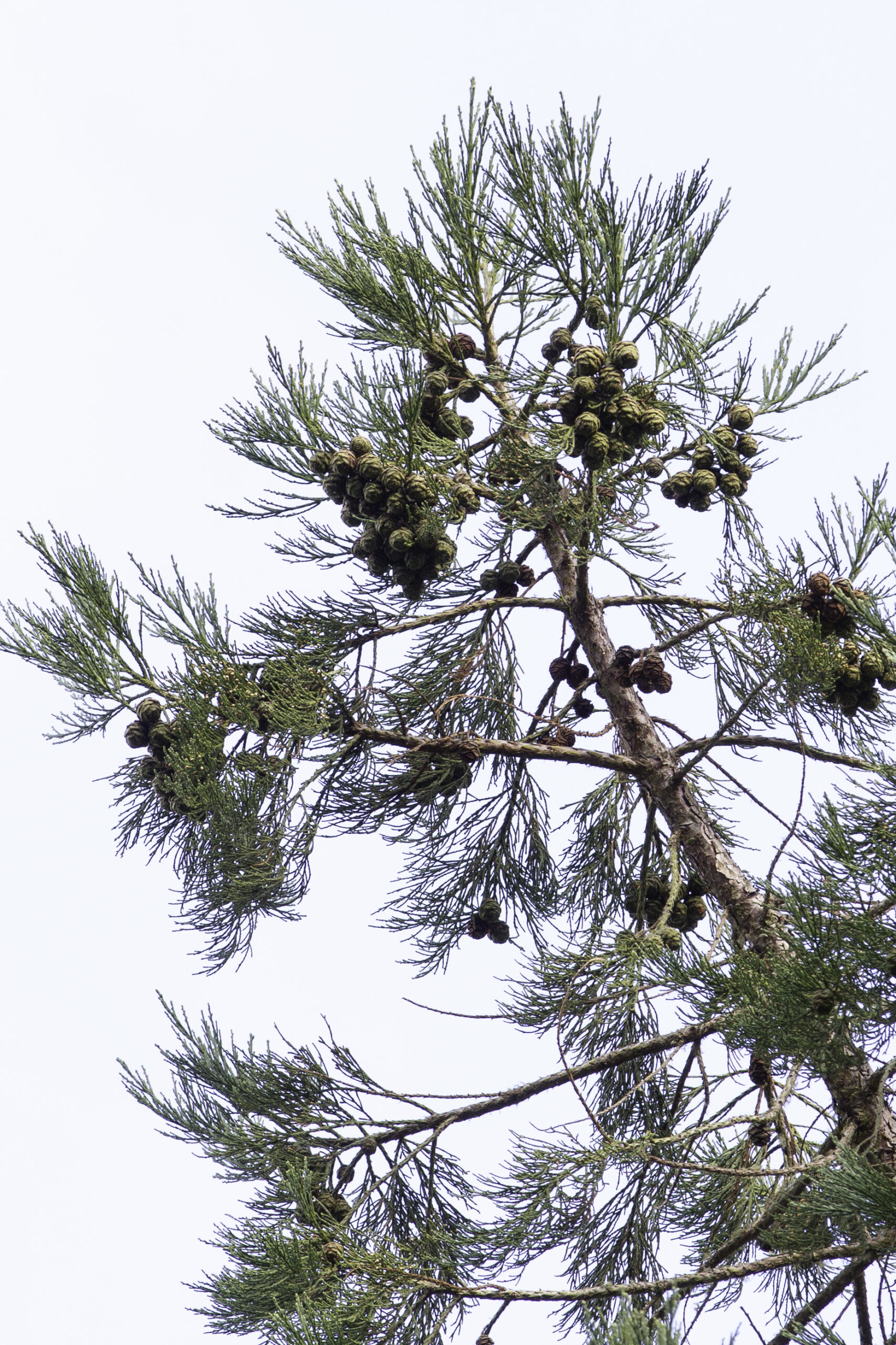
Giant Sequoia has 2 types of cones. Pollen cones (male cones) are small about 1/4 inch long, and egg shaped. Young seed cones (female cones) are green becoming woody and brown as they mature, growing to 1.5 to 3 inches. Seed cones mature in 18 to 20 months, but are persistant, often remaining green and closed up for years on the tree for up to 20 years.
Habitat
Mixed conifer forest.
Location / Range
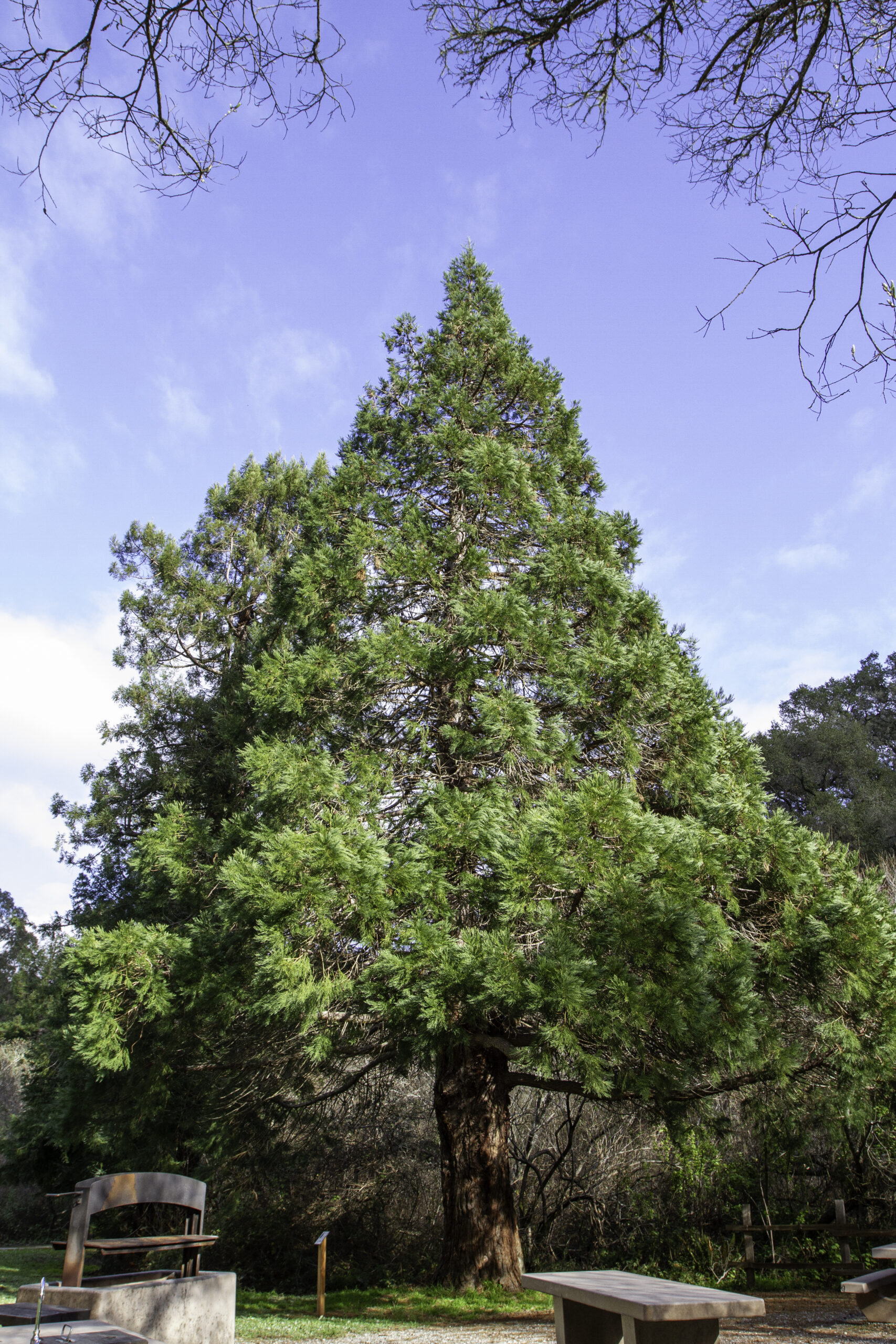
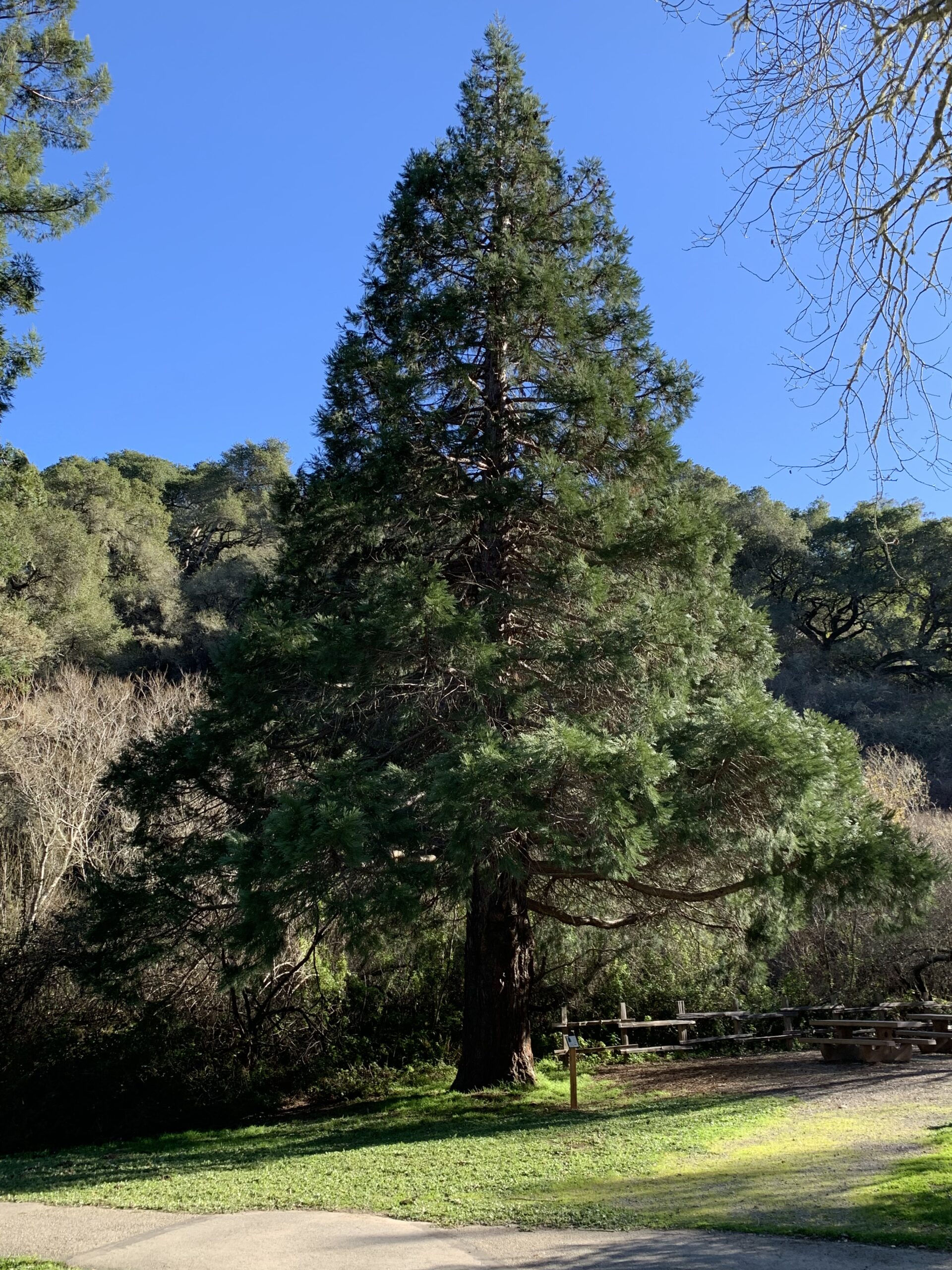
Two trees near SPVP visitor center, but normal range is western Sierra Nevada from 4600 to 8400 foot elevation.
Lifespan
Long lived, oldest tree is estimated to be 3500 years old.
Fascinating / Fun Facts
Sequoiadendron giganteum is considered the “largest” (most massive) tree on earth, in terms of biomass and overall size of the trunks. Also known as Sierra Redwood. The trees in San Pedro Valley Park have been intentionally planted. No one knows who planted the large tree, or when. The younger tree was planted by park staff.
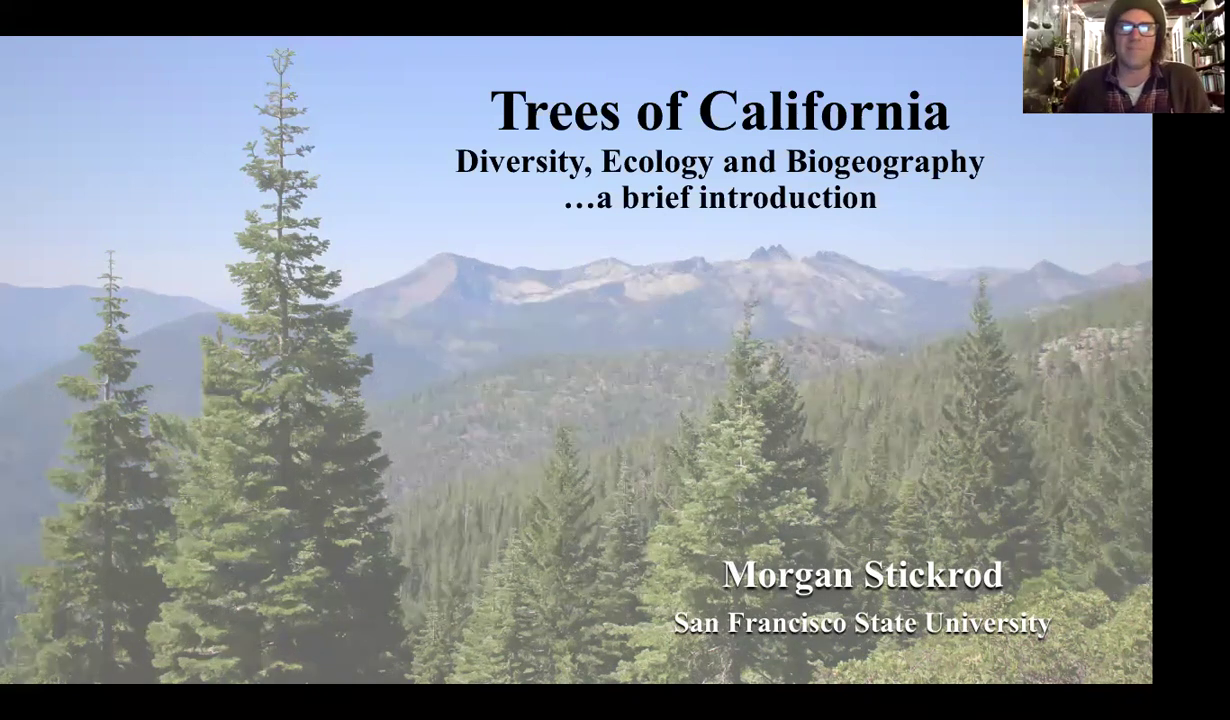
The Friends of San Pedro Valley Park welcomed Morgan Stickrod for a lecture on “Native Trees of California.” He has previously given us lectures on the...